Zuru Kenya is a sophisticated, high quality, visually impacting travel, leisure and lifestyle Blog. We seek to raise the profile of Kenya by showcasing its diversity in cultures, tastes, wildlife, stunning landscapes and more!
Our passion for travel drives us to highlight what makes Kenya a top tourist destination (not only in Africa but worldwide) and the premier of wildlife safari. Our aim is to bring you relevant travel content that features Kenya's fascinating history and culture, her people, amazing sights & sounds and beautiful regions designed to aid you in planning and/or enjoying your trip to this beautiful country
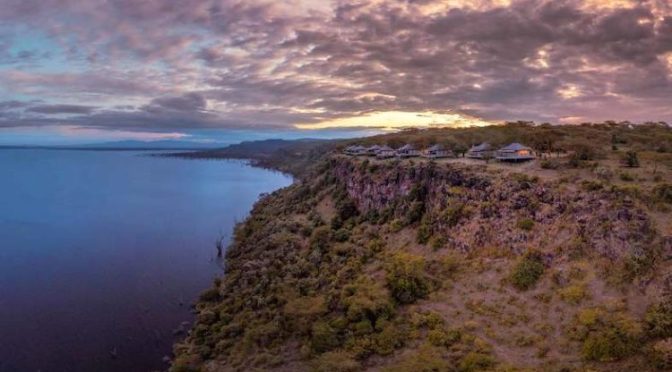
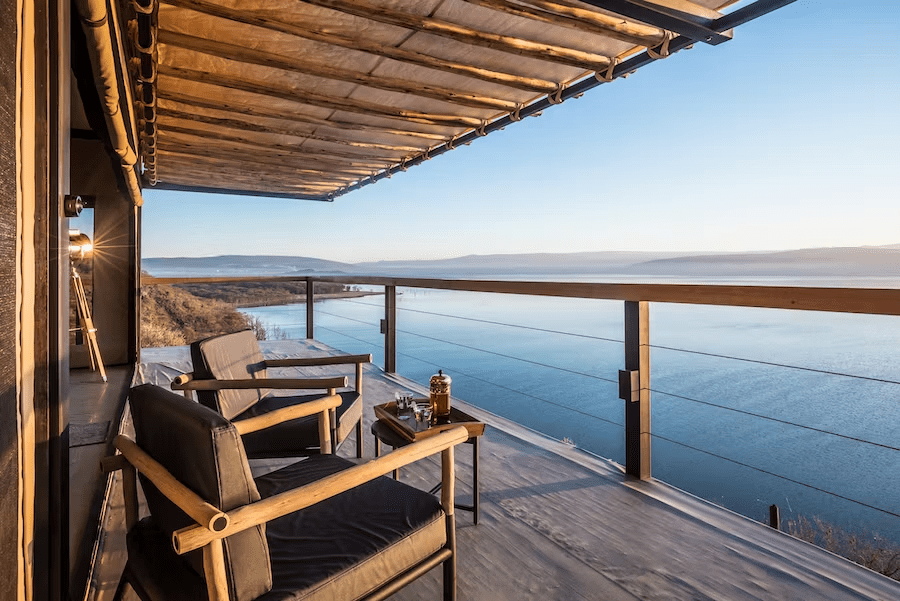
The Cliff – Operated by the Wilder Group, the region’s premier group of luxury tented camps and unique experiences – blends space and scenery with style and service atop a 100metre high rock face overlooking the magnificent flamingo feeding ground; Lake Nakuru, woodlands and forests protecting the popular lake.
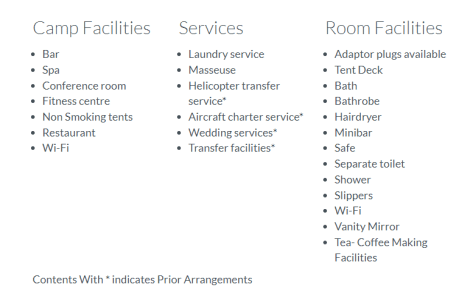
While ‘luxury camp’ is the simplest description, in reality The Cliff located inside Lake Nakuru National Park defies conventional labels, being a combination of safari lodge, tented camp and boutique hotel, constructed and furnished in a contemporary European style. The property is easily accessible within the great rift valley, a two and a half hour drive from Nairobi, Kenya’s capital city and approximately three miles from Nakuru town.
Accommodation
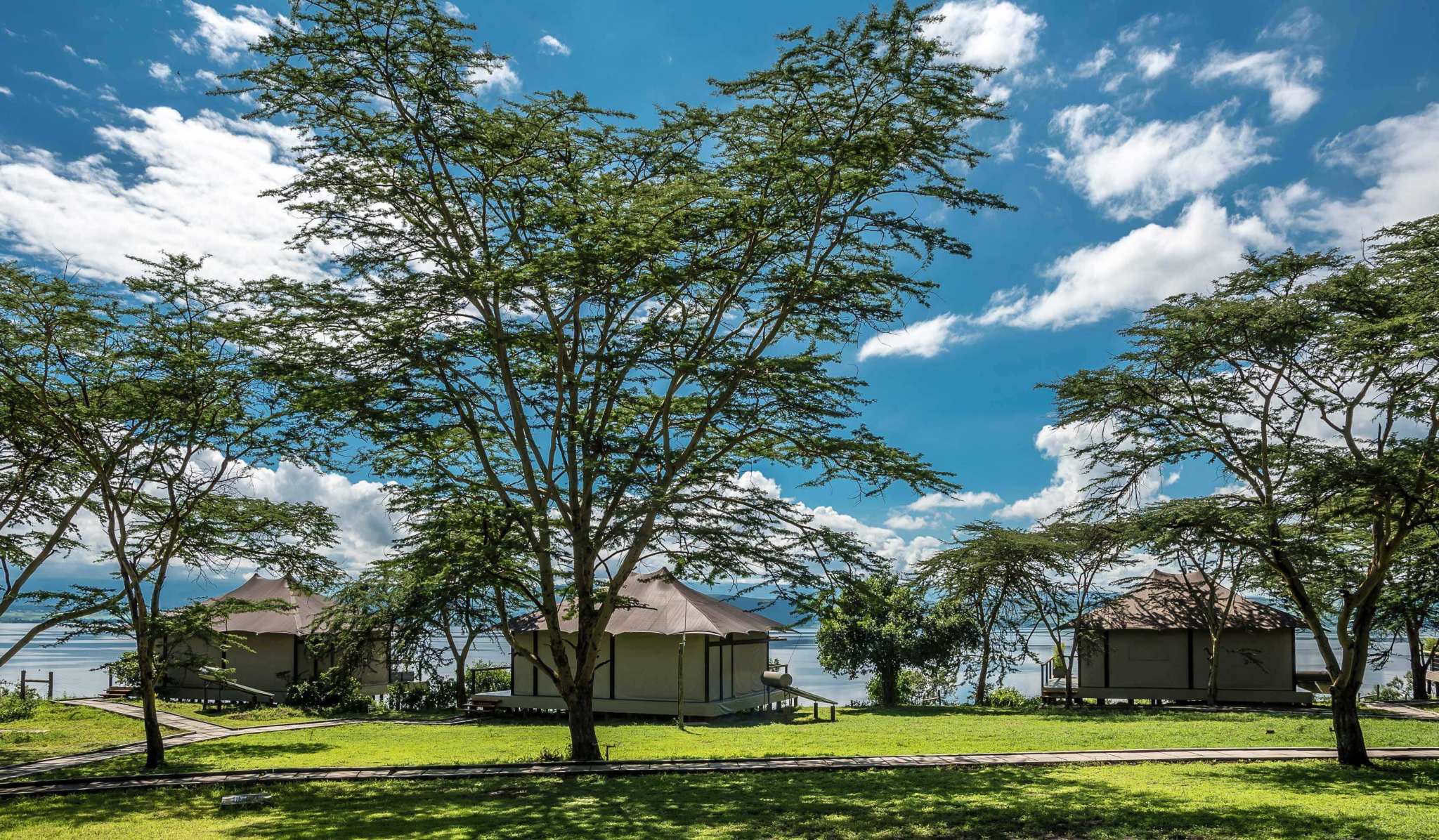
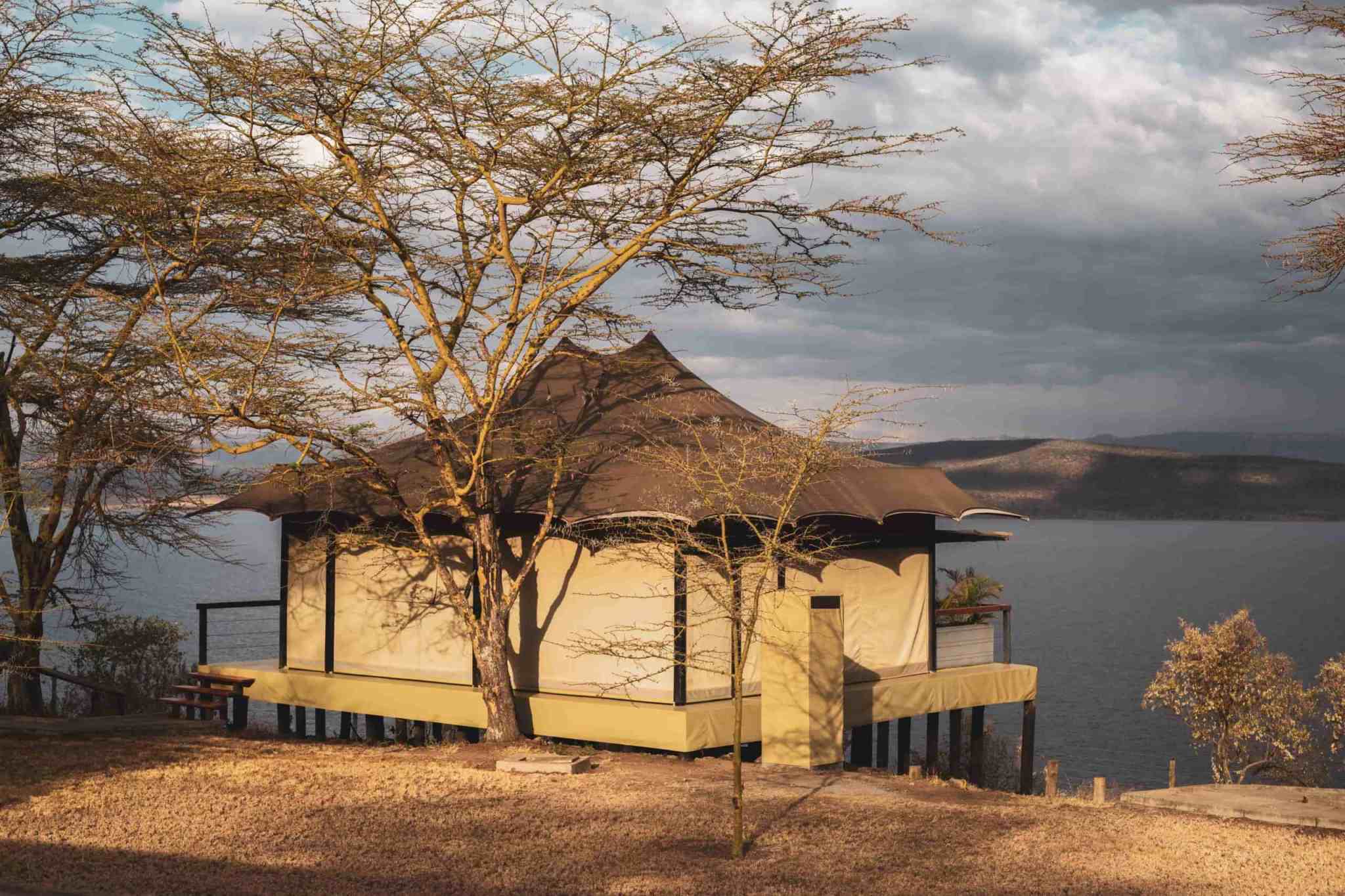
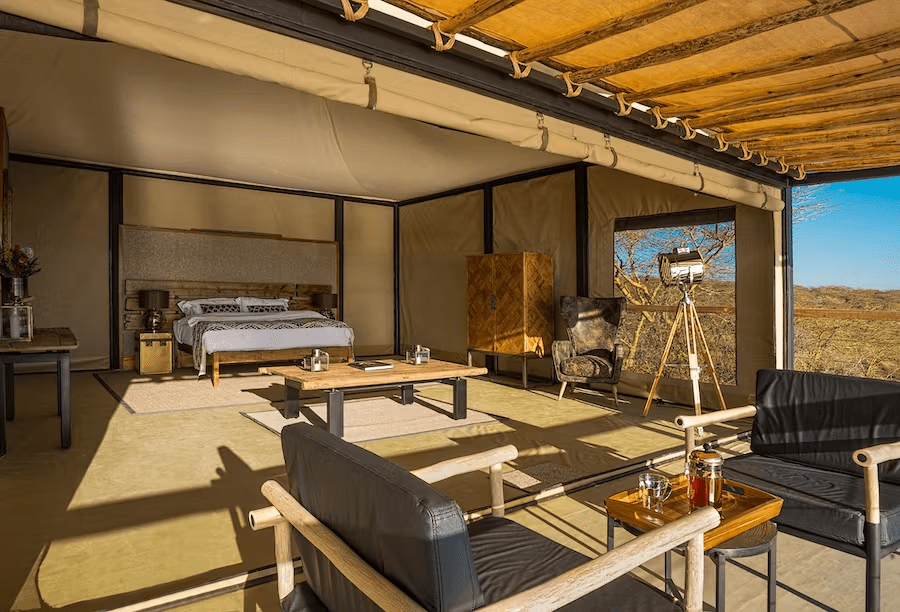
Each tent is built on solid foundations at the edge of the cliff, and faces the lake, allowing guests 180 degree views of the panoramic paradise, yet maintaining privacy. Not wanting to waste the view, the tent is spacious and the freestanding bath looks outwards. While the exterior environment at The Cliff is pure Africa, the room interiors combine organic chic with international design to create the understated style of a modern boutique hotel.
Guests can sit on the veranda to catch the rising sun in the morning as it spreads its vivid light across the lake, nudging life into the park’s occupants and awakening its environs. At the same time, as the sun sets in the evening, the atmosphere of the park settles into the comforts of the unfolding night and the nocturnal sounds of the wilderness.
Activities
It would be easy for a guest at The Cliff to spend the day gazing at the view from the comfort of the elegant tent, but there’s more to do around Lake Nakuru. Get up early and go on a game drive in the open-sided Land Cruisers, and perhaps see a leopard, lion, buffalo, rhino or a rare Rothschild’s giraffe. Hippo can also be sighted around the lake, and for birdwatchers, Lake Nakuru National Park is birdwatcher’s paradise with its incredible bird variety including the famous pink flamingoes.
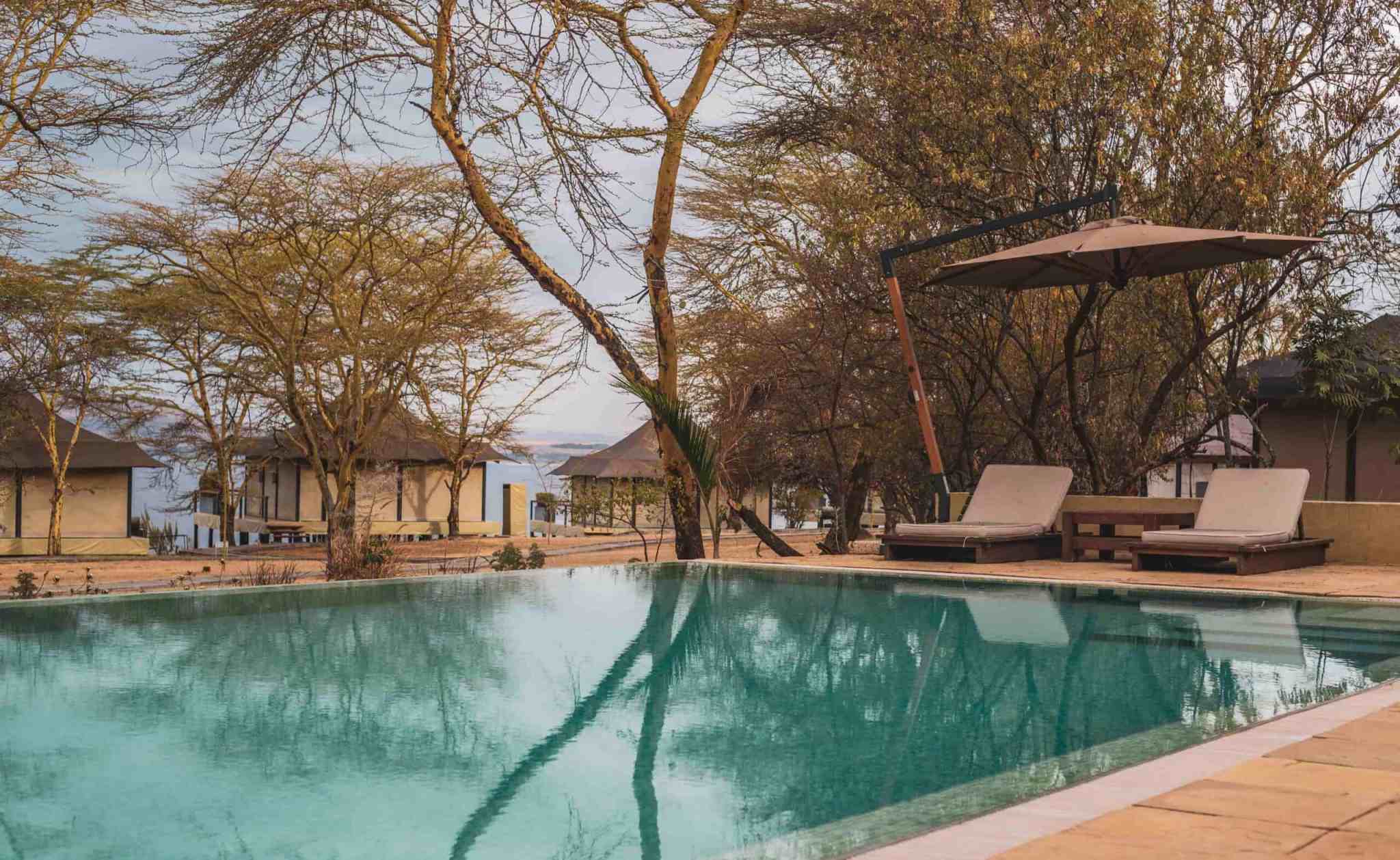
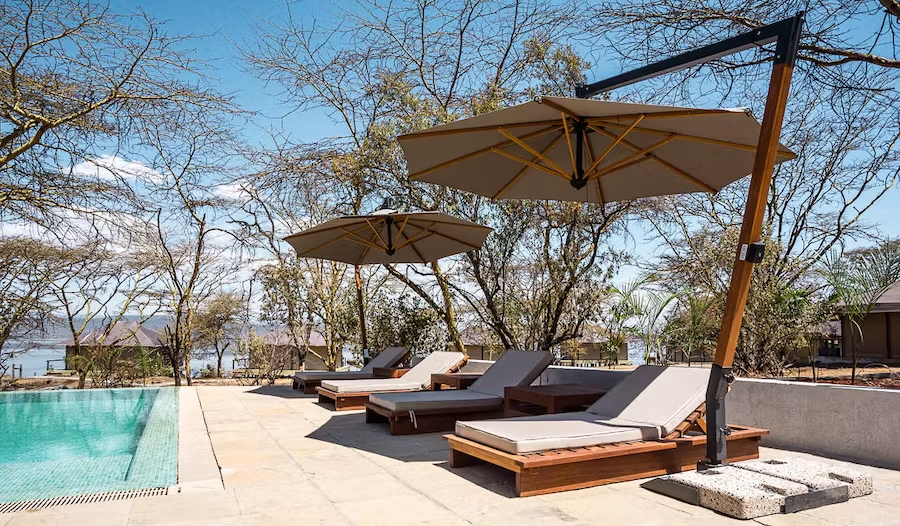
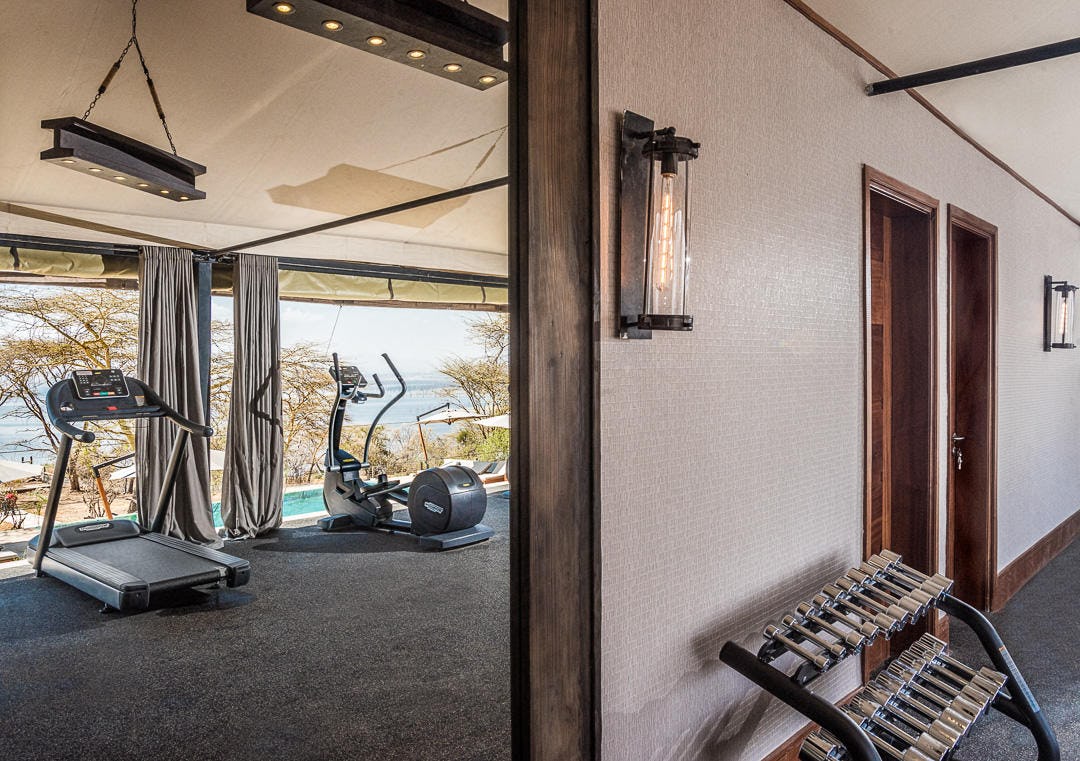
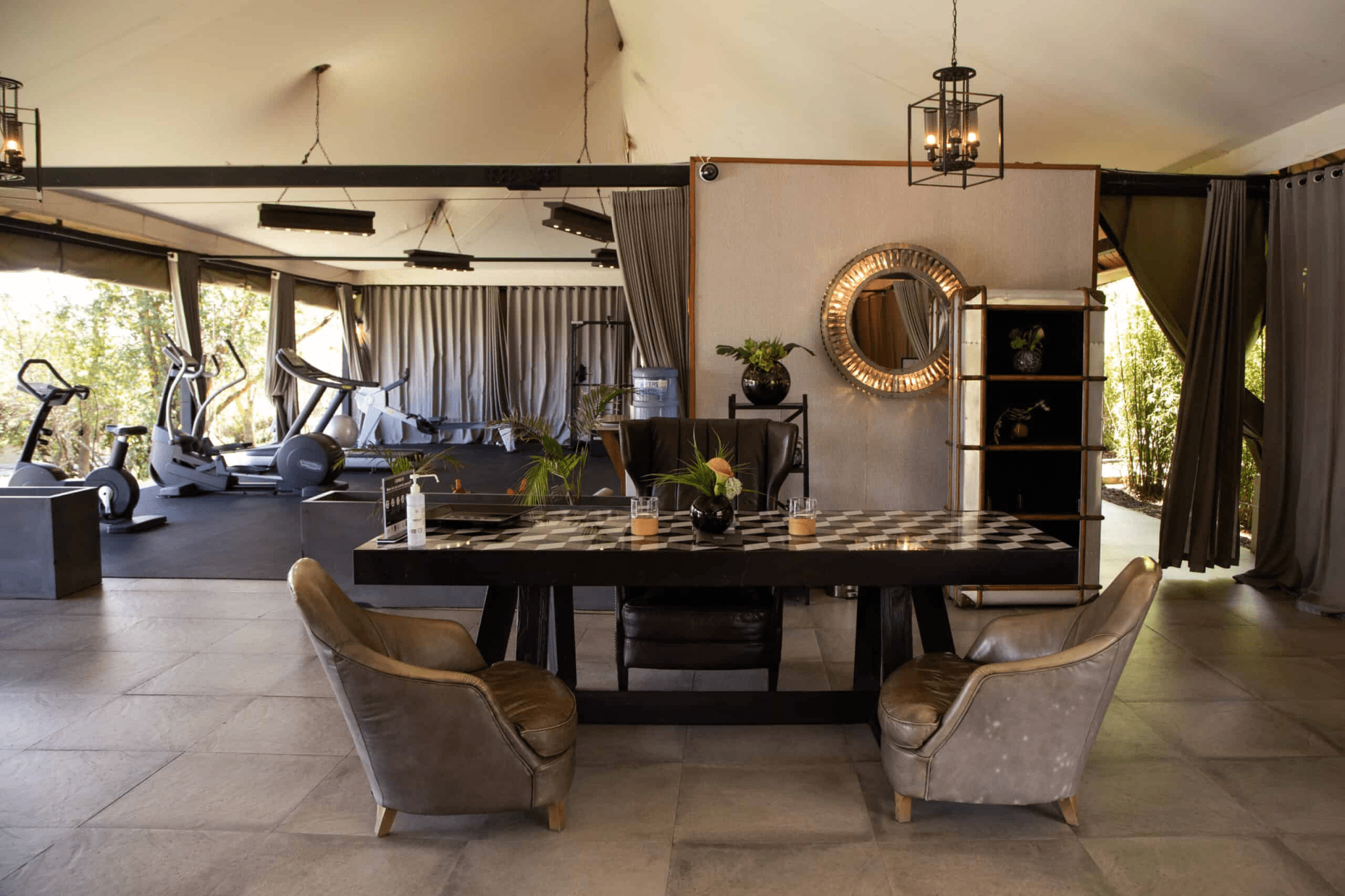
If guests prefer their game drive as the sun goes down they might like to visit the gym before breakfast, relax by the infinity pool with a cold drink just before lunch and have a soothing massage in the spa before heading out at 4 pm. While the day is busy, the pace itself is tranquil, the only disturbance (if you can call it that) being the calls from the nearby fauna.
The cliff offers conference facilities for groups of up to 20 delegates looking to break away and be inspired by the bush for their strategy sessions. This is the perfect way to bring the team together in a setting that will spark creativity and help them think out of the box. And it includes the added bonus of safari adventures!
Whatever your calling – international traveller, smart weekender, corporate strategist, or nature watcher – The Cliff, with its sensitive blend of space, privacy, style, service and scenery will make you feel on top of the world.
From supernatural stories to cultural legends, every UNESCO World Heritage Site has a tale to tell. As of September 2023, there are a total of 1,199 World Heritage Sites located across 168 countries, of which 933 are cultural, 227 are natural, and 39 are mixed properties.
The idea for the United Nations Educational, Scientific and Cultural Organization (UNESCO) World Heritage list grew out of a project to rescue the monuments of Nubia, which include Abu Simbel, the site of two temples carved into a sandstone cliff in the Nubian Valley in Egypt in the 13th century B.C. In the 1950s, local engineers planned to build a damalong a portion of the Nile River to control flooding and generate electricity.
However, the dam would have flooded the valley and submerged hundreds of ancient monuments, so the Egyptian and Sudanese governments turned to UNESCO for help. The resulting project, during which Abu Simbel was moved, in pieces, up to a higher altitude, helped spark the 1972 Convention Concerning the Protection of the World Cultural and Natural Heritage, which set up the heritage list.
The list seeks to encourage the identification, protection and preservation of cultural and natural heritage around the world considered to be of outstanding value to humanity. Here are the 7 Must-See UNESCO World Heritage Sites in Kenya to check off your bucket list.
The Mijikenda Kaya Forests consist of 10 separate forest sites spread over some 200 km along the coast containing the remains of numerous fortified villages, known as kayas, of the Mijikenda people. The kayas, created as of the 16th century but abandoned by the 1940s, are now regarded as the abodes of ancestors and are revered as sacred sites and, as such, are maintained as by councils of elders. The site is inscribed as bearing unique testimony to a cultural tradition and for its direct link to a living tradition.
Fort Jesus, Mombasa (2011)
Fort Jesus, undoubtedly Mombasa’s most popular tourist attraction, is a monumental piece of architecture built in the 16th century from 1593-1596 by the Portuguese. Sitting on the edge of a coral ridge overlooking the entrance to the old port of Mombasa, the Fortress which was built to protect the Portuguese trade route to India as well as their vested interests in East Africa is now turned Museum, declared a World Heritage site by UNESCO in 2011 and one of the finest examples of 16th century Portuguese military architecture.
Located northwest of the town of Migori in the Lake Victoria region, this dry-stone fortified settlement was probably built in the 16th century CE. The Ohinga, (a form of settlement or enclosure), appears to have served to ensure the security of communities and livestock, but also defined social units and relationships associated with systems based on lineage. Thimlich Ohinga is the largest and best preserved traditional enclosure in existence. It is an exceptional example of this tradition of massive dry stone construction, characteristic of the first pastoral communities of the Lake Victoria basin, which continued from the 16th century to the mid-20th century .
Thimlich Ohinga includes the four largest Ohingni, all of which have extensions. The main Ohinga is known as Kochieng, while the others are called Kakuku, Koketch and Koluoch. The dry stone surrounding walls are built in three phases, the interior and exterior sections are built separately, the middle section ensuring their cohesion. The stones were arranged according to an interlocking system which improved the stability of the whole without the aid of mortar or cement. The walls are built with carefully arranged stones of different sizes and without mortar, with a height varying between 1.5 m and 4.5 m and an average thickness of 1 m.
The property today remains a community meeting place where community rituals take place, particularly in times of crisis.
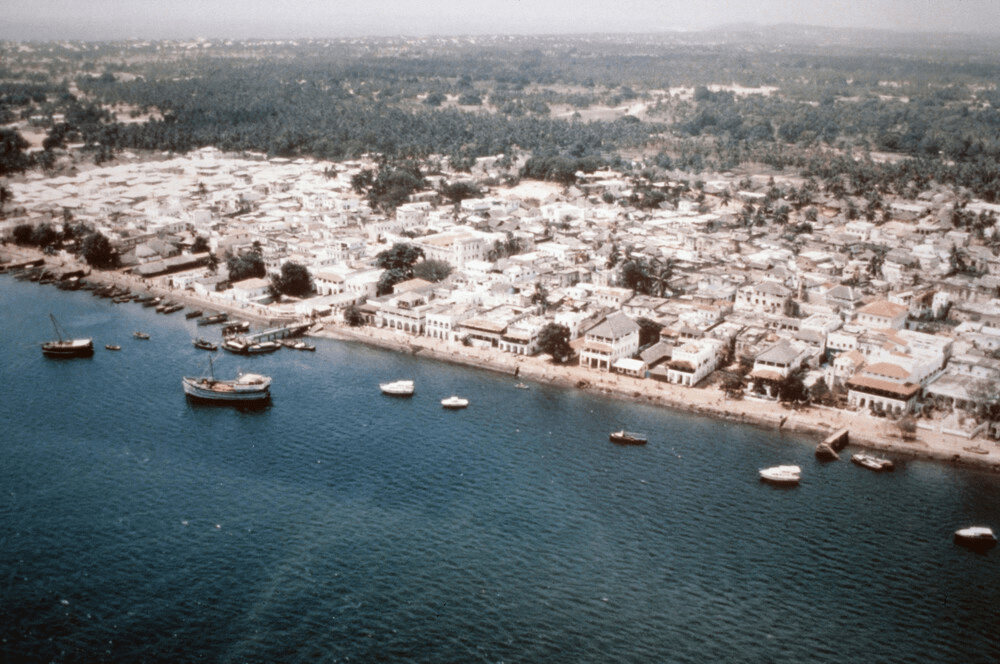
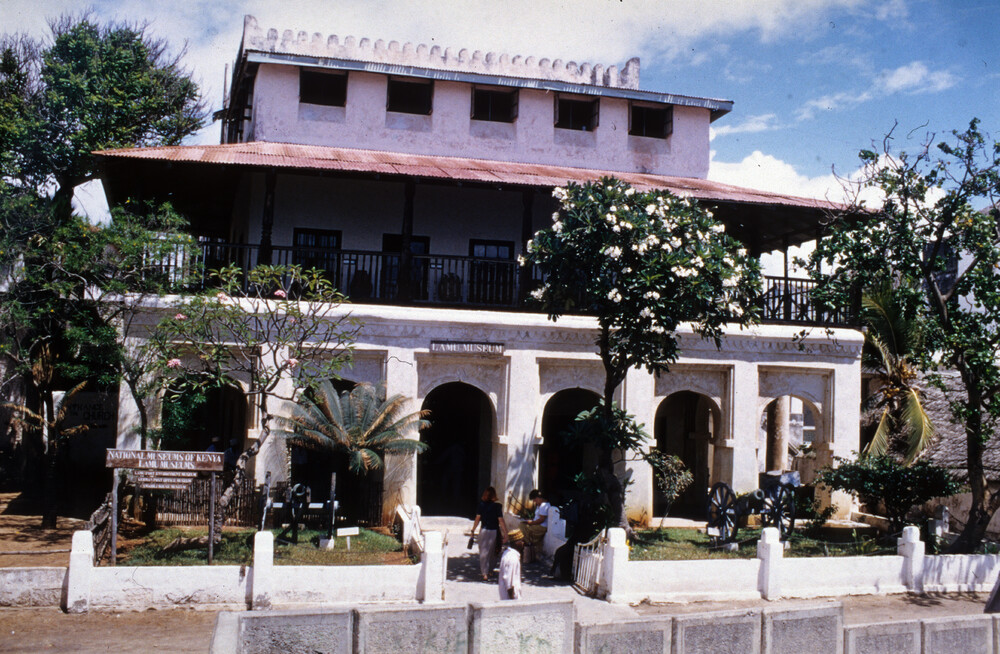
The old town of Lamu, which is the oldest and best preserved Swahili settlement in East Africa, retains its traditional functions. Built of coral rock and mangrove wood, the city is characterized by the simplicity of its structural forms, enriched by elements such as interior courtyards, verandas and carefully carved wooden doors. The site of major religious celebrations since the 19th century , Lamu has become an important center for the study of Islamic and Swahili cultures.
Three (3) World Heritage Sites
Mount Kenya National Park/Natural Forest (1997, 2013)
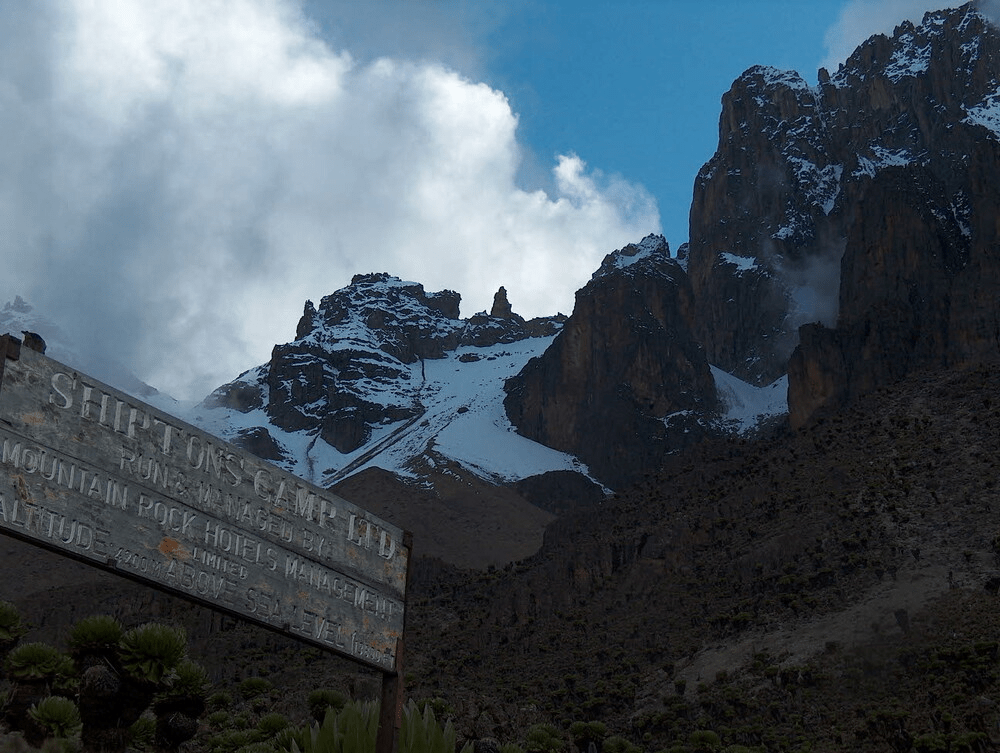
Culminating at 5,199 m, Mount Kenya is the second highest peak in Africa. It is an ancient extinct volcano which, during its period of activity (3.1-2.6 million years ago), would have reached 6,500 m. About a dozen glaciers remain on the mountain, all rapidly retreating, and there are four secondary peaks at the heads of U-shaped glacial valleys. With its rugged, glacier-capped peaks and forested mid-slopes, Mount Kenya is one of the most impressive landscapes in East Africa. The evolution and ecology of the Afro-alpine flora of Mount Kenya provides an exceptional example of ecological and biological processes. With the Lewa Wildlife Conservatory and the Ngare Ndare Forest Reserve, the site includes deep, low-slope valleys and arid habitats rich in biodiversity, located in an ecological zone of transition between a mountainous ecosystem and semi-arid savannah grasslands. The place is also on the traditional migration route of African elephant populations.
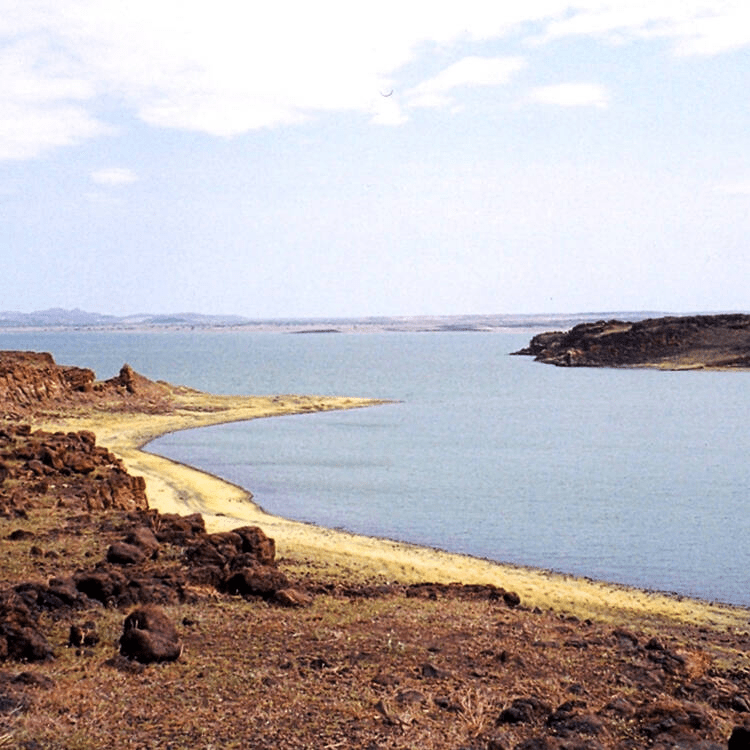
The saltiest of Africa’s great lakes, Turkana, is an exceptional laboratory for the study of plant and animal communities. The three national parks (Sibiloi National Park, the South Island and Central Island National Parks which cover a total area of 161,485 hectares) serve as stopovers for migratory waterbirds and are important breeding areas for the Nile crocodile, hippopotamus and various venomous snakes. The Koobi Fora fossil beds, where many remains of mammals, molluscs and other species are found, have contributed more to the understanding of paleoenvironments than any other site on this continent.
Kenya Lakes System in the Great Rift Valley (2011)
The Kenya Great Rift Valley Lakes System comprises three interconnected, shallow lakes (Lake Bogoria, Lake Nakuru and Lake Elementaita) which lie in the Rift Valley province of Kenya. Its surface area is 32,034 hectares. The property is home to 13 globally threatened bird species and the diversity of bird species is one of the highest in the world. It is the most important feeding site on the planet for lesser flamingos and an important nesting and feeding site for white pelicans. There are also good-sized populations of mammals, including black rhino, Rothschild’s giraffe, greater kudu, lion, cheetah and wild dog. The site lends itself particularly well to studies of particularly important ecological processes.
Who maintains the World Heritage List?
The list is maintained by the World Heritage Centre, staffed by UNESCO in Paris. The committee which makes decisions about adding sites to the World Heritage List, is made up of representatives from 21 of the State Parties elected on a rotating basis from among the current 195countries that have signed and ratified The World Heritage Convention. The World Heritage Committee meets once a year. It is responsible for the implementation of the World Heritage Convention, defines the use of the World Heritage Fund and allocates financial assistance upon requests from States Parties. It has the final say on whether a property is inscribed on the World Heritage List. It examines reports on the state of conservation of inscribed properties and asks States Parties to take action when properties are not being properly managed. It also decides on the inscription or deletion of properties on the List of World Heritage in Danger.
To be included on the World Heritage List, sites must be of outstanding universal value and meet at least one out of ten selection criteria.
These criteria are explained in the Operational Guidelines for the Implementation of the World Heritage Convention which, besides the text of the Convention, is the main working tool on World Heritage. The criteria are regularly revised by the Committee to reflect the evolution of the World Heritage concept itself.
Until the end of 2004, World Heritage sites were selected on the basis of six cultural and four natural criteria. With the adoption of the revised Operational Guidelines for the Implementation of the World Heritage Convention, only one set of ten criteria exists.
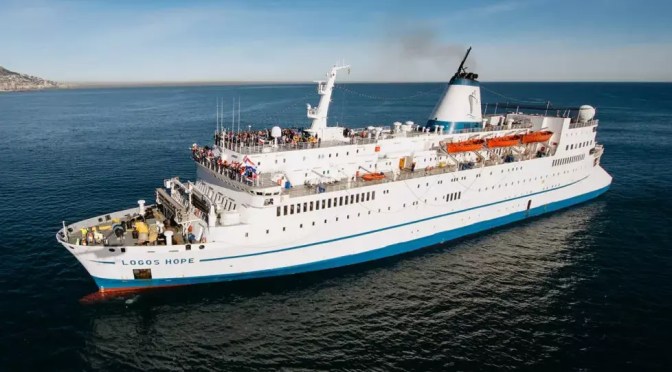
For over a month now, MV Logos Hope, operated by the German non-profit charitable organization Good Books for All (GBA), has had its gangways open to the public at the Mbaraki Wharf near Likoni Ferry in Mombasa.
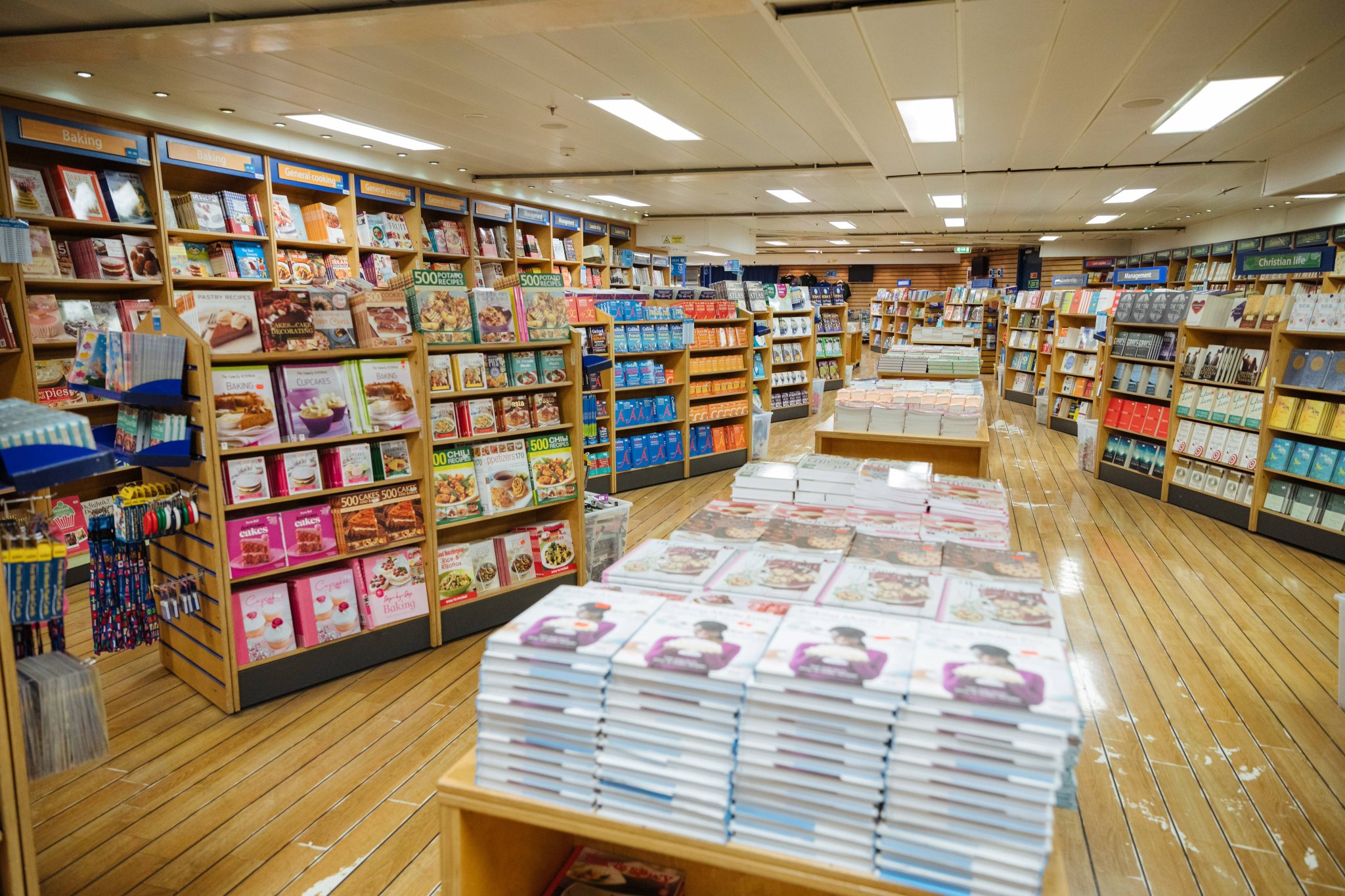
The world’s largest floating bookfair docked in Mombasa on August 222023. The mooring of this 132-meter-long iconic 9-deck ship (18 years after its sister ship MV Doulos visited Kenya in 2005) has been quite the bibliophile’s dream; serving enthusiasts and school children with an extensive collection of publications encompassing genres such as science, business, cookery, arts, medicine, sports, languages, faith, academic texts, atlases, dictionaries, children’s titles and so much more.
The fair which hosted an astounding 26,000+ visitors on the first week has over the course of the month concurrently run a number of activities on board; including a leadership summit, career fair and cultural fair showcasing different cultures from all over the world and cultural performances by the international crew.
People tour and Purchase books inside the MV Logos Hope Ship Library at the Port of Mombasa, Kenya on August 22 2023. PHOTO | KEVIN ODIT | NMG
Visitor experience deck. Image: Logos Hope
Visitor experience deck. Image: Logos Hope
People lining up to explore the Logos Hope bookfair at Mbaraki Wharf, Mombasa.
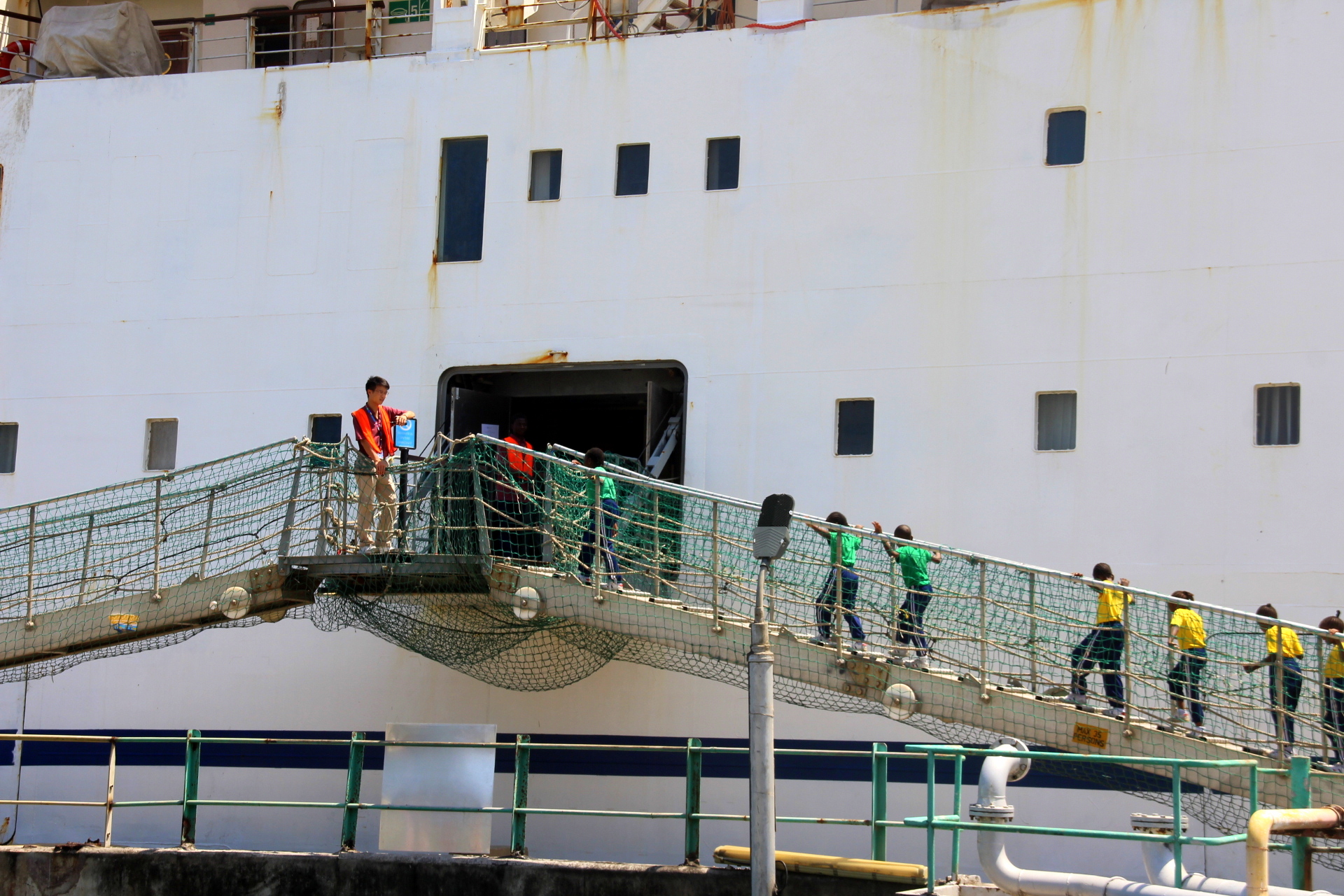
Students going on board Logos Hope.
Caracasbaai, Curaçao. Image: Logos Hope
Floating for Hope:
There is more to Logos Hope beside just the titles on board. The vessel is also on a mission to serve people in the port communities. In partnership with local communities, Logos Hope’s crew and staff spreads hope and love through providing humanitarian aid, medical care, education, and disaster relief. Whilst locals visit the book fair, the ship’s teams embark on assignment to hospitals, schools, orphanages or prisons, supply aid and provide community care.
With around 60 different nationalities represented on board, the Logos Hope community is regarded as a genuine expression of international goodwill and understanding. The crew and staff are all non-salaried volunteers, including many serving in their professional capacity, such as seafarers, engineers, electricians, nurses, teachers and cooks. Sponsorship from friends, family members and civic organizations enables crew members to serve on board.
It’s clear that the Logos Hope is more than a ship; it’s a symbol of unity, growth, and the transformative power of education and empathy.
Logos Hope will be anchored in Mbaraki Wharf until October 3 2023, before setting sail to Dar Es Salaam, Tanzania, where it will stay until October 23 2023. If you are yet to tour the expansive vessel, there is still a few days left to experience the bookfair and explore other amenities like the international café, visitors deck, welcome area among others at an entrance cost of fifty shillings only (KES50). Doors are open Tuesday – Sunday from 13:00 – 19:00.
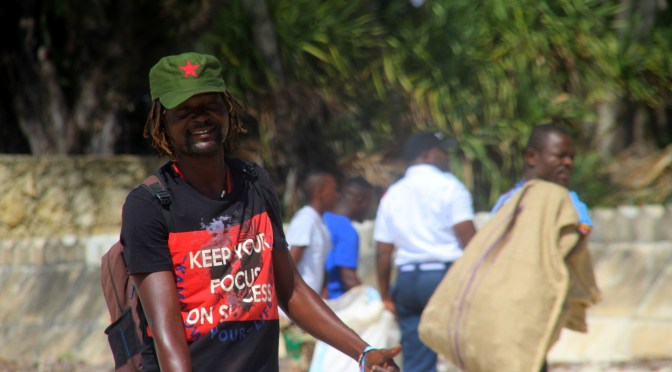
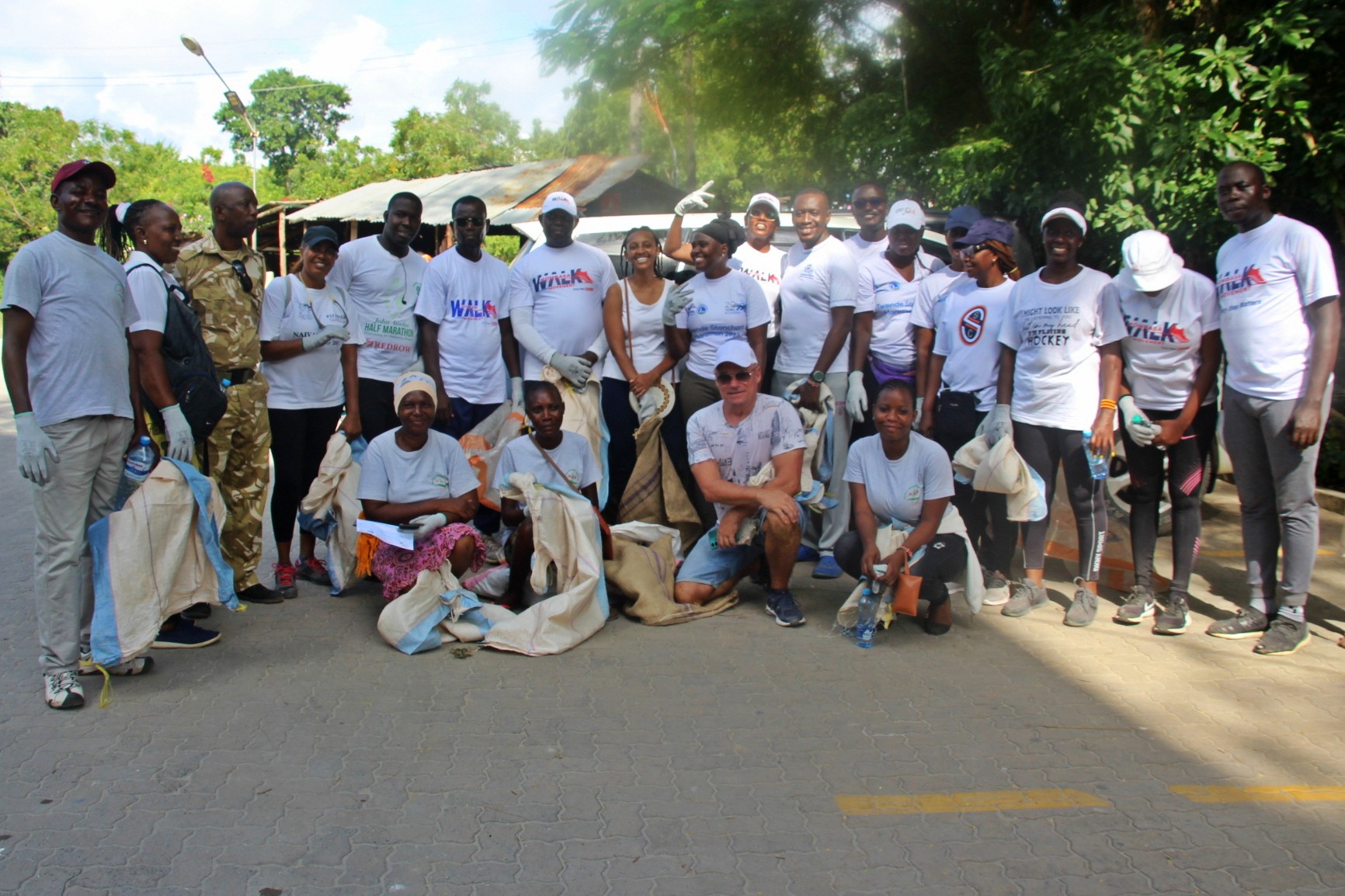
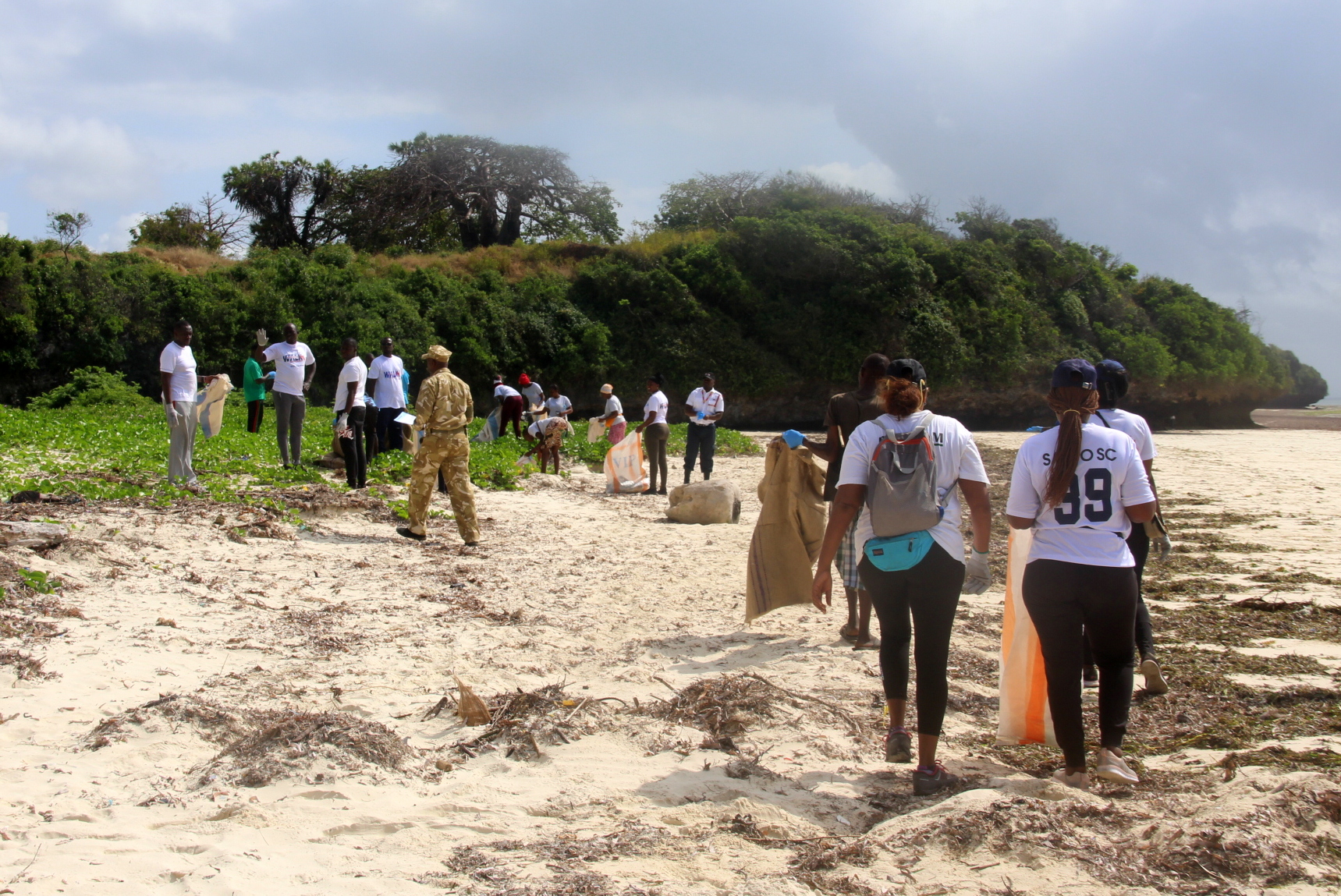
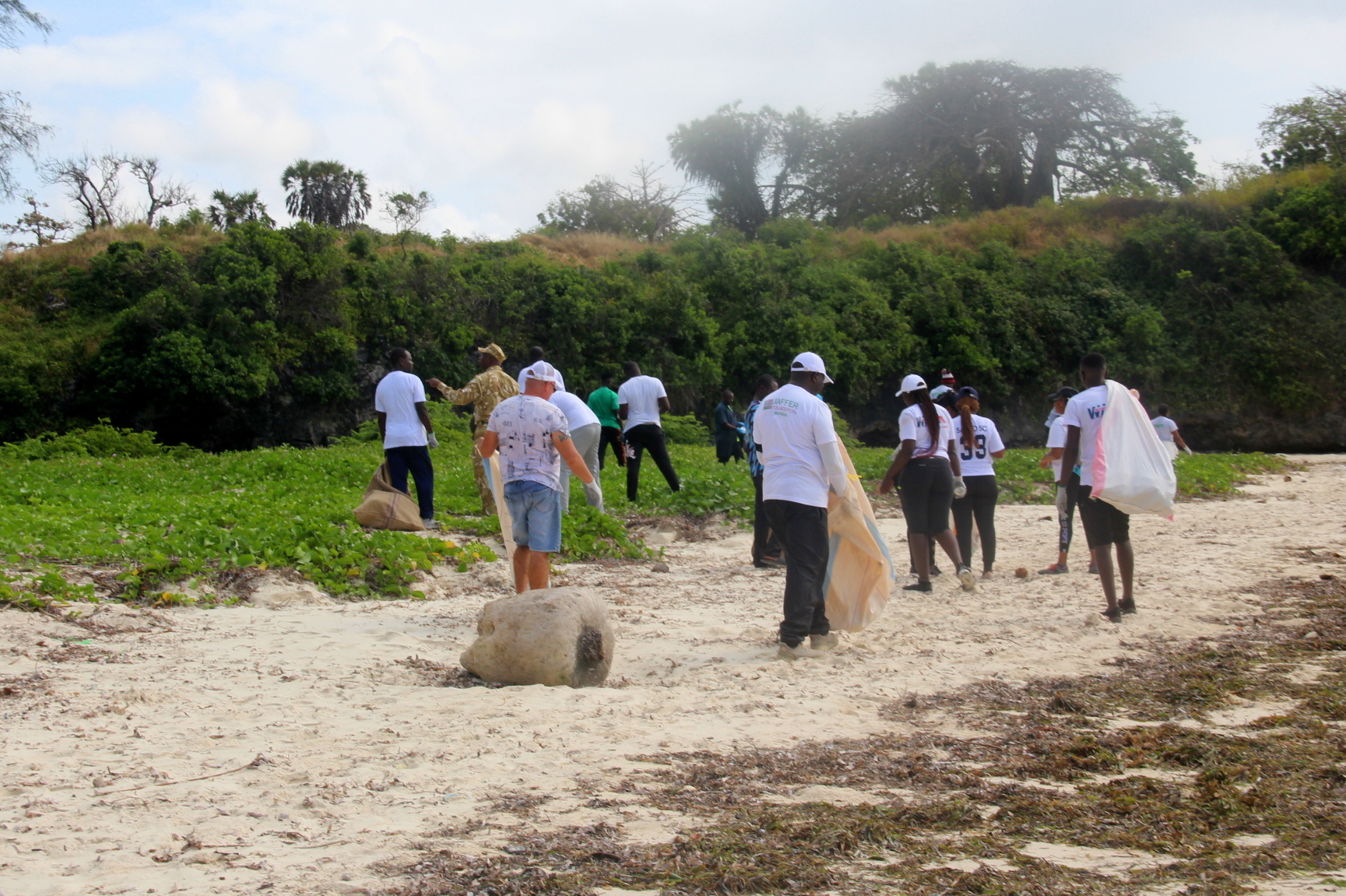
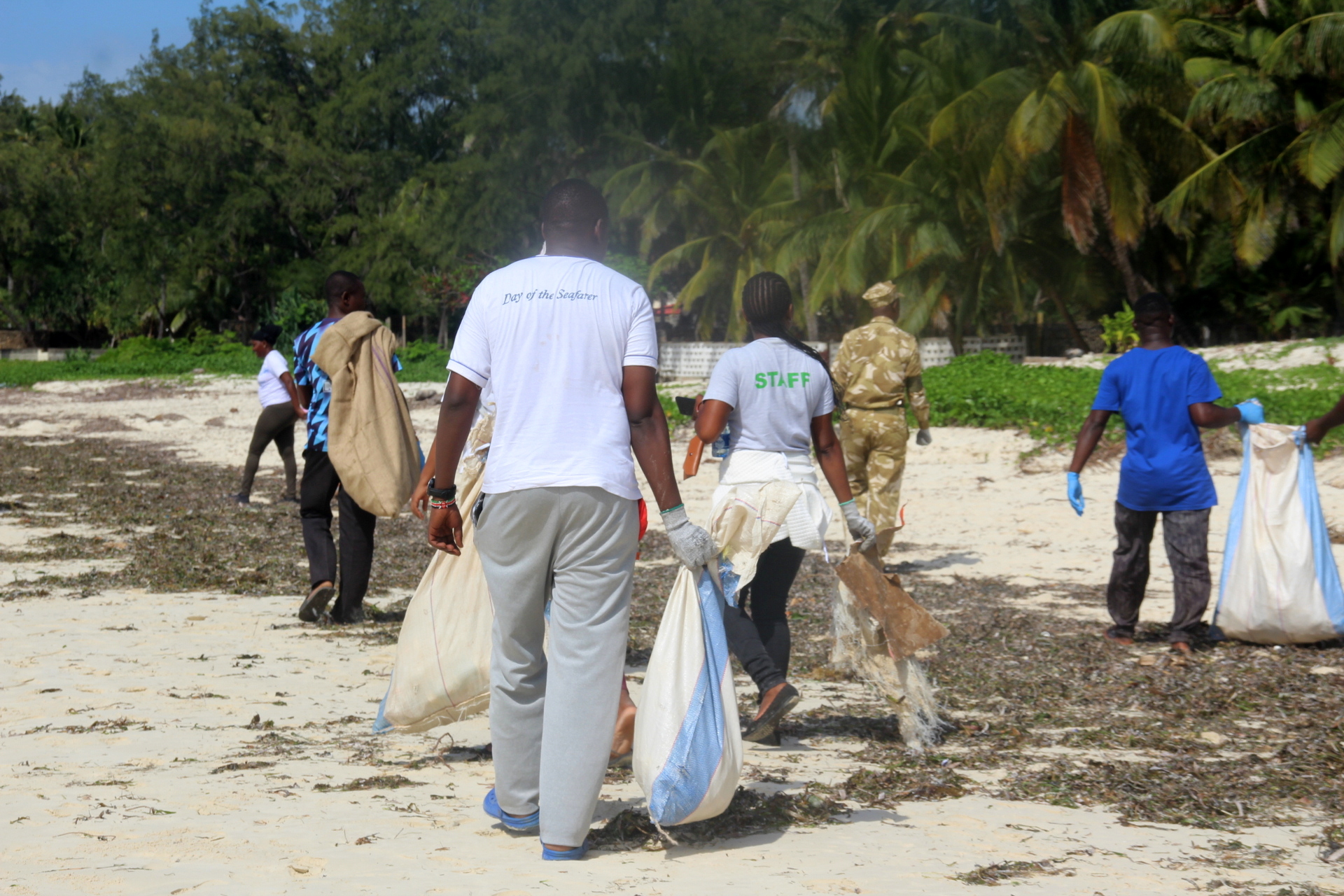
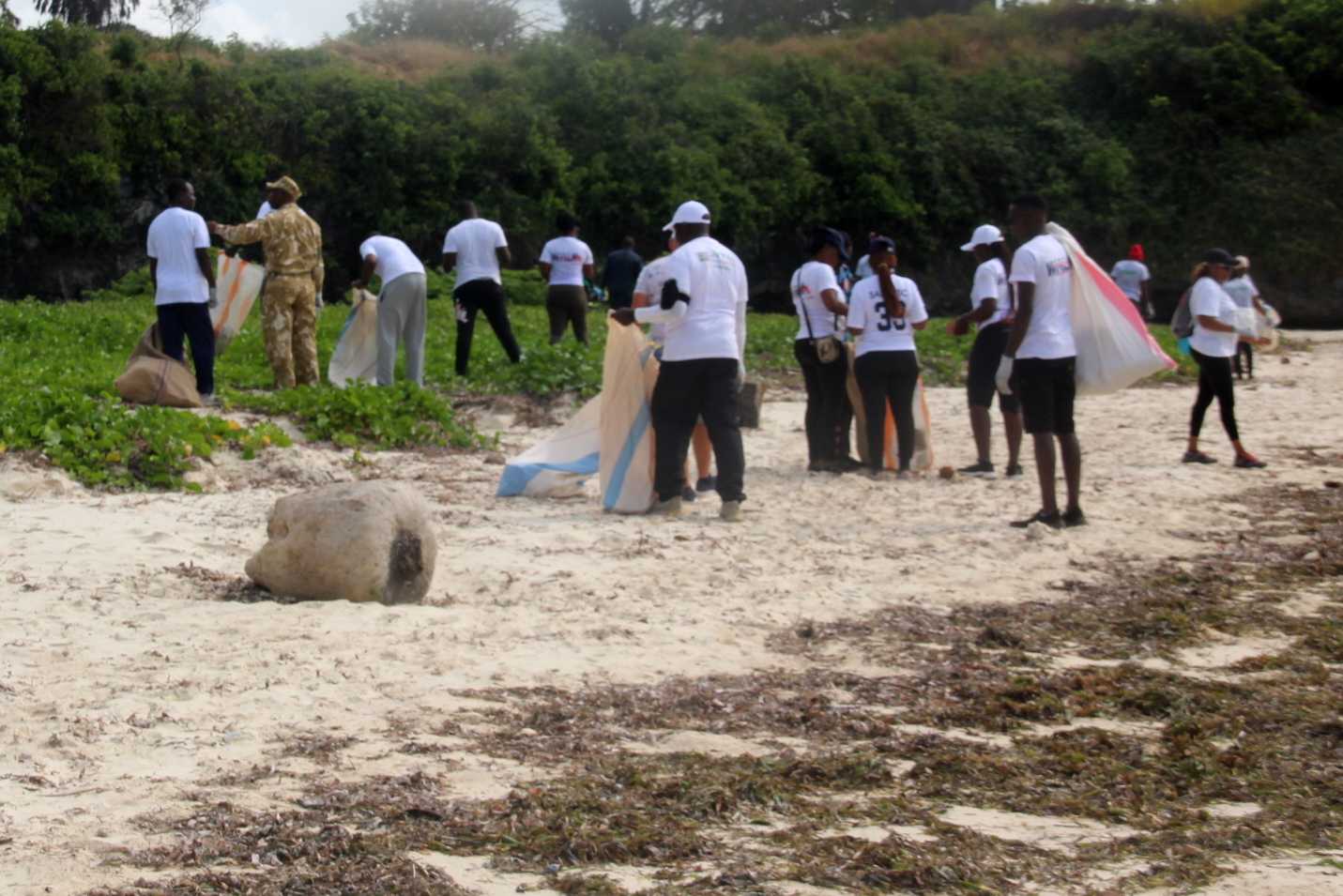
Like clockwork, every third week of September, environmental change enthusiasts in the global scene come together to collect and document trash littering along the coastline as an effort to raise awareness of the massive threat our oceans face because of plastic pollution as well as deliberate on ways to eliminate ocean trash in the future.
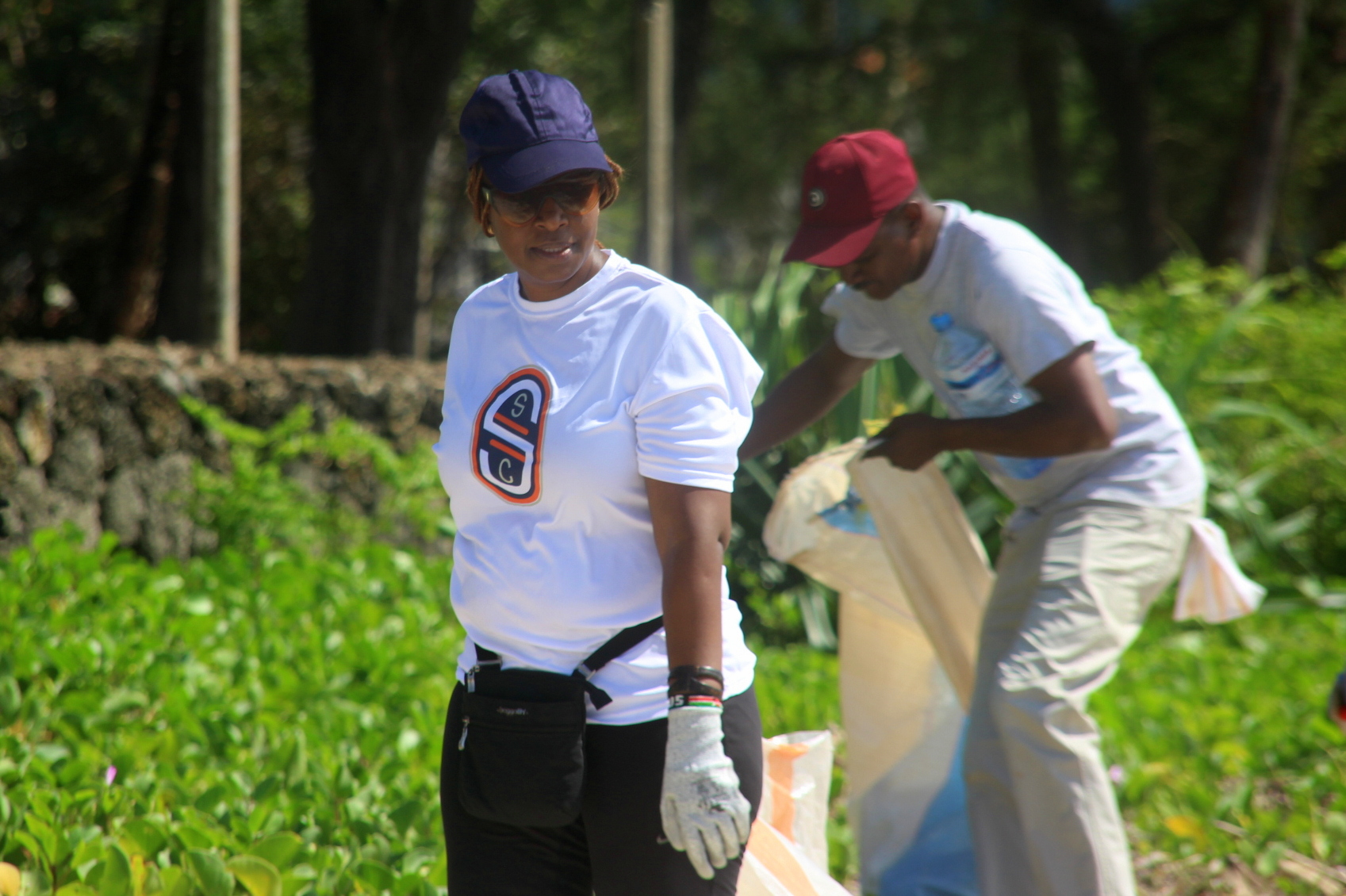
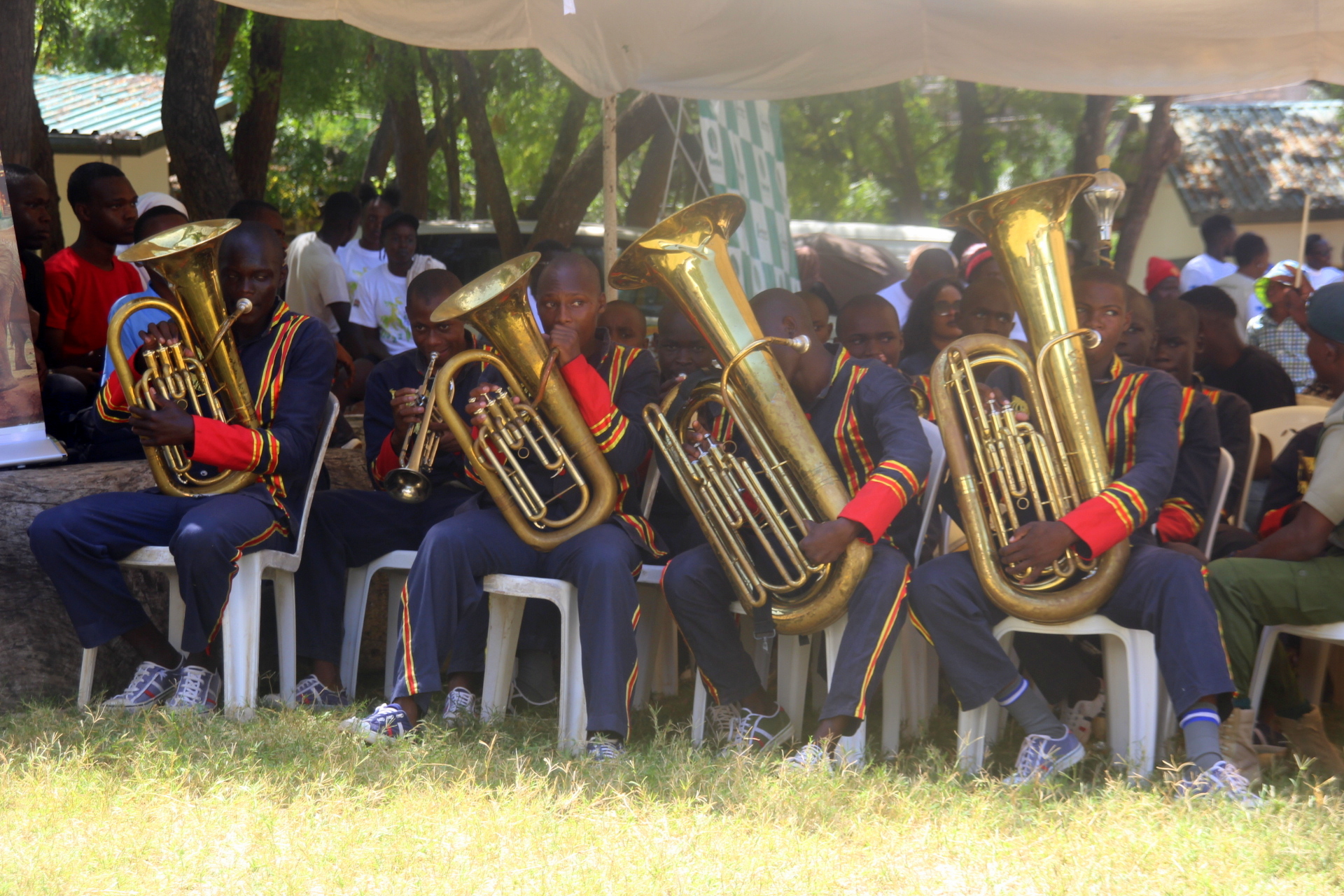
Check out a few snapshots of the cleanup exercise below:
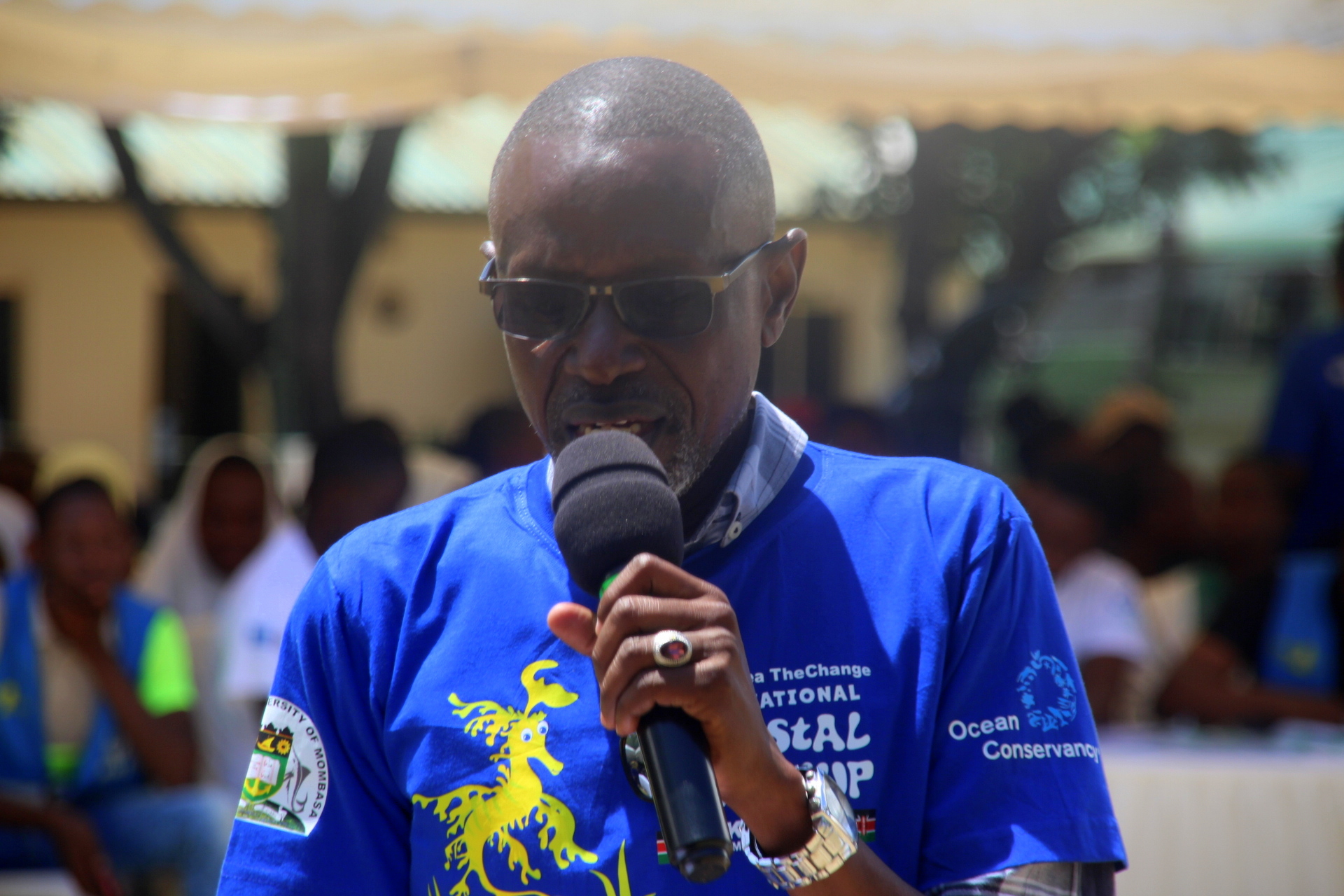
This initiative took root way back in 1986 driven by the passion and spirit of two committed individuals; Linda Maraniss and Kathy O’Hara. Themed “#SeatheChange” this year’s Mombasa Chapter cleanup was flagged off at Mombasa Marine Park; A successful event that featured volunteers from government institutions, the private sector, schools and the general public. The Kenyan chapter constitutes groups all along the Kenyan coastline; north & south. Some parties in the inland areas have in the recent years shown interest and also take part in the cleanup day.
Plastic pollution is a massive problem for our ocean, but even small actions can make a big difference. Every bottle, every straw, every piece of trash you clean up can lead to a cleaner, healthier ocean.
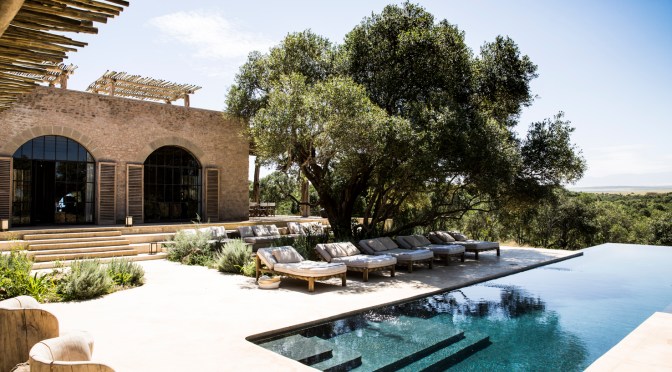
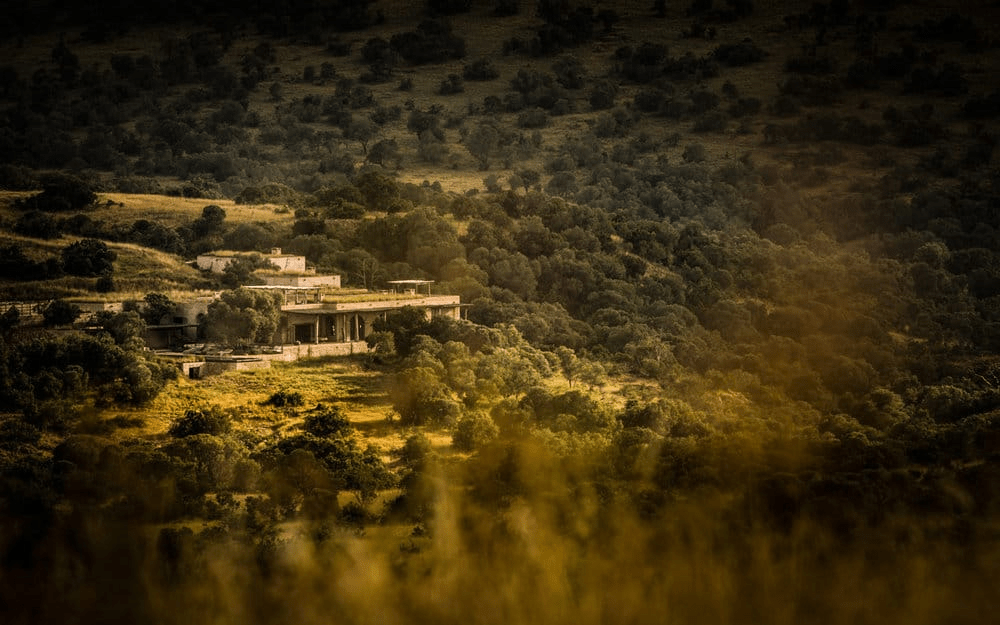
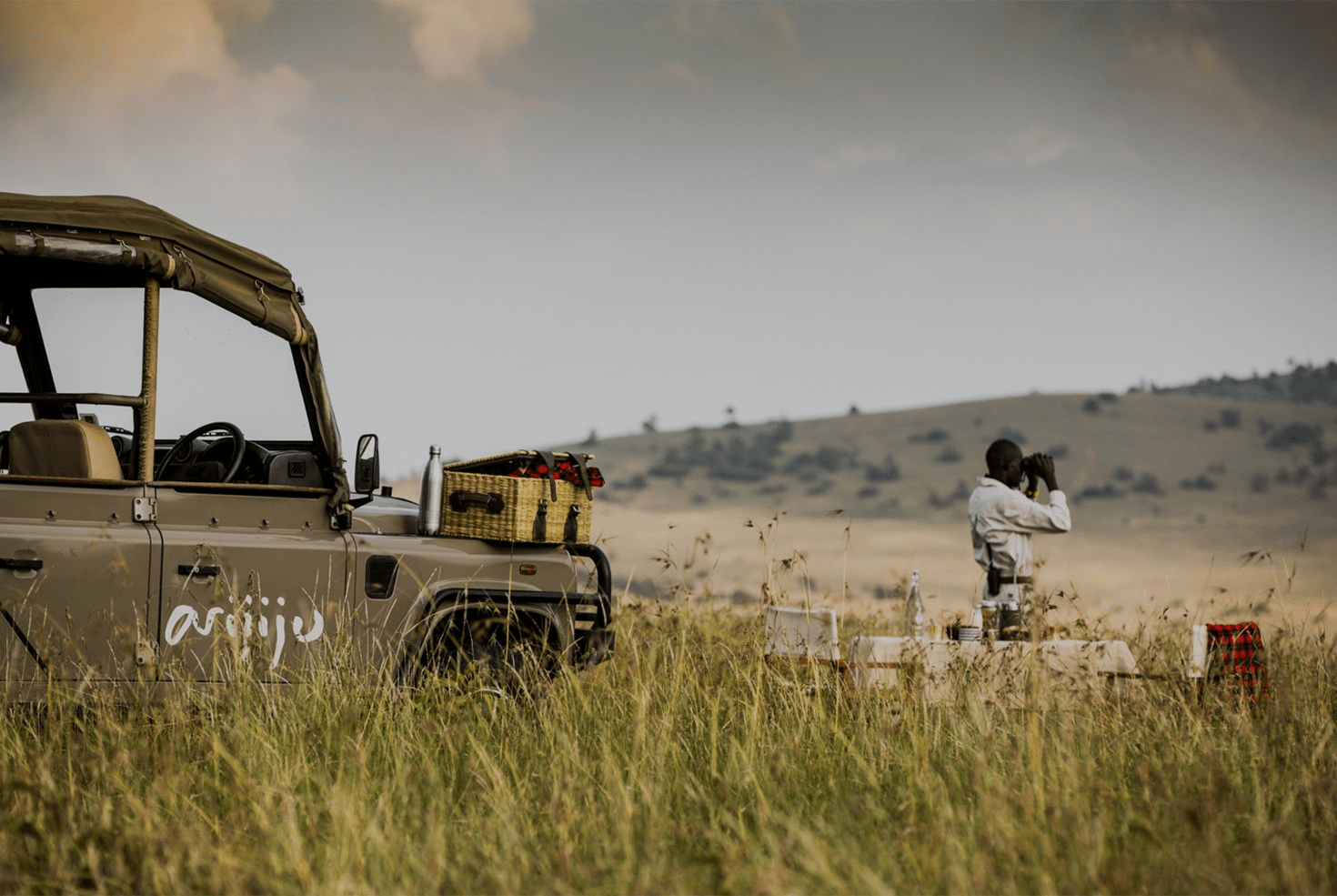
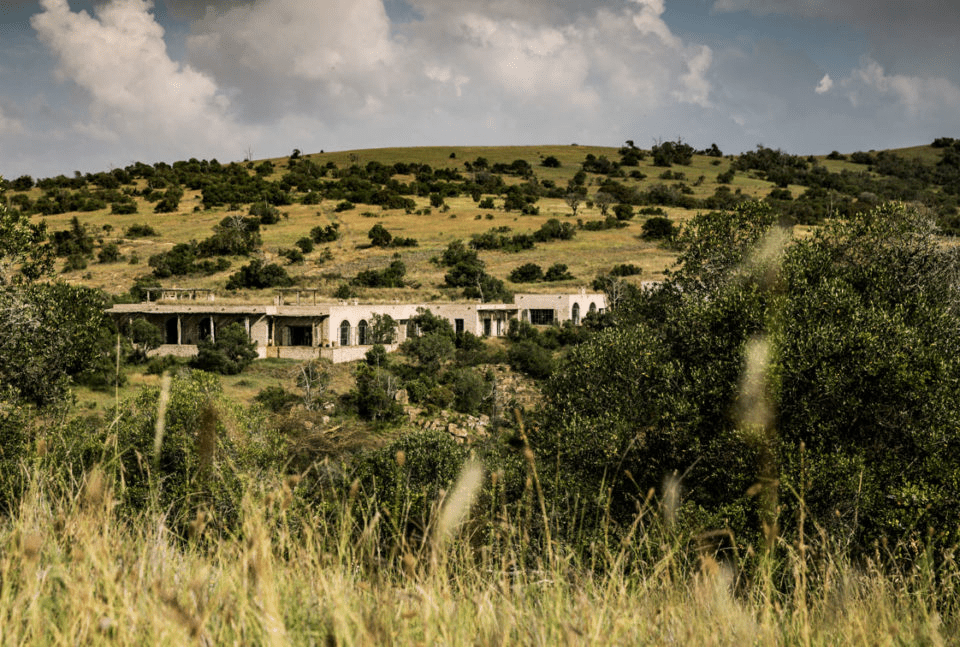
Arijiju is outstanding! Not your ordinary safari lodge, this luxurious exclusive-use retreat exhibits a perfect African-Western design style blend. The establishment is your quintessential chameleon, perfectly camouflaged into a forested hillside and well embedded into the Borana Conservancy landscape. The house, one of total five properties in the conservancy, four of which are exclusive-use, takes its name ‘Arijiju’ from the Maasai word for the hill on which it was built.
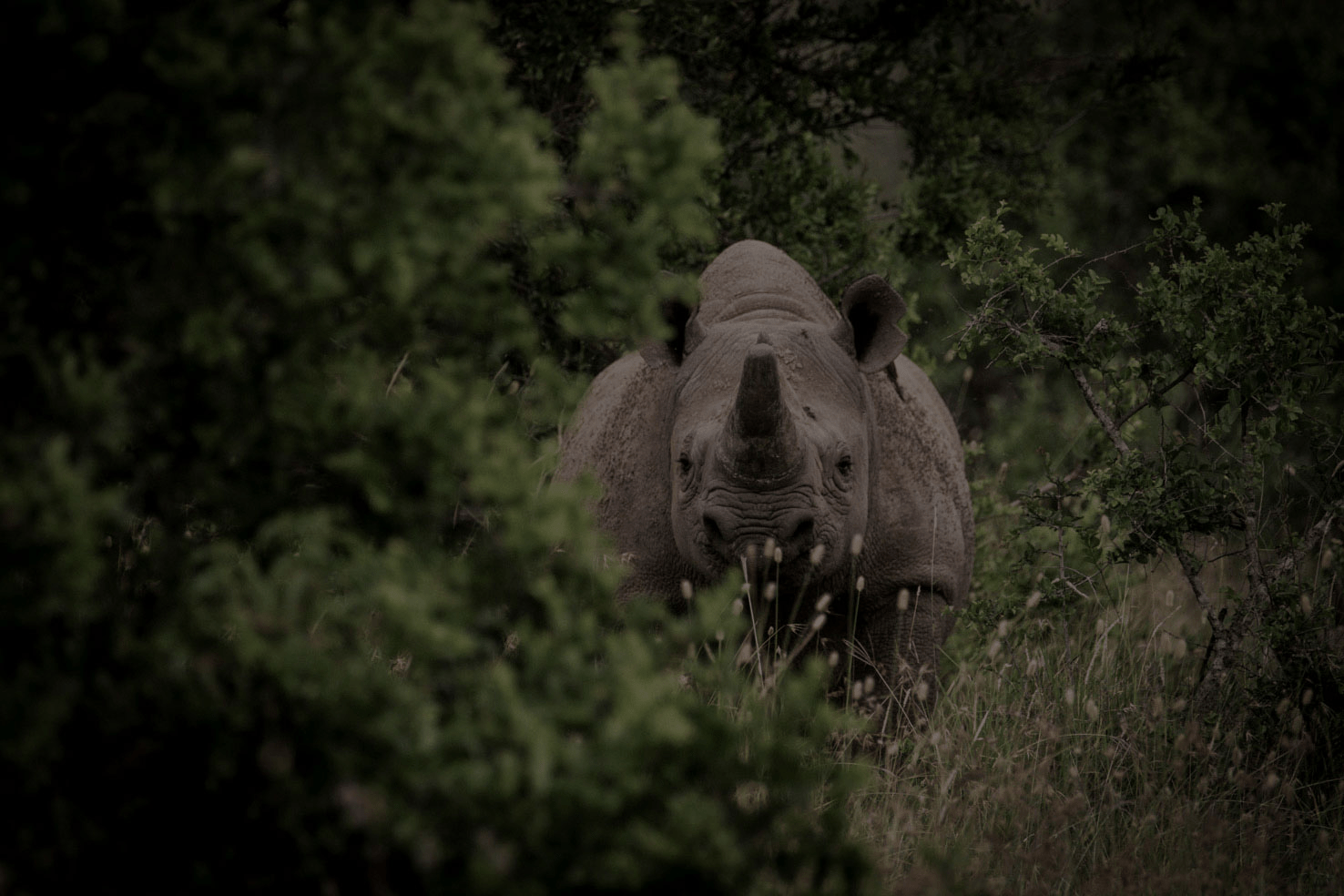
If conservation is a considerable factor whilst selecting where to stay in Kenya then it’s worth noting that you will be directly contributing to Rhino conservation when at Arijiju. Bordering Lewa Wildlife Conservancy, which has been committed to rhino conservation for over two decades, the preservation effect has since sipped into Borana Conservancy with a heavy investment that includes an anti-poaching unit gone into the protection of rhinos under constant threat from poaching. Currently the conservancy holds 22 black rhinos, translocated from Lake Nakuru National Park and neighbouring Lewa – which had reached its own carrying capacity of 70.
Part of the investment involves an understanding that properties within the conservancy chip into the conservation efforts with some profits being fed back into the land’s projects. Lions, enormous herds of elephants and giraffes are some of the amazing plains game you will spot whilst at Arijiju alongside local maasai herding their livestock as Borana Conservancy doubles up as a working cattle ranch and a wildlife sanctuary.
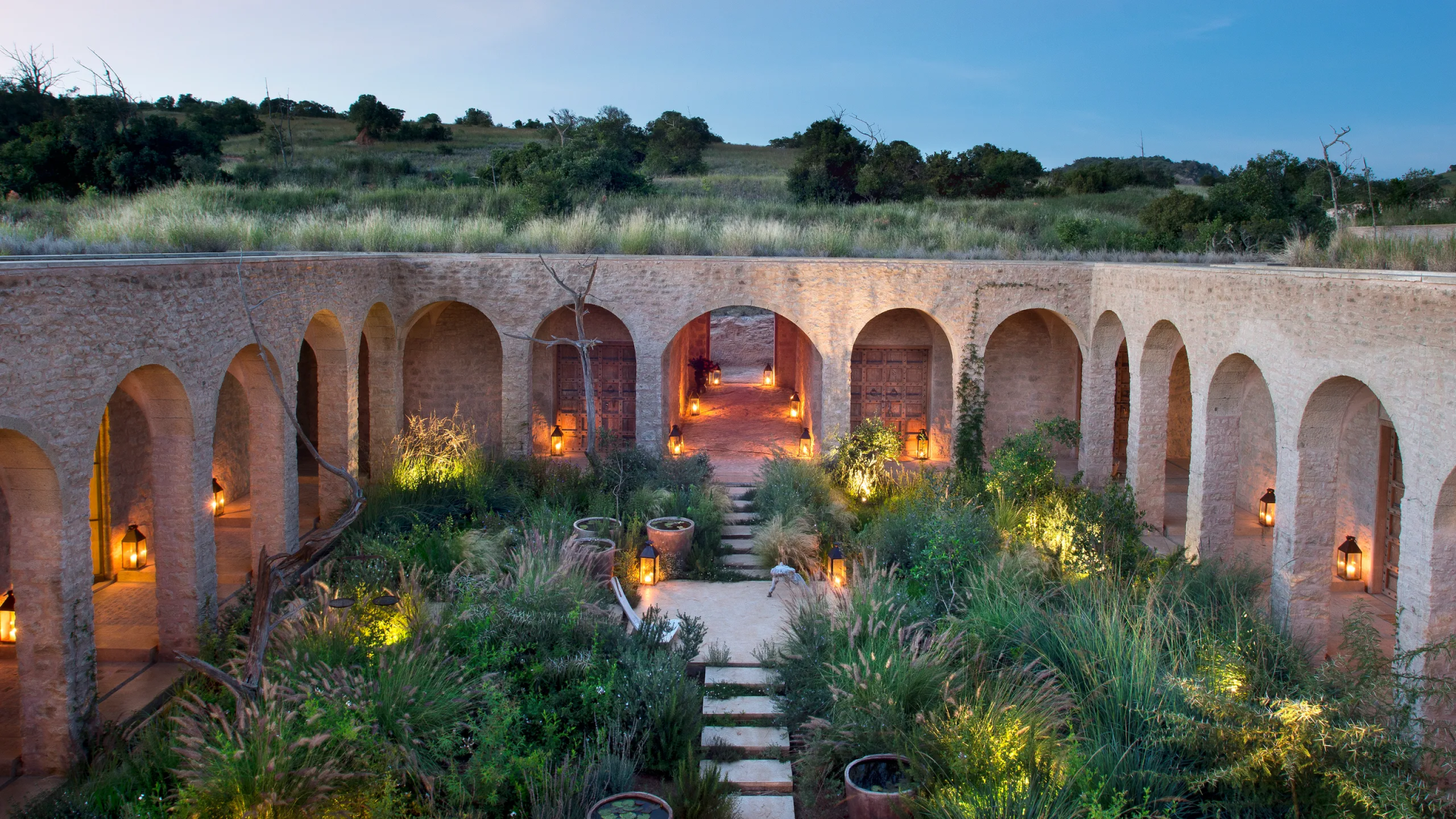
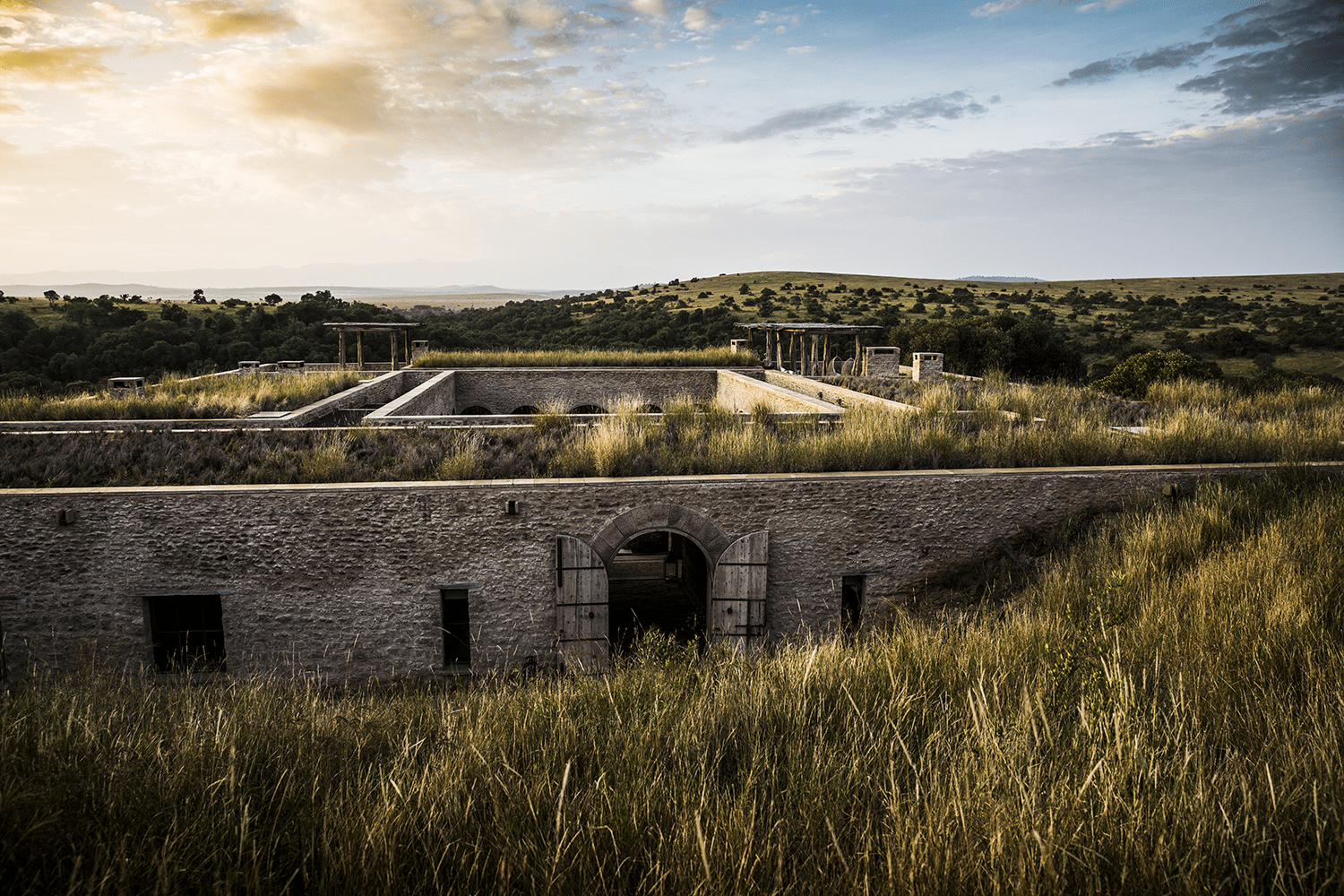
Social responsibility aside, Arijiju the establishment will blow your mind! Literally etched into the rock bed, it is truly a remarkable work of art. One that painstakingly took 10 or so years to complete. with its wild grass roofs and considerate structure, it disappears into the landscape akin to a leopard slumped over his chosen branch in a nearby tree.
Working with two architects – Nick Plewman from Johannesburg and Alex Michaelis from London ; the owner was keen to create something unobtrusive and embedded in the landscape. Inspirations for this establishment include a 12th century French Abbey; Le Thoronet Abbey, a Cistercian monastery built in Provence in the 12th century, distinctive for its lack of embellishment. Arijiju’s structural reclusivity also makes references to the buried, rock-hewn churches of Lalibela in Ethiopia topped with turf, creating something more nuanced. All the quarried Meru stone was hand-chiselled by local masons – that feels ancient and wise, honest and elemental, but also very contemporary.
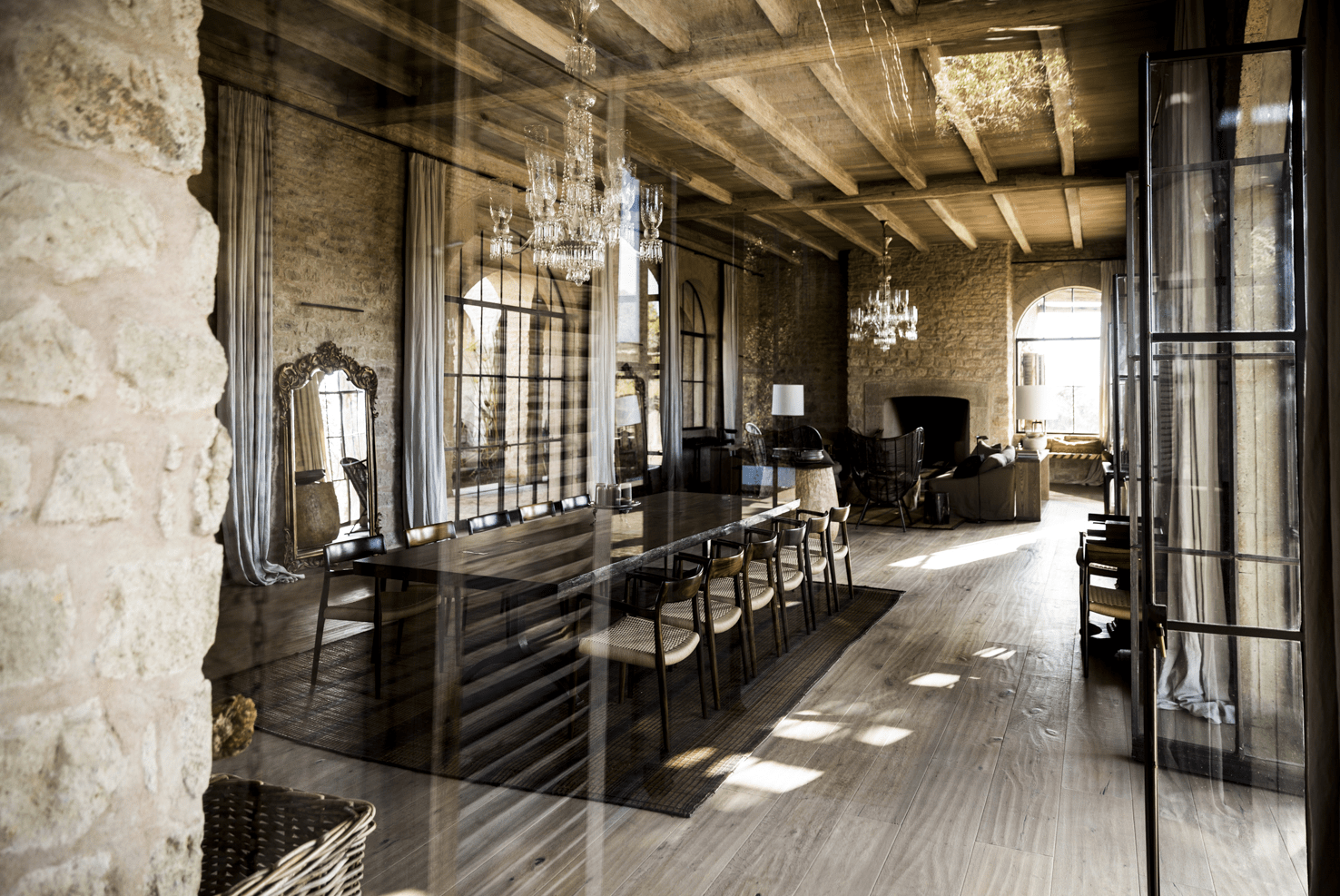
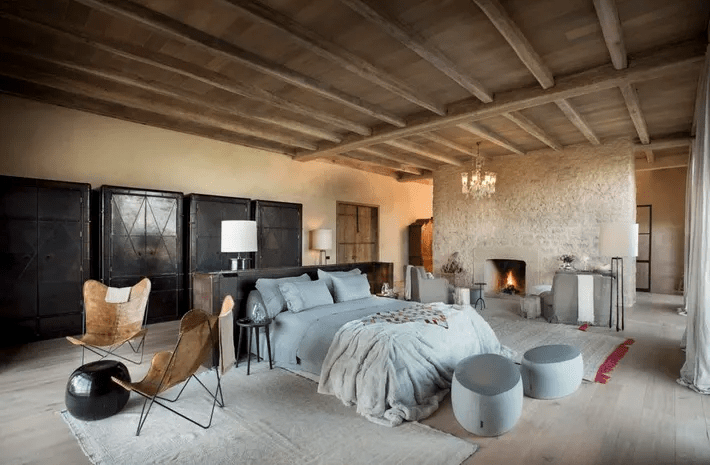
Within polished concrete and exposed stone walls, stunning in their calming simplicity, oversized chandeliers, sumptuous furniture and opulent trimmings – such as the splendid copper bath tubs and enormous French mirrors – to do the talking. No, it doesn’t quite feel like your quintessential safari lodge, but that’s precisely what makes Arijiju stand out among its neighbors; a lesson in unadulterated luxury.
Service at Arijiju Retreat is impeccable: attentive, stylish, friendly, highly professional. The kitchen takes a farm-to-table approach and caters simultaneously to the health-conscious and the gourmand; the Ottolenghi-style cuisine combines the modern, the classic and the local. The dining area features two large fireplaces and floor-to-ceiling arched windows, and meals can also be taken on any of the many decks and patios or even further afield in the conservancy.
Accommodation comprises of five suites: ten guests is the upper-limit, with smaller groups also catered for. Three of the suites are in the house itself, arranged around the central courtyard. Two more are in ‘cottage’ suites connected to the main villa. Throughout there are king-size beds (some four-poster), stone fireplaces, large lounge areas, luxurious ensuite facilities (with freestanding baths as well as showers) and expansive views. Furnishings are stylish and unique, as in the main areas, blending the traditional Kenyan and the contemporary European.
Activities at Arijiju Retreat are plentiful and varied. There are guided wildlife drives and walks available, as well as mountain biking, helicopter safari, quad-bike trips and access to the Ngare Ndare Forest, as well as much more.
This is one of the most luxurious private homes I’ve ever been to. Everything is included- laundry, food, drinks, game drives, massages, yoga, games, sports, spa, etc. And most darling were the elephants drinking water from the swimming pool. If there is a heaven on earth, this is it.
For many travelers, a trip to any one of the East African countries (Kenya, Uganda, Tanzania, Rwanda etc.) is a much anticipated item waiting to be struck off the bucket list. A long awaited safari probably inspired by “out of Africa” or “Lion King” and other more safari movies that you can list. Whilst Hollywood may have inspired your first trip to Africa, we sure hope that these classics don’t also influence your deck up. Safari fashion has long evolved from pith helmets and heavy-duty vintage khaki gear of the explorer days.
The East African region is vast and offers an environmental diversity that leaves you unsure of what to carry along your trip. Our weather’s unpredictability for instance, warrants that you are well prepped for whatever; rain or shine. It bewilders us too; it could be sunny one minute and you’d be totally drenched in the next.
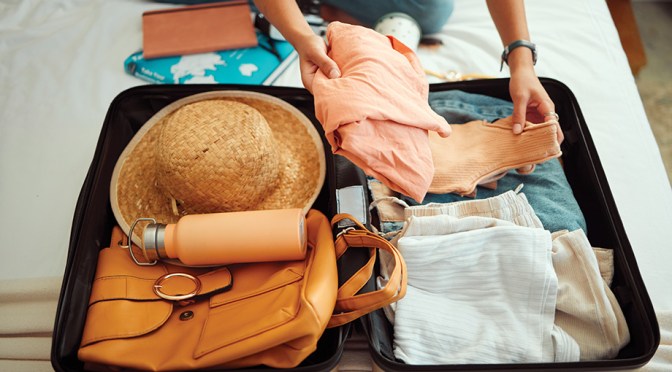
Given your itinerary, packing for this trip requires that you be very practical. Consider that aside from traversing off-the-beaten safari tracks; you are also bound to explore extremely contrasting surroundings such as beaches, hiking trails, villages, city towns and so on. Visiting all these areas means that majority of your time will be spent outdoors; being mobile in transportation that most likely offers very limited luggage space. Weight limits and other baggage rules will also be a determinant of what luggage to carry. The amount of luggage handling that will take place makes a soft duffel bag the best bet for your trip. This bag is not only lightweight, making it easy to carry across all your terrains but it also fits within most airline capacity requirements.
What then therefore should you stuff up in this duffel bag? If your trip highlights quite a number of activities, you will instinctively want to pack a great deal clothing. The trick is to pack smart – do not over-pack. Whilst you may want to carry along all your favorite pieces, you do not want to be tied down to excessive luggage within the entire duration of your itinerary. Layering is a practical solution. Select comfortable fashion choices that can be won interchangeably and that are favorable for the destinations that you will visit; light and breathable pieces are ideal. Also keep in mind the people’s customs and values so as to ensure that you are respectful in the way of dress.
CLOTHING
Lightweight clothing that can be layered
Long-sleeved shirts
Sweaters or fleece jacket
T-shirts and tank tops (be respectful of the people’s culture)
Pants and/or shorts
Belt
Socks
Comfortable walking shoes
Rain jacket, windbreaker or umbrella
Pajamas/sleepwear
Underwear
Sunglasses and glasses case
Dresses and/or skirts
Jewelry
Hat or sun visor
Scarf or bandana
Swimsuit
TOILETRY BAG
Toothbrush, toothpaste, floss, mouthwash
Hair brush or comb, hair ties, barrettes/bobby pins
Deodorant
Shampoo and conditioner
Sunscreen and face lotion with SPF
Makeup
Face wash and/or makeup remover wipes and Q-tips
Night time moisturizer/lotion
Lip balm with SPF and lipstick or lip gloss
Personal hygiene items
Feminine hygiene products
Extra contacts, solution, and contact case
Glasses and prescription sunglasses
Prescription medication with the label/script so that you can refill if needed
TOILETRY BAG EXTRAS
Perfume
Personal mini mirror
Hair products like hairspray and hair gel
Shaving kit and extra razors
Sewing kit/clothing care kit, stain remover
Facial tissues and/or toilet paper
Travel Towel
Nail clippers and tweezers
Include an outfit or two and a few essential toiletries in your carry-on bag just in case you lose your luggage. Airlines require that liquids (toothpaste, shampoo and sunscreen), gels, aerosols and creams be 3.4 ounces (100ml) or less per container, and they must be stored in a quart-sized, clear resealable plastic bag for screening at the security check at the airports.
Keep your tech gear in a way that isn’t easily noticeable. You might cross parts of East Africa that are ruled out as unsafe; be on the lookout for pick pockets.
TECH GEAR
Mobile device and charger
Laptop, iPad, or E-reader and charger(s)
Headphones
Camera and Go-Pro/video camera, memory card, and chargers
Electrical converters and adapters
Electronics organizer
COMFORT + ENTERTAINMENT
Travel pillow, blanket, eye mask, and ear plugs
Travel journal and pen (if you are into journaling)
Books and magazines
Deck of cards and travel games
Lip balm and lotion
Water bottle
Guide books, travel guides, travel apps, maps, language guides, etc.
You will also need a document organizer where you can store all your important travel documents. It would suck to be stalled at the airport because you forgot essential paperwork.
TRAVEL PAPERWORK
Passport/visa(s)
Personal ID/Student ID card
Frequent flyer card(s) and other loyalty program card numbers
Cash and credit card(s) (call your credit card companies before you travel to inform them of your travel, otherwise they might turn them off to prevent perceived fraud)
Health insurance cards/document(s)
Travel insurance information
Reservations and itineraries (print them and save them electronically for easy access)
Copies of all these things in case you lose your wallet
Every traveler is different; so your packing requirements might be different from the ones listed above. Just consider every activity you are going to experience and pack appropriately. Key pointers to remember: Do not overpack, be open minded about the people and places you visit, fully immerse yourself in the experience and enjoy yourself.
“Africa changes you forever, like nowhere on earth. Once you have been there, you will never be the same. But how do you begin to describe its magic to someone who has never felt it? How can you explain the fascination of this vast, dusty continent, whose oldest roads are elephant paths? Could it be because Africa is the place of all our beginnings, the cradle of mankind, where our species first stood upright on the savannahs of long ago?”
* Brian Jackman (British journalist and author, best known for his interest in wildlife and wild places – especially Africa)
Imagine travelling miles into the vibe that is Kenya and going back to your home country without having sampled any of our go-to street food; bummer, right?
If there’s anything that you can write home about, it is definitely our street food culture. A host to varied tastes, the Kenyan street food culture tells a story. A story of our towns, their occupants’ history and diverse cultures represented therein. The tasty bites you will sample are also adapted to suit the trends and needs of the consumers. In Nairobi for instance, residents are always in search of affordable alternatives in order to survive the demanding urban lifestyle. In this case, street grub is what is sustaining the masses in the city.
What bites should you look forward to munching on whilst in Nairobi? Glad you asked…
1. Mutura (Kenyan Sausage)
If we were to run a poll on what Nairobians would deem the go to street food in the city, our best bet would be Mutura. This popular “evening” snack enjoyed by the roadside after work hours over the grill (some may argue that it’s secret ingredient is darkness; The darkness and smoke from the grill serves for a wholesome experience) originates from the Kikuyu tribe.
Mutura vendor at his station serving customers
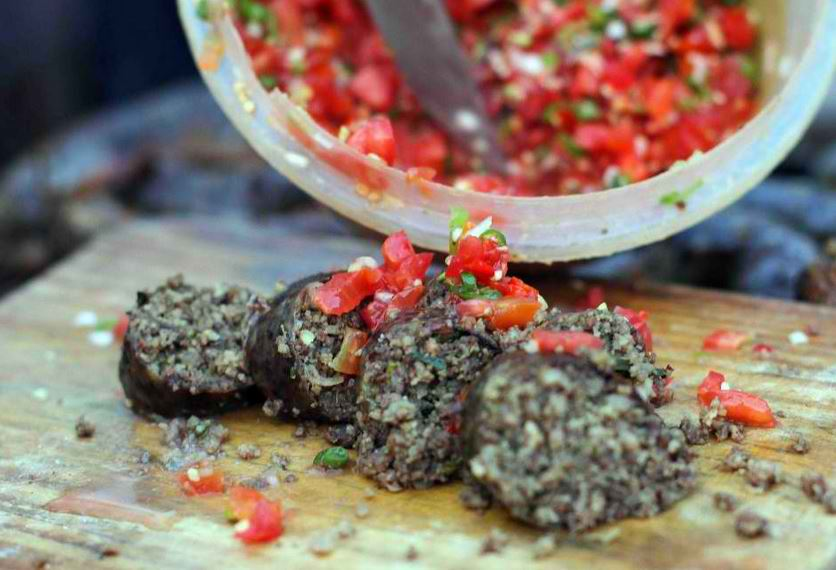
Mutura (Kenyan Sausage) is made from the large and small intestines of cows, goats or sheep. These intestines are thoroughly cleaned and then stuffed with blood, boiled assorted organ meats and some vegetables for more flavor. Some vendors may include ground beef. To spice up the Mutura goodness, sample it with a serving of “firi firi” kachumbari (a salad made up of diced tomatoes, onions, coriander, cayenne pepper (optional) and sprinkled lemon).
Estimated cost – As low as KES 20.00 or $0.20
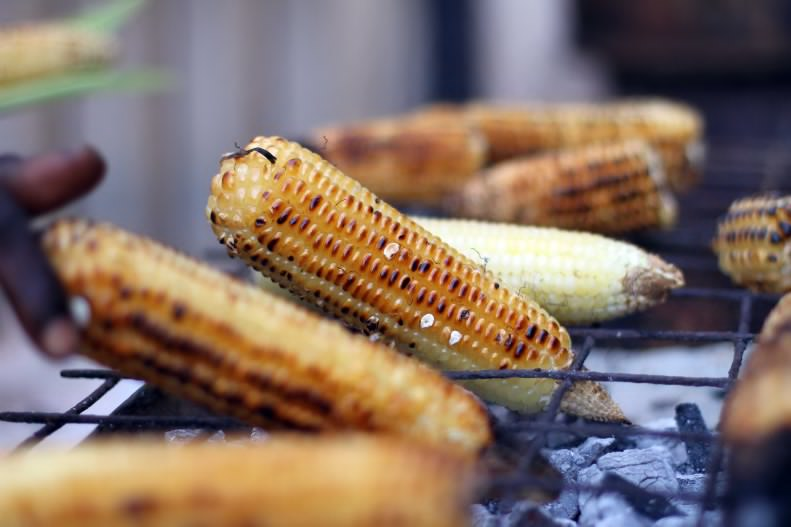
2. Mahindi Choma (Roasted maize)
Maize, or corn if you like, is very common in the streets of Nairobi. This is green maize that is roasted (popularly goes by mahindi choma) or boiled on the cob.
The boiled variety is best enjoyed with a sprinkle of salt while the grilled one is spiced up with lemon and ground pepper.
There is no particular joint for roasted maize vendors, you are likely to spot them by the roadside from the late afternoon hours in downtown Nairobi and within the estates.
Estimated cost – As low as KES 10.00 or $0.10 (you can either get the entire cob or have it cut down into pieces according to your budget)
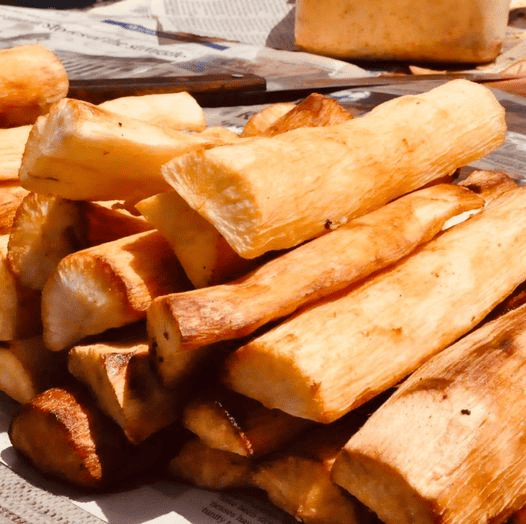
3. Muhogo (Boiled and Fried Cassava)
Muhogo (cassava) is a delightful snack you can enjoy either boiled or deep fried.
Both options can be portioned into two parts with some lemon and ground pepper slathered between the two pieces to spice it up.
Estimated cost – KES 20.00 or $0.20
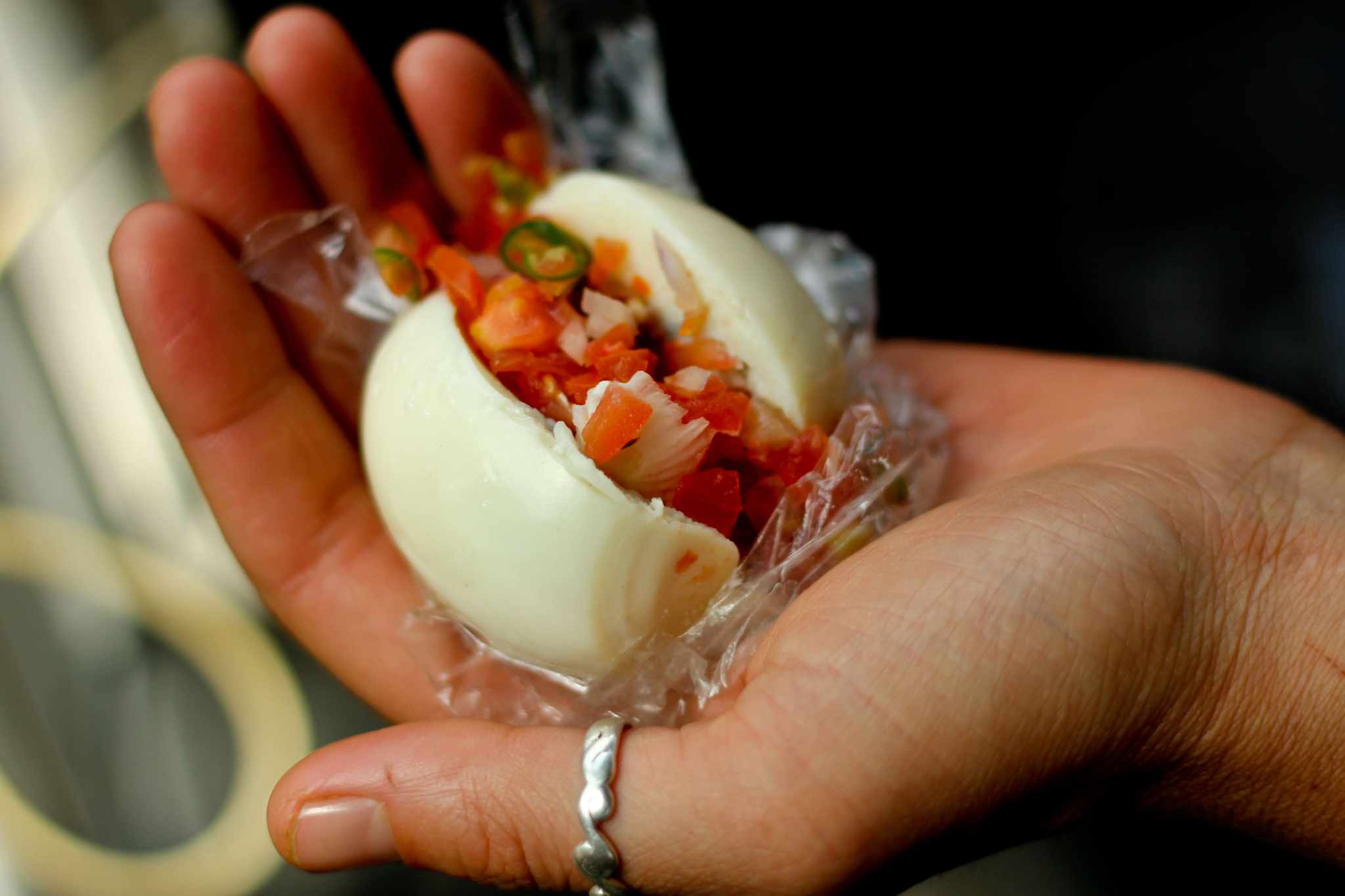
4. Mayai Pasua (Hard Boiled Eggs)
Within the city, you will notice a number of vendors in white lab coats pushing along a metallic trolley with eggs in display. These trolleys are made up of a coal stove underneath that ensures the snacks are kept at an enjoyable temperature.
The “street” boiled eggs go down well with a serving of kachumbari. The vendor will de-shell an egg, slice it in half and stuff it with the salad. Based on preference, you may also get a dash of tomato sauce on your snack.
Aside from trolley vendors, you may also spot some individuals walking along the streets with clear buckets selling eggs. Interesting fact about this snack; you could never replicate it at home no matter how you try, it simply never tastes the same.
Estimated cost – KES 25.00 or $0.25
5. Smokie Pasua (Smoked Sausages)
Smokies are precooked (ready-to-eat) smoked sausages made of pork, beef, chicken or a blend of all these meats and other flavorful inclusions. In popularity, it is perhaps only second to hard boiled eggs.
The name ‘smokie pasua’ translates to a smokie that has been sliced in half (pasua) and filled with Kachumbari. It is often sprinkled with salt and tomato sauce.
Smokie Vendors in one of Nairobi’s busy streets
Smokies are commonly sold alongside the eggs mentioned above in the metallic trolleys.
Estimated cost – KES25 OR $0.25
6. Samosa
This flavorful, deep-fried, triangular snack is the ideal chai partner. Samosa (a pastry with a savory filling) can be sampled two ways; vegetarian or non-vegetarian.
Tracing its roots to the middle east, samosas have a variety of filling options. Within the Nairobi streets however, you will mainly find ground beef samosas for the non-vegetarian or green grams/peas/potato samosas for the vegetarian.
Estimated cost – KES30 OR $0.30
8. Fried Fish
Deliciously crispy, fried fish is commonly found within the estates. Many Kenyans enjoy this as a main meal served alongside our staple “ugali” with veggies on the side. You can also enjoy this on its own; as a ready-to-eat snack right by the vendor’s stand.
Estimated cost – from KES50.00 – KES200.00 or $0.50 -$2.00(depending on size of fish pieces)
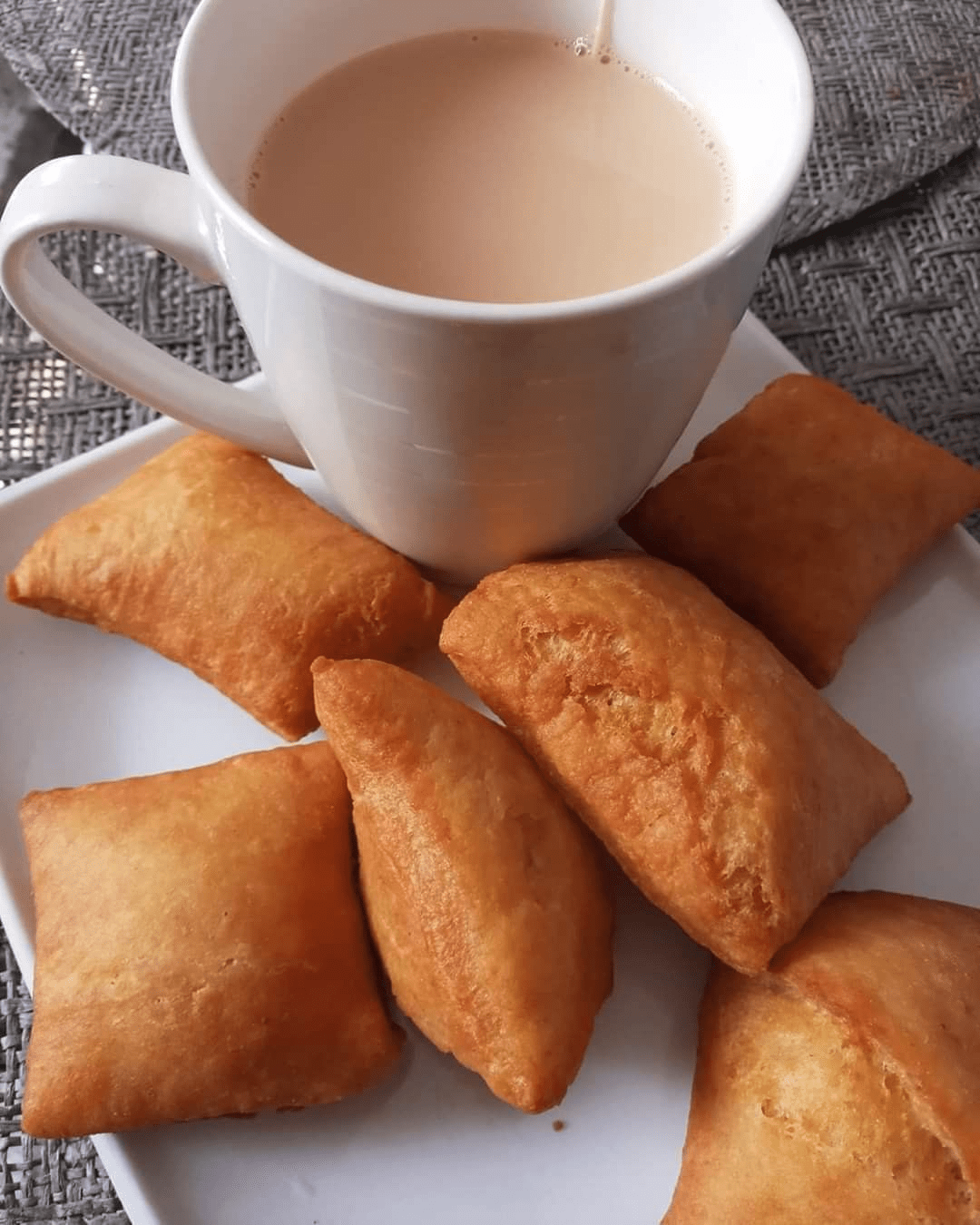
9. Mandazi (fried doughnuts)
Another fantastic tea accompaniment loved in Nairobi is mandazi. Mandazis are a form of deep-fried bread; amazingly soft, triangle-shaped (sometimes square) made from leavened dough.
For some Kenyans, Mandazis are a must-have breakfast treat although you can also enjoy them at any time of the day with a beverage of your choice.
Estimated cost – from KES10.00 or $0.10(per piece)
10. Chipo Mwitu
We saved the best for last. “Chipo mwitu” is simply french fries/chips depending on where you come from. The term basically describes fries sold by the roadside as opposed to purchasing them from a fast-food restaurant. Chipo is slang for chips and mwitu is a swahili translation for wild; hence fries sourced from the wild.
Chipo mwitu station; Image by Bonface Nyangweso, safari254
Chipo mwitu is always an inexpensive option when the fries bug attacks. The fries are normally prepared over a charcoal jiko or firewood. Although the packaging is not the norm of what you would expect at a fast-food joint, its taste however, you can expect will have you coming back for seconds. Yummy!
Estimated cost – As low as KES50.00or $0.50 – KES100 or $10.00 (prices depend on portion)
Turkana Land is where you can relax kabissa! ‘Kabissa’ means ‘completely’ in Swahili language. It boasts miles upon miles of palm fringed, unspoiled sandy beaches on the shores of Lake Turkana, the world‘s biggest permanent desert lake. Swimming in its slightly alkaline waters cures many skin ailments, making it a giant natural spa.
For those who are fascinated by the fundamental questions of who we are and where we come from, there is no better place to follow the traces of our ancestors. Some of the most significant archeological findings of pre- and early manhood have been made here, and Turkana Land righteously claims the title Cradle of Mankind. This is the place where all humans stem from – so: Welcome back home!
In many ways you can regard Turkana Land as largely unexplored which offers you an opportunity to make your own discoveries and experience true adventures like nowhere else. Enjoy the open spaces and breathe freely, something which is getting hard to find in other regions of Kenya and the world.
Highlighted below are some of the amazing attractions that Turkana has to offer which can easily be explored in three circuits.
A unique cultural wealth
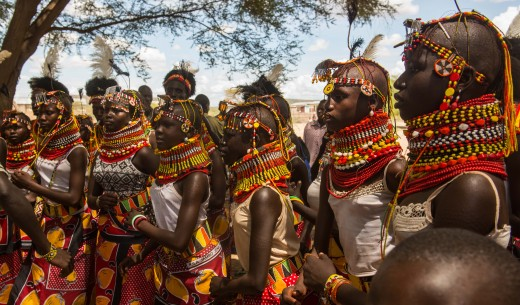
There are view places remaining in Africa of today where you can witness a traditional culture of such beauty and integrity. The Turkana culture is vivified by a unique wealth of dresses, hairstyles, jewellery, sayings, tales, songs, craftsmanship and knowledge. A visit to Turkana Land offers you the chance to experience the fascinating pastoralist way of life.
Rewarding hiking and rock climbing
There are many mountains, such as Silali Volcano, Loima Hills, Mogila Range or the Lokichar Hills that invite you for rewarding rock climbing and hiking tours. As camels are abundant in Turkana Land, you might also decide to use them as a support for carrying your equipment. Just be prepared to act as your own trail blazer and you will have the trip of your life time. These are truly virgin grounds which are waiting to be conquered by YOU!
Water games
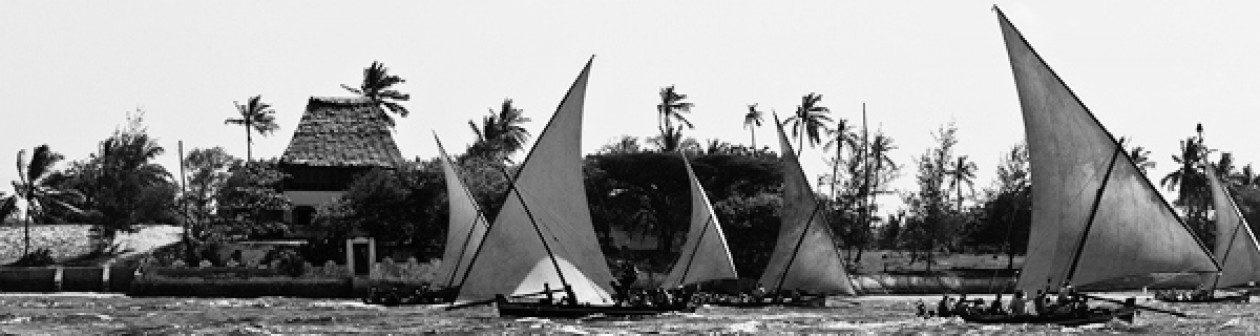
Lake Turkana, the infamous Jade Sea offers a huge potential for water sporting, whether you love swimming, boat riding or fishing trips. You could also do a sailing cruise with fishing dhows or try balancing on a traditional raft. Winds are favourable for both, wind surfing and kite surfing, though for the time being you will have to bring your own equipment along.
Come, play in the wild!
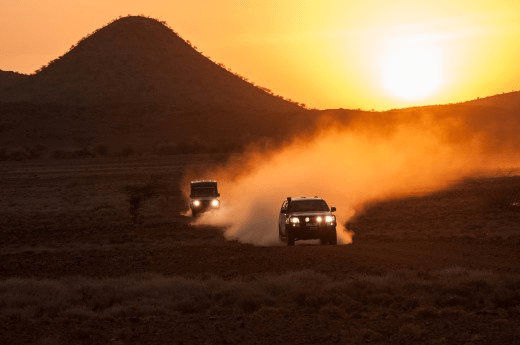
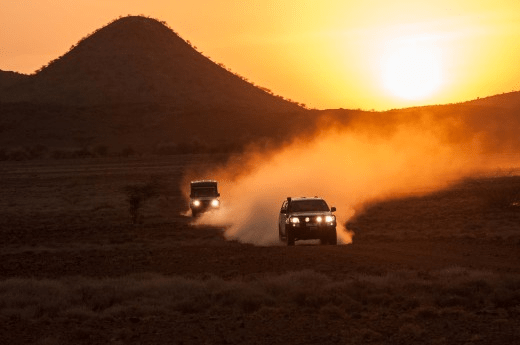
The vast lands of Turkana are a no-limits playground for cross bike riders, 4WD fanatics and GPS freaks, plus anybody else who loves to be out in the bunduz. Make the campfire your kitchen, starry skies your ceiling and the freedom to move in any direction at any time a normality.
Experience real wilderness
Turkana Land is a wide and a wild country, where to the south, especially within the South Turkana National Reserve, elephant, leopard, oryx antelope, gazelle, warthog as well as an exceptionally high number of Kori bustard roam. Along the border with South Sudan in the extreme northwest, the massive savannah grassland of the Lotikipi Plains forms another haven for wildlife which is currently undergoing gazetting as National Reserve and definitely is worth visiting.
An island out of this world
A wilderness with an out-of-this-world flair is Central Island National Park, the home of thousands of birds and crocodiles in the middle of Lake Turkana. Three crater lakes talk of the volcanic origin of Central Island, one offering a home to flamingos, another to tilapia fish and the third to crocodiles. Ferguson Gulf near Kalokol with an abundance in pelicans, flamingos and other waterfowl is a bird watcher’s paradise and so are many other spots of Turkana, making it a prime destination for ‘birdies’.
Shopping of traditional handicrafts
If you want to treat yourself and shop something beautiful to take home with you, you will find plenty of artful traditional jewelry, like the colorful necklaces of Turkana women or the carved wooden elders’ stools on sale almost everywhere. Equally typical is the skilful basketry woven by Turkana women from dried doom palm leaves. The basketry market in the centre of Lodwar probably offers the best choice.
The stars of the travel, tourism and hospitality aligned at the Kenyatta International Convention Centre (KICC), Nairobi, Kenya to find out who amongst them had won the industry’s ultimate annual honours.
Big winners at the red-carpet reception included Maldives winning ‘Indian Ocean’s Leading Destination’ and ‘Indian Ocean’s Leading Tourist Board’. Cape Town picked up the coveted honour of ‘Africa’s Leading City Destination’. Kenya topped off an evening that will live long in the memory by scooping the major title of ‘Africa’s Leading Destination’, capital Nairobi claimed the prize for ‘Africa’s Leading Business Travel Destination’ and KICC for ‘Africa’s Leading Meetings & Conference Centre’. ‘Indian Ocean’s Leading Wedding Destination’ went to Mauritius, while ‘Indian Ocean’s Leading Honeymoon Destination’ was won by Seychelles. Thanda Island took the trophy for ‘Africa’s Leading Luxury Island’.
The event marked the return of business tourism with a bang, and gave cause for unbridled celebration for Kenya Airways with a hat-trick of top aviation honours. Kenya’s flagship carrier claimed success in categories for ‘Africa’s Leading Airline – Business Class’, ‘Africa’s Leading Airline Brand’ and the ultimate prize of ‘Africa’s Leading Airline’. Ethiopian Airlines took the title of ‘Africa’s Leading Airline – Economy Class’. Air Seychelles celebrated with the honour of ‘Indian Ocean’s Leading Airline’ with ‘Indian Ocean’s Leading Airline Brand’ won by Air Mauritius.
Travel industry VIPs from 25 nations attended World Travel Awards comeback event at KICC in heart of Kenya’s vibrant capital city, Nairobi.
Graham Cooke, Founder, WTA, said: “What a breath-taking event and what a truly memorable experience was had by our blue-chip audience. WTA had the privilege of recognising the region’s leading lights as the industry marked its triumphant return in style. As stellar examples of tourism excellence, our winners have helped to once again raise the bar”.
“Nairobi is a pulsating city, rich in heritage but with a dynamic, forward-thinking business focus. And at its epicentre is the majestic KICC. I would like to put on record my heartfelt thanks to Nana Gecaga – the KICC’s superstar CEO and her fabulous team, as well as extend my gratitude to our generous Event Partners and Supporting Partners. I’ve been travelling the globe for the last 29 years heading up our annual Grand Tour of gala ceremonies. Tonight was amongst the very best I’ve had the privilege of leading. As the industry bounces back better and stronger, Kenya should take its place at the high table of world class tourism destinations”.
The refined elegance of Fairmont Mount Kenya Safari Club claimed the ultimate hospitality award for ‘Africa’s Leading Hotel’, with Radisson Blu taking top honour for ‘Africa’s Leading Hotel Brand’. Saxon Hotel, Villas and Spa, South Africa won the prize for ‘Africa’s Leading Boutique Hotel’ with Transcorp Hilton Abuja, Nigeria taking the title ‘Africa’s Leading Business Hotel’
The hotly contested category for ‘Indian Ocean’s Leading New Resort’ went to Jumeirah Maldives Olhahali Island; the award for ‘Indian Ocean’s Leading Beach Resort’ went to Andilana Beach Resort; Madagascar, ‘Indian Ocean’s Leading Luxury Island Resort’ was awarded to Waldorf Astoria Maldives Ithaafushi; and ‘Indian Ocean’s Leading Resort’ was won by Vakkaru Maldives.
Travel provider winners included Flight Centre, South Africa (‘Africa’s Leading Travel Agency’) and Thompson’s Africa (‘South Africa’s Leading Destination Management Company’). In the Indian Ocean region top honours went to Get Into Maldives Travel ‘Indian Ocean’s Leading Luxury Tour Operator’, Simply Maldives (‘Indian Ocean’s Leading Travel Agency’) with Mautourco taking the honours for both ‘Indian Ocean’s Leading Destination Management Company’ and ‘Indian Ocean’s Leading Tour Operator’.
The next red carpet events on the WTA Grand Tour 2022 will take place in Amman, Jordan (Middle East) followed by Muscat, Oman (Grand Final).
Find more information and a full list of winners on the official WTA website.
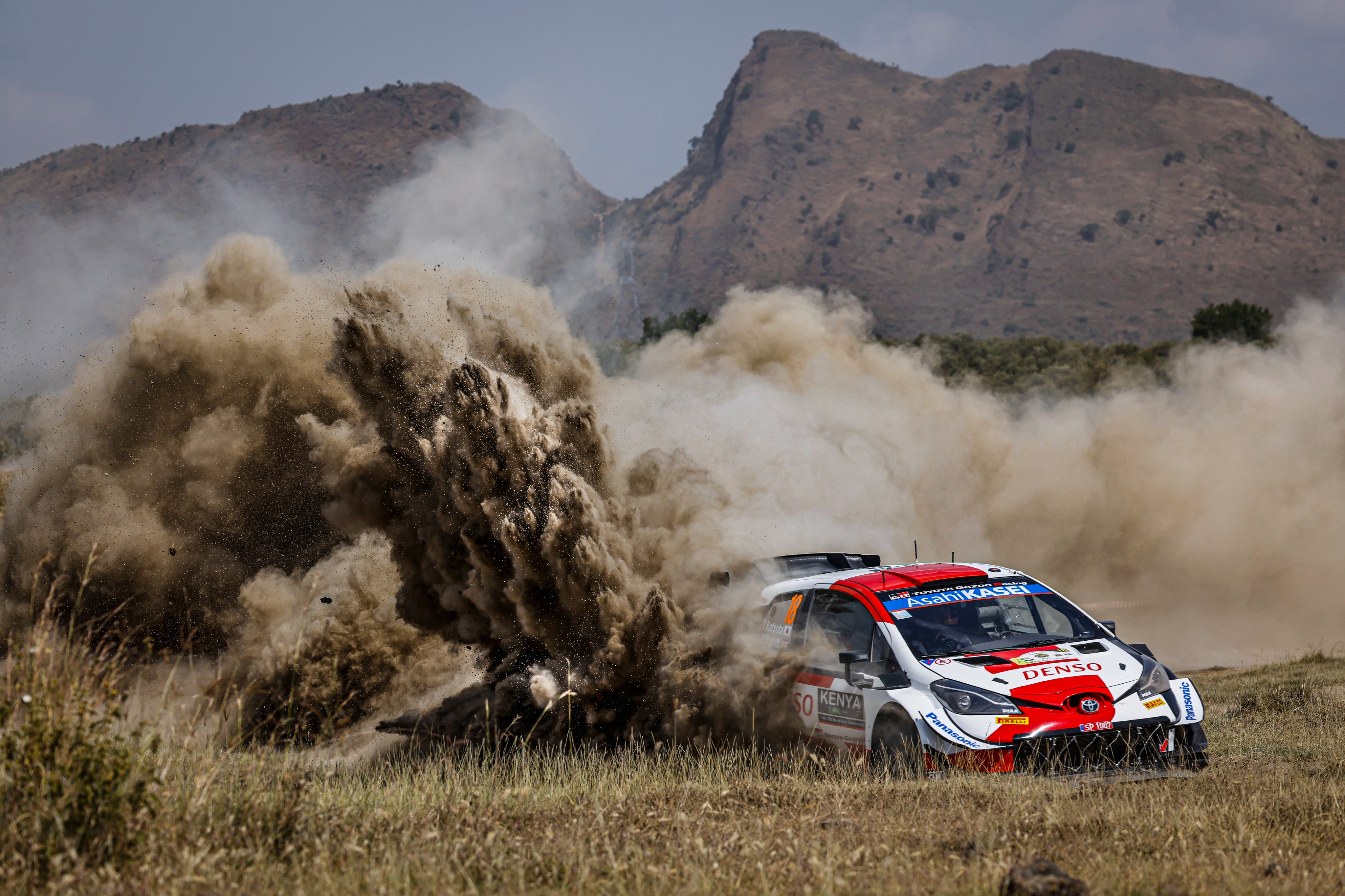
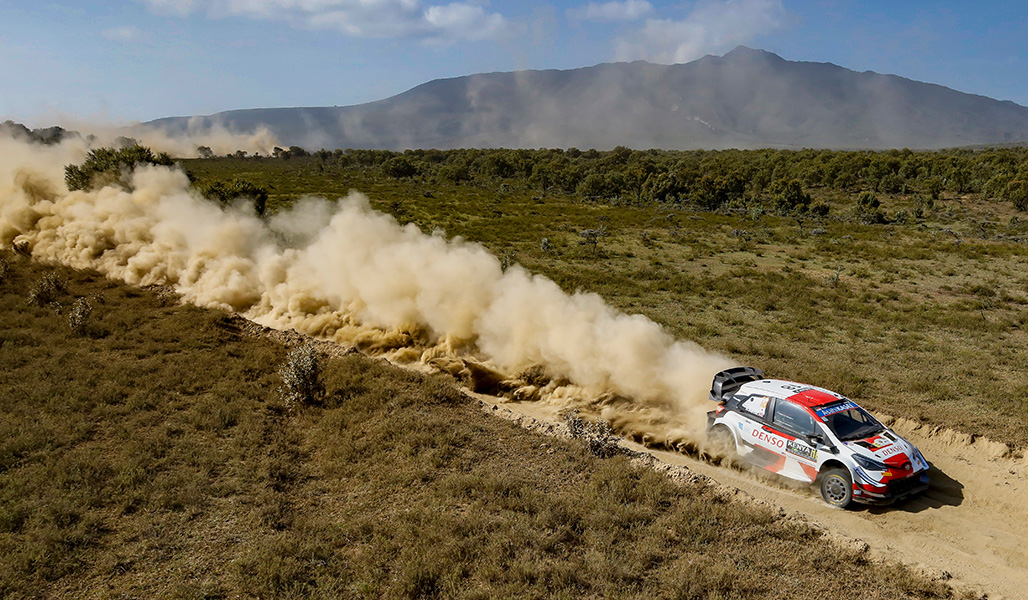
It’s finally here! June 23-26, all roads lead to Naivasha for the 2022 World Rally Championships (WRC) Safari Rally. The event which is listed as one of the 13 rounds of the FIA World Rally Championship promises a tantalizing experience; competitors can expect challenging closed dirt roads, rocky and rutted tracks and unpredictable weather which could transform dry and dusty trails into glutinous mud baths.
Stages
Thursday lunchtime’s traditional Safari start in the heart of Nairobi is followed by a side-by-side super special in the afternoon at Kasarani, north-east of the city centre.
Friday’s opening leg visits the northern and southern shores of Lake Naivasha. The forested Loldia in the north is followed by Geothermal and Kedong to the south. At 31.25km, Kedong is the longest stage of the rally and a Safari test of old. After service, all three are repeated to bring the day’s total to 124.20km.
Roads further north around Lake Elmenteita host Saturday’s 134.90km of action. It opens with an extended Soysambu, followed by Elmenteita’s oft-used tracks in the Delamere Estate and Sleeping Warrior, set in the shadow of a hill that resembles a Maasai warrior lying down. The trio are driven for a second time after service.
Sunday’s finale returns south of Lake Naivasha. Oserian lies in the Oserengoni Wildlife Conservancy Estate, which is home to lions, leopards, giraffes, antelope and buffalo. It is followed by Narasha and Hell’s Gate and after service the trio are driven again. The second pass of Hell’s Gate, which finishes amid stunning scenery at Fishers Tower, forms the Wolf Power Stage. The six tests add up to 99.62km.
The 19 stages total 363.44km.
Iconic Stage
Saturday’s Soysambu stage. It is classic Safari with a little bit of everything that made this event so legendary and has been extended by 9km to almost 30km. A couple of river crossings near the finish with steep entries and exits, mud trucks on standby to pull anyone clear who gets stuck, big straights, flowing corners, rocky climbs, rough compressions and hard lava roads. What’s not to like?
Amidst the adrenaline rush, don’t forget to take a moment to soak in the stunning picture-postcard scenery and keep a look out for the exotic wildlife.















































 Zuru Kenya