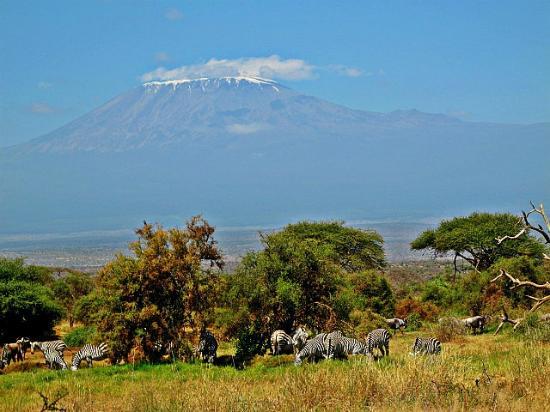
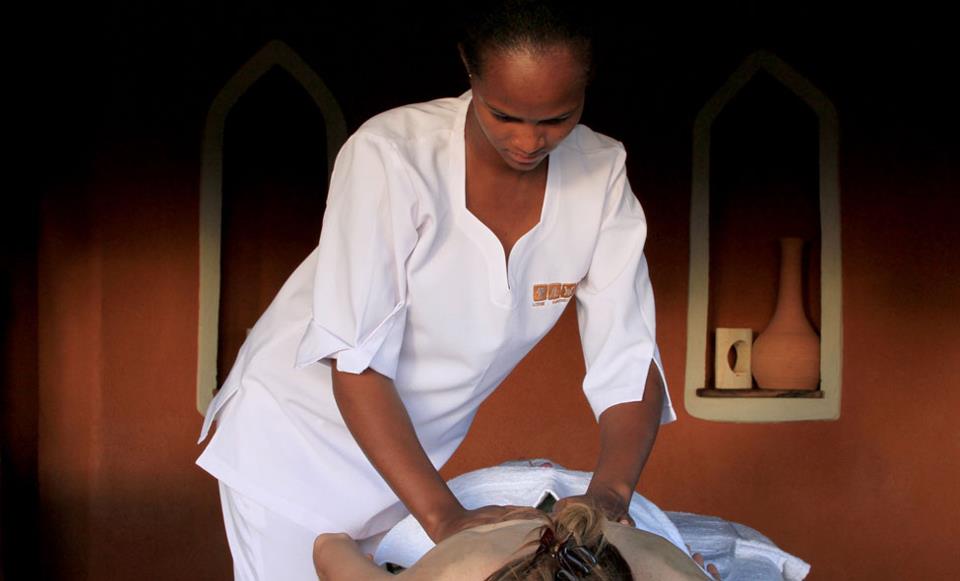
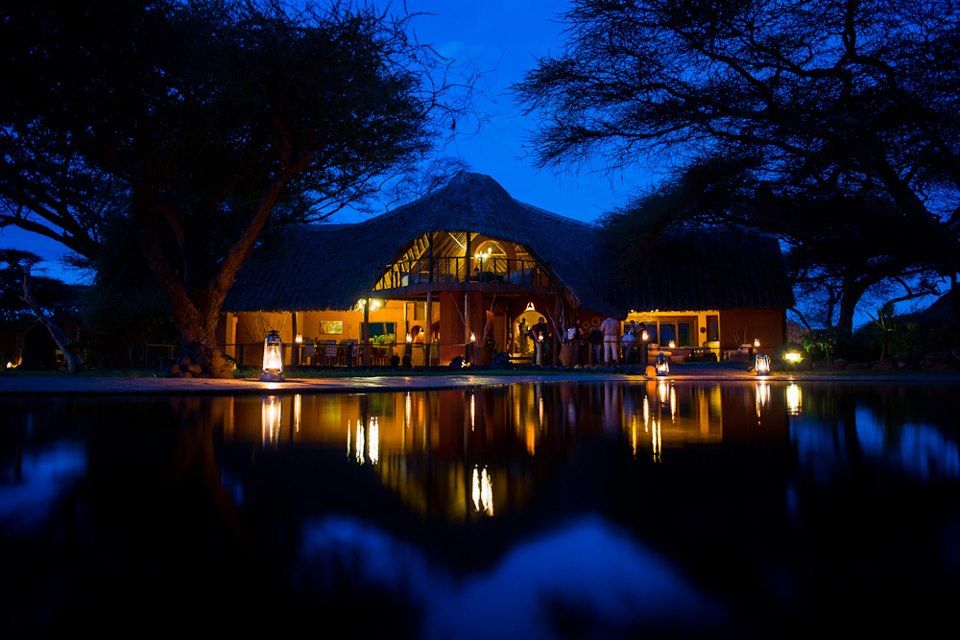
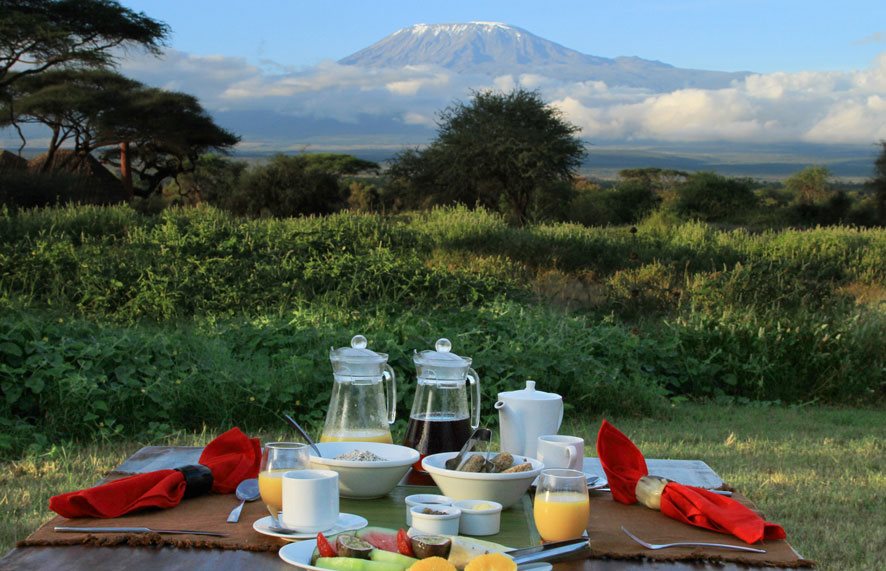
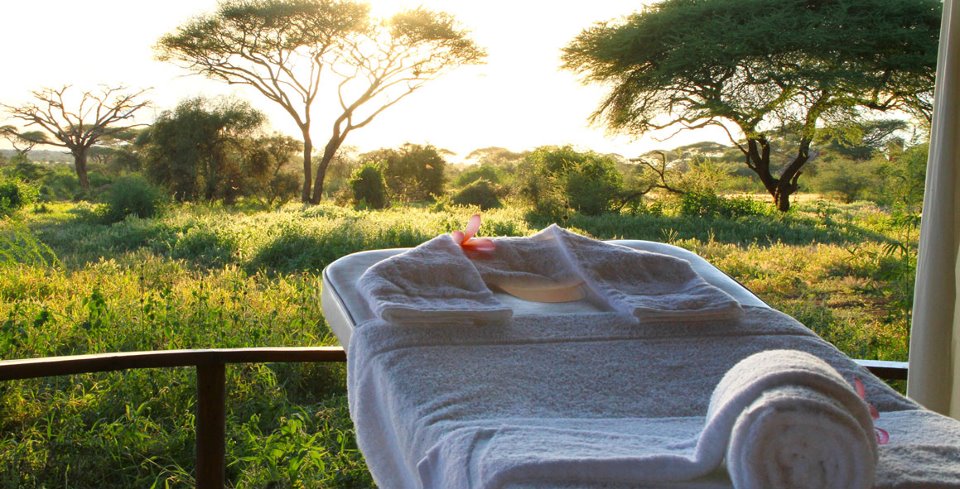
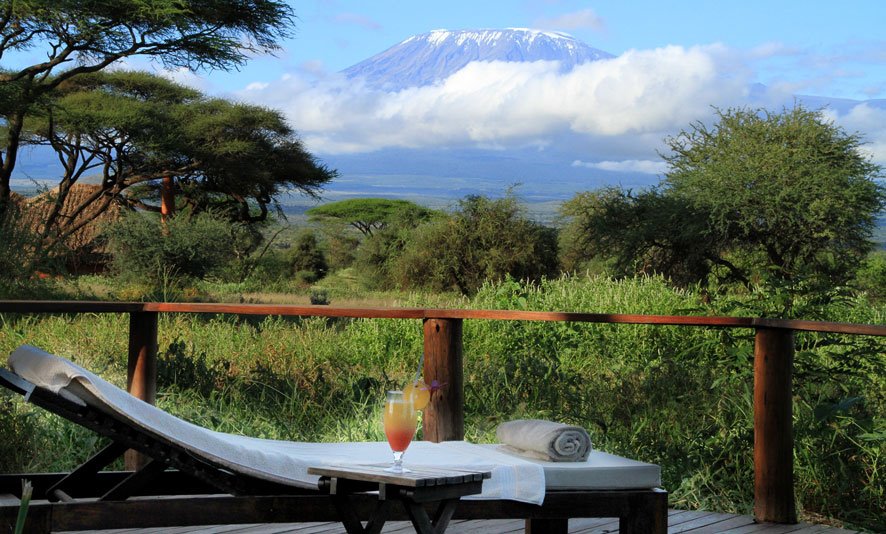
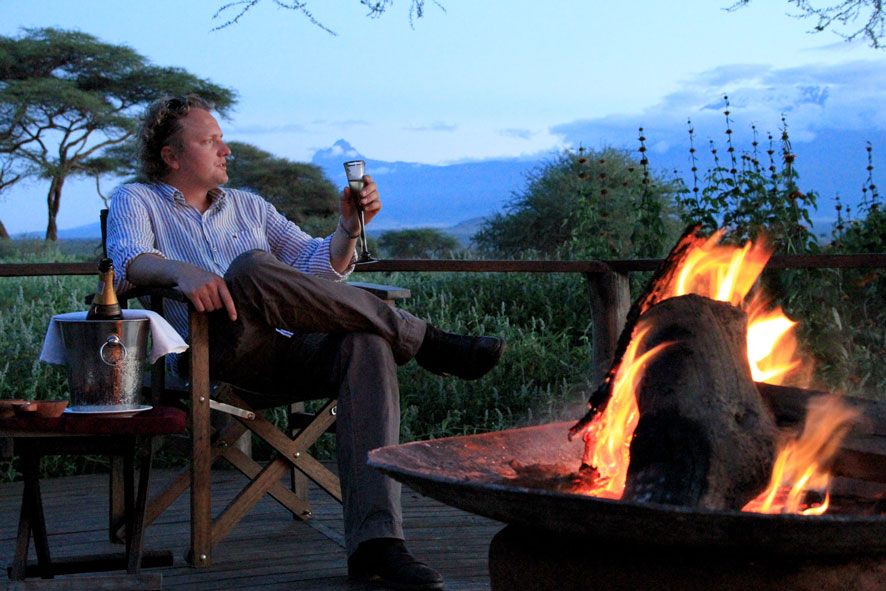
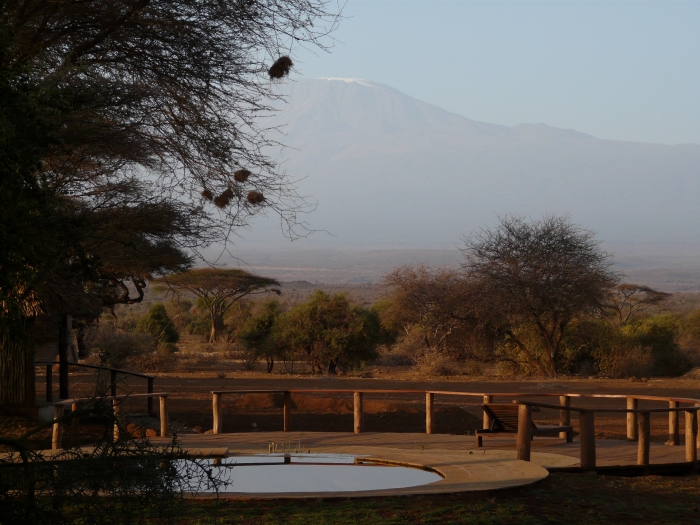
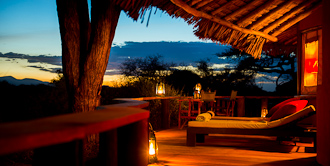
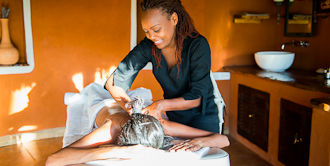
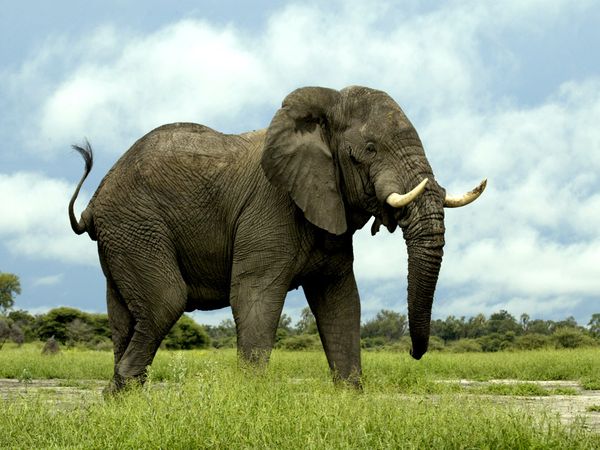
Imagine the Highest free-standing mountain as your backdrop as you watch a herd of elephants play in the mud a few metres a way, go on game drives, take a swim or endulge in that massage therapy, enjoy that bubble bath from the comfort of your cottage, or simply as you relaxingly enjoy those special sundowners with your buddies by the wooden decks…Tawi lodge has this in store for you and more.
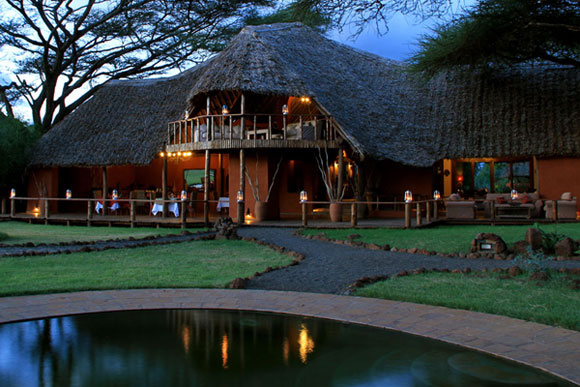
The Eco-friendly lodge sits at the foot of Mt. Kilimanjaro (Africa’s highest mountain) within a private community-run conservancy which in association with African Wildlife Foundation, endeavors to promote and maintain harmonious development for both the wildlife and the maasai people since human-wildlife conflict is leading to that which is regarded as the greatest threat in the area; habitat fragmentation and loss.
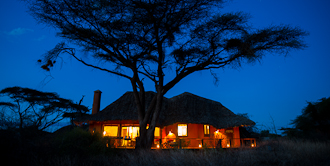
While here, relax and pass by time with stories of game experiences by the campfire or better yet enjoy the magical sounds of the African wilderness under the amazing African sky.
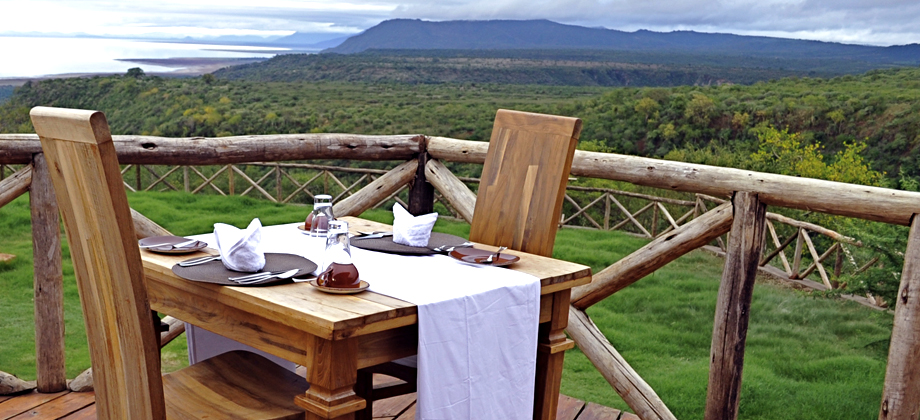
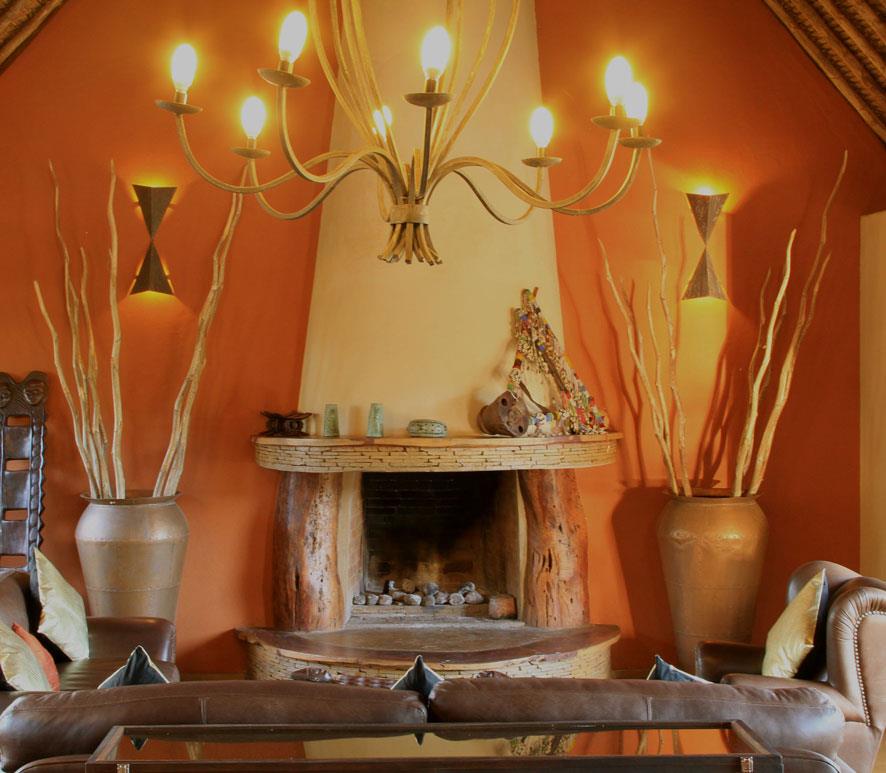
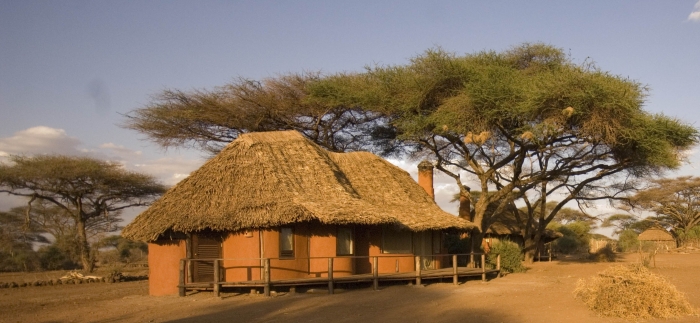
Tawi Lodge has 12 double or twin cottages, all en-suite with own fireplace, mini-bar, and wooden deck for the beautiful mountain and wildlife views.
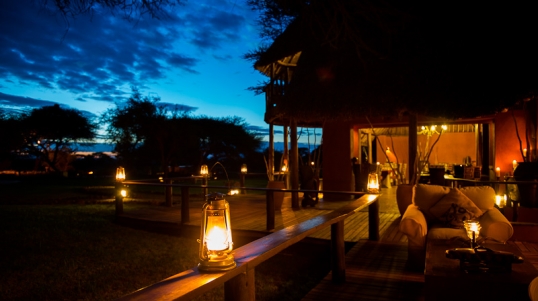
The style of the lodge is a harmonious combination of modern (for your comfort) and traditional (to remind you that you are in Africa).
Kenyais a country made up of many tribes; 43 and more and swahili/ kiswahili (being the national language) stands out as the language that unifies these groups. Swahili has taken root in many countries as well and is widely spoken in regions of Ethiopia, Sudan, Uganda, Rwanda, Burundi, the Congo and Zambia; it is the most widely spoken African language.
In Kenya, “JAMBO” swahili for “hello” is a greeting most commonly associated with tourists and is often the first word learnt …this is also evident in the famous welcoming song “Jambo Bwana” by them mushrooms.
While exploring the beautiful Kenya, learning a little swahili will come a long way in helping you enjoy a smooth and enjoyable adventure when interacting with the locals.
This guide will give you access to some helpful basic Swahili:
USEFUL GREETINGS
Jambo (informal used on tourists) or Hujambo?(Hello, good day, how are you?)
Jambo or Sijambo(the response) I’m fine!
Habari?How are things?
Nzuri (Fine, good)
Hodi!Hello? Anyone in? (said on knocking or entering)
Karibu Come in, enter, welcome(also said on offering something)
Kwaheri/ ni
Goodbye to one/ many
Asante/ ni
Thank you to one/ many
Bwana
Mama
Mister, the equivalent of monsieur in French
Like the French madame or madamoiselle, for adult women
Kijana
Mtoto
Youth, teenager(plural,vijana)
Child, kid(plural,watoto)
BASIC NEEDS
Where can I stay?
Naweza Kukaa wapi?
Can I stay here?
Naweza kukaa hapa?
Room/s
Chumba/vyumba
Bed/s
Kitanda/vitanda
Chair/s
Kiti/viti
Table/s
Meza
Toilet, bathroom
Choo, bafu
Washing water
Maji ya kuosha
Hot/cold water
Maji moto/baridi
I’m hungry
Ninasikia njaa
I’m thirsty
Nina kiu
Is there any?
Iko… or Kuna?…
Yes there is…
Iko…or kuna…
No there isn’t any
Hakuna
How much?
Ngapi?
money
Pesa
What price?
Bei gani?
How much does it cost?
Pesa Ngapi?
I want…
Nataka
I don’t want
Sitaki
Give me/Bring me (can I have?)
Nipe/Niletee
Again
Tena
Enough
Tosha/basi
Expensive
Ghali/sana
Cheap(also”easy”)
Rahisi
Fifty cents
Sumni
Reduce the price,come down a little
Punguza kidogo
Shop
Duka
Bank
Benki
Post office
Posta
Café,restaurant
Hoteli
Telephone
Simu
Cigarettes
Sigara
I’m ill
Mimi mgonjwa
Doctor
Daktari
Hospital
Hospitali
Police
Polisi
TRAVEL AND DIRECTIONS
Bus/es
Bas,basi / mabasi
Car /s, Vehicle/ s
Gari/ Magari
Taxi
Teksi
Bicycle
Baiskeli
Train
Treni
Plane
Ndege
Boat / Ship
Chombo / Meli
Petrol
Petroli
Road, path
Njia/ ndia
Highway
Barabara
On foot/ Walking
Kwa miguu
When does it leave
Inaondoka lini?
When will you arrive?
Tutafika lini?
Slowly
Pole pole
Fast, quickly
Haraka
Wait! / hang on a moment!
Ngoja!/ ngoja kidogo!
Stop!
Simama!
Where are you going
Unaenda wapi
To where?
Mpaka wapi?
From where?
Kutoka wapi?
How many kilometers?
Kilometa ngapi?
I’m going to
Naenda
Move along, squeeze up a little
Songa!/ songa kidogo!
Let’s go, carry on
Twende, endelea
Straight ahead
Moja kwa moja
Right
Kulia
Left
Kushoto
Up
Juu
Down
Chini
I want to get off here
Nataka kushuka hapa
The car has broken down
Gari imearibika
General Words and Phrases
English
Swahili
And
Na
Big
kubwa
Small
ndogo
A lot of
nyingi
Other/ Another
Ingine
Not bad
Si mbaya
Danger
Hatari
Drink (noun)
Kinywaji
Drink (verb)
Kunywa
Eat
Kula
Excuse me!
Samahani!
Food
Chakula
Friend
Rafiki
Good
Nzuri
Goodbye!
Kwaheri!
Help me, please!
Nisaidie, tafadhali!
Here
Hapa
Hot
Moto
How?
Vipi?
I am angry.
Nimekasirika.
I am traveling.
Ninasafiri.
I am happy.
Nimefurahi.
I can speak Swahili.
Ninaweza kusema Kiswahili.
I can’t speak Swahili.
Siwezi kusema Kiswahili.
I love you!
Ninakupenda!
Motorcycle
Pikipiki
No!
Hapana!
OK!
Sawa!
Please
Tafadhali
Sorry! (apologize)
Samahani!
Sorry! (sympathize)
Pole!
Sweet
Tamu
Thank you!
Asante!
Thank you very much!
Asante sana!
There
Pale
Very
Sana
Water
Maji
Welcome!
Karibu!
What?
Nini?
When?
Wakati gani?
Where?
Wapi?
Where are you going to?
Unakwenda wapi?
Which?
Ipi?
Yes!
Ndio
Fine, cool
Safi
Completely
Kabisa
Just, only
Tu(kitanda kimoja tu-just ona bed)
Thing/ s
Kitu/ vitu
Problems, hassles
Wasiwasi, matata
No problem
Hakuna wasiwasi/ Hakuna matata
Friend
Rafiki
Sorry, pardon
Samahani
It’s nothing
Si kitu
Excuse me (let me through)
Hebu
What’s up?
Namna gani?
If God wills it
Inshallah (heard often on the coast)
Please
Tafadhali
Take a picture of me!
Piga picha mimi!
Help the poor!
Saidia maskini!
Ok, right, fine
Sawa
Numbers
English
Swahili
English
Swahili
1
Moja
40
Arubaini
2
Mbili
50
Hamsini
3
Tatu
55
Hamsini na tano
4
Nne
60
Sitini
5
Tano
70
Sabini
6
Sita
80
Thamanini
7
Saba
90
Tisini
8
Nane
100
Mia
9
Tisa
136
Mia moja thalathini na sita
10
Kumi
999
Mia tisa tisini na tisa
11
Kuminamoja
1000
Elfu
12
Kumina mbili
1997
Elfu moja mia tisa tisini na saba
17
Kumi na saba
Half
Nusu
20
Ishirini
Two and a half
Mbili na nusu
24
Ishirini na nne
Quarter
Robo
30
Thalathini
Forty seven and three quarters
Arubaini na saba na robo tatu
Time
English
Swahili
Time
Saa
Hour
Saa
Watch/Clock
Saa
Morning
Asubuhi
Evening
Jioni/Usiku
Afternoon
Mchana
Late afternoon
Alasiri/Jioni
Dusk
Magharibi
Night
Usiku
Late night
Usiku wa manane
Early morning
Alfajiri
What time is it?
Saa ngapi?
8 o’clock in the morning
Saa mbili kamili asubuhi
8 o’clock sharp
Saa mbili barabara
Noon
Saa sita mchana
4:25 p.m.
Saa kumi na dakika ishirini na tano alasiri
6:00 p.m.
Saa kumi na mbili kamili jioni
8:15 p.m.
Saa mbili na robo usiku
7:45 p.m.
Saa mbili kasorobo usiku
9:30 a.m.
Saa tatu unusu asubuhi (also: Saa tatu na nusu asubuhi)
Now
Sasa
Today
Leo
Yesterday
Jana
Tomorrow
Kesho
Day before yesterday
Juzi
Day after tomorrow
Kesho-kutwa
Day
Siku
Week
Wiki
Month
Mwezi
Year
Mwaka
Century
Karne
Common Dialogue
Sentence/Phrase
Response
Habari! (Hello!/Hi!)
Nzuri! (Good!/Fine!)
Ninaitwa Charles. Wewe unaitwaje?
(My name is Charles. What’s your name?)
Ninaitwa Mary. Nimefurahi kukujua. (My name is Mary. I’m pleased to know you.)
Unazungumza Kiswahili? (Do you speak Swahili?)
Ndio! Ninazungumza Kiswahili. (Yes! I speak Swahili.)
Kidogo tu!
(Just a little bit!)
Hapana! Sizungumzi Kiswahili. Ninazungumza Kiingereza tu!
(No! I don’t speak Swahili. I only speak English!)
Ninatokea Marekani. Wewe unatokea wapi? (I’m from the United States of America. Where are you from?)
Ninatokea Japani. Nipo hapa kwa matembezi.
(I’m from Japan. I’m visiting here.)
Ninatokea Uingereza. Nipo hapa kwa kazi.
(I’m from U.K. I’m here on business.)
Ninatokea Ujerumani. Nimekuja kujifunza Kiswahili.
(I’m from Germany. I’ve come to learn Swahili.)
Kwaheri! Nimefurahi kukutana na wewe. (Goodbye! I’m pleased to meet you.)
Karibu! Nimefurahi pia kukutana na wewe. (Goodbye! I’m also pleased to meet you.)
Utapenda kunywa nini? (What would you like to drink?)
Nitakunywa maji tu. Nina kiu sana! (I’ll just drink water. I’m very thirsty.)
Nitakunywa kahawa bila maziwa.
(I’ll drink coffee without milk.)
Nitakunywa chai na maziwa na sukari kidogo.
(I’ll drink tea with milk and little sugar.)

























 Zuru Kenya