

#FilmandTravel: 8 Classic Films that will awaken your wanderlust for Kenya
Has a Movie ever inspired your next vacation? With epic adventures and stunning landscapes, have you ever found yourself wanting to replicate what you just saw on the big screen within your own travels?
No?!
With this round-up of some of our favourite wanderlust-inducing films set in Kenya, We’ll have you packing your bags set for an adventure in no time.
Movies about/set in Kenya transport you right into the heart of our amazing landscapes and breathtaking backgrounds. With such fascinating backdrops; films shot in the country, everything from Fiction, Non-Fiction to Documentary; you are guaranteed of absolutely stunning result.
Travel Movie #1. Out of Africa (1985)
Set in the colonial Kenya of 20th century, this is a tragic autobiographical tale of a big-game hunter who has a steamy affair with a Danish baroness and plantation owner. Once you see the lovely reserves and hills of Kenya in this movie, you will leave no stone unturned till you make a trip to this side.
This romantic, beautiful classic is one of the most acclaimed movies of all time. Baroness Karen Blixen (Streep,) a strong-willed Dutch woman, moves to Kenya and starts a coffee plantation in the early part of the 20th century with her new husband (more of a business arrangement than a marriage of love). Her husband heads to war (and takes up with other women) and in his absence she falls in love with a mysterious nomad hunter Denys Finch Hatton (Redford), who falls deeply in love with her too. Africa and the people become her home, as does Denys. Winner of 7 Academy Awards, Out of Africa is a true story…An Absolute MUST See
The story is told in narrative by Karen, as she is now an old woman, thinking back to this time of love, passion, adventure and loss. Meryl Streep, Robert Redford and Klaus Maria Brandauer are masters of their craft as they bring these characters to life. The film was honored with several academy awards including Best Picture(1985),a well deserved Best Director for Pollack, Best Screenplay by Kurt Luedtke, Original Score for the genius of John Barry, and one for the gorgeous Cinematography among others…..Reviewer from Amazon: Laurie from Whittier, CA
Travel Movie #2. Nowhere in Africa (2001)
Both epic and heartbreakingly intimate, Nowhere in Africa begins with a Jewish woman named Jettel Redlich fleeing Nazi Germany with her daughter Regina, to join her husband, Walter, on a farm in Kenya. At first, Jettel refuses to adjust to her new circumstances (she brought with her a set of china dishes and an evening gown), while Regina adapts readily to this new world, forming a strong bond with her father’s cook, an African named Owuor. But this is only the beginning of a series of uprooting, and as the surface of their lives is torn away, Walter and Jettel find they have little in common, and must–under tumultuous circumstances–build their marriage anew.
With incredible skill and passion, Nowhere in Africa manages to bring you fully into every change in this family’s life; it richly deserves the Academy Award® it received in 2002. A powerful, deeply moving film. –Bret Fetzer
Travel Movie #3. Born Free (1966)
Married couple George Adamson and Joy Adamson have long lived in northern Kenya for George’s work as the senior game warden of the region. One of George’s primary responsibilities is to deal with dangerous animals that may be chronically threatening to humans, livestock and/or crops. It is in this vein that George and his staff end up killing a man eating lion and its lioness, resulting in their three young female cubs being orphaned. Although difficult to begin, George and Joy are able to wean and take care of the three cubs, who they adopt as pets. But soon, they know they have to provide a more suitable environment for the cubs, namely sending them to Rotterdam Zoo… that is except for the smallest, who they have named Elsa and to who Joy in particular has become attached as the emotional fighter among the three. As Elsa grows into lioness maturity, George and Joy provide her with greater freedom away from their property, which may get her into trouble as a largely tame animal. Ultimately, John Kendall, George’s boss, directs them to send Elsa to a zoo like they did with her sisters, especially as with anyone in George’s job he is soon being reassigned. Joy cannot bear the thought of Elsa being locked up for the rest of her life, believing that they can reintegrate her back into the wild instead, something that had never been done with a tame lion. John gives them three months to accomplish this task, which most specifically involves getting Elsa to be able to kill for food, other creatures which up to this point she has seen only as fellow playthings, and to be accepted by other lions, most specifically mate with and provide food for a male partner while standing up successfully to female competitors.
Travel Movie #4. To Walk With Lions (1999)
More than 30 years after the Academy Award triumph Born Free moved millions, To Walk With Lions brings you the dramatic continuation of George Adamson’s fight to save Kenya’s wildlife. Together with his young assistant Tony Fitzjohn, Adamson battles to keep the animals on his game reserve “Kora” from dangerous poachers and deadly “shifta” warriors who are determined to destroy rhinos and elephants for their tusks, and lions for their rich pelts.
Academy Award Nominee Richard Harris of Gladiator and Harry Potter and The Sorcerer’s Stone takes you to the wilds of Africa in an inspirational story about one man’s magnificent crusade.
Travel Movie #5. Africa’s Elephant Kingdom (1998)
Africa’s Elephant Kingdom takes you into the heart of the continent and face-to-face with the great elephants of Africa. Featuring spectacular cinematography and the amazing picture and sound quality that comes from giant-screen film, this is the same widely acclaimed motion picture playing in giant-screen theaters worldwide. Africa’s Elephant Kingdom is the story of one elephant clan’s struggle for survival as it travels across vast stretches of land in search of dwindling sources of food and water. Wide and high above Africa, the camera travels over waterfalls, rivers, plains, and forests. Large groups of elephants move across the plains. One comes closer. He is massive, weathered, craggy. He is the Old Bull, our storyteller, and it is through his eyes that the film dramatically unfolds.
Travel Movie #6. Africa – The Serengeti (1994)
There is a place on earth where it is still the morning of life and the great herds still run free. Africa: The Serengeti takes you on an extraordinary journey to East Africa to view a spectacle, few humans have ever witnessed: The great migration. Journey with more than two million wildebeests, zebras and antelopes as they travel over 500 miles across the Serengeti plains…. A MUST SEE
Travel Movie #7. White Masai (2005)
The film White Masai follows the story of a young Swiss girl, Carola, whose vacation in Kenya takes an interesting turn when she becomes infatuated with a Samburu Warrior Lemalian. Although traveling with her boyfriend Stefan, Carola decides to leave him to stay with her new lover. She makes her way to Lemalian’s tribe in Barsaloi where she is welcomed by his people. There, she has to adapt to the Masai’s way of life and get used to their food which includes milk mixed with blood. She also has to face her husband’s attitude towards women and what he expects from a wife. In the long run however, faced with cultural differences, Carola is forced to make an ultimate decision for herself and her daughter.
The film introduces you to the samburu culture and their way of life. This is one of the Kenyan communities that has managed to keep their traditions intact even with the claim of civilisation. You will also definitely enjoy the beautiful landscapes showcased in the movie.
Travel Movie #8. The First Grader (2010)
In a remote mountain village in the Kenyan bush, a primary school is bursting at the seems with hundreds of children who have been given a chance at free education newly promised by the Kenyan government. Perhaps the most intriguing applicant is an 80-something year old veteran Mau Mau tribesman, desperate to learn to read after a lifetime of fighting for the liberation of his homeland. This triumphant story places a humble, elderly man alongside 6-year-old students to learn a skill so many of us often take for granted. This film became an instant inspiration to the Kenyan nation and world, reminding us of the courage it sometimes takes to achieve our dreams. A poignant film with great purpose.
With this movie, we conclude our list of must watch films set in our beautiful country. The number of movies out there however that can awaken your Kenyan wanderlust is endless; so much so that attempting to list them all would be but a tiresome affair.
If you haven’t seen these movies yet, you owe it to yourself to check them out. Don’t go saying we haven’t given you a weekend plan now!!
Share this:

Camping in The Taita Hills – Needle In A Haystack

I am unsure if i should share the fact I drove for 6 hrs over 400km, camped for 2 nights and walked for hours through the Taita Hills to find 3 of Kenya’s treasures that were each about 10 cm long. These are the reasons why you have to be a little bit mad to be a traveller. You need that one screw loose, that one blown fuse, the slight spark of insanity to justify some of the reasons that take you places. But thats just the way travel is, it cannot be separated from the quest of of knowledge; the answer the question “What is over that next hill?”

View original post 996 more words
Share this:
The Ultimate Luxury Hotel in the Heart of Africa

Make some time for rooftop cocktails and shisha. (Photo: Tribe)
“You never know who you’ll run into at the Tribe.” That’s what the locals and visitors consistently say about this luxury property in Nairobi.
It’s true. The Tribe has become a go-to destination for visitors here from movie stars, heads of state, famous chefs, supermodels and the adventurous tourist.
Kenya’s bustling capital city, Nairobi, has quite the split personality these days.
The vibrant, thriving metropolis with rich culture and cosmopolitan flair shares its boundaries with an expansive National Park and game reserve.
Interestingly, the 137-room Tribe Hotel is a perfect reflection of the city’s duality. The contemporary and sleek architectural property pays perfect homage to Kenya’s wide ranging historic and natural wonders.
The Vibe
The hotel is serene and sanctuary-like, making you feel soothed and welcome from the moment you set foot inside the lobby. Warm, wide smiles greet you at every turn and the blend of modern design and beautiful displays of African Art give the space a sophisticated style that is elegant but unpretentious. Everywhere you look there are colorful carvings, paintings, tapestries and unique pieces of furniture that blend will with the angled rooms and spaces. The bedrooms are designed to be calming but highly functional while common areas, and there are many, are warm and inviting.
The Location
Tribe Hotel is located in a quiet upmarket suburb in the northern part of the city. While this area is certainly a distance from the busier city centre and airport, it is just steps from the Village Market – an upscale shopping area with plentiful shops and dining options. Nearby is also the Friday Maasai market, a great place to purchase local crafts, and the Karura forest is also walking distance away. Most other attractions are a taxi ride away.
The Rooms
Rooms are bright, clean and comfortable while each is uniquely floor-planned and decorated, again with a mixture of original artwork and en vogue styling. Several feature a loft-style, split level lay out that is spacious and well-suited to those who like to work and relax in their room.

Rooms combine modern luxury with gorgeous local art. (Photo: Tribe)
The adjoining bathrooms are sleek and well-appointed with large soaking tub and open showers. One unusual aspect in some of the suites is a glass sliding wall that separates the bedroom from the bathroom. While it opens up the space and gives you a nice view of the beautifully designed bathroom, it provides little sound insulation and therefore privacy. So if you are cohabiting in the room, be prepared to share a whole lot more than just your space.
The Food
The hotel’s main restaurant, Jiko, has an extensive and well curated menu of tasty international options from soups, salads and pasta to burgers, sushi and traditional steaks and seafood dishes.

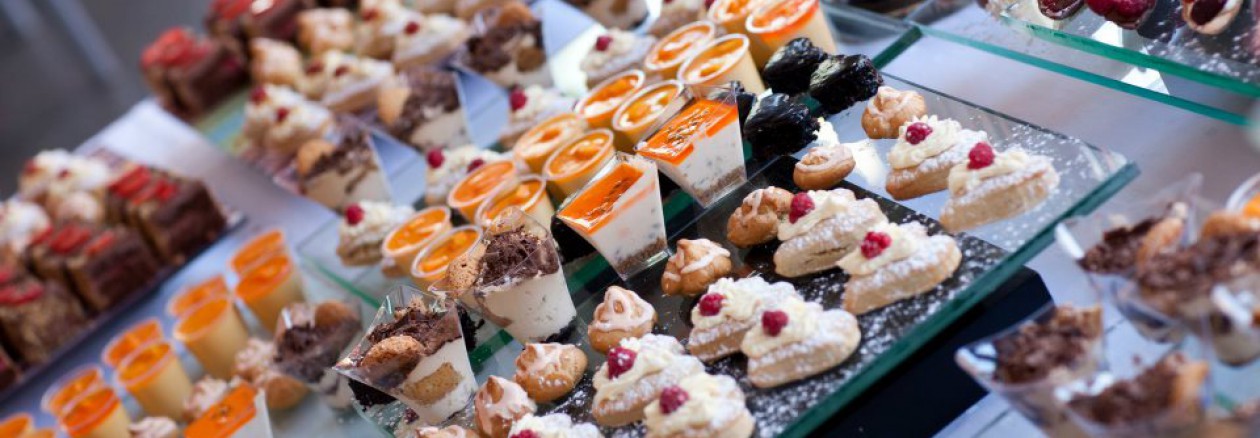
Indulge in delicious homemade sweets at the aptly named Suite 101. (Photo: Tribe)
The included daily buffet breakfast is plentiful and nicely laid out.
The Staff
Service standards at The Tribe Hotel are unparalleled and the staff might just be the highlight of your stay. They are impeccably courteous, and helpful, almost to the point of it being frustrating, but in no way does it feel false or forced. Each and every member of the team loves their job, it oozes from them, and their attention to detail provides a truly personalized service. So, if you want to be pampered and well taken care of, this is the place.
Added Bonuses
The luxurious spa is excellent with treatments ranging from hot stone massage and body wraps to facials and chemical peels, while the fitness centre is well equipped, even featuring a boxing area, and is staffed with personal trainers – an unusual addition to a hotel gym.

Nairobi is a city known for its wicked traffic. Let Tribe’s drivers get you where you need to go. (Photo: Tribe)
The hotel also has its own Range Rover which can be rented out for private safari tours into the Nairobi National Park (driver included!), so even if you are tight on time, or bad at organizing excursions, you can still have an opportunity to explore the wilderness.
-Sophie Forbes, Source: Yahoo! Travel
Share this:

Love, Life, and Elephants: An African Love Story
The day had begun well. My friend and I were in Tsavo National Park, among the tangled vegetation and wild herds, searching for Eleanor. I was eager to find my most treasured orphaned elephant. Over my many years of involvement with elephants, there was no doubt about it: Eleanor had taught me the most about her kind. We had been through many ups and downs together. She was my old friend.
Finding her was not an easy task. Tsavo spreads over 8,000 square miles. We were looking now in the place where I had heard she had been just the day before. There had been many occasions in the past when, suspecting that Eleanor might be among a wild herd, I had simply called her name and she had turned quietly from her group and come to me. We had shared many tender moments, her massive trunk prickly as she wrapped it gently around my neck, one huge foot raised in greeting for me to hug with both my arms.
I had known Eleanor since she had become an orphan at two – now she was in her forties, almost the same age as Jill, my elder daughter – and there existed between us an amazing bond of friendship and trust that had persisted beyond her return to the wild. At last – in the right area – we spotted a wild herd. From a distance it was never easy to identify Eleanor among a milling crowd of her fellow adults, and I had never felt the need to do so, certain that she would always know me. Unlike the other wild elephants of Tsavo, who had no reason to either like or trust humans, Eleanor would always want to come when called, to greet me, simply for old times’ sake. I have come to know a lot about elephant memory and how very similar to ourselves elephants are in terms of emotion – afterall, greeting an old friend makes you feel good, remembered, wanted.
There stood a large cow elephant drinking at a muddy pool, her family already moving on among the bushes. From this distance, it didn’t look much like Eleanor, for although as large, this elephant was stockier. I told my friend as much.
“How disappointing,” he said. “I was so hoping to meet her.”
“I’ll call her,” I replied, “and if this is Eleanor, she will respond.”
She did. The elephant looked up at me, her ears slightly raised, curious. She left the pool and walked straight up to us.
“Hello, Eleanor,” I said. “You’ve put on weight.”
I looked into her eyes, which curiously were pale amber. I had a fleeting thought that Eleanor’s eyes were darker, but I dismissed this instantly. This must be Eleanor. Wild elephants in Tsavo simply did not behave in this way, approaching humans so trustingly. The Tsavo herds were now innately suspicious of our kind, having been relentlessly persecuted in the poaching holocaust of the 70s, 80s and early 90s.
“Yes,” I said to my friend. “This is Eleanor.”
Reaching up, I touched her cheeks and felt the cool ivory of her tusks, caressing her below the chin in greeting. Her eyes were gentle and friendly, fringed with long dark lashes; her manner was welcoming.
“She’s beautiful,” murmured my friend. “Stand next to her so that I can take a photo.”
I positioned myself beside one massive foreleg, reaching up my hand to stroke her behind the ear, something that I loved doing with Eleanor. The hind side of an elephant’s ear is as soft and smooth to the touch as silk and always deliciously cool.
I was totally unprepared for what happened next.
The elephant took a pace backwards, swung her giant head and, using her trunk to lift my body, threw me like a piece of weightless flotsam high through the air with such force that I smashed down onto a giant clump of boulders some twenty paces away. I knew at once that the impact had shattered my right leg, for I could hear and feel the bones crunch as I struggled to sit up. I could see too that I was already bleeding copiously from an open wound in my thigh. Astonishingly, there was no pain – not yet, anyway.
My friend screamed. The elephant – I knew for certain now that this was not Eleanor – rushed at me, towering above my broken body as I braced myself for the end. I closed my eyes and began to pray. I had a lot to be thankful for, but I did not want to leave this world quite yet. Inside I began to panic, jumbled thoughts crowding my mind. But suddenly there was a moment of pure stillness – as if the world had simply stopped turning – and as I opened my eyes I could feel the elephant gently insert her tusks between my body and the rocks. Rather than a desire to kill, I realized that the elephant was actually trying to help me by lifting me to my feet, encouraging me to stand. I thought: this is how they respond to their young.
But lifting me now could be catastrophic for my broken body.
“No!” I shouted, as I smacked the tip of the wet trunk that reached down to touch my face.
She gazed down at me, her ears splayed open in the shape of Africa, her eyes kind and concerned. Then, lifting one huge foot, she began to feel me gently all over, barely touching me. Her great ears stood out at right angles to her huge head as she contemplated me lying helpless, merely inches from the tip of two long, sharp tusks. I knew then that she did not intend to kill me – elephants are careful where they tread and do not stamp on their victims. If they do intend to kill, they kneel down and use the top of the trunk and forehead. And it was at this moment – with an astonishing clarity of thought that I can still feel within me to this day – I realized that if I were to live, I needed to fulfill the debt I owed to Nature and all the animals that had so enriched my life. For even as I could feel the broken bones within my crumpled body, feel the fire of pain now engulfing me, and even though it was one of my beloved creatures that had caused me this distress, I knew then and there that I had an absolute duty to pass on my intimate knowledge and understanding of Africa’s wild animals and my belonging to Kenya.
I thought: if I survive this, I will write. This will be my legacy. I will set down everything I have learned in my efforts to contribute to the conservation, preservation and protection of wildlife in this magical land.
It was as if the elephant had heard my thoughts. There was a tense silence as she took one more look at me and moved slowly off.
I would live on. In a state of some distress, my friend managed to find his way back to our driver to fetch help.
After many hours of lying beneath that boulder, experiencing agonizing pain such as never before, I was rescued by the Flying Doctors. My ordeal was far from over. I was to endure endless operations, raging infections, bone grafts and a lengthy convalescence in which it took me months of learning to walk again. But I was alive, still here in Africa. I had survived because of elephants’ extraordinary ability to communicate very sophisticated messages to each other, messages that often go against all their natural instinct. For we discovered that Eleanor knew Catherine – as we subsequently named my wild attacker – and had somehow told her that I was a friend.
As for my epiphany – the certainty that I had to write about my life and my work – here it is, some years down the line. This is the story of my settler ancestors; of growing up on my parents’ farm; of safaris and nights under the stars; of my soulmate David, my daughters Jill and Angela, the birth of our elephant orphanage, my life lived – all interwoven with spellbinding stories of the many different animals that have immeasurably enriched my life, animals I have reared and loved and come to know as a surrogate mother.
Set against the majestic land of Africa, the birthplace of mankind, my story begins.


Excerpted from “Love, Life, and Elephants: An African Love Story” by Dame Daphne Sheldrick, published in May 2012 by Farrar, Straus and Giroux, LLC. Copyright ©2012 by Dame Daphne Sheldrick. All rights reserved. All photos are courtesy of David Sheldrick Wildlife Trust.
Share this:

Di Caprio, Bloomberg, Elton John for Kenya jumbo talks

LEADING Hollywood and media personalities will be in Kenya in April to attend a major summit on the illegal trade in wildlife.
Among those expected in Nairobi are naturalist and broadcaster David Attenborough, American actor and film producer Leonardo DiCaprio and American business magnate and philanthropist Michael Bloomberg, a former New York mayor.
The others include Australian-American actress Nicole Kidman, billionaire businessman George Soros, Yao Ming, Elton John, Paul Allen, Kim Tan and Howard Buffet.
“They will be joined by a host of African gliterrati in a campaign to sustain the fight against poaching and the illegal trade in ivory, for which Kenya is already a recognised leader,” the Environment Cabinet Secretary, Professor Judi Wakhungu, said.
Several heads of state and governments, including high-powered representatives of Western nations and China, are also set to attend the two-day Pan-African Giants Club in April.
Kenya plans to use the occasion to set ablaze 120 tonnes of ivory, the biggest to be burned by any country in one go, as its commitment to zero tolerance for poaching and the illegal ivory trade.
The summit is set for April 29 and 30, and will also be attended by heads of state and government.
According to government statistics, poaching has gone down in Kenya by 80 per cent, with the number of elephant and rhinos poached in 2015 dropping to 57 and five respectively.
The success has been attributed to the high penalties enforced by the Wildlife Management and Conservation Act 2013, increased numbers of rangers and improved surveillance at Kenya’s major airports.
Continued training of the Judiciary on enforcement and collaboration with the office of the director of public prosecutions is also said to be part of the success story.
President Uhuru Kenyatta signed up as a founding member of the pan-African Giants Club in July last year, joining political, business and finance leaders to fight the illegal trade in wildlife that has devastated Africa’s elephants.
The President also committed to the Elephant Protection Initiative launched in the UK in 2014, which is supported by dozens of African countries struggling to eradicate the increasingly lucrative ivory trade.
Some 100,000 elephants have been killed across Africa in the past three years.
The Giants Club was established by The Space of Giants, whose patron is the media billionaire Evgeny Lebedev, owner of The Independent and the London Evening Standard newspapers.
– By Felix Olick, Source: The Star
Share this:

#InspirationMonday: 5 Inspiring TED Travel talks to give you wanderlust
New year, new resolutions…perhaps “travel more” is one of them?!
We have just the right bit of inspiration; perhaps a brief insight into the lives of others who view life as an adventure will give you the much needed excitement and enlightenment to start you along on your journey.
It’s essential that from time to time we escape the monotony of routine, and actually listen and absorb what we see, feel what could be and embrace that rush of invincible energy that is strong enough to change your direction.
So, if your will is to travel but you just can’t seem to get away from the magnetism of money and the daily grind, I believe these stories will pull you in and sway you for a life of adventure. The TED speakers listed below have managed to alter not only their own lives through their powerful beliefs and strong-will but also the lives of many others.
Discover the unknown and learn from other peoples’ view of travel:
MY JOURNEY TO START A SCHOOL FOR GIRLS IN KENYA
Daniela Papi says: “Schools don’t teach kids. People do.” This ted talk here is a touching story about an inspiring woman -KAKENYA NTAIYA, who never gave up on her dream to improve her community’s overall standard of life. You will hear about the horrifying practice of mutilation in Africa and the importance of education and giving opportunities.
DIVE INTO BIOLOGY – GET INSPIRED TO SCUBA-DIVE
This is how teaching by entertaining is supposed to look like. David Gallo is talking about the intriguing creatures that live underwater. But not only talking – he is showing them to us on the screen. Check out for yourselves, what you can see in our oceans and get inspired to go scuba-diving in at least one of them.
TAKE A LOOK AT OUR FUTURE
Robert Neuwirth gives a presentation on why he thinks that squatter districts of cities like Rio de Janeiro, Mumbai, Nairobi and Istanbul are going to define the future of our civilisation. Understanding how people live there will most probably make you want to see at least one of them with your own eyes.
FOR MORE TOLERANCE, we need more … TOURISM?
Aziz Abu Sarah is a Palestinian activist with an unusual approach to peace-keeping: Be a tourist. The TED Fellow shows how simple interactions with people in different cultures can erode decades of hate. He starts with Palestinians visiting Israelis and moves beyond…
THE JOY OF SURFING IN ICE-COLD WATER
“Anything that is worth pursuing is going to require us to suffer, just a little bit,” says surf photographer Chris Burkard, as he explains his obsession with the coldest, choppiest, most isolated beaches on earth. With jawdropping photos and stories of places few humans have ever seen — much less surfed — he draws us into his “personal crusade against the mundane.”
Share this:
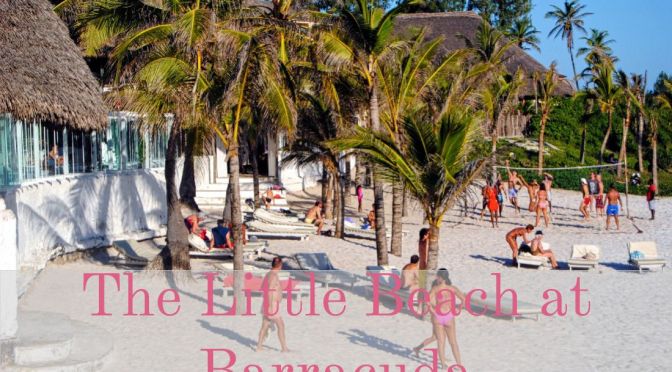
The Little Beach at Barracuda
Driving down the small trail, a Watamu local in the backseat giving us directions, I couldn’t have envisioned what awaited us. I’ve had my fair share of coastal beaches but what I was about to step into I couldn’t have imagined. This little piece of paradise sitting pretty outside the small village of Watamu, is no wonder Watamu is listed as having some of the most beautiful beaches in the world.
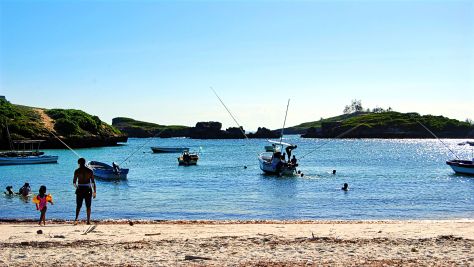
Once you step on the beach, the rocky lagoons across the street instantly catch your eye. These reef-protected lagoons line the Watamu National Marine Park and Reserves, which are the oldest in East Africa and one of the best kept secrets in the world recognized internationally as a UNESCO Biosphere Reserve.
The Blue Lagoon bay where we chose to spend our christmas afternoon is known for its extraordinarily clear waters sheltering a rich marine life; ideal for snorkelling and offers great panoramic views out over the bay. Watersports, swaying hammocks and luxury beachfront resorts complete the picture – it’s the perfect definition of paradise.


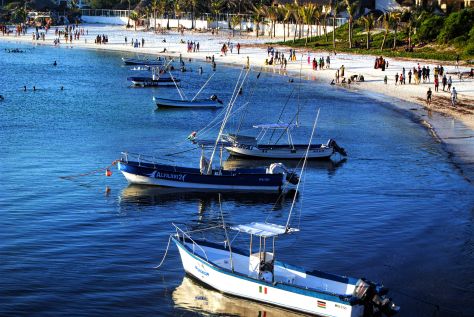


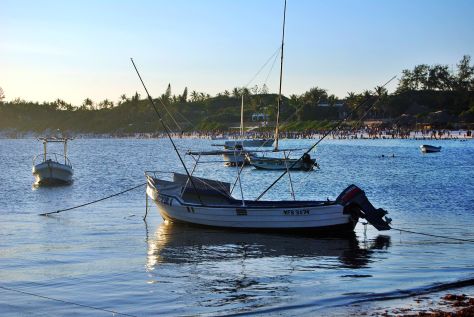
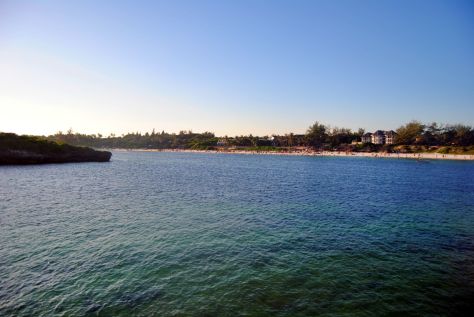
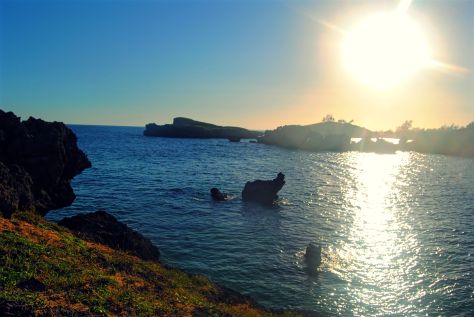

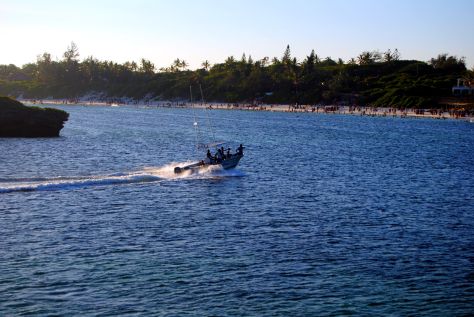
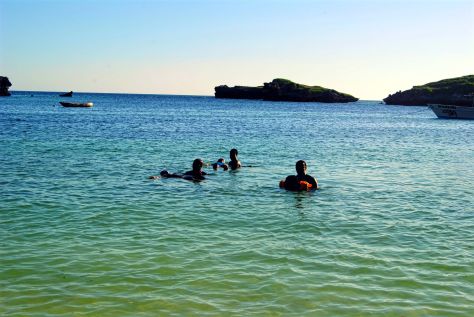


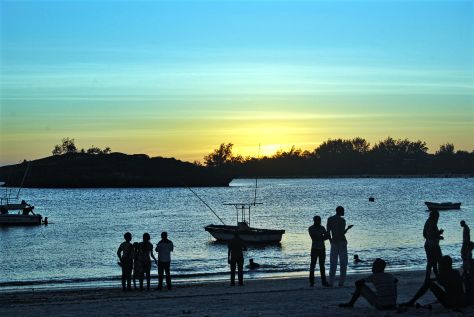
What to anticipate: A “beach boy” or two may approach you with a boat ride offer to the Marine Park. On seeing that we weren’t interested in seeing dolphins, the guy who’d approached us offered to join him and his crew at their hangout joint, a small makuti restaurant where they look out for clients.
Here I met Hussein Guida Turistica who currently goes by the alias Brian when at work. Given the terrorist attacks that majorly hurt the tourism economy, he fears that using his real name Hussein will ward off clients and he could not afford to lose his main way of earning a living.


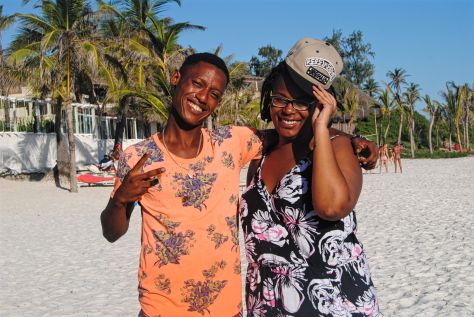
Italian is the language of commerce here and once in a while he and his friends would shift from swahili to italian when they didn’t want us to here what they were saying while bargaining for a boat ride to the Marine Park.
Share this:

#Conservation: This is how you can help the endangered Grevy’s Zebra

The IUCN Red List of Threatened Species is widely recognized as the most comprehensive, objective global approach for evaluating the conservation status of plant and animal species – in 2015, it was updated three times.
Sometimes it can feel intimidating when you get inspired to help in conservation, especially once you understand the urgency, the overwhelming numbers and extent of the need – the List currently includes 79,837 assessed species, of which 23,250 are threatened with extinction, with habitat loss and degradation identified as the main threat to more than 80% of species assessed.
“How can I help,” What can I do,” are common questions you may find yourself asking, but it doesn’t always have to be complicated or expensive. Citizen science is gaining popularity in conservation efforts globally since the crucial data and insights collected by citizen scientists (usually the public), are used in scientific research, and also engages people in conservation through providing tangible assistance.

PHOTO: Grevy’s Zebra Trust
The Great Grevy’s Rally Calls On Citizen Scientists
The endangered Grevy’s Zebra (Equus grevyi), which is taller than the Plains Zebra, has narrower stripes, a white belly and large rounded ears and has an estimated population of only 2,800 in the wild (primarily in Kenya with few in Ethiopia).
For the first time, a national census of the endangered Grevy’s Zebra will be held in Kenya on 30th-31st of January, 2016. The collected data will be used in updating the existing database and populate the new Image Based Ecological Information System and identify future conservation strategies.
The success of The Great Grevy’s Rally will depend greatly on the public’s participation. So if you’re someone who’s always wanted to help – this is your chance!
How You Can Help
If you know how to operate a digital camera and can spot different animals – you’re perfect for the job!
Register as citizen scientists and join academics, conservationists and local community members capture Grevy’s Zebras on your GPS enabled camera (provided by organizers for the two days). The only thing you need to keep in mind, for uniformity, is to take pictures of only the right flank of the Grevy’s Zebra.
The Great Grevy’s Rally will be taking place in Nanyuki, Kenya and there will be many camping and lodging options – there are affordable camping options that begin as low as KSh 400 per night. The Registration fee is KSh 2,000 per vehicle team and each member of your team must provide proof of medical evacuation or AMREF air evacuation coverage at time of registration. If you don’t have proof of medical evacuation, AMREF air evacuation annual coverage will be available for purchase on Friday, 29th of January for KSh 2,000 to KSh 2,500 at the registration desk at Nanyuki Sports Club.
If you would like to help, I would suggest registering as soon as possible. The first teams of citizen scientists will be able to reserve a specific location to conduct their census and book their preferred accommodation.
For more information on how you can register, complete the form here.
–SUSAN WONG, Source: capitalfm.co.ke
Share this:


Cheers to a year full of mistakes!
Happy new year good people…
“I hope that in this year
to come, you make mistakes.Because if you are making mistakes, then you are making new things, trying new things, learning, living, pushing yourself, changing yourself, changing your world. You’re doing things you’ve never done before, and more importantly, you’re Doing Something.
So that’s my wish for you, and all of us, and my wish for myself. Make New Mistakes. Make glorious, amazing mistakes. Make mistakes nobody’s ever made before. Don’t freeze, don’t stop, don’t worry that it isn’t good enough, or it isn’t perfect, whatever it is: art,
travel, or love, or work or family or life.Whatever it is you’re scared of doing, Do it.
Make your mistakes,
this year, next year and forever.”
― Neil Gaiman

 Zuru Kenya