As promised, the list of shortlisted finalists for the Eco-tourism award is finally out. The 7th edition of the Eco-Warriors Award Ceremony Gala Nightscheduled to be at the Safari Park Hotel and Casino on24th September 2013, will be held under the Tourism’s role in sustainable community development theme.
The Award ceremony is held annually to recognize exceptional achievers in ecotourism best practices in Kenya. Over 77 applications were received for this year’s awards, the nominees are as follows:
Conservancy of the Year 2013 – Private
a)Ol Pejeta
b)Borana Conservancy
Conservancy of the Year 2013 – Community
a)Ol Kinyei Conservancy
b)Ilngwesi Conservancy
c)Naboisho Conservancy
d)Mara North Conservancy
Ecotourism Enterprise of the Year 2013 – Lodge
a)Severin Sea Lodge
b)Serena Mountain Lodge
c)Amboseli Serena Safari Lodge
d)Sirikoi Lodge
e)Tawi Lodge
f)Keekorok Lodge
g)Olarro Lodge
h)Sarova Shaba Game Lodge
Ecotourism Enterprise of the Year 2013 – Tented Camp
a)Ol Seki Hemingways Mara
b)Lake Elementaita Serena Camp
c)Porini Mara Camp
d)Kilima Camp
e)Basecamp Masai Mara
f)Kiboko Luxury Camp
g)Elephant Pepper Camp
h)Sanctuary Olonana
i)Sarova Mara
j)Governors camp
Ecotourism Enterprise of the Year 2013 – Villas/ Holiday homes
a)Forest Dream Resort
b)Medina Palms
Ecotourism Enterprise of the Year 2013 – Community Based (Supported by Kenya Wildlife Trust)
a)Porini Amboseli Camp
b)Camp Kenya
c)Kobo Safaris Ltd
d)Statunga Ecotours
Ecotourism Enterprise of the Year 2013 – Tours and Travel
a)Gamewatchers Safaris Ltd
b)Kobo Safaris Ltd
c)Exclusive Eco Travels Ltd
d)Cheli & Peacock Safaris
Ecotourism Enterprise of the Year 2013 – Airline
a)Air Kenya
b)Safarilink
Eco-Rated Facility of the Year 2013
a)Basecamp Masai Mara
b)Ol Seki Hemingways Mara
c)Sasaab Lodge
d)Kicheche Valley Camp
e)Amboseli Serena Safari Lodge
f)Lake Elementaita Serena Camp
g)Serena Mountain Lodge
h)Serena Beach Hotel & Spa
i)Porini Amboseli Camp
j)Turtle Bay Beach Club
k)Kichwa Tembo
l)Joys Camp
m)Sanctuary Olonana
n)Baobab Beach Resort
o)Kicheche Camp Ltd
Ecotourism Partnership of the Year 2013
a)Ol Seki Hemingways Mara
b)Sasaab Samburu
c)Porini Amboseli Camp
d)Kobo Safaris Ltd
e)Cheli & Peacock Community Trust
f)Basecamp Maasai Brand
Ecotourism Guide of the Year 2013
a)Christopher Letur- Saruni Samburu
b)Deric Nabaala- Basecamp EagleView
c)Nelson Ole Reyia- Sanctuary Olonana
d)Andrew Odhiambo- Kicheche camps
e)Onesmus- Rekero Camp
f)David Nganga- Mara Rianta
Ecotourism Journalist of the Year 2013
a)Kimathi Mutegi- People Daily
b)Aby Agina- Nation Media Group
c)Rupi Mangat
d)Carol Gatura
Ecotourism Student Innovation Award 2013
a)Anthony Muinde
b)Mwania Stephen
c)David Mwabili & Billy Oyaro
d)Musau Makau
Ecotourism Training Program of the Year 2013
a)Strathmore University
b)Kenyatta University
c)Amboseli Institute
d)Intl Hospitality & Tourism Institute
Ecotourism Student Host Organization of the Year 2012 (Supported by Ecotourism Kenya)
a)Mlilo Community Tours & Safaris
b)Statunga Ecotours
This year’s Eco-Warriors will be held during the Ecotourism and Sustainable Tourism Conference (ESTC13) Kenya Night Event. The Ecotourism and Sustainable Tourism Conference (ESTC), organized by the International Ecotourism Society (TIES), is a unique annual conference focused on the advancement of sustainability goals for the tourism industry.
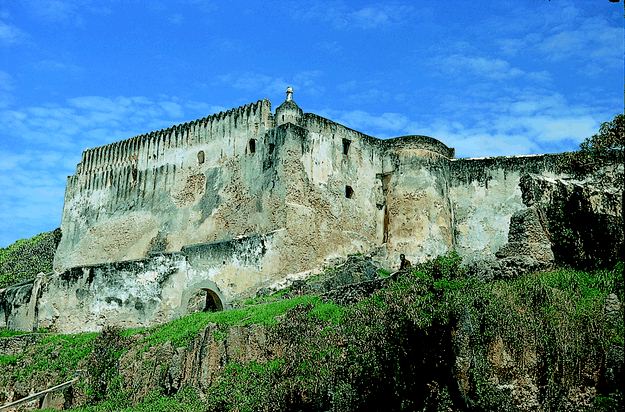
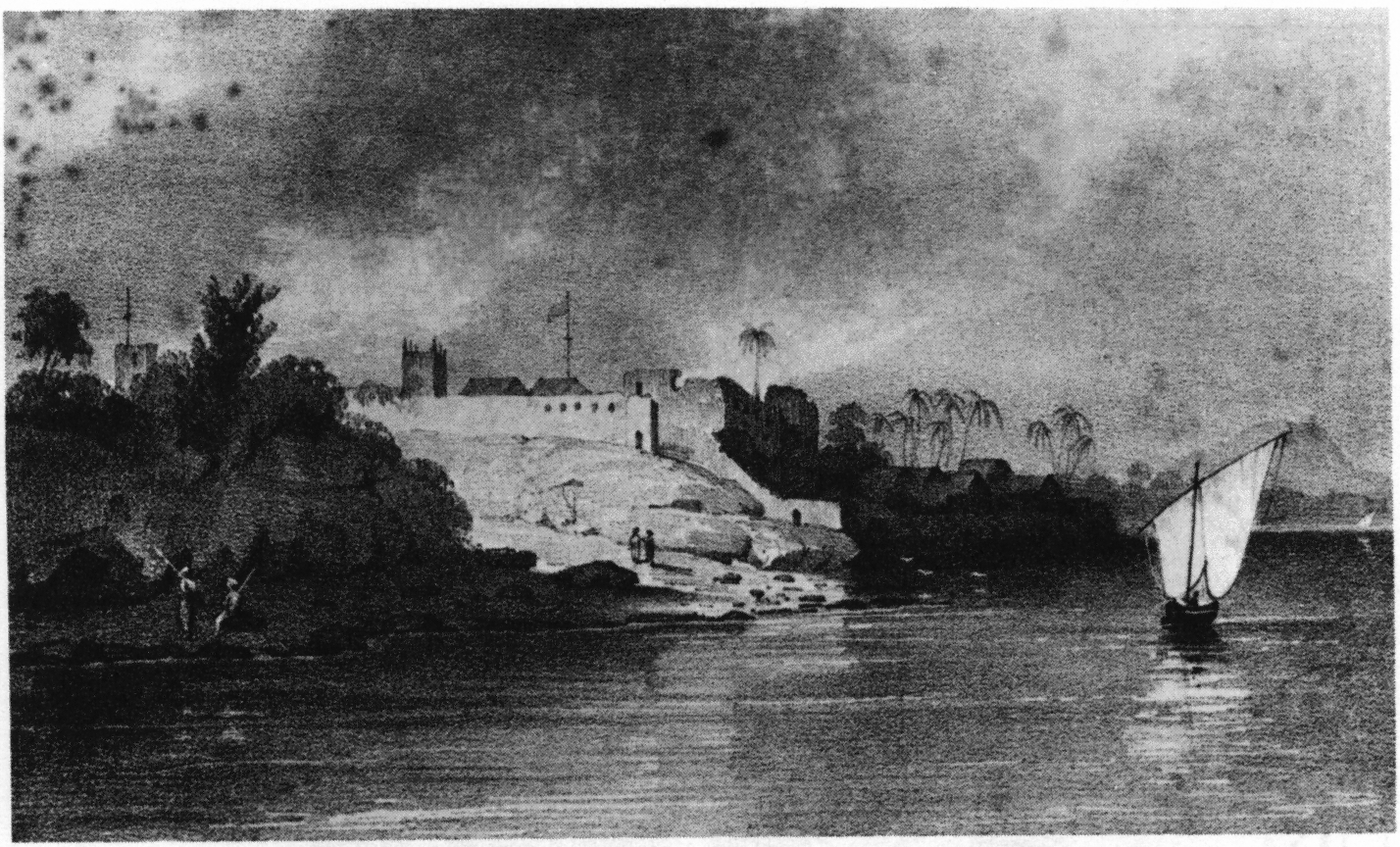
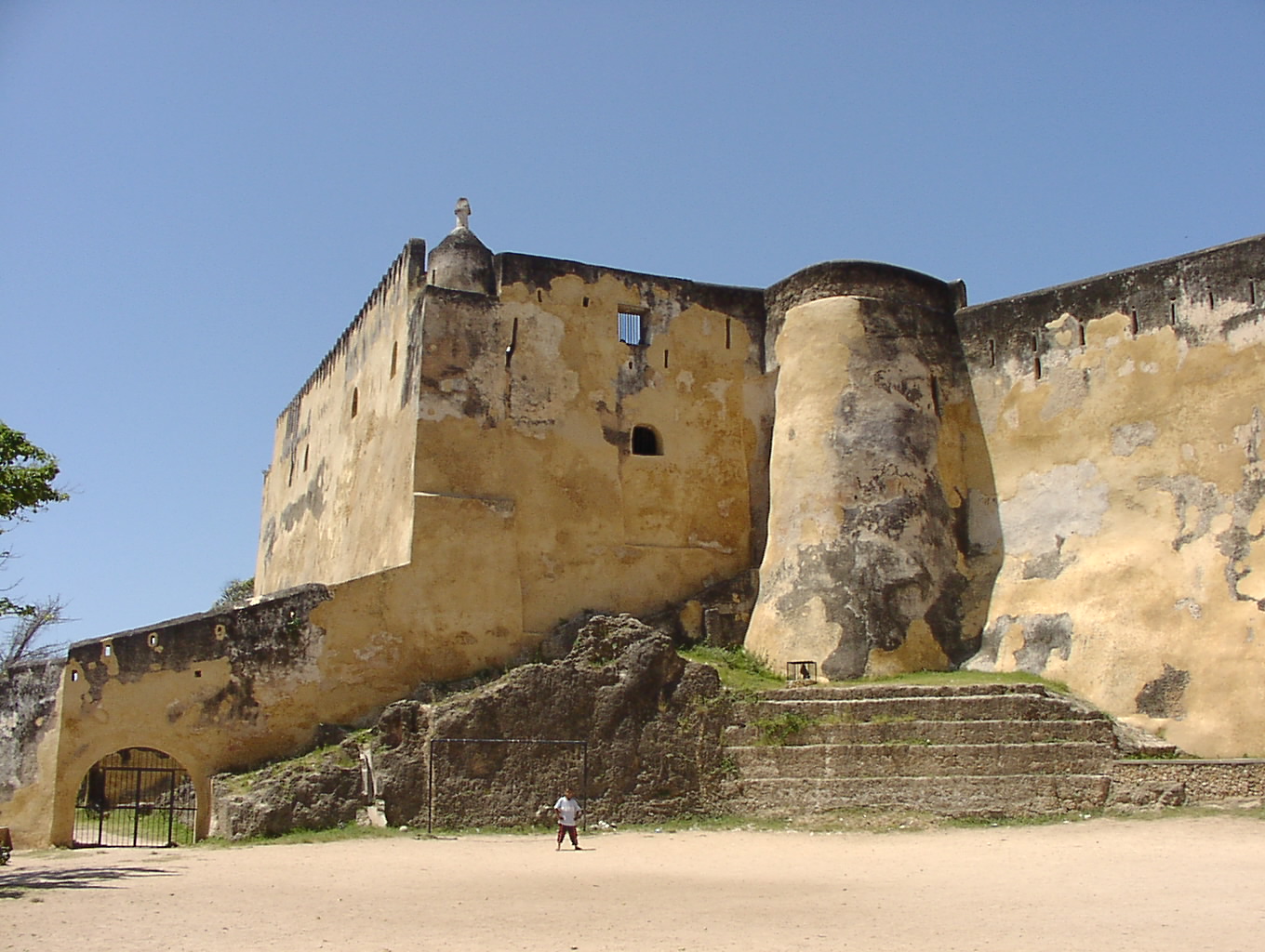
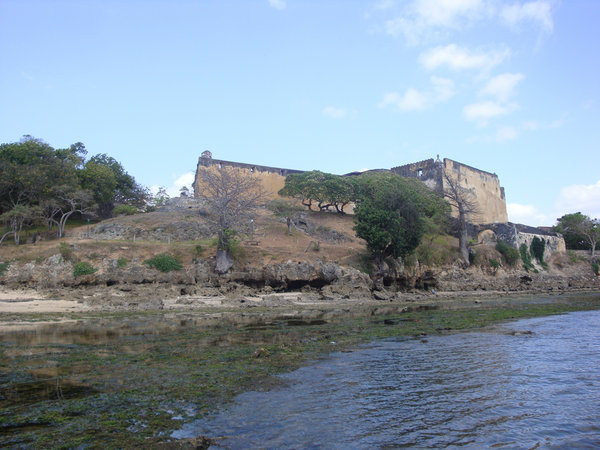
Fort Jesus, undoubtedly Mombasa’s most popular tourist attraction, is a monumental piece of architecture built in the 16th century from 1593-1596 by the Portuguese. Sitting on the edge of a coral ridge overlooking the entrance to the old port of Mombasa, the Fortress which was built to protect the Portuguese trade route to India as well as their vested interests in East Africa is now turned Museum, declared a World Heritage site by UNESCO in 2011 and one of the finest examples of 16th century Portuguese military architecture.
Designed by Italian architect, Giovanni Battista Cairatiand and later dedicated and named “Fortaleza de Jesus de Mombaça” by the then-captain of the coast, Mateus de Mendes de Vasconcelos, the quadrilateral fort is comprised of four bastions; S. Felipe, S. Alberto, S. Mathias and S. Mateus and owes its existence to the Turkish raids of 1585 and 1588 which is what led to its construction.
Since its erection, Fort Jesus’ control has exchanged hands numerous times in counting; In 1631, Sultan Muhammad Yusif baptized as Dom Jeronimo Chingulia entered the fort taking the Portuguese by surprise and killing the Portuguese captain, Pedro Leitão de Gamboa. He also then massacred the whole Portuguese population of Mombasa (45 men, 35 women and 70 children) and after two months of siege, abandoned the enterprise becoming a pirate. Right After sultan Dom’s departure, a small Portuguese force under Captain Pedro Rodrigues Botelho, that had remained in Zanzibar, reoccupied the fort.
In 1696, Fort Jesus fell under siege from Omani Arabs but was easily relieved by a Portuguese expedition in the same year. Unfortunately though, in the following months a plague killed all the Portuguese of the garrison (50-70 portuguese soldiers) and by 1697 the defense of the fort was in the hand of Sheikh Daud of Faza with 17 of his family, 8 African men and 50 African women. After several other sieges from then, the Omani Arabs successfully took over the fort and with this conquest taking the whole coast of Kenya and Tanzania with Zanzibar and Pemba under their control. The fort had clearly become a vital possession for anyone with the intention of controlling Mombasa Island or the surrounding areas of trade. The struggle didn’t just end there though, the Portuguese were not one to accept defeat so easily as they retook Fort Jesus in 1728, when the African soldiers mutinied against the Omanis; a take over that didn’t last so long unfortunately. Tables turned the following year when the Mombasa locals revolted against them and put under siege the garrison. Years later during colonization, the British used the fortress as a prison, until 1958, when they converted it into a historical monument.
Today, visitors get to explore the gun turrets, battlements and houses within the walls of Fort Jesus. The national monument combines Portuguese, Arab and British elements, representing the major powers that held it at different times in history. The presence of the Portuguese and British is felt through their respective cannons; The Portuguese cannons had a range of 200 meters and are longer than the British cannons which had a range of 300 meters. The Omani Arabs on the other hand, left their mark throughout the fort with numerous Koran inscriptions showcased on the wooden door posts and ceiling beams whereas a former meeting hall supported by 5 stone pillars to the ceiling portrays their Muslim tradition of 5 pillars.
Those interested in learning more about the struggles that the fortress has housed over the years will be delighted by the spectacular sound and light shows hosted by the fort 3 nights in a week. On the night of the show, visitors are welcomed into the Fort by guards in flowing robes brandishing flaming torches. They are then led to a specially designed and choreographed show that uses lights, sound effects and costumed actors to bring to life the long and turbulent history of the Fort. After the show, the visitors are treated to a candlelit dinner in the open courtyard of the Fort, under the stars. The sound and light show can also be combined with a sunset dhow cruise on the Mombasa harbor.
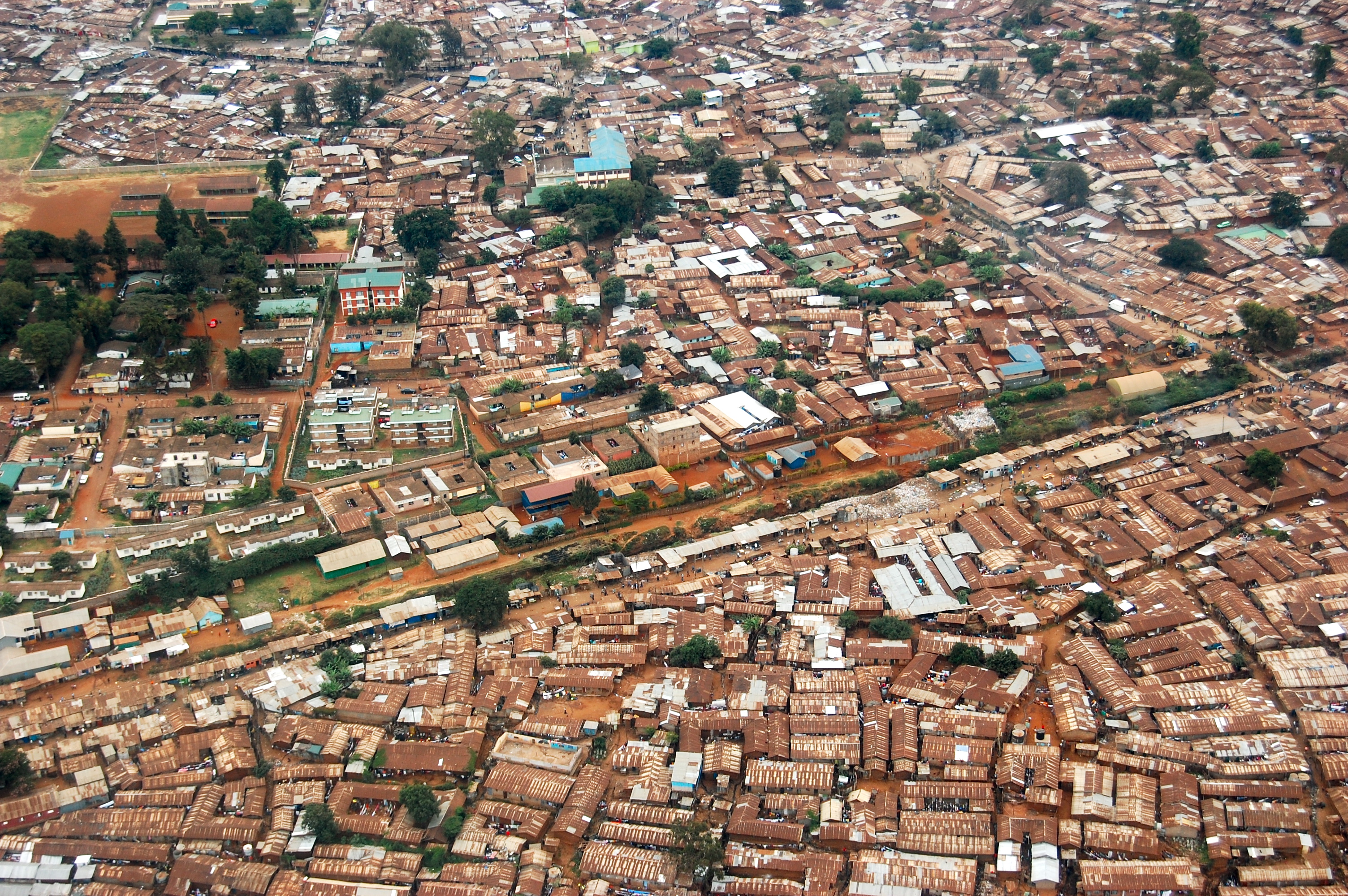
Poorism, ‘Slumming it‘, slum tourism or however you prefer to call it is a phenomenon that has rapidly emerged in the Kenyan tourism sector albeit controversially so, having sparked numerous debates – not only in Kenya but the world over – bordering on whether the tours are exploratory or plain exploitative. Prior to some high-profile obligatory visits, (U.N. Secretary General – Ban Ki-moon, Chris Rock, then-Senator Barack Obama, former United States Secretary of State – Hillary Clinton and former Prime Minister of the United Kingdom – Gordon Brown)itineraries to the ‘chocolate city’ (Kibera’s alias) were simply unheard of.
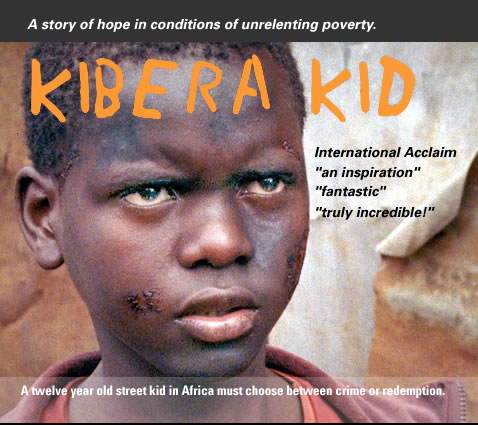
Many can also argue that aside from the high-profile visits, showbiz has had a bigger hand in the promotion of slum tours whether intentional or not; with the release of big films like Kibera Kid, The Constant Gardener(brought a wave of tourists to Kibera), City of God(increased tourism in Rio) and the biggest one yet, Slumdog Millionaire (The award-winning movie recorded a phenomenal increase in the level of poverty tourism popularity in the world). The films go a long way in showcasing not only the poverty in shantytowns, but that these areas can also provide for excitement and thrill in terms of cultural vibrancy, drama, vices and lots more calling for exploration.
A scene from the Constant Gardener
Today, the prominence of poorism has seen a number of slum tour outfits offering tailor-made tours to slum areas within the capital crop up (not without opposition off course); with the most popular slum destination being Kibera as it is the largest in the country. Those set against the entire slum-tour practice (many of whom are slum residents) and with supposed good reason, argue that it is not at all beneficial to the community and see no significance in its existence. What slum tourism does instead, as per their belief is invade the residents’ privacy and have them treated like park animals, which is insulting.
Many abhor the fact that slum residents, who play into the whole equation as mere commodity guaranteeing profit for the tour operators, have no say in the organization of these trips. Nobody seeks out their thoughts or perspectives when planning what activities can or cannot be carried out nor do they get to decide what areas the tourists can or cannot see. This feeling is not only restricted to Kibera though; the same is echoed in regard to the favela tours in Rio de Janeiro andDharavi tours in India where organizers of the tours are labelled as parasites leeching off of the plight of the poor.
According to Cejas 2006, this sort of tourism turns poverty into entertainment more so like ‘reality television’ whereby the tour operators, like television producers, can essentially write a script for tour guides on what is said – who is hero, who is villain, and what areas should be highlighted.
“They see us like puppets, they want to come and take pictures, have a little walk, tell their friends they’ve been to the worst slum in Africa,”David Kabala – Kibera resident.
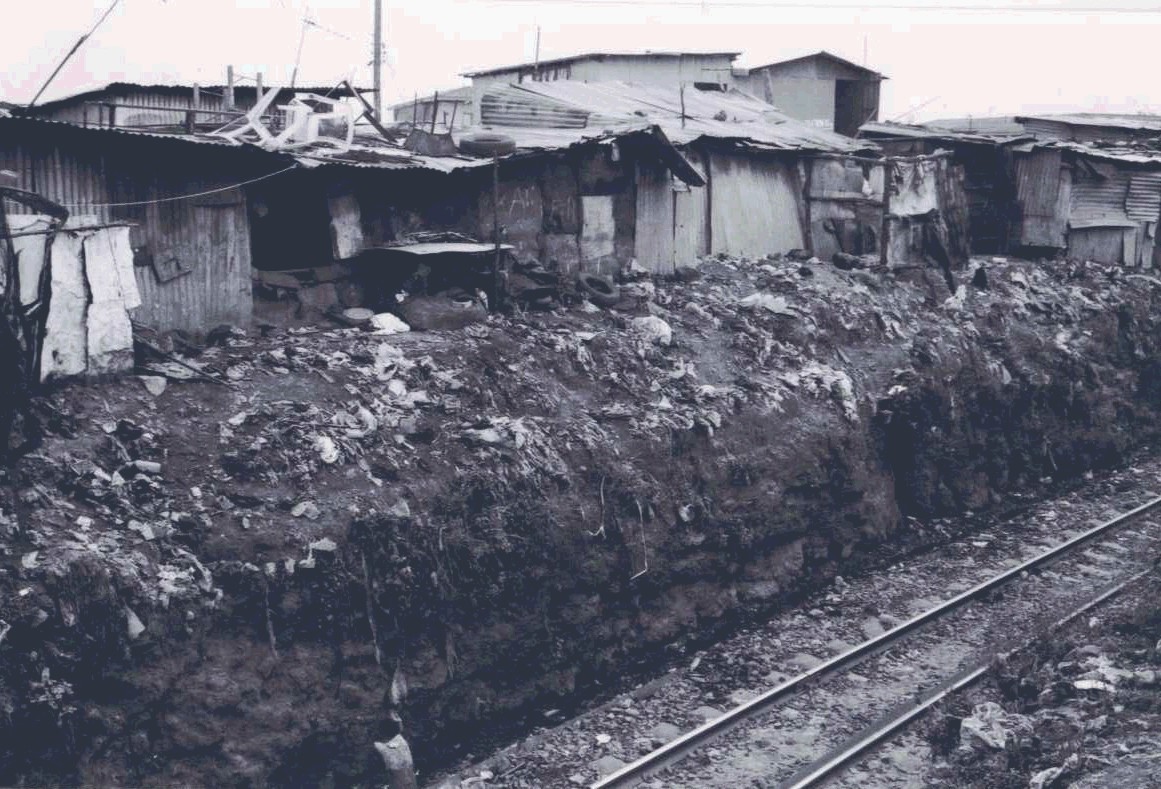
On the other end of the argument however, proprietors of these ‘pity tours’ are seemingly convinced that tourists on an adventure, snaking along narrow mud-ridden alleys fascinated by the novelty of capturing images of the newest spectacle in tourism ‘the bipedal slum wildlife’, while sampling the varied tastes that poverty and slum life has to offer; lack of sanitation, water shortages, lack of access to education, health hazards and diseases, sale of illicit alcoholic brews, HIV/AIDS amongst many others is not a mockery to the slum residents’ situation, au contraire.
Aside from being good money off course, slum tourism from the tour operators’ view is a form of promoting social and cultural awareness; a tool that aids tourists get more accustomed to what being a slum dweller really means and to better grasp the issues and challenges that slum residents have to tackle in everyday living. The generated income from the slum tours supposedly makes its way back to the community to help support schools, children’s homes, art centres and many more but in many occasions; this is sadly not the case as much of the cash registered is pocketed by the slum-tour outfits. This very common scenario is arguably the main reason behind most of the residents’ stand in opposing slum tourism as aside from enriching the tour operators, it simply does nothing for them.
Now granted that most of the individuals paying for these tours on a whim may genuinely want to understand how shantytown life may be, – not that it is advocated that one enthusiastically sets out on an adventure capturing images of individuals without their consent in the name of understanding poverty – a two to three-hour visit no matter how well-intentioned you may be would do nothing to help one nearly comprehend the slum situation, not in the least bit. Perhaps those that truly seek to understand slum life should dive all in and literary walk in the residents’ shoes; do away with the one-way street affair that is a few hours slum tours and say hello to home-stays within the slums areas. That way, the visitor gets to experience first-hand the situation on the ground without relying on stories and on the other hand, host families get to put food on the table by actually getting profits from the trips.
In all honesty though, in spite of the organizers’ high expectations that the experience may lead the tourists into action, how many of these tourists actually do something about what they see during their slum tours after they get back home? it all seems to be a lip service affair Just as is the case with many of the dignitaries.
An example of endeavors to understanding the depth of poverty associated problems that many Kenyans grapple with in the slums brings up Famous, rich and in the slums. For those who might not have watched it, Famous rich and in the slums is a two-part documentary series that follows four British celebs – comedian Lenny Henry, TV host and journalist Angela Rippon, actress Samantha Womack, TV and radio star Reggie Yates – into the slums of Kibera away from their privileged lives, as they fully immerse themselves in slum culture for one week and undergo an emotional, life-changing encounter, forming deep bonds with people living with a range of devastating issues all too common in Kibera . Stripped of all their possessions, and with just Ksh200 to start them off, the four had to eat, breathe and work every aspect of slum life for the seven days. How did they cope in their new environment? living by themselves in the first few days and having to work tough jobs to survive, Lenny, Angela, Samantha and Reggie discover just how harsh the realities of poverty are.
This documentary was filmed as part of the annual BBC Comic Relief charity telethon – Red nose day, an event that saw over £70 Million (£74,360,207) raised that year to help change lives of extremely vulnerable and disadvantaged people across the UK and Africa (including the ones featured in the film). Aside from being emotionally hard-hitting, the documentary unlike many others, gives a voice to the slum dwellers as they share their stories as well as homes with the four personalities. This is a side of Kibera that we rarely get to see in the media, we see resilient individuals who despite hardship and abject poverty have not stopped hoping and work extra hard for a better future. Although some may argue that this is all a ploy for ratings, one cannot deny the impact that this experience had on the lives of the residents that the four personalities engaged with, even if just in a little way. Comic relief continues to make an impact on people’s lives both by raising funds and raising awareness about just how life can be for those on the opposite end. Another similar feature from comic relief is Famous, rich and homeless a documentary that unveils the realities of living in the streets of London.
That being said, it’s about time Kibera stopped being Kenya’s poverty poster child. Despite the inescapable poverty and hard living conditions, Kibera is teaming with so much life, energy, community and promise; with so much talent yet to be harnessed. Kibera needs land/tenancy rights, housing, water, electricity, health clinics, education, employment, security plus much more; issues that are being addressed to a lesser or greater extent by many organizations including Churches, UN-Habitat, MSF, AMREF and many others, with funding coming from organizations such as Gates Foundation, Bill Clinton Foundation, and other well-known charities both local and international. The major question here though is where does the government fall in this picture? why should Kenyan citizens have to rely on outsiders to do something for them when the very people they elect sit by and watch them suffer?
In essence though, we all should be on the forefront of alleviating the rich-poor divide in the country. The much-needed efforts of willing and compassionate people would definitely go a long way in extracting the “me vs the poor” attitude.
“Overcoming poverty is not a task of charity, it is an act of justice. Like slavery and apartheid, poverty is not natural, it is man-made and it can be overcome and eradicated by the actions of human beings” Nelson Mandela.
With their latest venture having been geared towards advocacy against poaching, the now acclaimed Maasai warriors took to the field to do what they know best; cricket. Not so long ago, the unusual Maasai cricket morans (unusual because unlike any normal cricket team, the morans play the sport in their colourful garb instead of the traditional cricket whites) faced the Ambassadors of Cricket;an Indian cricket team, in a T20 cricket match at the Ol Pejeta Conservancy.
The event’s main goal was creation of awareness against poaching of elephants and rhinos in Kenya; an issue that has increasingly exacerbated overtime. Ol Pejeta was selected as the initiative’s venue for the simple reason of being home to some of the endangered species i.e black and northern white rhinos.
The Maasai Cricket Warriors have awed many in their years of existence (believe it or not they have a decade under their belt as a team) not only for the sassiness they bring in the game of cricket (their sport attire is colourful; made up of colourful shukas, beads and sandals made from tyres aliasakalas) but also for the main reason behind their playing this gentleman’s game. Its a peculiar sight coming across a Maasai whom instead of a spear holds a cricket bat. However, this peculiarity has a noble drive behind it; the warriors main mission through this is to empower youth by targeting social problems in order to bring about positive change in their Maasai communities.
The Maasai warriors cricket team, to quote an old Pepsi tag line, has nothing official about it – and that’s where the beauty lies! The team consists of 11 men (plus another 14 reserves) – each one striving to be a role model in their community. Their campaigns are targeted against traditional female circumcision (FGM), child marriages, and HIV/AIDS among tribal youth.
The Maasai community is male-dominated and the women have very few rights – even to their own bodies. The Maasai women also grapple with Female Genital Mutilation (FGM) where girls as young as 6 are circumcised facing pain, psychological trauma, considerable health problems as well as high-risk of infection since materials used are not entirely sanitary (the girls are circumcised with materials that have been used over and over). HIV is also rife here and the victims face a lot of stigmatization. Another major challenge is child marriages where in some cases children are married off in return for livestock or alcohol. The cricket warriors feel that education and change is the only way to secure the health of the community, provide equality to their society, and as a result protect their future.
It is a tough challenge to accomplish what they are going for seeing as the Maasai elders fear changing their traditions will herald the end of the Maasai. However, with great drive and determination, they continue to make a difference – one step a time. The warriors are also spending their time trying to stop cattle rustling a practice that has now degenerated into a militarized activity among the Pokot, Turkana, Maasai and Samburu communities. Today’s incidents of cattle rustling are driven by hatred, political instigations, unscrupulous commercial activities, general crime, and availability of firearms. The warriors plan to curb this through proactive engagement of the youth from the pastoral communities in this region and also with cross-district involvement in sports, such as cricket while at the same time reawakening and revitalizing the traditional mechanisms of peace building among the different communities. The community elders will also be facilitated and enabled to carry out traditional peace building and conflict transformation strategies.
The Maasai cricket warriors have come a long way and are not planning to call it quits anytime soon. They dream of reaching England and playing in the Last Man Stands World Championships – a pilgrimage of sorts to the ‘home of cricket’ – not only because they genuinely love the game, but also because they believe it will give them a status to positively influence the future of their village.
We Don’t Only Play Cricket – It’s Our weapon to Eradicate Social Evils
Currently underway at the KICC (Kenyatta International Conference Centre), the Kenya Hospitality Trade Fair was officially launched yesterday by the Governor of Nairobi, Dr. Evans Kidero. The Trade Fair kicked off with a premier conference for the first edition of Hotel Summit East Africa (HOSEA)(this was introduced by the event’s organisers, Slujan Events in conjunction with the Eastern Africa Economic Chambers of Commerce (EAECC)) under the theme Investing in the Hospitality Industry: The next Frontier.
The three-day event that ends tomorrow (25th – 27th July) is regarded as the largest hospitality event in East and Central Africa, and expects to attract just about over 10,000 business networking, exhibition and conferencing professionals.This event will give a platform to hospitality-oriented businessmen amongst others, to sample top notch products, services and solutions available in the industry.
Also expected at the event are over 100 exhibitors from more than 10 countries. The exhibitors will include experts in interior décor & furnishing, international manufacturers, suppliers and solution providers in hospitality supplies & equipment, distributors, technology & sustainability, outdoor & tailor-made experiences and many, many others.
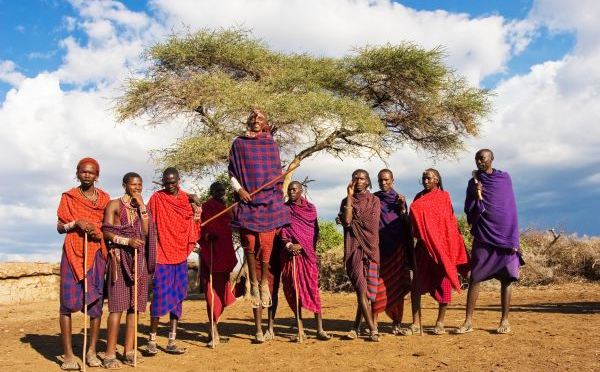
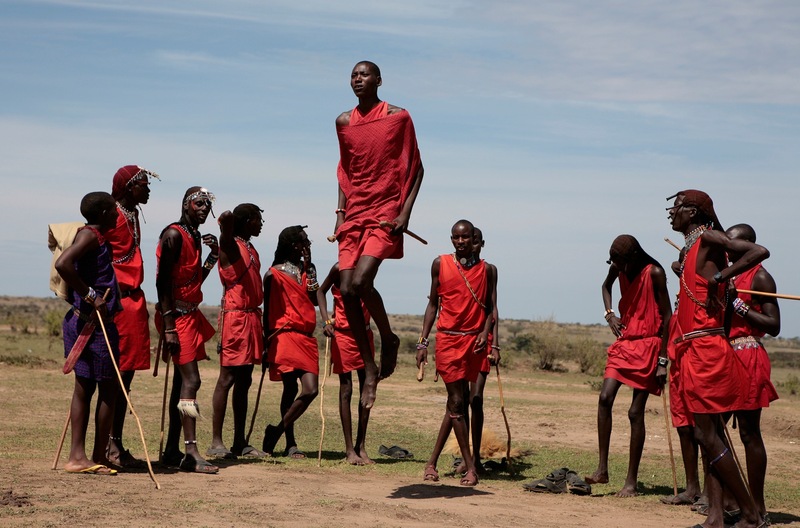
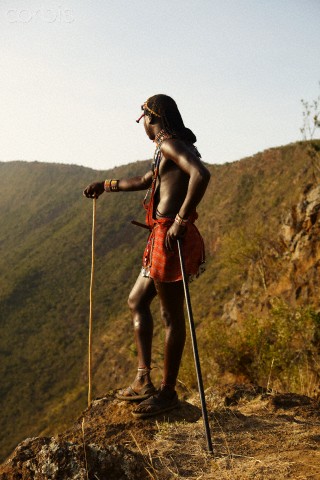
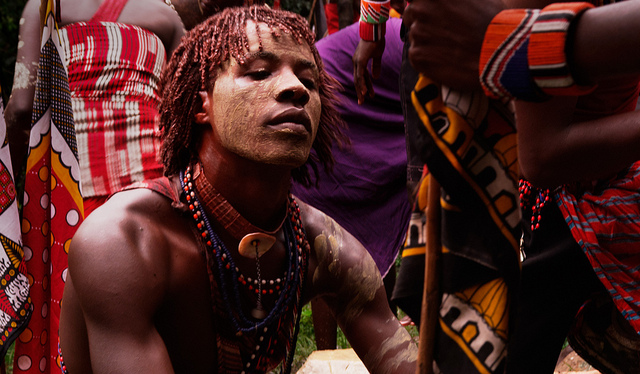
Performing the adamu (the jumping dance – performed when a circle is formed by the warriors, and one or two at a time enter the center to begin jumping while maintaining a narrow posture), they stand tall and slender in somewhat stylish long ochre-dyed hair with Shúkà attire (red sheet-like material with hints of other colours e.g blue wrapped around the waist or over the shoulder) completing their overall look. On other occasions you’ll spot them with a spear clutched on one hand and right foot hooked on the crook of the knee of the left leg; these are the stereotypical images we’ve become accustomed to when it comes to the Maasai in the tourism world.
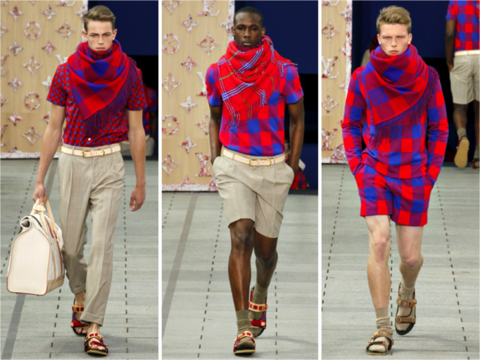
They are undoubtedly the most known Kenyan tribe outside of Kenya, having grown into a brand in itself not only for Kenyan tourism but also steadily for global fashion. The maasai brand is all over; maasai carvings and merchandise are in display in numerous curio shops, the maasai market has also overwhelmingly grown overtime, the maasai themselves stand on display at many hotel entrances as an attraction to the guests, even the high-end fashion house Louis Vuitton has a maasai line that includes; hats, scarves, duffle bags and beach towels. The distinctive Maasai beading and decorative jewellery has become a fashion item in the West, and remain one of the most popular items taken home by visitors to Kenya. So popular has Maasai beading become that many modern functional items, including watchstraps, belts, handbags and even mobile phone covers are being produced in Maasai designs. There are currently about 80 companies around the world using either the maasai image or name; showing just how big a brand the maasai have become. Sadly though the ‘Maa’ speaking people aren’t part of the trade – anyhow, that’s a story for another day . But who really are the Maasai?
Louis Vuitton maasai inspired fashion
Over the last one week, renewed effort has been put in, both in print media and on international websites such as BBC, on the pertinent issue of Who Really owns the Maasai Brand? The debate goes, Maasai brand is currently everywhere globally, and it is big money – but the community itself is receiving little benefit from their own brand. To quote from today’s issue of Daily Nation’s DN2 Pullout, “there are currently about 80 companies around the world using either the Maasai image or name. These include a range of accessories called Maasai made for Land Rover; Maasai Barefoot Technology, which makes specialty trainers; and high end fashion house Louis Vuitton, which has a Maasai line that includes beach towels, hats, scarves and duffle bags.” – See more at: http://northkenya.com/2013/05/who-owns-the-maasai-brand-in-kenya/#sthash.A77AID3U.dpuf
there are currently about 80 companies around the world using either the Maasai image or name. These include a range of accessories called Maasai made for Land Rover; Maasai Barefoot Technology, which makes specialty trainers; and high end fashion house Louis Vuitton, which has a Maasai line that includes beach towels, hats, scarves and duffle bags.” – See more at: http://northkenya.com/2013/05/who-owns-the-maasai-brand-in-kenya/#sthash.A77AID3U.dpuf
Over the last one week, renewed effort has been put in, both in print media and on international websites such as BBC, on the pertinent issue of Who Really owns the Maasai Brand? The debate goes, Maasai brand is currently everywhere globally, and it is big money – but the community itself is receiving little benefit from their own brand. To quote from today’s issue of Daily Nation’s DN2 Pullout, “there are currently about 80 companies around the world using either the Maasai image or name. These include a range of accessories called Maasai made for Land Rover; Maasai Barefoot Technology, which makes specialty trainers; and high end fashion house Louis Vuitton, which has a Maasai line that includes beach towels, hats, scarves and duffle bags.” – See more at: http://northkenya.com/2013/05/who-owns-the-maasai-brand-in-kenya/#sthash.A77AID3U.dpuf
there are currently about 80 companies around the world using either the Maasai image or name. These include a range of accessories called Maasai made for Land Rover; Maasai Barefoot Technology, which makes specialty trainers; and high end fashion house Louis Vuitton, which has a Maasai line that includes beach towels, hats, scarves and duffle bags.” – See more at: http://northkenya.com/2013/05/who-owns-the-maasai-brand-in-kenya/#sthash.A77AID3U.dpuf
“there are currently about 80 companies around the world using either the Maasai image or name. These include a range of accessories called Maasai made for Land Rover; Maasai Barefoot Technology, which makes specialty trainers; and high end fashion house Louis Vuitton, which has a Maasai line that includes beach towels, hats, scarves and duffle bags.” – See more at: http://northkenya.com/2013/05/who-owns-the-maasai-brand-in-kenya/#sthash.A77AID3U.dpuf
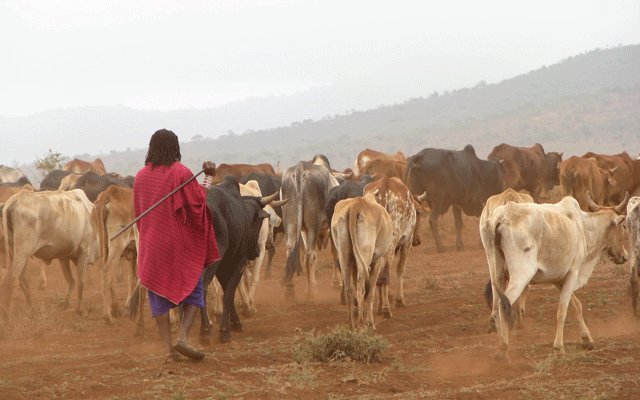
Predominantly a warrior tribe, the maasai are a semi-nomadic group whose lives revolve around cattle. They cherish these animals so much so that “I hope your cattle are well” is regarded a common greeting among the maasai. They speak ‘maa’, a language family related to Dinka and Nuer and they also have a common ancestral tie to the Samburu and the Njemps. The Maasai have a strong belief that God entrusted cattle to them and therefore to them, wealth is measured by how many herds one owns. This very belief is what has seen result to many cattle raids among the ‘maa’ speaking groups as they believe that stealing from other tribes is okay seeing as cattle was given solely to them by the creator.
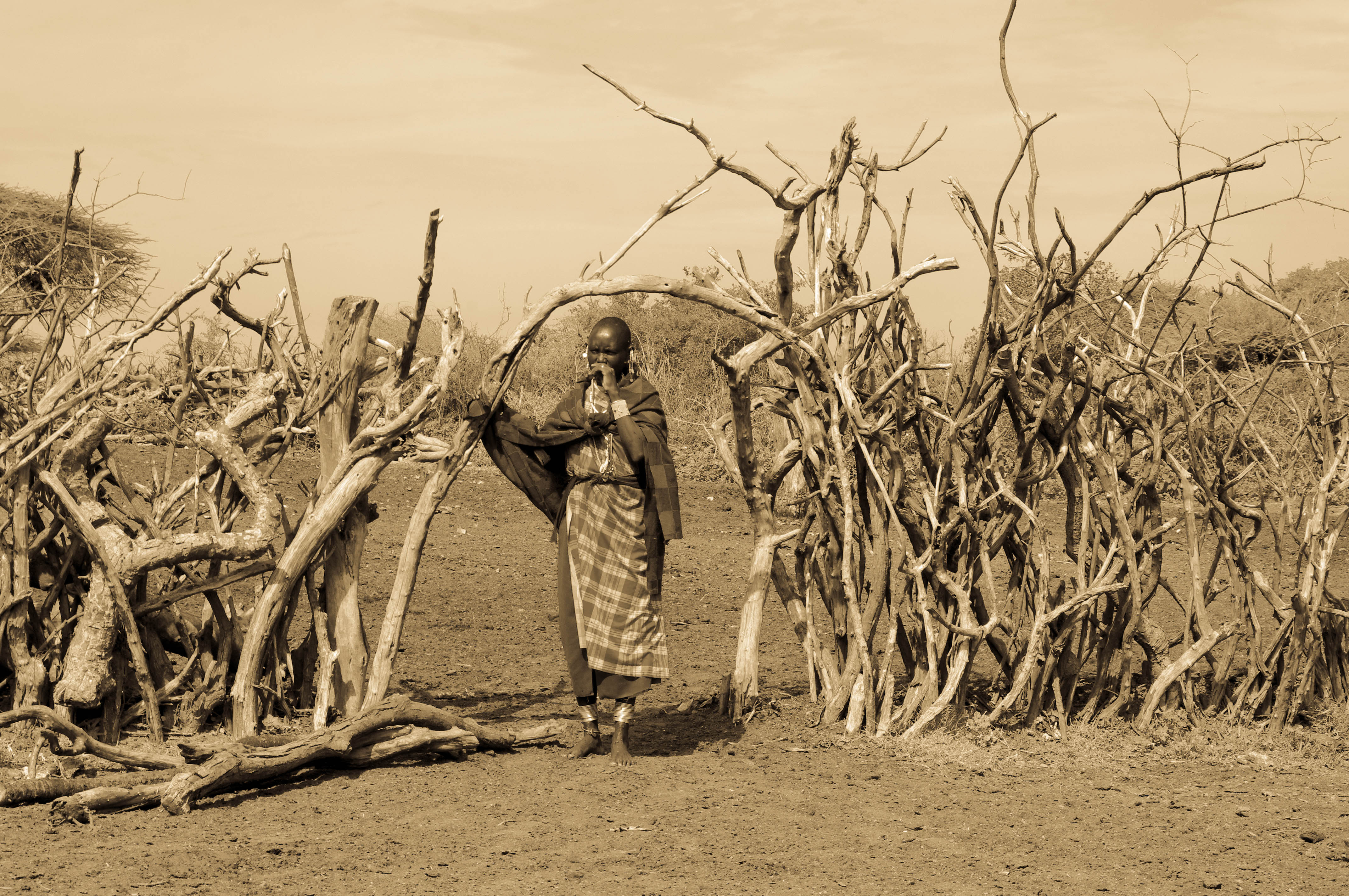
The Maasai as a cultural people, have managed to retain their beliefs and lifestyle despite modern world temptations to change and adapt with new technologies. They live in small settlements in Kraals, surrounded by thorn bush fences. Their manyattas ( traditional house/hut) are made out of branches, grass, twigs and cement made out of cow dung and urine. Animal skin and cushions of dry grass serve as interior decor for the huts. For survival, the Maasai rely on cows blood, meat and milk although recent times have seen them adopt agriculture as well. The blood is obtained from the jugular vein of the cow using an arrow and after drawing of the blood, the animal is cared for ’till it heals.
The Maasai tribe constitutes a highly developed system of initiation and age-sets. The highest ranked being the Oloiboni – a spiritual leader, who also takes the role of a political leader. Along with Oloiboni is alaigwanani, holding the political leadership role only, confined within clan parameters unlike the Oloiboni who has an added religious role that goes beyond clans to a larger community setting in Maasai land. The Maasai also consult diviners; Loibonok whenever misfortune hits the community who also double up as physicians treating diseases. The tribe’s clans are lead by Laigwanak (heads of clans) whose roles include settling land disputes, resolving conflicts between Maasai communities and other tribal groups, as well as serving as intermediaries between the Maasai community and the government.
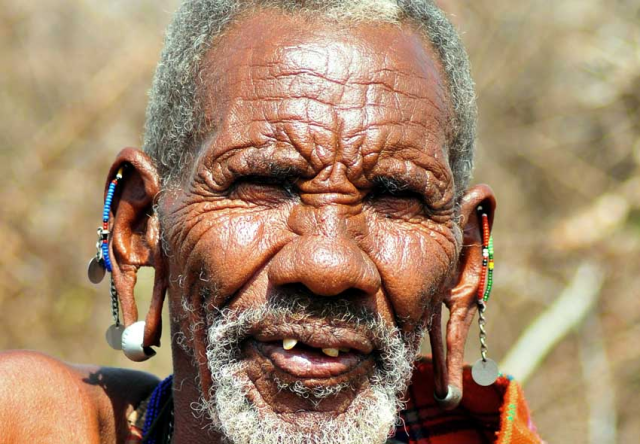
Maasai elder
The first initiation stage that the maasai go through is circumcision of boys who are considered junior moran afterwards. They then grow their hair into long braids, usually decorated with red ochre, which is also used to slather their upper bodies. A huge task that the morans previously undertook afterwards but is no longer in practice for wildlife endangerment reasons was lion hunting; Olomayio. This served as a testing for how courageous the young morans were and was a very daunting and daring task having to fight a lion and escape with their life. The victorious warriors would then perform a dance called Engilakinoto.
Age-sets to the maasai are an integral part of the society. These are derived during circumcision where a group partaking in the exercise together form an age-group. Each group has a specific role in the community. For instance, boys (age six and seven) begin to learn herding from their older brothers before undergoing circumcision. There are four age groups in total; junior warriors, senior warriors, junior elders, and senior elders. The junior warriors learn about warfare under the tutelage of the senior age group, prepping to be defenders of the land. They also learn about the customs and traditions of the Maasai people as it will be their duty to pass it on to the next generations. The senior warriors on the other hand assume a tremendous responsibility of defending the land from all sorts of enemies. These two groups serve within a time period of about twenty years until another group gets circumcised. There are no age groups for women, instead they automatically fall into the age group of the men that marry them.
Women are the heart of the Maasai tribe, having to carry out many of the chores in the community. Aside from building manyattas; a task that takes them a period of about seven months to complete, the women fetch water and firewood, milk cows, pick calabashes and gourds decorating them with leather and beads, look after their homes amongst many other duties. Even though women in this society have a strong voice in their culture functioning as religious leaders and educators, they are on the other hand, considered a minority. They have no right to own neither cattle nor land and are represented by their fathers when it comes to sensitive matters and tough decision making and later on after marriage, their husbands. If unfortunately one doesn’t get sons in her marriage, the poor woman will be left on her own with no money, possessions or anyone to take care of her.
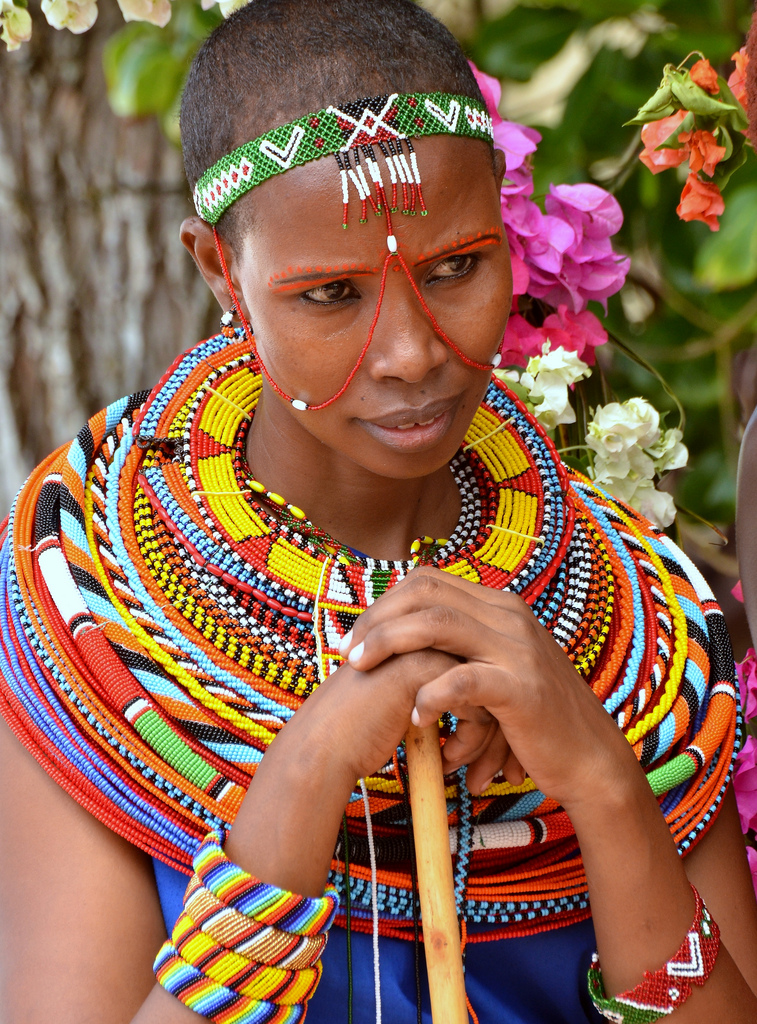
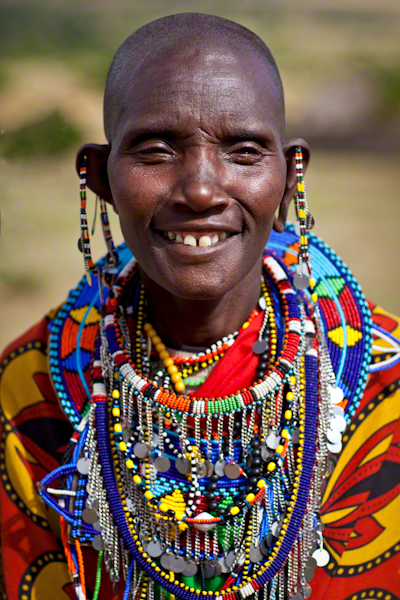
The Maasai are not only known for their traditional beliefs but also for their exquisite artistry. To some of us it appears simply as fashionable but what many do not know is that beading to the Maasai is actually symbolic. This tribe has about 40 types of bead work that mostly feature the colours red (colour of the Maasai), blue (Godly and reflecting the colour of the sky) and green (colour of God’s greatest blessing, fresh grass after rainfall). The bead work is done by the women but is worn by both genders of the community. Unmarried women adorn one of the beautiful pieces created; a large flat disc that surrounds the neck, made up of rows of beads threaded onto wire, secured and spaced with cow hide strips. Married women on the other hand, wear long blue beaded necklaces, and also decorate their earlobes with long beaded flaps. This amazing bead work has gained the Maasai a large market for their creations with locals as well as tourists serving as big customers.
The Maasai tribe is crippled by a number of challenges today; competing with wildlife for their land, natural calamities such as drought causing loss of herds, illiteracy is another thing that short changes the community and constant cattle raids leading to loss of life and property. Despite being seen as a rigid society for preserving their traditional ways, their conservatism has undoubtedly gone a long way in bringing the Maasai a lot of fame overtime. Today, they are revered as a community of beautiful culture that has earned worldwide respect.
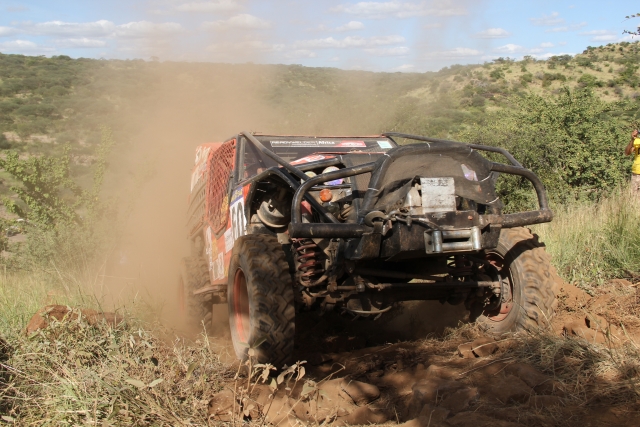
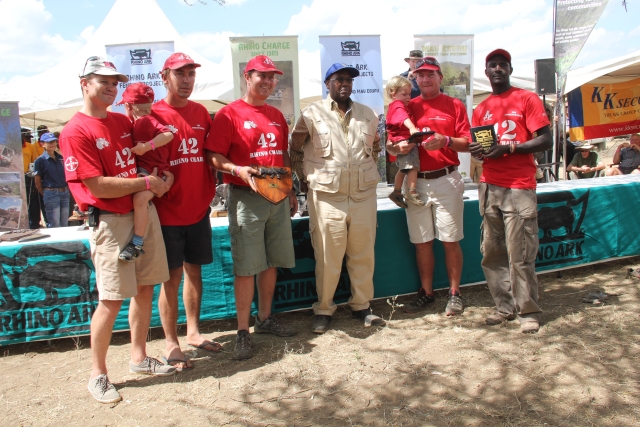
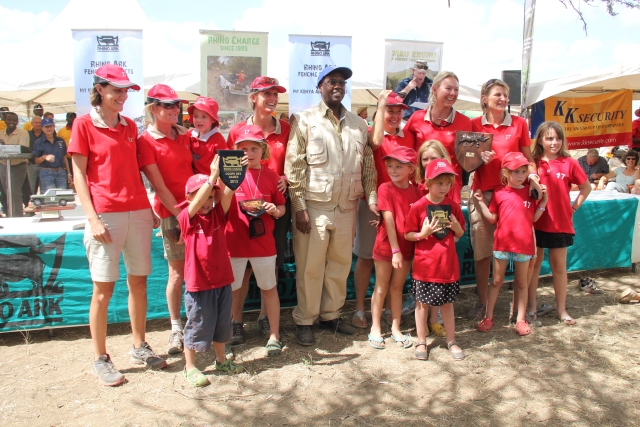
The numbers are in, Rhino charge this year successfully raised a whopping Ksh90,294,239.18 a step up from last year’s Ksh84.6 million by a Ksh5.6 million difference; an all time record. This was a three-day event held from June 1 in Ol Doinyo Nyokie, Kajiado County. Sean Avery ( Team Bundu Fundi – car 38) whose team visited all guard posts with a distance of 26.99km was this year’s winner.
“I am most thankful to the host community for accepting us in one most beautiful and unspoiled part of East Africa, as well as to all the competitors and sponsors for having come good in a difficult time for a cause which is at the centre of the future of the nation” David Lowe, Clerk of the Course.
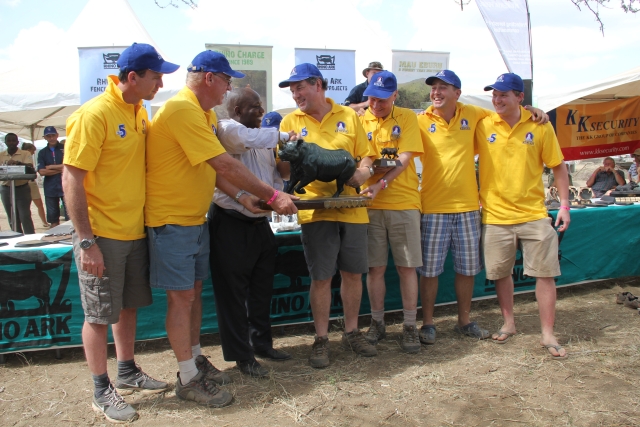
The most prestigious VictorLudorum Award (highest fundraiser award) went to Alan McKittrick of car 5. McKittrick and his team continued their noble streak of fundraising having raised an all time high of Ksh12,098,283 beating their last year’s record of Ksh11,509,015. Alan has been the highest fundraiser in rhino charge’s history having raised a staggering total of Ksh101,240,535 since 1989. This incredible performance saw McKittrick’s team awarded the Ken Kuhle trophy for services to conservation having been number one fundraiser for 11 consecutive years. Tim Carstens of Base Titanium came in 2nd with just over Ksh5 million raised.
The tough Gauntlet race proved a bit of a challenge for Sean Avery coming in second with a distance of 1.34km. First place went to Terry Childs (Braeburn Seven Squared) in car 49 with a distance of 1.28km who also won the Tiger Line 2 covering a distance of 3.876km. Peter Bonde Nielsen in car 64 came in Third with a distance of 1.36km. Avery managed to regroup and emerged winner of the modified vehicles category. Tanya Church (Team Rhino Rouge) in car 17 won the unmodified category but was placed 16th overall with a distance of 37.356km. She was also awarded the Coupe Des Dames award.
Tiger Line 1 was won by Mark Glen (Glen/Llewellyn) in car 48 covering a distance of 1.747 km whereas Best placed overseas entrant went to Chris Welles (The Wags) in car 10 placed 39th overall in the event. Anton Levitan scooped the Spirit of the Charge trophy having been Clerk of the Course for 19 consecutive years. Levitan’s efforts have seen the charge evolve into a much sort after conservatory sport built up of thrill, fun and social responsibility.
Another success into the event was the Rhino Charge raffle meant to assist the fund-raise with over 120 prizes. The main prize, 2 return business class tickets to Bangkok from Kenya Airways and 5 nights accommodation at the Rembrandt Hotel in Bangkok was won by Business Advisory Group supporting car 44. Ksh2.9 million was raised in camping fees. This was gotten from entry fees into the venue by all entrants. The funds will go to local conservation projects run by a local committee.
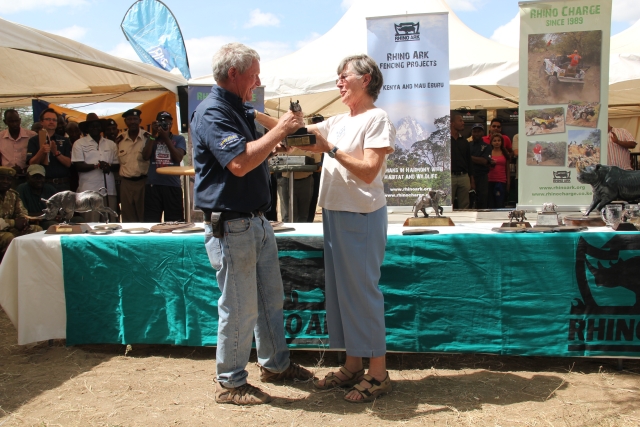
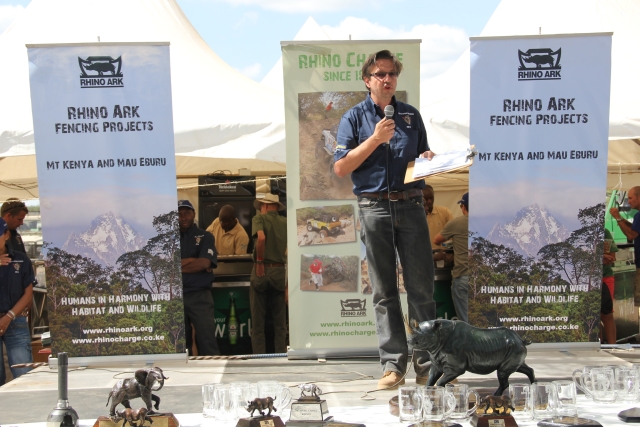
Speaking during the prize giving ceremony, Christian Lambrechts, Executive Director of Rhino Ark thanked “the competitors who have been most active during the past year in securing sponsorships for their cars and succeeded in raising funds to a level never reached before”.
The money raised during Rhino Charge will go towards fencing Mt Kenya and Mau Eburu. Work on these two projects has already began with 27km of the Mt. Kenya electric fence already built and 6km on Mau Eburu completed.
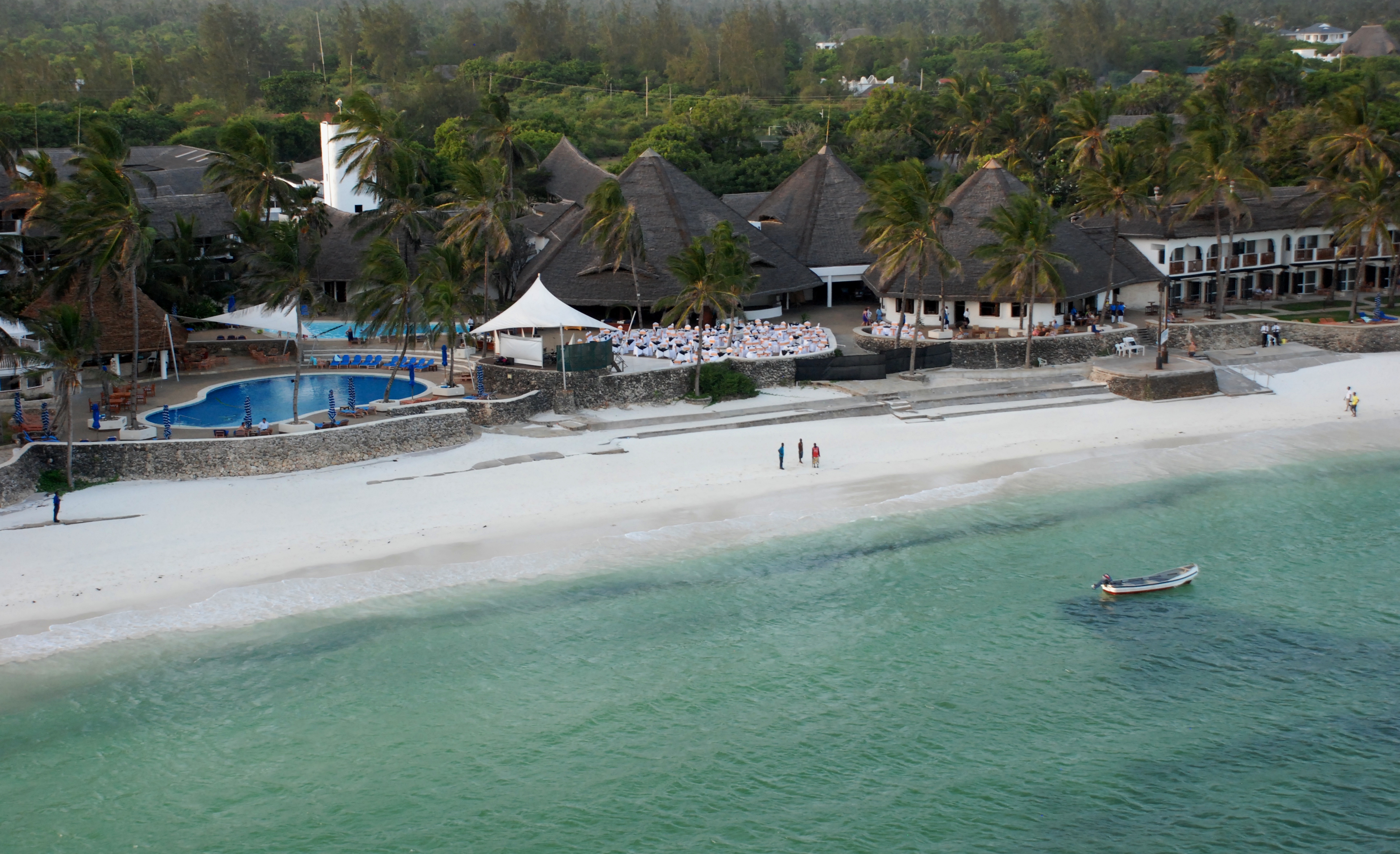
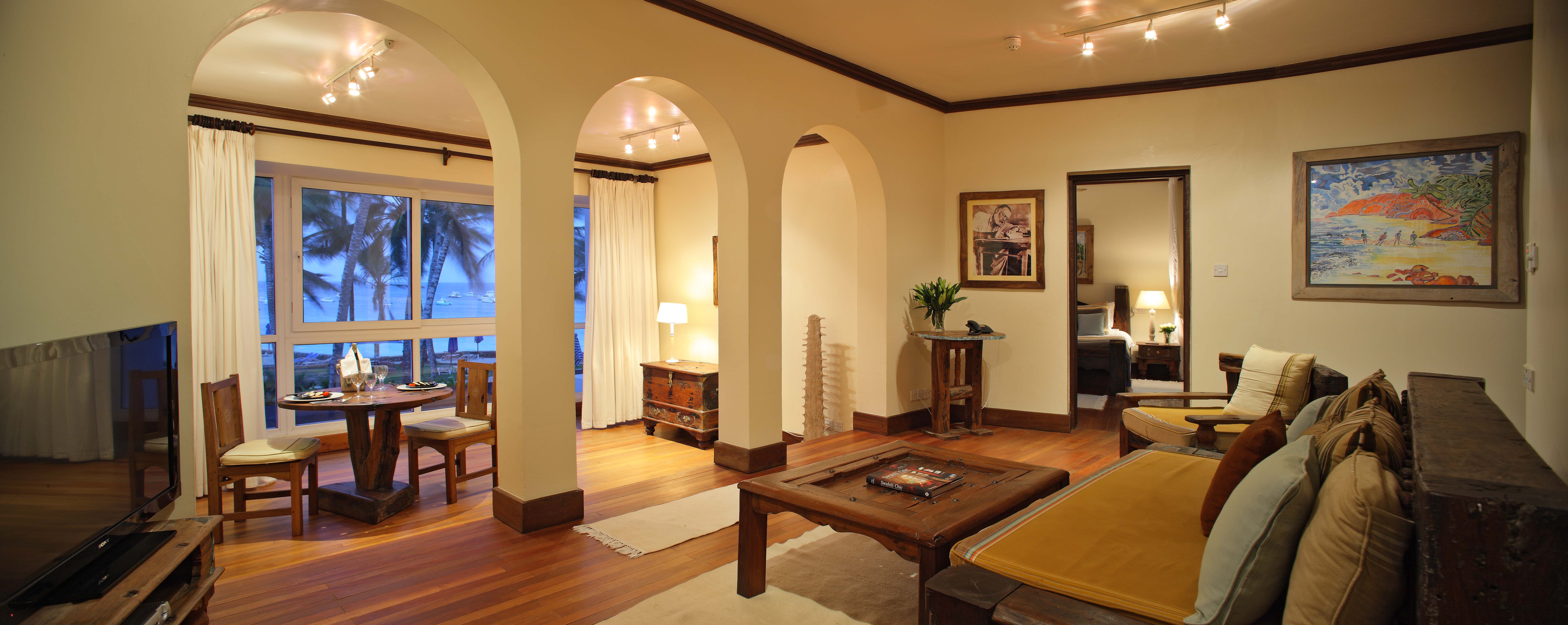
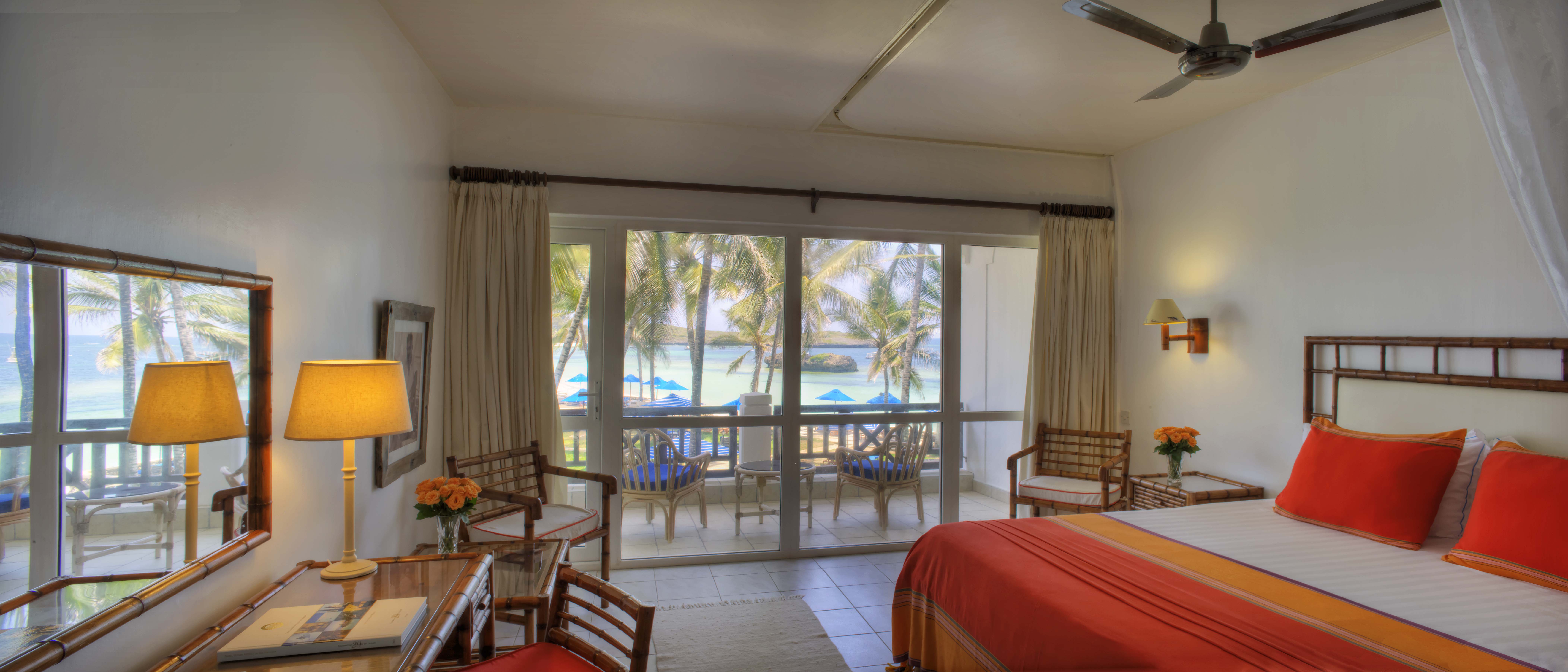
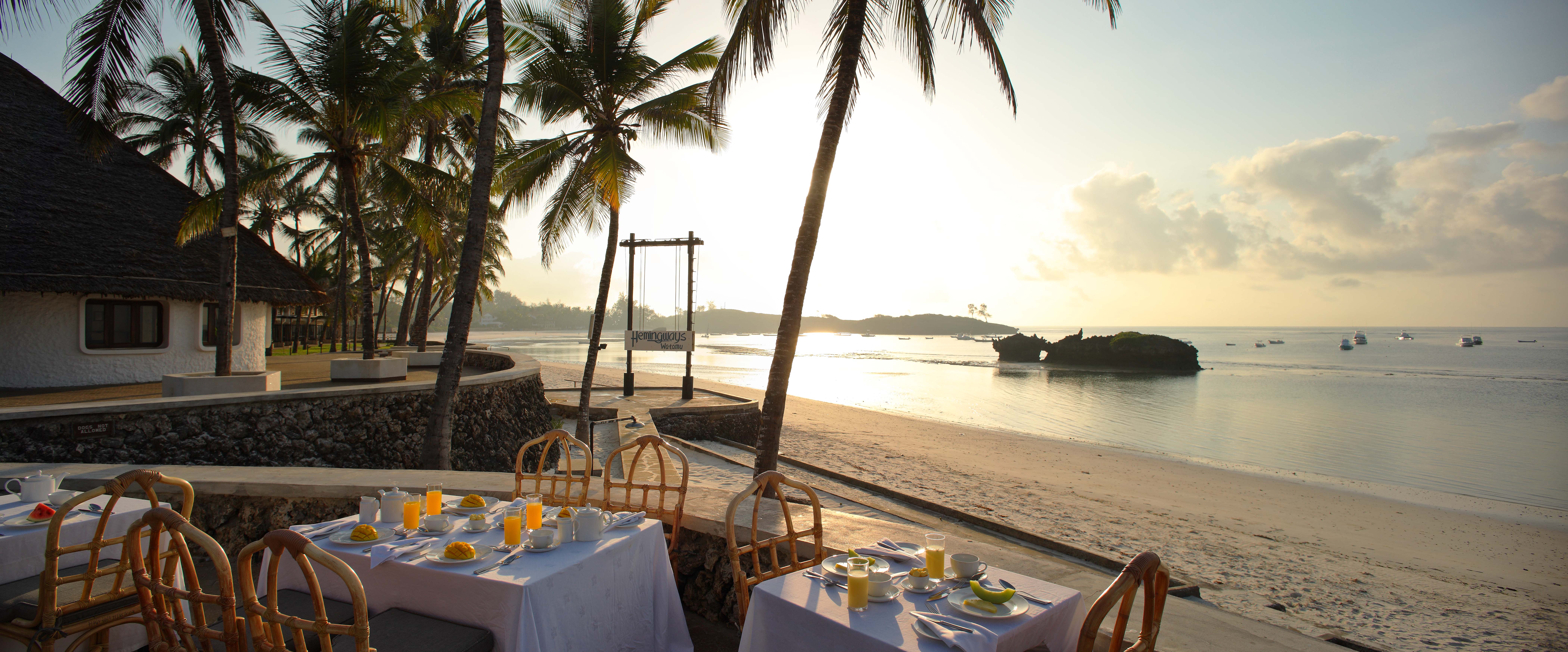
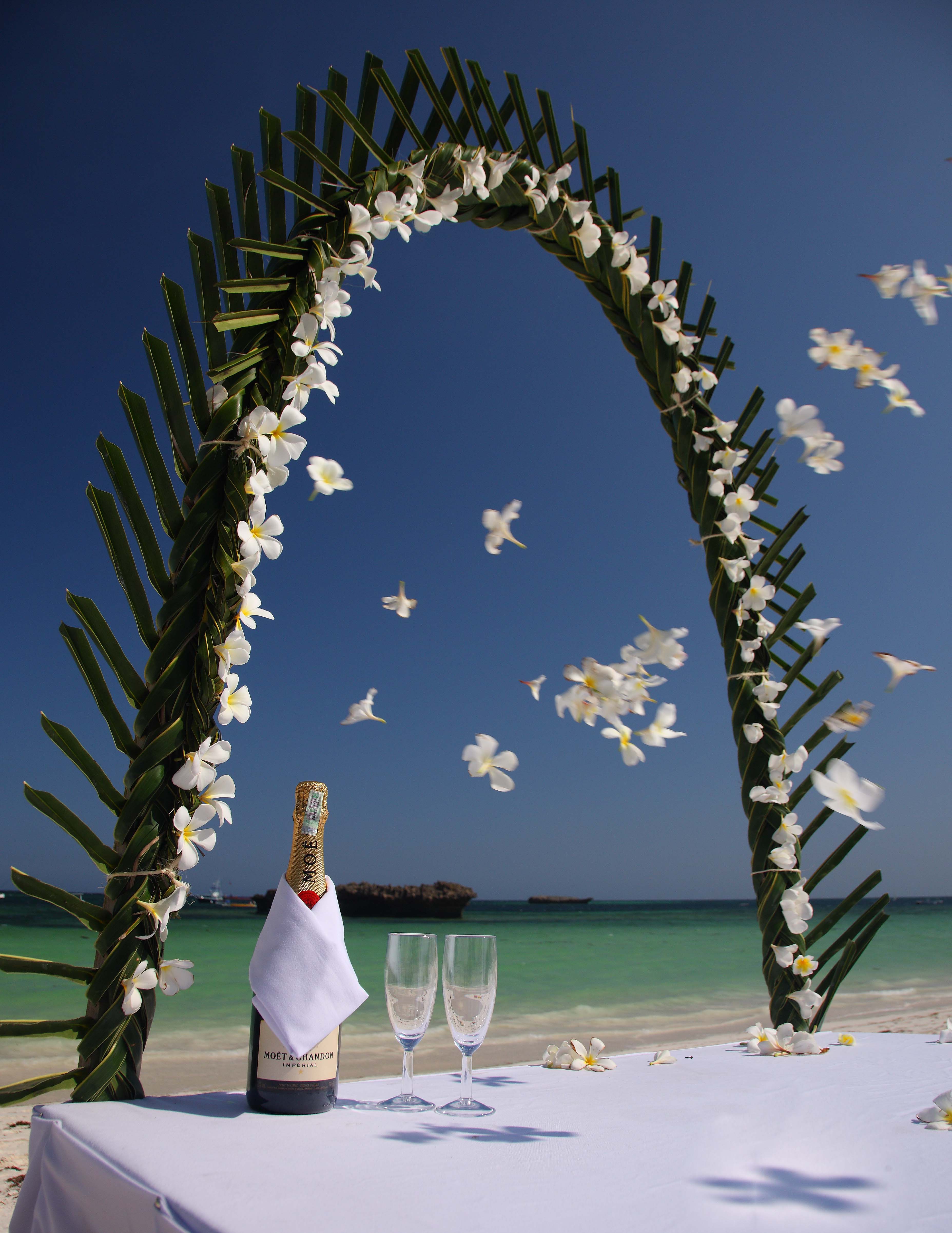
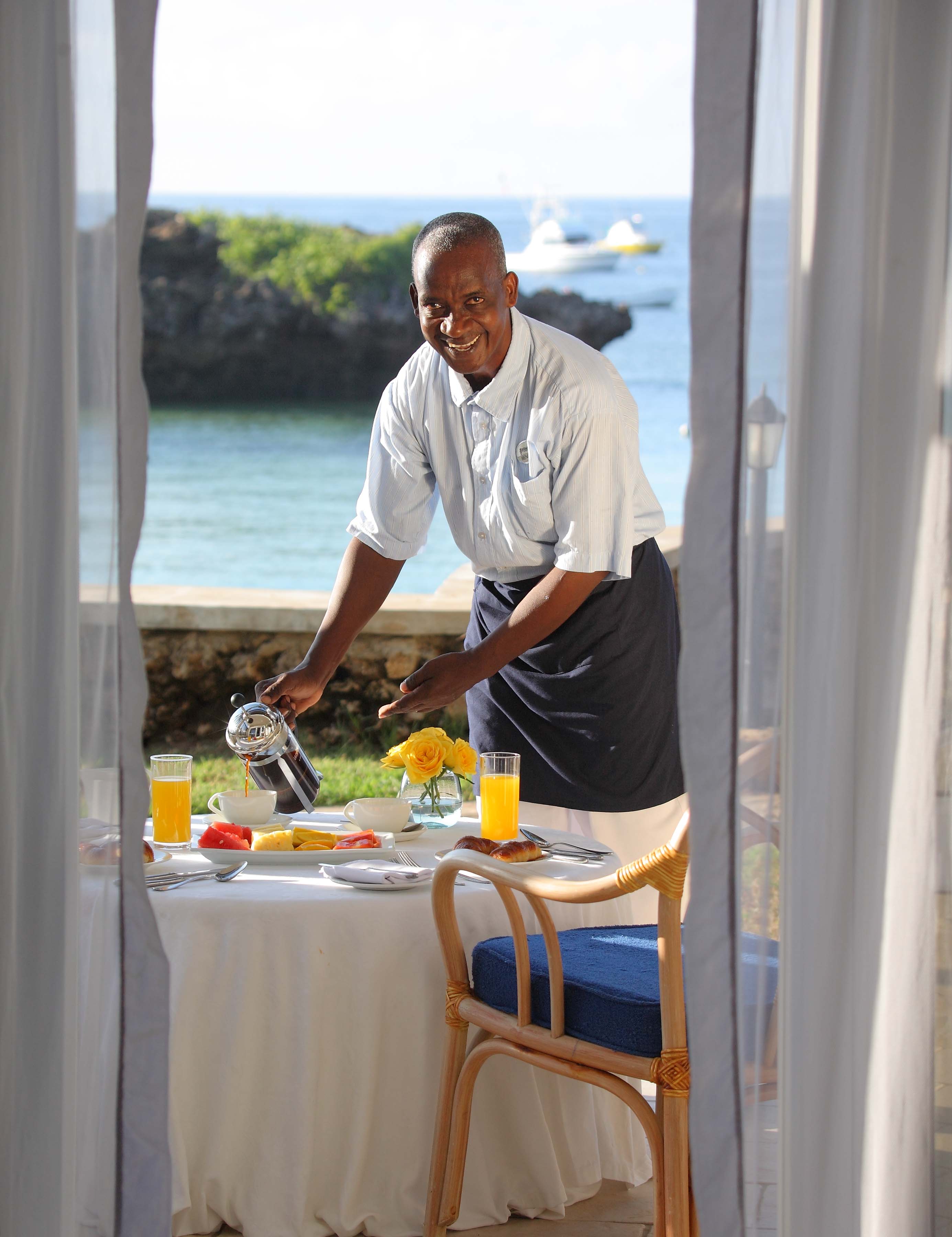
This Indian Ocean beach resort is everyone’s favorite. Guests just keep coming back for more. Maybe it’s the location – right in the middle of the pristine white sand beach of Watamu; perhaps it’s the big game fishing – one of the top destinations in the world for this sport; or maybe it’s the fantastic personal service and sincere charm of this established hotel that has come to represent Kenyan coastal luxury to so many families and couples over the years.
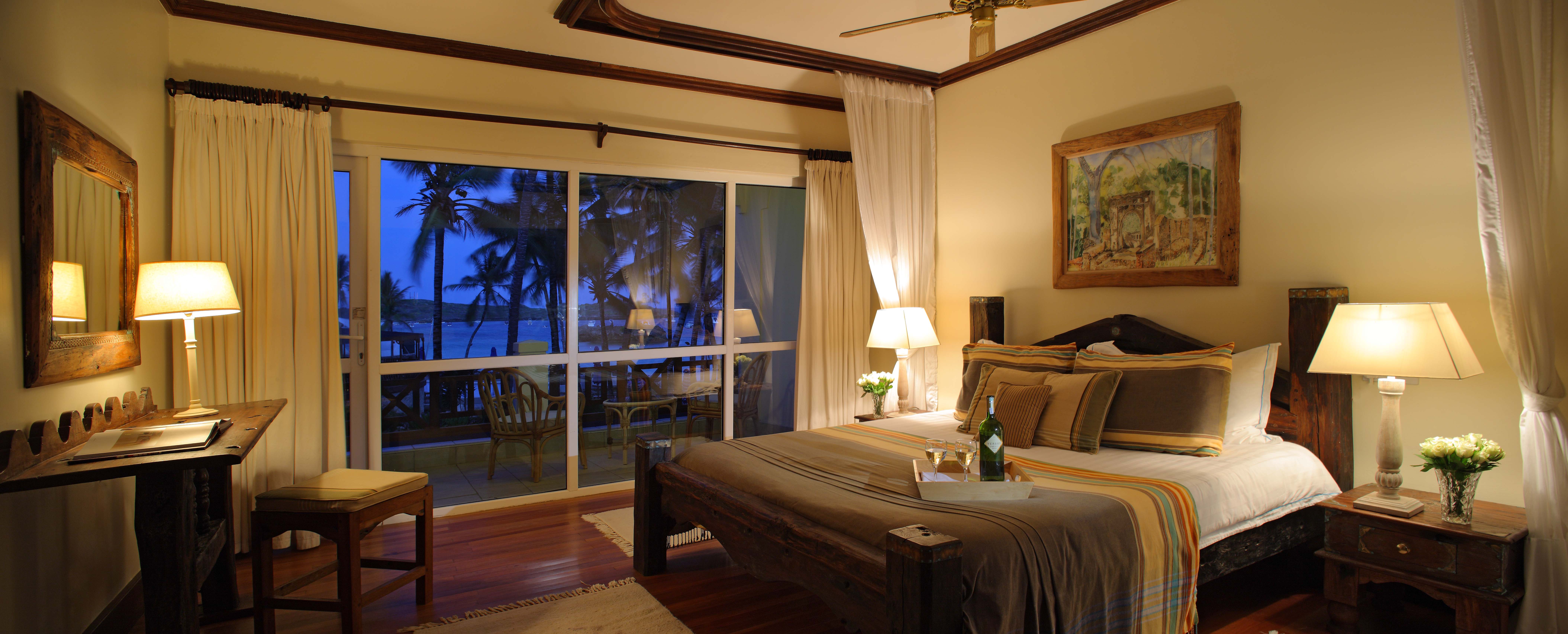
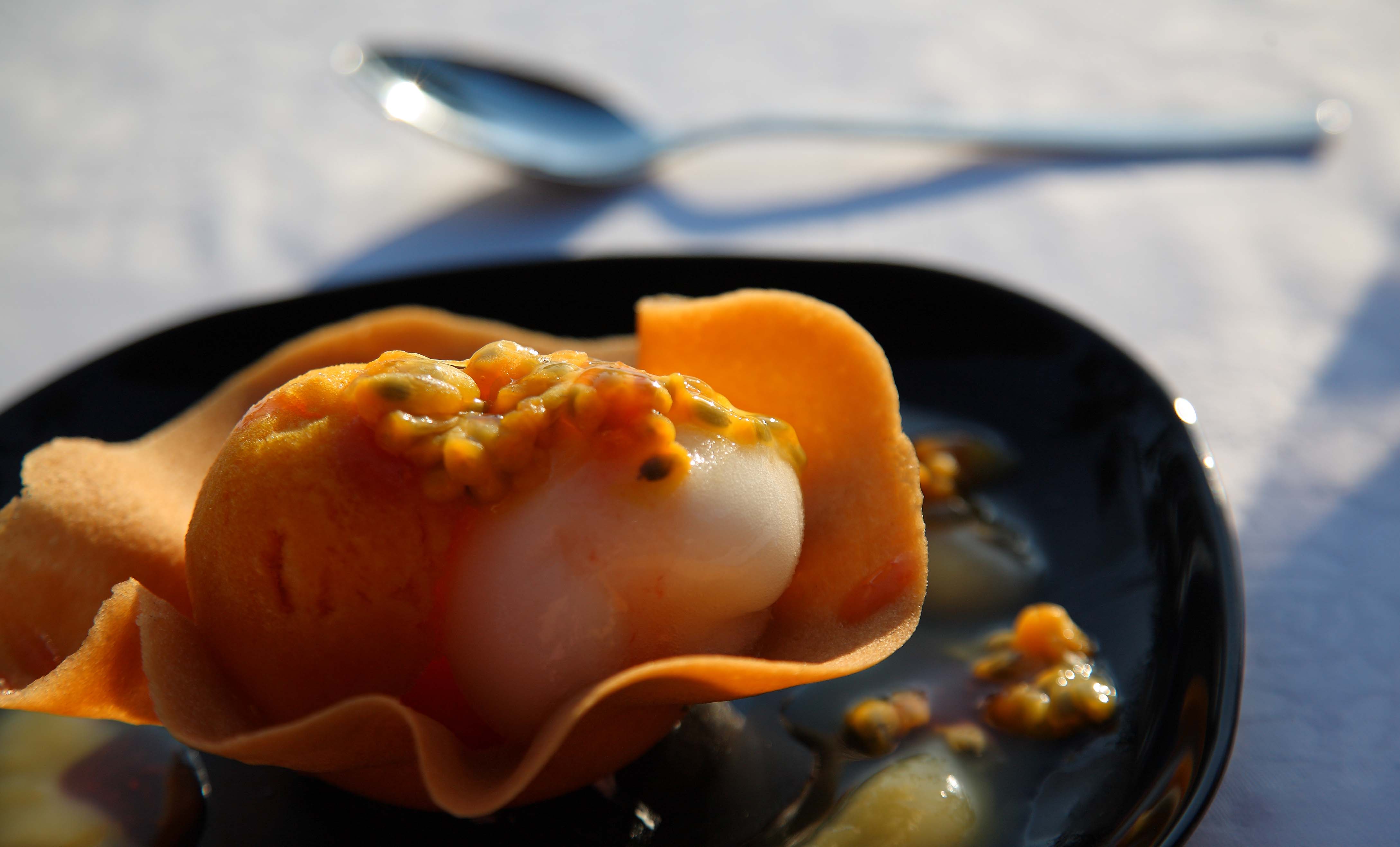
Hemingways’ 76 bright, airy rooms all offer a view of the Indian Ocean horizon. Every room is en-suite, air-conditioned and has mosquito netting, a fridge and a personal safe. You’ll also find a fan, telephone, minibar, hairdryer and kettle in your room. Their restaurant also serves the freshest sea-food, straight from the ocean.
There’s just so much to do here – relax in the poolside bar of the resort working your way through their cocktail menu; play a round of golf on the nearby world class course, Vipingo Ridge; learn to kite-surf; get your PADI certificate, take a sunset dhow cruise on Mida Creek; or go on safari for a few days in Tsavo or the Masai Mara.
If the world is your oyster – Hemingways is your pearl.
“I’ve stayed at lodges all over Masai Mara many times and Hemingways is up there with the best” John, Thailand
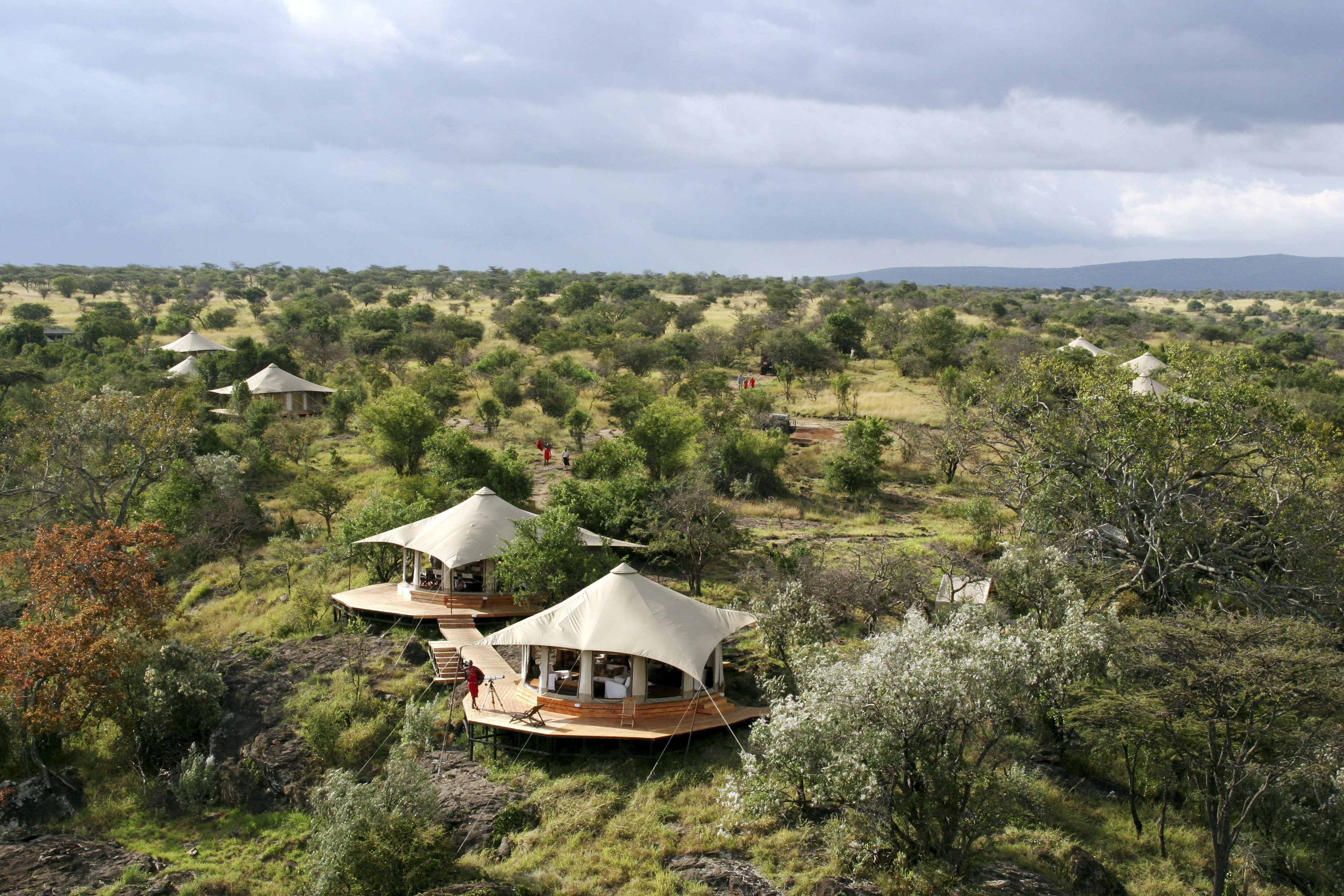
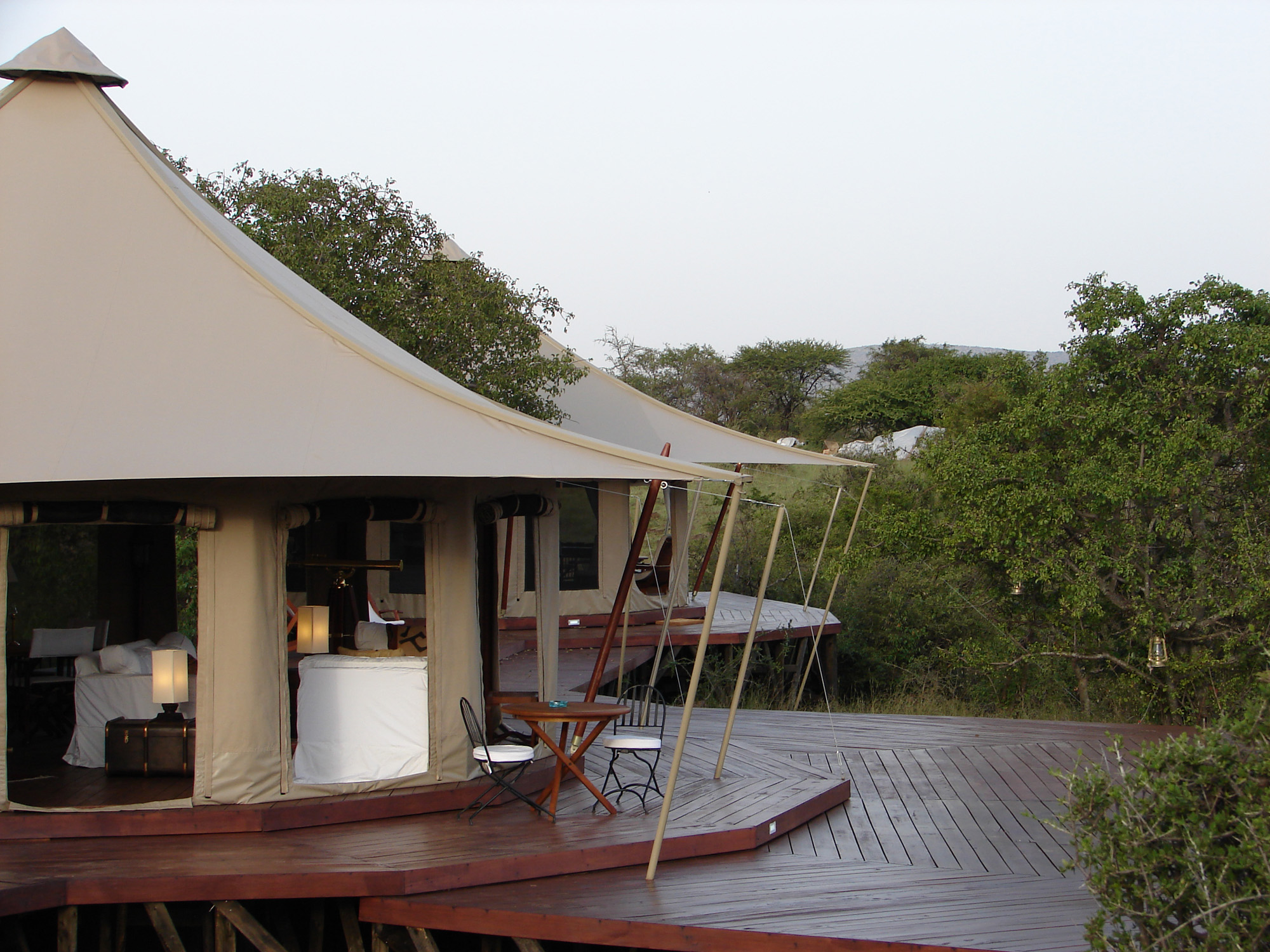
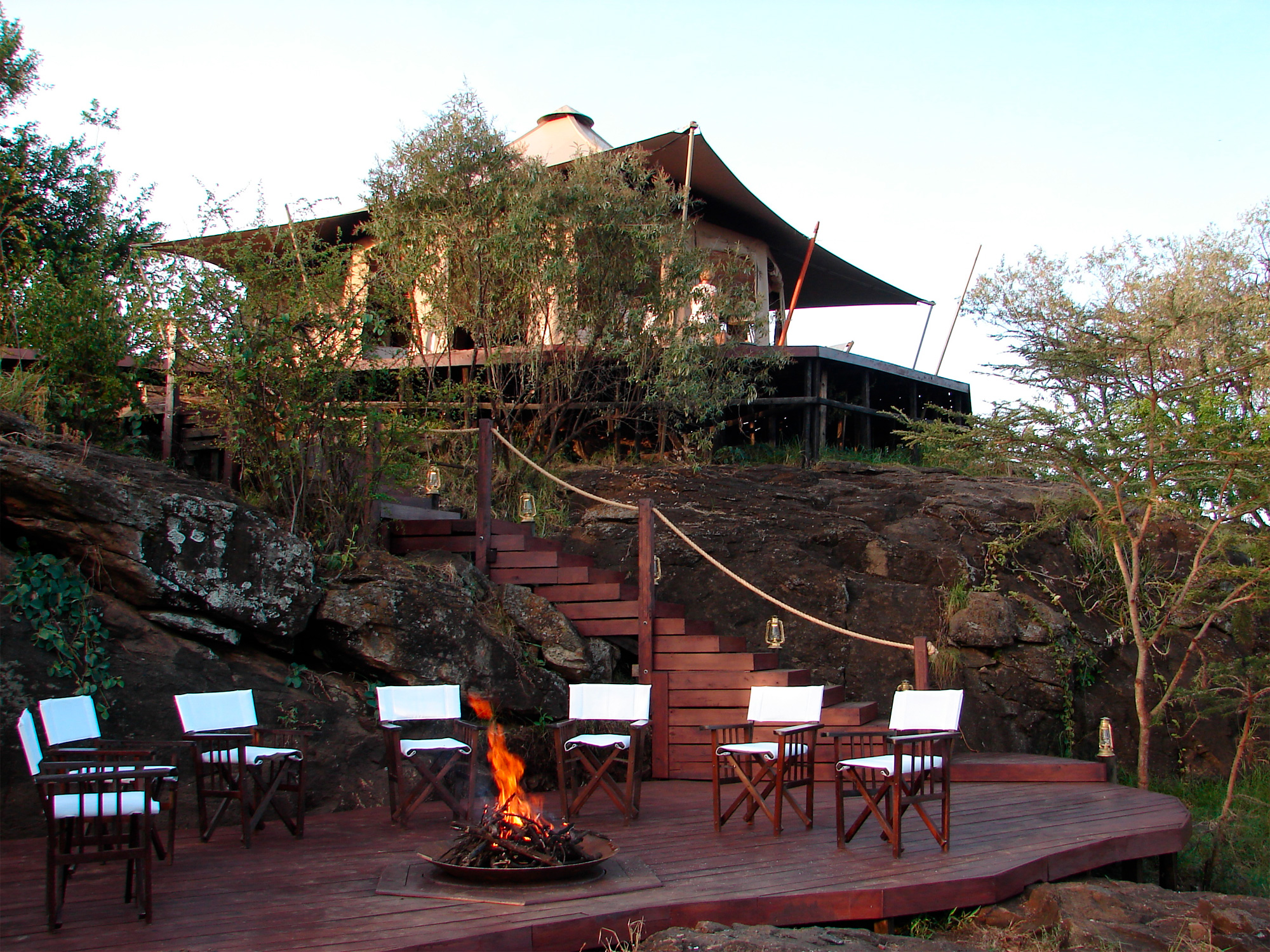
This private tented camp bordering the Masai Mara is your enclave of luxury in the wildest terrain of Kenya. They have a choice of 10 exclusive tents in which to host you and the entire 200km square of Naboisho Conservancy to reveal exclusively to you.
So what’s special about Ol Seki?
The location – The conservancy borders the Mara, no fences to inhibit the migration of animals which means you should see the big five and all the other indigenous animals on your check list right here, sometimes within five minutes of the camp. Only vehicles from the properties are allowed in the conservancy, so you see wildlife, not minibuses. The view from the camp is spectacular, the Mara is mostly flat plains but we are elevated on a rocky escarpment so you can see for miles.
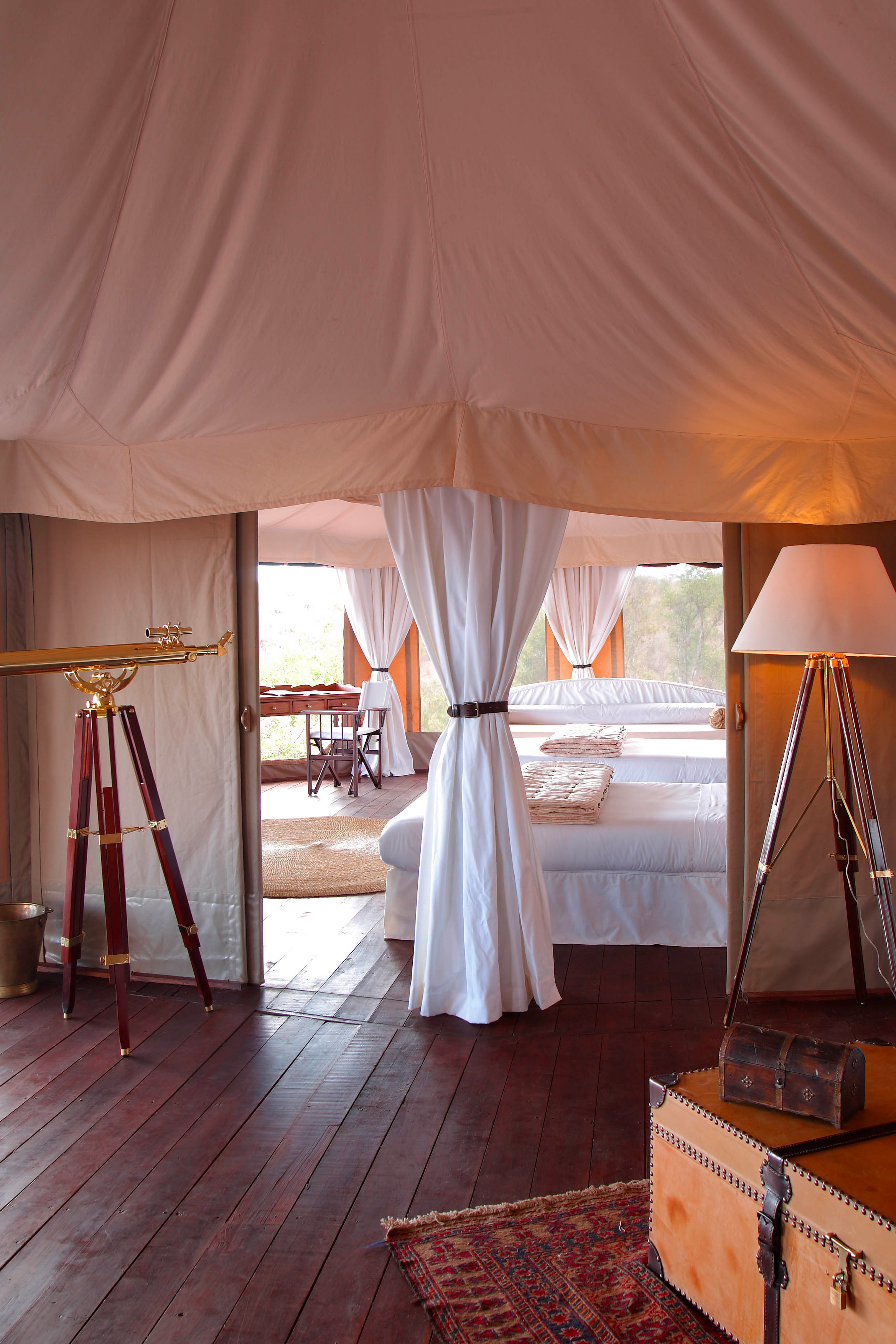
The tents – The size of the tents is remarkable and the exquisite paleness of the colours compliments the beauty of the design.
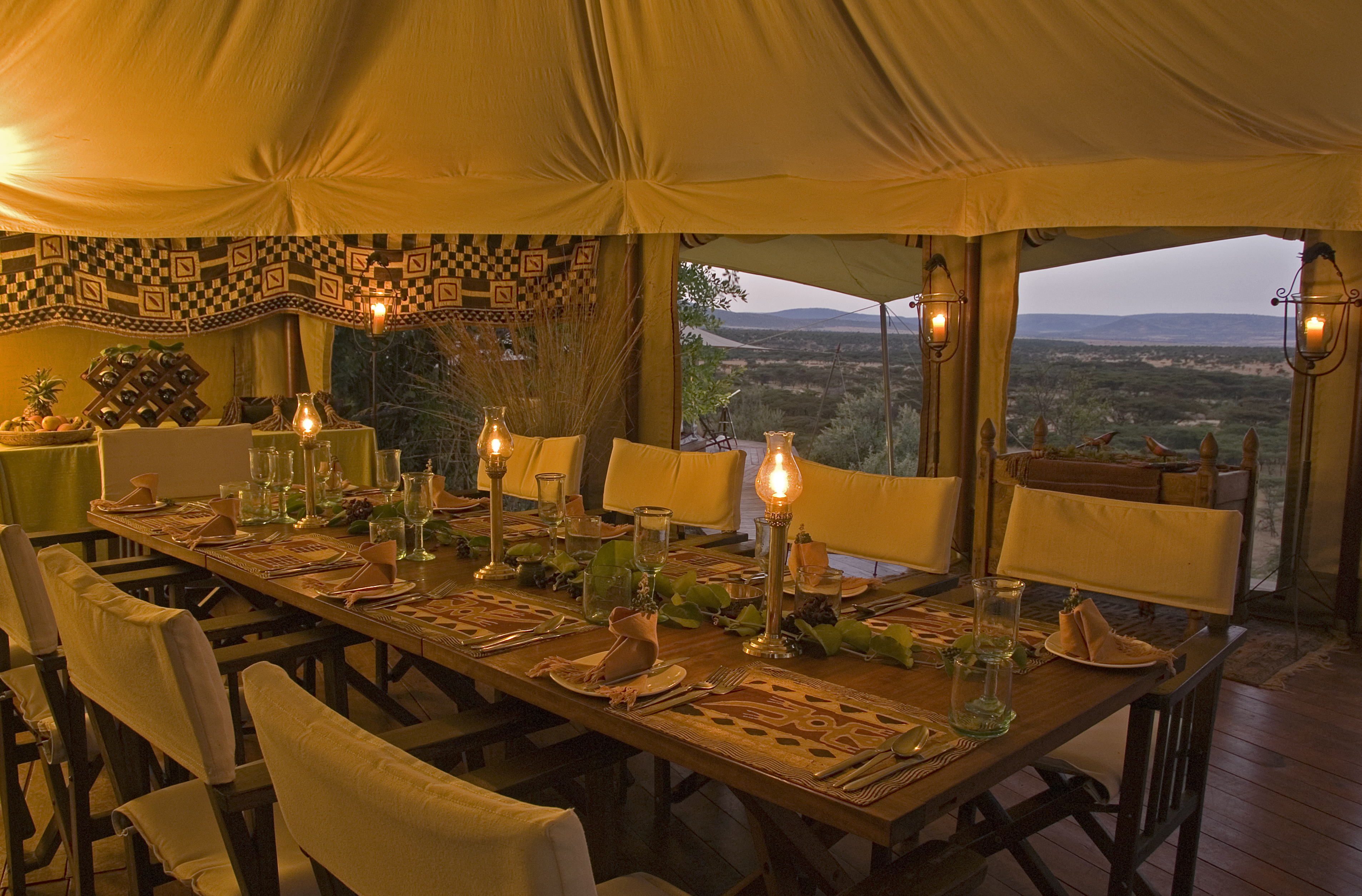
The people – Majority of Ol Seki staff were brought up within a 15km radius of the camp. They know the land intimately and they care about it. Everyone has an excellent knowledge of the area, not only the guides. So if you’re in the dining tent and you point to the hills and ask the waiter what they’re called, he’ll tell you the name and what it means.
The service – Ol Seki is small and personally tailor every day to suit what you want. They are friendly, totally flexible and dedicated to making your time at Ol Seki an unparalleled adventure in the realms of safari.
The camp is named after the Ol Seki tree (known in English as the sandpaper tree) which in Ma, the local Masai language, means “blessed”. It’s a peace tree and the branches are used to settle disputes. This is apt because the creation of Naboisho, which means “coming together” has brought peace between agriculture and wildlife in the conservancy and has helped to forge a harmonious relationship between the local Masai and tourist enterprises in the area.”

















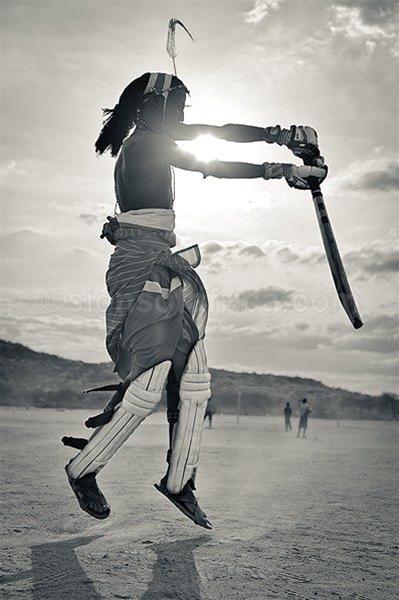


 The Maasai community is male-dominated and the women have very few rights – even to their own bodies. The Maasai women also grapple with Female Genital Mutilation (FGM) where girls as young as 6 are circumcised facing pain, psychological trauma, considerable health problems as well as high-risk of infection since materials used are not entirely sanitary (the girls are circumcised with materials that have been used over and over). HIV is also rife here and the victims face a lot of stigmatization. Another major challenge is child marriages where in some cases children are married off in return for livestock or alcohol. The cricket warriors feel that education and change is the only way to secure the health of the community, provide equality to their society, and as a result protect their future.
![[photo/funsterz.com]](http://www.sleepout.com/nomad/wp-content/uploads/2013/06/Kenyan-Cricket-Team-of-Young-Maasai-Warriors-016.jpg)
![[photo/dailymail.co.uk]](http://www.sleepout.com/nomad/wp-content/uploads/2013/06/Maasai-Cricket-Warriors-2.jpg)







































 Zuru Kenya