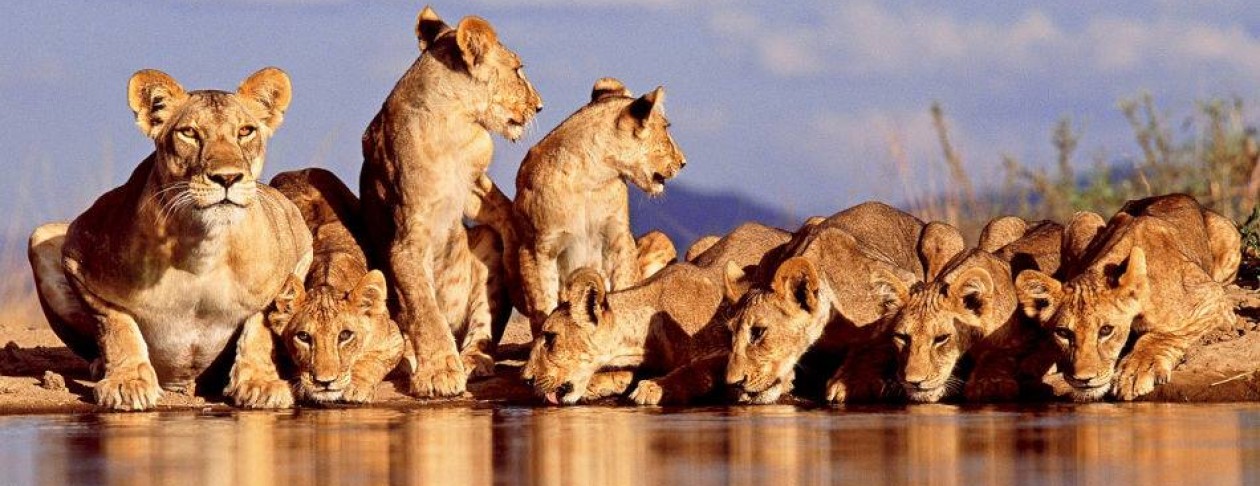

“For mine is a generation that circles the globe and searches for something we haven’t tried before. So never refuse an invitation, never resist the unfamiliar, never fail to be polite and never outstay the welcome. Just keep your mind open and suck in the experience. And if it hurts, you know what? It’s probably worth it.” — Alex Garland, “The Beach”
All posts by zurukenya

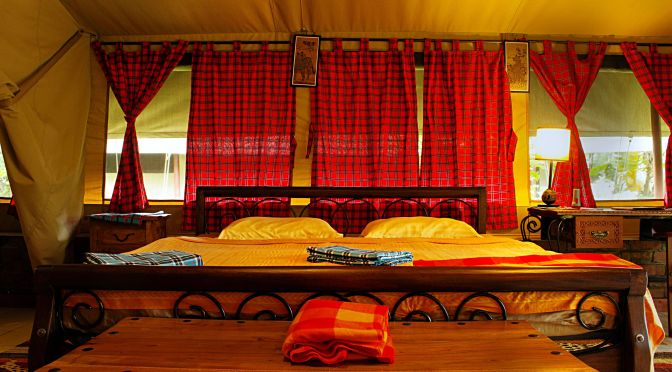
Anga Afrika: Bringing the back of beyond to Nairobi
Whenever one is picking out camps and lodges for their next safari in Kenya, Nairobi as a destination barely comes to mind. Never mind the fact that Nairobi is the only city in the world to host a national park, many travelers hitherto only view the city safari experience merely as a transit option to the real bush experience.
What if we told you though that the much sought out Hemingway bush and tent experience is right here at your doorstep? That you don’t have to go the extra mile, leave Nairobi, that what stands between you and your much desired safari is a mere 20 minutes or so?
Because many safari lovers only use Nairobi as transit, not much effort has been put into establishing accommodations that offer these enthusiasts a full safari experience right within the city. One family is however trying to re-write this script. Launched early this year, Anga Afrika, a family owned and run establishment, seeks to ensure that you don’t have to leave for upcountry into the back of beyond in order to experience life under the sun and the stars, to experience the story of Africa in the wild that is much told.
Sidney Trompell, one of the owners of Anga Afrika introduces us to the whole idea behind the establishment and fills us in on why it would be such a shame if you missed out on the experience offered.
- How long have you been open and what was the inspiration behind owning Anga Afrika?
We opened in the beginning of the year, although it was already years in the planning. The special thing about Anga Afrika is that every little detail was very thought through. We took our time.
My family and I always liked Karen because we are generally people who prefer peace and nature over the noisy turmoil that is often Nairobi. After we had finished building our home we wanted to share our little ‘island’ with people who share our mindset and philosophy. That is how Anga Afrika came to be. We feel that luxurious tented camps embody the Kenyan holiday experience the best and we wanted to provide our guests with the most authentic “out of Africa” experience.


- Why the name Anga Afrika and what should people expect when they get here?
Our place in Karen is 1850 m above sea level; therefore relatively close to the stars, hence the name Anga Afrika. Also, since our tented suites are made up of canvas, which really gives our guests the feeling that they are truly sleeping under African skies. The view of the stars on a clear night is breathtaking.


- The sort of experience you offer is rarely found in Nairobi, why set up away from major safari destinations, why Nairobi? What is unique about Anga Afrika’s location?
The special thing about our location is that it feels like you’re 100’s of miles away from Nairobi, but really you can be in the city centre within 20 minutes. It’s ideal for people who want to be immersed in nature as well as for Kenya first timers who want to experience Kenya in the most authentic way before embarking on major safaris to Masai Mara, Amboseli etc. Also, since our home is literally next door we try to connect with our customers on a personal level, build relationships and make sure that if they need anything that there’s always someone they can talk to. We also enjoy meeting new people from all around the world and exchange experiences and stories with them.


- What authentic local experiences will guests have access to here and what types of guests do you expect to attract?
First off, the experience of living in a tented camp as opposed to a hotel. This is a huge deal. I remember the first time I went glamping in the Masai Mara with the family and it was an unforgettable experience. Therefore we think that this type of accommodation will be very memorable for a lot of people. We also organize tours for our guests to local attractions such as the Giraffe Centre, Nairobi National Park, David Sheldrick Wildlife Trust and the Karen Blixen Museum.
To maintain a certain standard of exclusivity, we hope to attract people who have a strong appreciation of nature, peace, and the love for Kenya. Profit maximization isn’t our first priority, but maintaining a certain standard, living by our values and providing the best possible African experience is. We truly enjoy what we do here!

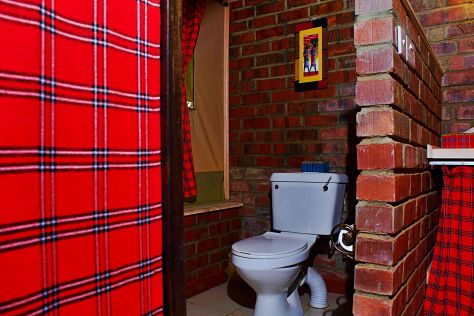
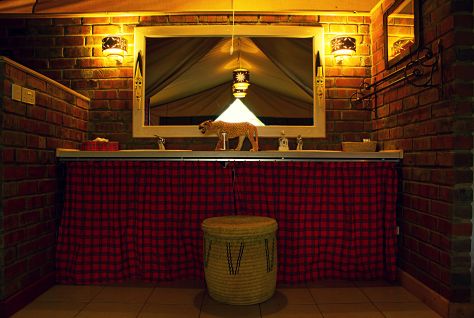

- If you could describe your property or the glamping experience you offer in three words, what would they be?
Modern. Authentic. Africa.

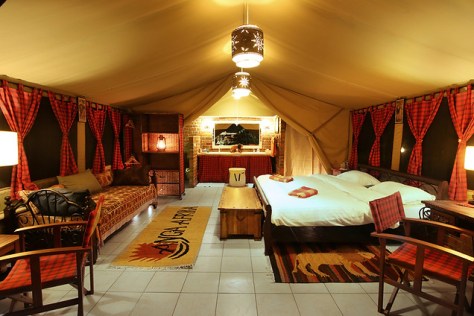

- What makes Anga Afrika a destination in itself?
Definitely the altitude…The cool temperatures in the morning, the fresh air, jogging in the morning fog, enjoying a cosy campfire in the evening…it literally gives you the feeling that you’re living in the African mountains such as Mount Kenya or Aberdares.


- A stand out meal in your restaurant, what would you recommend?
We have a lot of outstanding dishes at our restaurant, but George, our chef makes sweet potato bread that is to die for. A lot of our guests go home with the recipe because it is simply that good!

- Any other experiences you can recommend in the area for a combined trip when staying at Anga Afrika?
David Sheldrick Wildlife Trust is a must. Seeing orphaned elephants taken care for and interacting with them gives you such a fulfilling experience. You can even adopt one if you are committed to support it for a long amount of time. Otherwise Karen Blixen Museum is a great place to learn about the history of Karen and how it came into existence, Giraffe Centre, where you can ‘kiss’ Giraffes on the mouth. Literally. There’s quite a lot you can do in our area and we are always more than happy to provide our guests with help and guidance to make this experience as memorable as possible.
Location: Karen Area
Establishment Type: Luxury Tented Camp
Contact for Bookings: http://www.angaafrika.com/
Attractions around: David Sheldrick Wildlife Trust, Karen Blixen Museum, Giraffe Centre, Nairobi National Park, Nairobi Animal Orphanage.
Share this:


Wild soap bar: Wildlife works’ “Green” soap production
As with previous series’ on wildlife works, the people of Kasigau Corridor have highly benefitted from provision of jobs in different sectors of the company with training and development of varied skillsets; If you are not cutting or sewing in the eco-factory, maybe you are protecting the diversity as a ranger, or perhaps putting your knowlege of plants to good use in the greenhouse and if you are more adept at mechanics, then you can spend your work days at the workshop.
In order to maximise job creation, Wildlife Works is constantly venturing into new sectors, soap making being one of them. The soap-making factory, albeit still a small operation, works on producing high quality soaps with a touch of individuality – some of which you love to pocket home from your eco-lodge getaway.
MEET BETTY KITIRO

The principal employee of wildlife works’ soap factory, Betty Kitiro who hails from a village in the Kasigau corridor started volunteering at wildlife works in 2007 where she was trained in soap-making. In less than year, she became a full time employee and now shows great initiative in experimenting with different ingredients to create fun and fragrant soaps for Kenyans and international tourists alike.

Betty is currently producing five core varieties of soap, with the key ingredients coming from local sources. The soap-making factory aside from producing for consumers, it is able to provide a boost in income for small-scale producers of aloe, limes, jojoba seeds, myrrh, loofah pods, honey and oranges. To add extra essence of the region, the soaps are generally simply packaged in elephant dung paper made at Rukinga or sisal baskets made by local women. At the moment the soaps are primarily sold to hotels in Kenya, providing their guests with a little something from Tsavo.

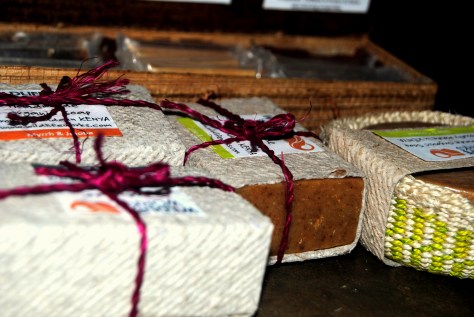

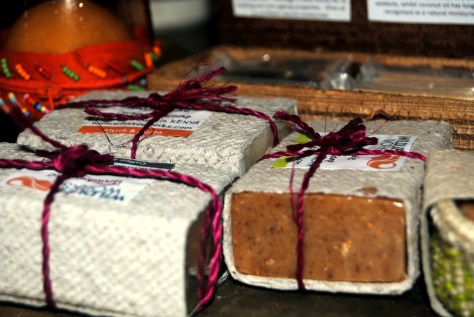

Note: Wildlife works uses only pure essential oils to scent their products. Each original recipe also includes wild native plants, organic botanicals, natural colorants, and healing earth clays therein remaining purely “Green”.
Share this:

Let’s go Glamping!
Camping, this is one of those travel experiences with no in-betweens; you either simply love it or hate it.
If in incase you lean towards the latter because of the back-to-basics nature of camping, a new trend has emerged that might just be the reason you come around at least before ruling it out completely.
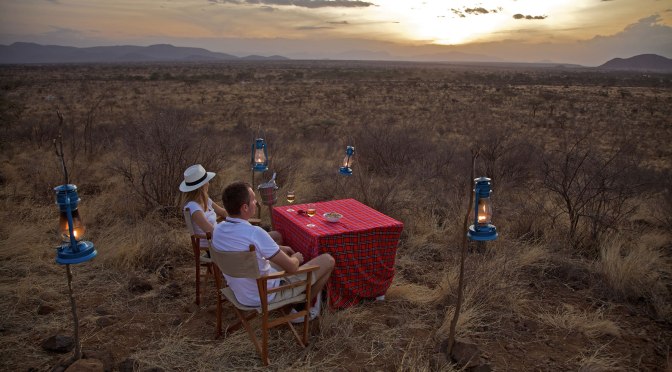
“Glamping” or rather, glamorous camping resorts are sprouting up rapidly, with the makeup of extremely spacious luxury tents that come with a personal chef and butler to boot! Nothing basic about that!
Travelers keen to get off the beaten path are best suited for this new form of travel and Kenya has not been left behind in terms of serving you with some of the finest glamping destinations.
Kenya gives you a glamping experience with no barriers; wide, scenic views of the plains and colorful sunsets from your deck with a couple of wildlife looking to make a friend or two popping up at your doorstep to say hello. Here you are immersed in nature with high-end comfort.
Your accommodation tents are a far cry from the poles in the ground you might be picturing; they feature hardwood floors, private bathrooms, and four poster beds, in room Wi-Fi in camps situated in massive acres.
Say goodbye to pitching tents, unrolling sleeping bags, and building fire. There’s nothing like the allure of a luxury experience in the wild taking you back to Ernest Hemingway days.
So, if you really didn’t like your last back-to-basics camping experience, it might just be time for an upgrade. You might consider these destinations for instance;
Ashnil Samburu

Ashnil Samburu Camp sits in Buffalo Springs Game Reserve which takes its name from an oasis of crystal clear water at the western end of the reserve. It is separated from Samburu National Reserve by Ewaso Nyiro River and is less hilly and dense yet equally very attractive.
Sanctuary Olonana

This award-winning tented camp in the Masai Mara, is one of the best places in the world to see the annual wildebeest migration. This natural spectacle happens on the camp’s doorstep and you may catch glimpses of it from the private verandah of your tent!
Sasaab Lodge
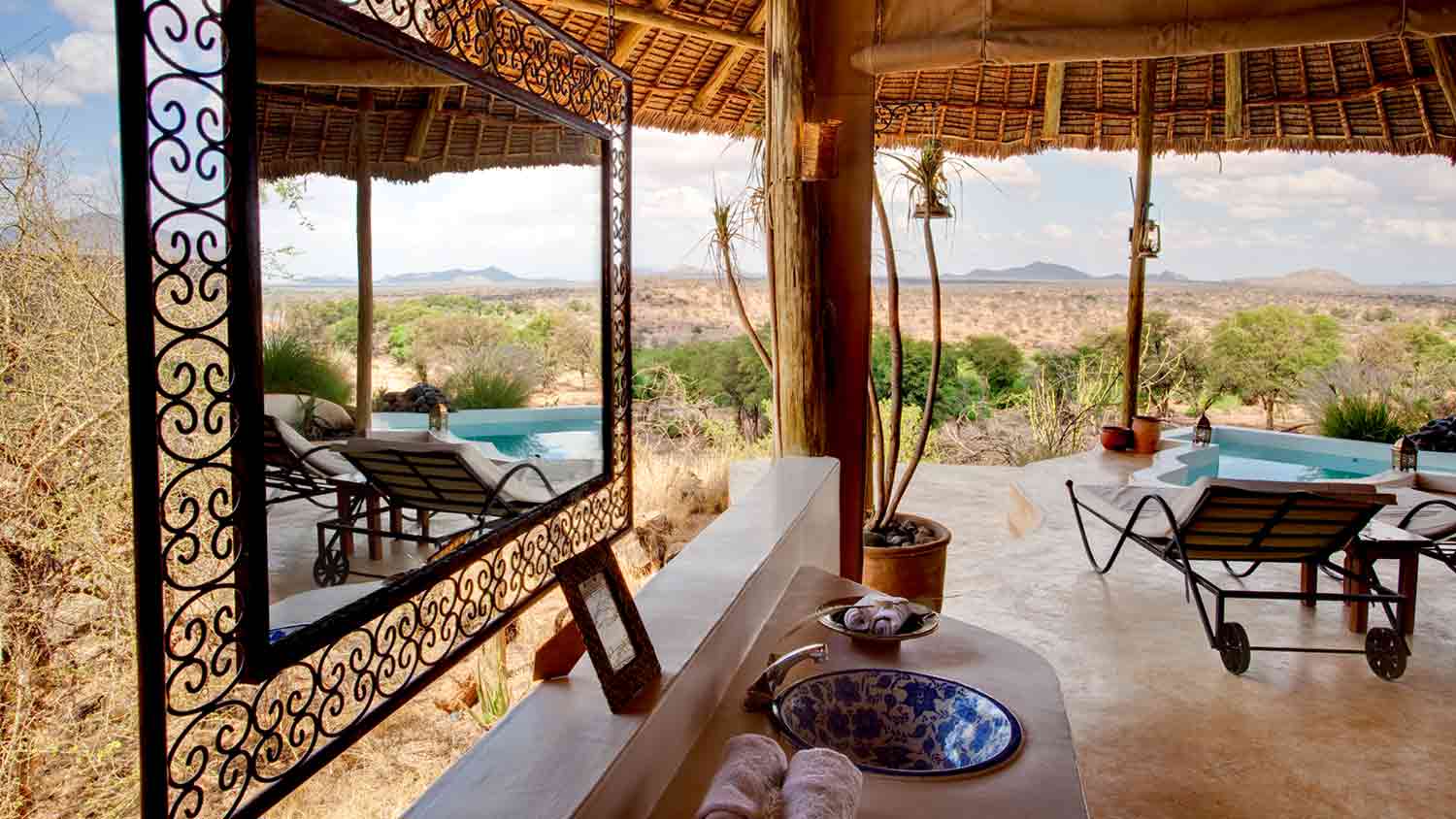
Sasaab is a stunning blend of Moroccan and Swahili style, located in the heart of the African bush. Each individual cottage is designed to offer majestic views of the landscape and offer a cooling retreat from the African heat.
Mahali Mzuri

In Swahili, Mahali Mzuri means “beautiful place”, just one glance and you know it indeed is a beautiful place. It is also right in the path of the annual great migration. The stylish and luxurious tent suites are made to blend in with its surroundings and designed by borrowing elements of regions traditional architecture.
Lewa Safari Camp
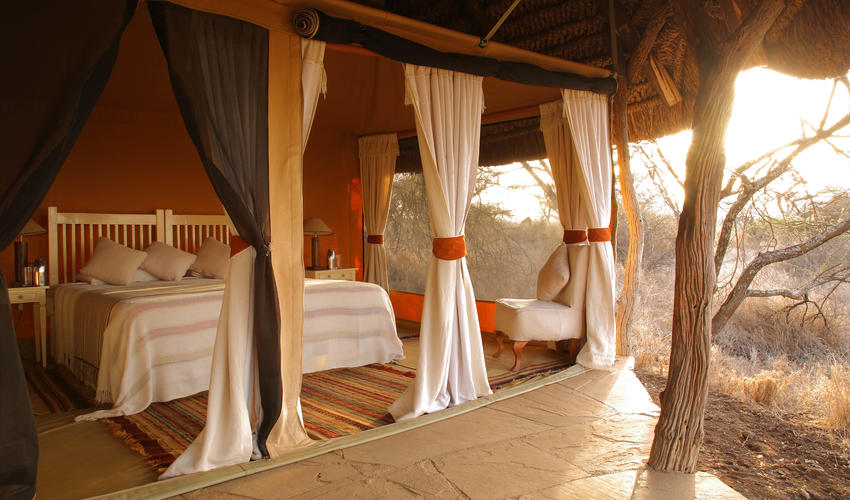
This tented camp in the Lewa Wildlife Conservancy, overlooks Mount Kenya and the reserve. The conservancy is a terrific place to view the endangered black rhino as it is home to about 10% of Kenya’s rhino population. The game viewing in Lewa is excellent.
Jambo Mutara Camp

This elegant safari camp is located just west of Mount Kenya, North of Aberdares Forest. The camp is the only accommodation found in the Mutara Conservancy and it offers the best of safari accommodation in a luxury style.
Mara Bushtops Luxury Tented Camp

Set amid the 60,000 hectares of the Mara Siana Wildlife Conservancy, directly bordering the Masai Mara itself, Mara Bushtops boasts a sensational location. Set in its own private conservancy, the camp has been designed to blend in with the natural habitat to ensure minimal impact of the environment. No expense has been spared on the fittings provided in the 12 spacious and fabulously appointed luxury tents, open on three sides to the great outdoors and each with its own special view. Featuring beautiful interiors solely designed for ultimate comfort and convenience, the camp’s private accommodation has everything you need for a luxurious stay.
Sand River Maasai Mara

This classy tented camp perched on the banks of the Sand river in the Mara is a winner. Located in a quieter area of the Mara the camp has outstanding resident wildlife and is brilliantly located for the migration before it re-enters the Serengeti. The layout of the camp lends a sense of privacy & the decor is relaxed yet luxurious.
Share this:

‘Shetani’ Lava Flow
‘Shetani ’ means ‘devil’ in Kiswahili: The Lava flows are said to have been formed about 500 years ago. When the locals first saw ‘fire’ erupting and ‘flowing’ on the ground they believed that it was the devil himself emerging from the earth – hence the name “Shetani” Lava Flow.
Want to envisage how the world was like when it was “formless, dark, and void” before God said “let there be light” (Genesis 1:1-3)?? ‘Shetani’ Lava Flow in Tsavo West is the place to visit. God’s wonders are all around us take sometime to appreciate them.


Wish you all a Great Weekend.
Credits: Benson M. Mwakughu
Location: Tsavo West
Share this:

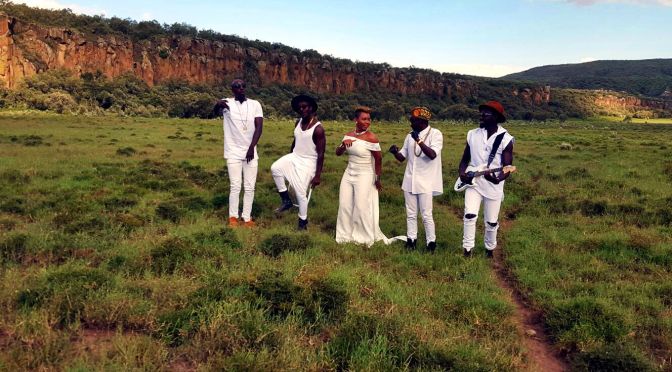
Traverse Africa in Four minutes with Yemi Alade and Sauti Sol
So I have just come across the “Africa” official Video by Yemi Alade ft Sauti Sol and now its on constant replay. Of course I had heard it a while back, but I really paid no mind to it because a song is never really a song until the video is out then you can put two and two together; Music Visuals in relation to the lyrics.
Just yesterday, some colleagues and I were discussing how Yemi Alade showcases so much culture and colour in her music videos – perhaps a depiction of the African Continent, based on her Mama Africa Album birthed in journeys around the continent – then I come across this today (To the African Gods who were listening, Thank you!). Yemi Alade has won millions over with this Album and so has Sauti Sol with Live and Die in Afrika. It is only right therefore, that they had a collaboration on this big hit “Africa”.
These two talents did not disappoint as usual, but the reason why this music video is on replay is not the polished blend of guitar and dancehall, no. It is merely the fact that I remain fixeted on the beautiful people, landscapes, and wildlife. Basically the spirit that is our motherland. The video not only showcases our history, through the pics of the people responsible for our freedom today, It also shows the world the vibrancy that is our cultures, destinations and love for each other. Thanks to Yemi Alade and Sauti Sol, you get to traverse Africa in just four minutes.
If you’re still not exactly sure how Africa looks like, take a look at this Music Video. I’m sure you’ll be booking your next ticket here whilst getting down to the very danceable tune. Don’t get it twisted though, Africa is still not a country…so come to kenya first *wink*.
“Anywhere you go, nowhere be like Africa, no where be like home”
Fun Facts:
- ‘Africa’ video was shot in different locations – Nigeria, Kenya, UK and USA, celebrating the incomparable beauty and richness of Africa
- The amazing backdrop of landscapes and wildlife is yours truly, Kenya.
Share this:

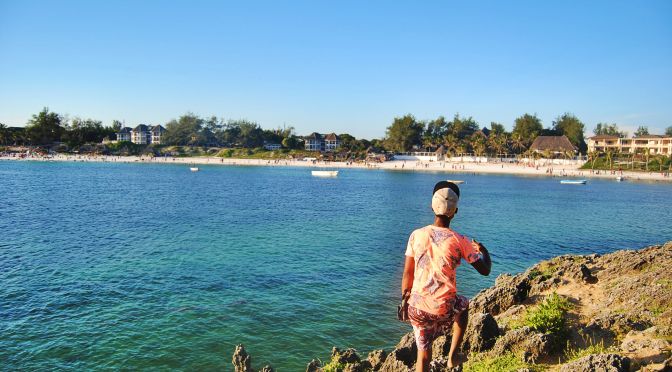
HUSSEIN GUIDA TURISTICA: The ‘Beach Operator’ with a dream
You may have noticed that majority of beach hotels have erected fences along the shoreline, leaving only a narrow opening leading to the beach. Perhaps you have come across some Samburu and Maasai men roaming the stretch of the shoreline as well? In as much as they are an attraction to tourists, these young men serve as barricades, hired by some hotels to serve the same purpose as the erected fences.
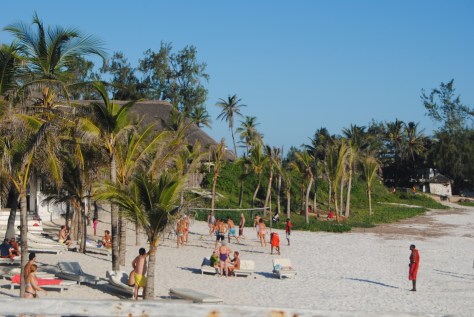
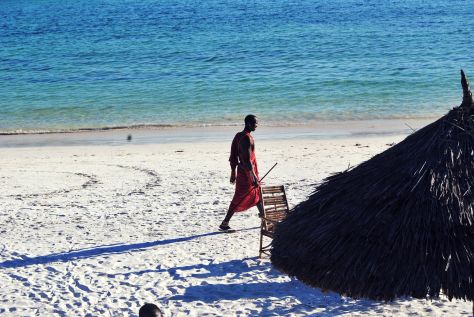
Knowing very well that hotel guests come here looking for some relaxation time by the white sandy shores, why then would these establishments go to such lengths to keep them fenced in? Well… have you heard this before, “when you head down to the beach, pay no mind to the beach boys!”
Ah, yes, beach boys! The mere mention of the words has tourists and locals alike, running for the hills.
These people will ruin your day. They do not take no for an answer. They will adamantly try to sell you whatever favors are on offer for that day. And if you think those fences are good enough to keep them away, guess again, they will cling on for dear life, calling out for you until you heed their call.
Beach boys have a keen eye too. They will spot you the moment you set foot on the white sands. Instantly working out tactics in which to reel you in. Like fresh prey, you are just another meal ticket for the day’s survival walking through these “vultures’” door.
“Jambo!
Would you be interested in a boat excursion to the Watamu Marine Park?” a somewhat young guy approached us. He introduced himself though I forget his name.
“It’s not costly” he said.
“No thanks! We are just walking” we responded.
“How about snorkeling? Promise you’ll have loads of fun”
“We weren’t prepared for that today…Asante, pengine Kesho! (Thanks, perhaps tomorrow!)”
Now, whenever you tell Kenyan hawkers “no thanks, perhaps another day” – accompanied with a polite smile, they generally tend to leave you in peace, of course, after few attempts of trying to convince you to check your pockets again, but they do move on without a hassle in search for the next potential client (Lessons learned from years of having to negotiate buys at the market).
So when we said perhaps tomorrow, he said okay and left.
Only to come back with a booklet filled with photos showcasing the excursions they offer…haha *facepalm emoji* sigh!
This guy just wouldn’t let up.
“Tomorrow we can go see the dolphins, yeah?!”
Knowing we weren’t even going to be there tomorrow we just said we’d think about it.
“Okay, if you don’t want to go on the boat trip, maybe you can check out the sourvenirs we have at our hang-out joint?
Man, this guy’s marketing skills were up there with the rest of them. Although, I now get how the dogged persistence can be wearing and a tad-bit annoying. He and his crew spend their days at a small makuti restaurant (their hang-out joint) by the beach from where they chill and wait to spot potential clients. The restaurant is owned by one of them; it’s apparent that “beach boys” spread themselves thinly over a wide range of deals rather than specializing in one so as to cushion them from uncertainty.
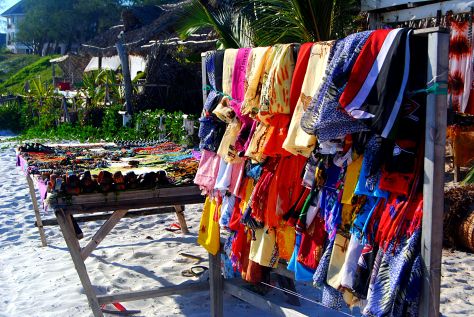
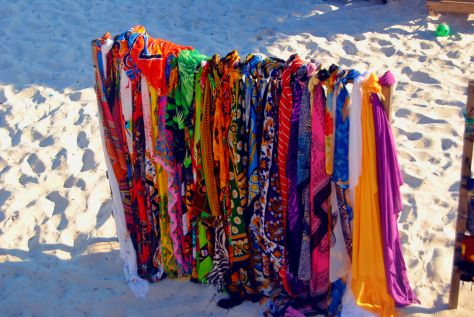
We had nothing to lose so we obliged. On approaching the “hang-out joint” a number of other beach boys came over to say hi asking us where we were from and so on. One of them on noticing I had a camera requested for a photo with one of us. That is how I met Hussein Guida Turistica (I learnt his name later on).
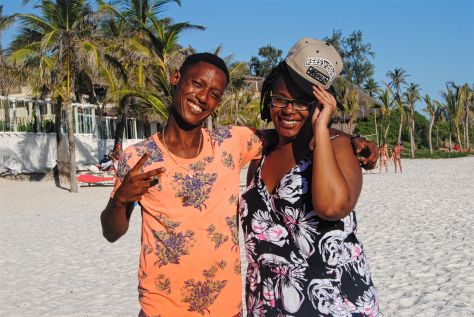
“Come upstairs” the rest of them said. The restaurant had a balcony lounge with a real nice view. “C’mon we won’t bite, come hang out with us.”

Once upstairs, they all introduced themselves and offered us seats. Our conversations involved their experiences at the beach, selling several services and what excursions they could take us on; at some point they would shift from Swahili to Italian to keep us from understanding what they were talking about. “Have you eaten, we have food you can buy” one said. “Or perhaps something more relaxing,” the guy who had initially approached us added. He explained how he had taken some alcohol earlier that day to relax. Apparently he worked better that way. Before we knew it he was singing a tune holding a make-shift microphone, explaining the benefits of alcohol…hilarious!
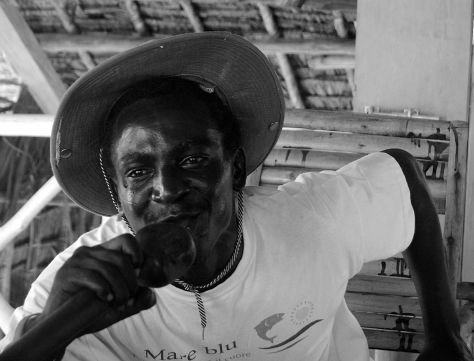
Amidst our conversation I enquired on whether they could take me across the shore to the little lagoons. I wanted to take a nice shot of the beach line from the other side. Hussein offered to take me…said he’d do it for free even. There was no need for a boat ride as one of them could be accessed on foot which provided for a good opportunity to have a real conversation on the “beach boy” life and his experiences.
Until the recent security threats, Hussein used to go by his real name. But during this period, he went by the alias ‘Brian’ for obvious reasons. Asked why he is in this business, to fend for his family the only way he knew how. He wasn’t fortunate enough to proceed with his education. His family didn’t have the funds.

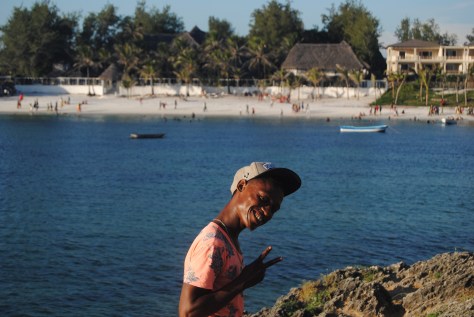
Many of the beach boys along the Kenyan coast are in the profession because it’s what they know. Their fathers were also in the same business so it’s only natural.
It is also well known that aside from boat safaris, beach boys also trade drugs as well as sexual favors. He however told me that there are two types of groups clumped into the definition “beach boys” saying that the latter, gives them bad repute. “They have nothing to lose hence why they engage in sex for profit; constantly seeking foreign women (and even men) to upgrade their lives perhaps fly them out of the country even.”
He prefers to go by the title ‘beach operator’ doing honest work as an improvised tourist guide and translator. Some Italian hotels hire them as full time tour-guides assigned to groups of tourists because well, beach operators have proven to be a huge tourism attraction despite the negative connotation linked to their profession. Hussein is up to date with all the fun up-coming events in Watamu; a good guide has to be after all. He tells me that in the evening they will be having a beach party by the restaurant which is open to all and extended an invite. Unfortunately though, we weren’t sticking around till evening.
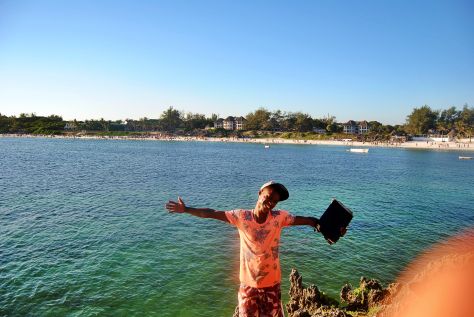
He furthermore, informed me that he only works here to fend for his family; his mother and siblings. When he’s not at the beach, he is performing as a street dancer, something he says his mom discourages him from. “She’s just afraid I’ll hurt myself,” he says as he shows me the scar he got on his face from a fall the previous night during his performance. “But it’s my dream and passion,” he adds.
As we continued along the beach stretch, I noticed that he was really popular with the locals here, everyone from children to his peers and even older stopped us just to say hello. Perhaps it was his kindheartedness and soft nature that captivated and enticed him to people.
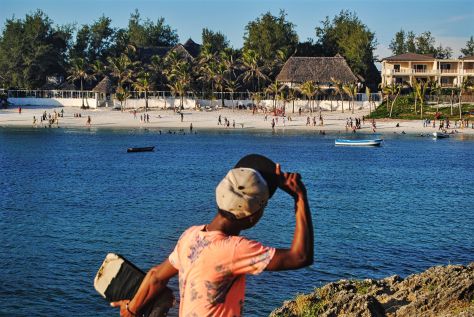
Hussein went on to tell me of his challenges and future aspirations. “You see that building there,” pointing to a hotel construction at the beach stretch that is in its final touches. “I hope to one day earn enough money to afford me just one night’s stay at that place and get the royal treatment that all these tourists get.”
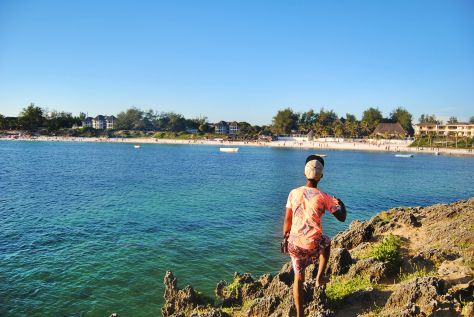
For now, nothing is standing in his way to achieve his passion and dreams; he has plenty of time to earn that night’s stay.
After all, he is only 24!
Beach Boy Facts:
- Beach boys are known to mostly sport dreadlocks. (None of the ones we interacted with in Watamu had dreadlocks)
- They offer a range of services from boat trips, safaris, curios selling, drugs and even sexual favors.
- Majority are illiterate and are in the beach boy profession as a result of unemployment.
- Not every young male at the beach is a “beach boy”, some are fishermen and Maasai ‘guards’.
Share this:

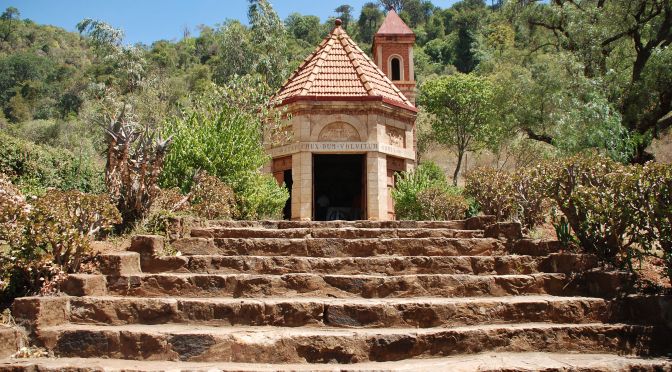
Little Travelers Chapel on the hill
Just as it is with any historical site that has stood the test of time, the four walls of the “Travelers’ Chapel” are shrouded in a lot of mystery and myth. Word goes round of a ticking clock that can be heard but is never seen. It has even been said that those who erected the structure hid their jewels and wills in the church concrete columns setting enthusiasts on a hunt for the ‘hidden treasure’. Perhaps it is these great tales – amongst others, that make this landmark of sorts intriguing. Or maybe the fascination is purely based on its miniature build.
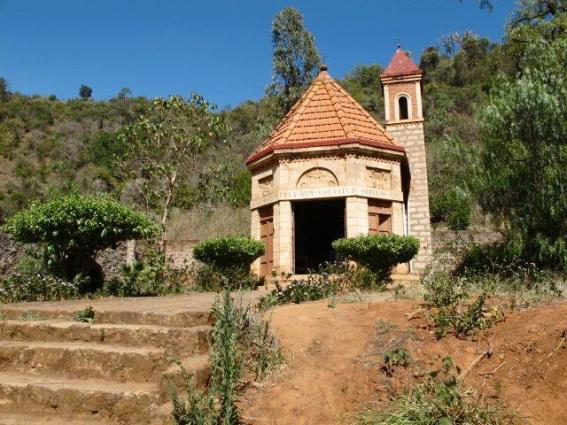
Listed as the smallest church in Kenya (and possibly Africa), the “Travelers’ Chapel” which is commonly referred to by its alias ‘Msikiti – mosque’ by the locals sits pretty along the Mai Mahiu-Naivasha highway. Its story dates back to the Second World War where we are told that British and imperial forces captured more than half a million Italian soldiers, sailors and airmen. Whilst having these prisoners of war (POWs) around as a symbol of military success was all good, The British soon realized that in as much as their ‘symbols of victory’ brought high standing for their ranking in the war, they also posed a few complications as they came with needs as well; one of them being having a place to worship. Seeing that the Italians were Catholics and the British Anglicans, the two parties could not worship together and so they were allocated land to build their own place of prayer.
Under the strict supervision of British colonialists, the construction of The Mai Mahiu Catholic Church popularly referred to as the “Travelers’ Chapel” came to be in 1942. The Italian Prisoners Of War (POWs) would take turns to erect the structure during breaks from the construction of the road. The building of the church was however not without any setbacks. For instance, a number of Italians succumbed to diseases and attacks from wild animals, which included poisonous snakes that allegedly live in the area to date. Several graves lie outside the church compound where the deceased were laid to rest. Thanks to well wishers, a mausoleum has since been erected in form of a cemented cross in honor of the fallen Italians.
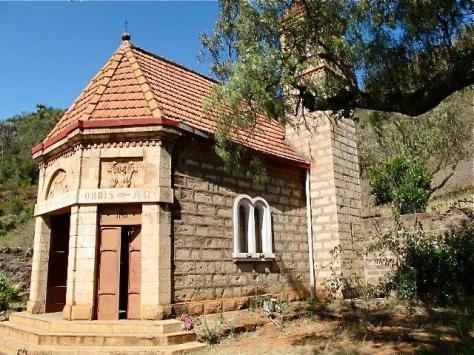
The Design
The pentagon-shaped church interior has four small wooden pews and an altar with a pulpit. Measuring 15 by 8 feet, it has a capacity to sit 12 people during mass. Just like its bigger counterparts, the church has three normal doors for access.
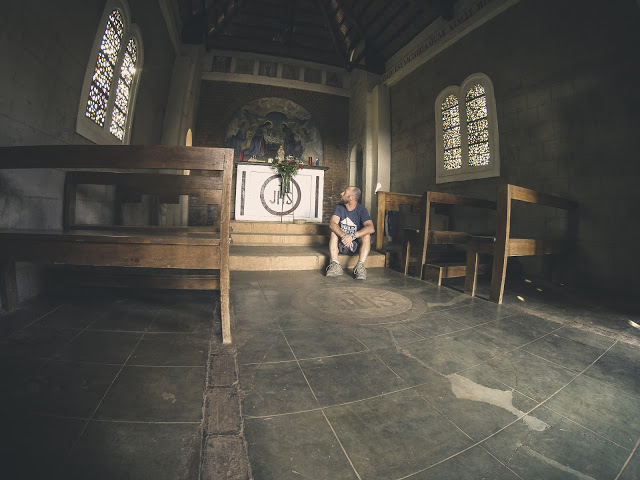
The inside walls are decorated with inscriptions in Latin. Above the stained glass windows and the entrance doors are painted the words, Venite Ad Memone (Come to me my people), Haec Est Victoria Quae Vincit Mundum Fides Mustra (This is the victory that has won the world by our faith), Benedicite Coeli Domino Benedicite (Blessed be the sky and blessed again) and finally Universa Germinatia In Terra Domino, which translates to, everything will germinate in the sky and also on the earth.

Behind the altar is an old mural of the nativity scene (baby Jesus and his parents Mary and Joseph) surrounded by angels thought to have been created in early 1943. It is not very clear who painted the mural but it is nonetheless credited to Navitatis NDJC. The reason behind this lack of clarity is that “Navitatis” does not seem to have done any works of art before or after the mural at the Mai Mahiu Catholic Church. There is, however, a name inscribed on the mural that refers to Pittore R. and the date 25.02.1943. All that this confirms is the date the mural was painted – 1943. It could as well be that Pittore did the mural – this is still subject to confirmation.
The church has three steps at the entrance that according to Ann Nyakio, a caretaker, symbolizes the Holy Trinity; the Father, the Son and the Holy Spirit. There are also two crosses on the roof and a compass that symbolizes that the church will stay as long as the world will turn around it.

Today, the Mai Mahiu Catholic Church is management by the Italian Embassy, the Kenyan government and well wishers who pump in their resources to conserve this religious historical site. The “Travelers’ Chapel” is open to all members of the public free of charge. Interestingly though, Christians and Hindus are allowed to worship, whereas Muslims can only visit.
Fun Facts:
- The Travelers’ Chapel is commonly referred to as msikiti – mosque by the locals because it resembles one. Furthermore, prior to the four pews, worshipers used to pray on their knees.
- Different communities and dominions conduct their prayers here.
- The chapel is a popular venue for weddings and photo shoots because it gives off an antique feel.
- Mai Mahiu Catholic Church is a favorite among truck drivers on transit from Mombasa to the landlocked central African countries.
Getting There:
The Mai Mahiu Catholic Church is located on the busy Mai Mahiu – Rironi road.
Share this:


The pride of Africa | Flying high in 2016
“The Pride of Africa”
Our national flag carrier is on a lane of its own; seamlessly living up to its name if the World Travel Awards 2016 is anything to go by. Going by the title “Africa’s Leading airline” this year, Kenya Airways not only affirms its dominance in the African skies but also confirms that it is indeed, the Pride of Africa.
Moreover, Its commitment to modern conviniences and overall customer experience, also saw it scoop the “Africa’s Leading Airline – Business Class” award for the fourth consecutive year.
In light of this remarkable achievement, we reached out to Kenya Airways’ Marketing Director Chris Diaz, to get his sentiments on the awards and future progress of the carrier.

For the past 22 years consecutively, South African Airways has been the best airline to fly with as far as winning the Africa’s Leading Airline Award at the World Travel Awards is concerned. This year however, Kenya Airways broke that cycle, taking the Africa’s Leading Airline Award home. How big a deal is winning this title and what does it mean for the airline and your consumers going forth?
The award was a tremendous honour and great reward for the monumental efforts all of us at Kenya Airways have put into making the airline a leader in the region. Going forward, we are working to ensure Kenya Airways remains at the forefront of international aviation with a commitment to continue offering our guests warm African hospitality . We continue to connect Africa to the world and the world to Africa.
Aside from Bagging Africa’s Leading Airline Award this year, you also scooped Africa’s Leading Airline – Business Class Award. This is the fourth consecutive year you are taking this award home; you clearly must be doing something right in this department. Today, Business-Class travel experience is highly valued by flyers and a lot of factors come into play when deciding what airline offers seamless travel for this group. What sort of developments or services offered by your airline do you think sets you apart from the rest in the game, hence getting you this accolade for the fourth consecutive year?
Over the years we have invested heavily to get where we are. We have one of the newest fleet in the region. We have invested in ensuring our guests experience superior flying experiences in the Business-Class cabin. We are now operating from a fairly new hub at JKIA with a state of the art terminal, we have introduced new menus on board, and we have fully-flat bed in our aircraft. We also have world class inflight services and award winning lounges at JKIA. These are just some of our strengths but our greatest one is our people who work tirelessly despite difficult circumstances to keep our guests coming again and again.
Having won the “Africa’s Leading Airline” title, do you perhaps think that all eyes will be on you now to set the industry’s standards in terms of service and comfort?
Definitely. As a result, our focus is to remain committed to transforming air travel by continuously investing in the best people, products and technology and, in doing so, developing a highly acclaimed airline brand.
While we are still on that topic, are there any developments that Kenya airways may have achieved that perhaps are a first in the industry thereby setting yourself apart as a trend setter?
As mentioned above, our product and people speak for themselves. The fact that we also know Africa better than anyone else is a great advantage. We go to 42 destinations in the continent and if anyone knows Africa, it is Kenya Airways. In this case we continue to contribute to the sustainable development of Africa.
Of course, even with a successful a company as yours, one cannot fail to encounter a few shortcomings here and there, in a few reviews that we’ve taken a look at, we’ve come across several critiques in terms of “cost-cutting measures in regards to meals, delays without notice and/or apologies and sometimes a not so customer friendly staff and so on” thus while the airline might be good, the overall experience for some is not so good. Have you encountered any such concerns, and what are you doing to curb them?
We receive complaints and we know we are not perfect but are continuously investing to ensure we offer our guests the best in service and the quality of our product. Yes, there is an opportunity to improve. We strive to bring consistency and quality by focusing on delivering consistently high levels of customer service that extend beyond in-flight service.
Last year, financial reports indicated a 25.7 billion after tax loss incurred by Kenya airways during the last fiscal year. One of the reasons given for this was the major challenge faced by the tourism Industry as a whole i.e. insecurity following terror attacks and the issuance of travel advisories by most countries. However, things are looking up now. Are there any measures or incentives that Kenya Airways has taken to try and draw more tourists to Kenya?
Yes. We currently executing a turnround strategy dubbed, Operation Pride in a bid to change the fortunes of the airline and we are already seeing some positive traction. We have stepped our efforts to ensure seamless connectivity through our hub, at competitive prices. We are working on improving our profitability by instituting several measures in the strategy. In the next 18 to 24 months, we should be breaking even. In addition, the move by the Government of Kenya to reduce the visa restriction of for children under 16 years has impacted positively on growing tourist numbers especially for Kenya.
Lastly, if you could recommend one place to tourists looking to visit Kenya, where would this place be and why?
As you know, Kenya is a world-class destination offering some of the best rated tourist activities and products including the Masai Mara and Diani Beach which were voted leading destinations at the Awards. I would recommend visiting these sites among the many others Kenya has to offer.
Share this:


The Pink Invasion: Martin Harvey’s Perspective
The Lake shores of Nakuru and Bogoria are a bird-watcher’s paradise to say the least. Millions of flamingos gather along the alkaline lakes to devour the algae that lends to their brilliant pink plumage. These pink beauties are quite the ornithological spectacle and no one could’ve captured that better than Martin Harvey. Harvey takes us on one pink magical adventure that is bound to leave birding enthusiasts in awe.
“To witness a concentration of birds like this is, without a doubt, one of the greatest ornithological experiences in the world. There is constant movement of pink as birds move about the lake in search of food or disturbance by predators. It truly is an enjoyably overwhelming wildlife experience.” – Martin Harvey
![lake-nakuru-flamingos-7[6]](https://zurukenya.com/wp-content/uploads/2016/06/lake-nakuru-flamingos-76.jpg?w=474&h=316)
![lake-nakuru-flamingos-15[2]](https://zurukenya.com/wp-content/uploads/2016/06/lake-nakuru-flamingos-152.jpg?w=474&h=315)

![lake-nakuru-flamingos-12[2]](https://zurukenya.com/wp-content/uploads/2016/06/lake-nakuru-flamingos-1221.jpg?w=474&h=316)

![lake-nakuru-flamingos-11[2]](https://zurukenya.com/wp-content/uploads/2016/06/lake-nakuru-flamingos-112.jpg?w=474&h=316)
![lake-nakuru-flamingos-10[2]](https://zurukenya.com/wp-content/uploads/2016/06/lake-nakuru-flamingos-102.jpg?w=474&h=316)
![lake-nakuru-flamingos-2[6]](https://zurukenya.com/wp-content/uploads/2016/06/lake-nakuru-flamingos-26.jpg?w=474&h=316)
![lake-nakuru-flamingos-3[6]](https://zurukenya.com/wp-content/uploads/2016/06/lake-nakuru-flamingos-36.jpg?w=474&h=316)
![lake-nakuru-flamingos-9[2]](https://zurukenya.com/wp-content/uploads/2016/06/lake-nakuru-flamingos-92.jpg?w=474&h=316)
![lake-nakuru-flamingos-1[8]](https://zurukenya.com/wp-content/uploads/2016/06/lake-nakuru-flamingos-18.jpg?w=474&h=316)
![lake-nakuru-flamingos-12[2]](https://zurukenya.com/wp-content/uploads/2016/06/lake-nakuru-flamingos-122.jpg?w=474&h=316)


 Zuru Kenya