The beauty that is now ‘Haller Park’ was once an industrial wasteland. In 1970, one Dr. Rene Haller, took upon him the task of rehabilitating a barren cement quarry whose floor was hard as rock and groundwater saline.
Dr. Haller set out to transform this industrial wasteland into a flourishing natural park, something that was unheard of at the time. His vision; to establish a multitude of plants, providing food and shelter to a large variety of animals.”
Through careful observation of how plants and animals interact, and a series of trial-and-error experiments, Dr. Rene Haller achieved what many had thought was inachievable.
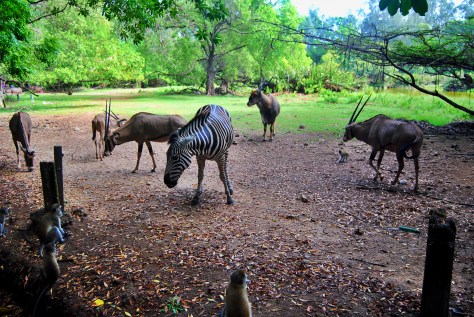
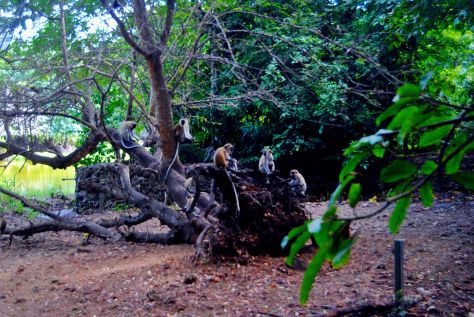
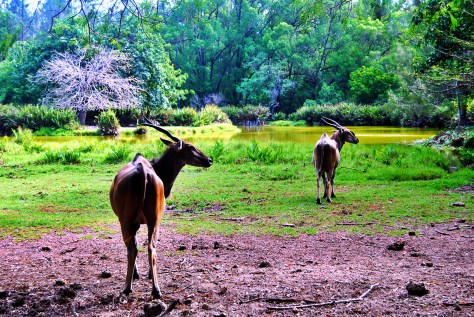
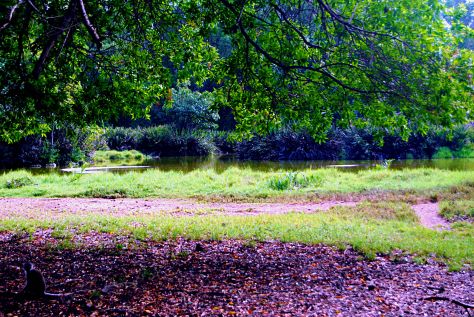
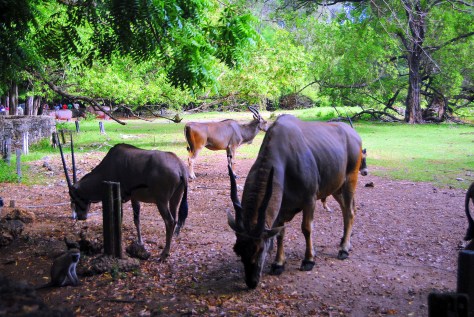
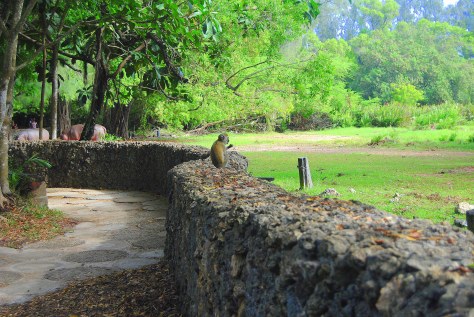
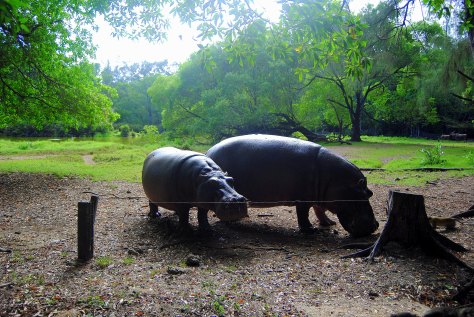
Over 1 million trees planted, and having a range of insects, butterflies, birds and mammals introduced, we now have Haller Park; a serene nature enthusiasts’ haven. Each plant, insect or animal had a purpose to keep the ecosystem in balance. Now Haller Park is a beautiful Wildlife Sanctuary, home to over 30 species of endangered animals and a favorite spot for family time over the weekends.
NB: Nearly 100,000 people visit Haller Park every year.
Entry Fee: kshs. 500 per person *subject to change
Make some time for rooftop cocktails and shisha. (Photo: Tribe)
“You never know who you’ll run into at the Tribe.” That’s what the locals and visitors consistently say about this luxury property in Nairobi.
It’s true. The Tribe has become a go-to destination for visitors here from movie stars, heads of state, famous chefs, supermodels and the adventurous tourist.
Kenya’s bustling capital city, Nairobi, has quite the split personality these days.
The vibrant, thriving metropolis with rich culture and cosmopolitan flair shares its boundaries with an expansive National Park and game reserve.
Interestingly, the 137-room Tribe Hotel is a perfect reflection of the city’s duality. The contemporary and sleek architectural property pays perfect homage to Kenya’s wide ranging historic and natural wonders.
The Vibe
The hotel is serene and sanctuary-like, making you feel soothed and welcome from the moment you set foot inside the lobby. Warm, wide smiles greet you at every turn and the blend of modern design and beautiful displays of African Art give the space a sophisticated style that is elegant but unpretentious. Everywhere you look there are colorful carvings, paintings, tapestries and unique pieces of furniture that blend will with the angled rooms and spaces. The bedrooms are designed to be calming but highly functional while common areas, and there are many, are warm and inviting.
The Location
Tribe Hotel is located in a quiet upmarket suburb in the northern part of the city. While this area is certainly a distance from the busier city centre and airport, it is just steps from the Village Market – an upscale shopping area with plentiful shops and dining options. Nearby is also the Friday Maasai market, a great place to purchase local crafts, and the Karura forest is also walking distance away. Most other attractions are a taxi ride away.
The Rooms
Rooms are bright, clean and comfortable while each is uniquely floor-planned and decorated, again with a mixture of original artwork and en vogue styling. Several feature a loft-style, split level lay out that is spacious and well-suited to those who like to work and relax in their room.
Rooms combine modern luxury with gorgeous local art. (Photo: Tribe)
The adjoining bathrooms are sleek and well-appointed with large soaking tub and open showers. One unusual aspect in some of the suites is a glass sliding wall that separates the bedroom from the bathroom. While it opens up the space and gives you a nice view of the beautifully designed bathroom, it provides little sound insulation and therefore privacy. So if you are cohabiting in the room, be prepared to share a whole lot more than just your space.
The Food
The hotel’s main restaurant, Jiko, has an extensive and well curated menu of tasty international options from soups, salads and pasta to burgers, sushi and traditional steaks and seafood dishes.
Indulge in delicious homemade sweets at the aptly named Suite 101. (Photo: Tribe)
The included daily buffet breakfast is plentiful and nicely laid out.
The Staff
Service standards at The Tribe Hotel are unparalleled and the staff might just be the highlight of your stay. They are impeccably courteous, and helpful, almost to the point of it being frustrating, but in no way does it feel false or forced. Each and every member of the team loves their job, it oozes from them, and their attention to detail provides a truly personalized service. So, if you want to be pampered and well taken care of, this is the place.
Added Bonuses
The luxurious spa is excellent with treatments ranging from hot stone massage and body wraps to facials and chemical peels, while the fitness centre is well equipped, even featuring a boxing area, and is staffed with personal trainers – an unusual addition to a hotel gym.
Nairobi is a city known for its wicked traffic. Let Tribe’s drivers get you where you need to go. (Photo: Tribe)
The hotel also has its own Range Rover which can be rented out for private safari tours into the Nairobi National Park (driver included!), so even if you are tight on time, or bad at organizing excursions, you can still have an opportunity to explore the wilderness.
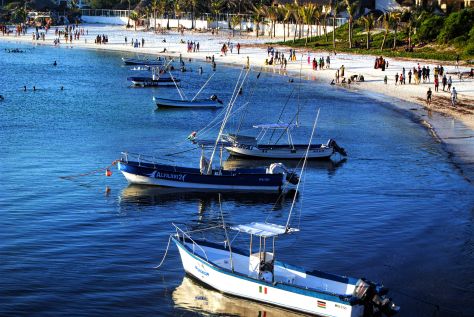
Driving down the small trail, a Watamu local in the backseat giving us directions, I couldn’t have envisioned what awaited us. I’ve had my fair share of coastal beaches but what I was about to step into I couldn’t have imagined. This little piece of paradise sitting pretty outside the small village of Watamu, is no wonder Watamu is listed as having some of the most beautiful beaches in the world.
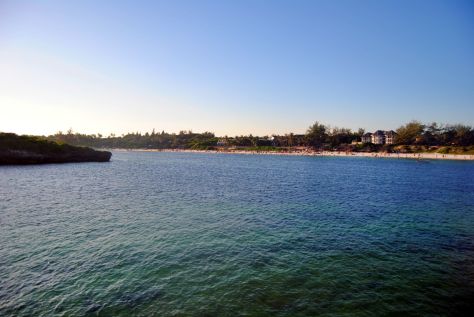
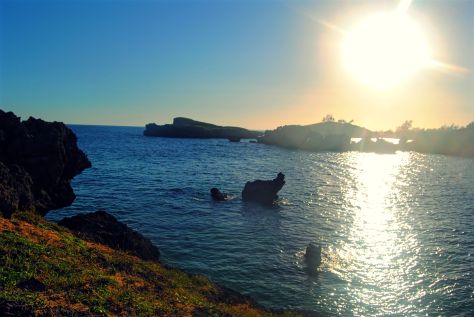
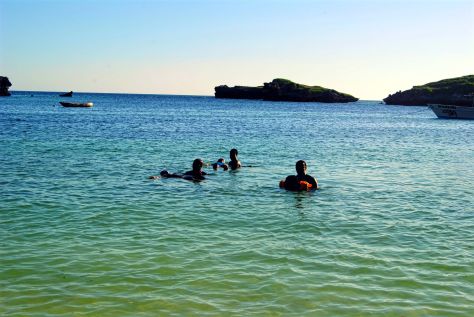
Once you step on the beach, the rocky lagoons across the street instantly catch your eye. These reef-protected lagoons line the Watamu National Marine Park and Reserves, which are the oldest in East Africa and one of the best kept secrets in the world recognized internationally as a UNESCO Biosphere Reserve.
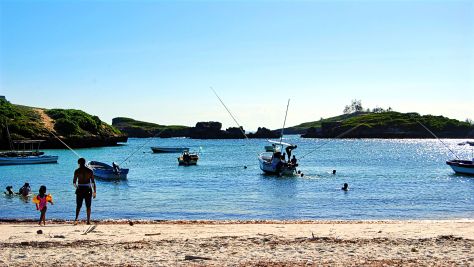
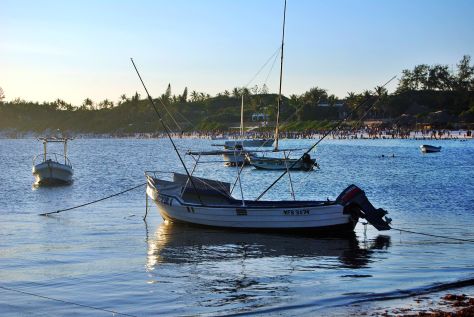
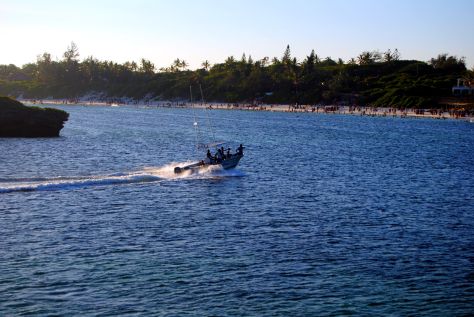
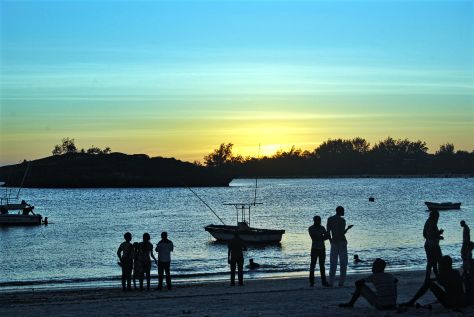
The Blue Lagoon bay where we chose to spend our christmas afternoon is known for its extraordinarily clear waters sheltering a rich marine life; ideal for snorkelling and offers great panoramic views out over the bay. Watersports, swaying hammocks and luxury beachfront resorts complete the picture – it’s the perfect definition of paradise.
What to anticipate: A “beach boy” or two may approach you with a boat ride offer to the Marine Park. On seeing that we weren’t interested in seeing dolphins, the guy who’d approached us offered to join him and his crew at their hangout joint, a small makuti restaurant where they look out for clients.
Here I met Hussein Guida Turistica who currently goes by the alias Brian when at work. Given the terrorist attacks that majorly hurt the tourism economy, he fears that using his real name Hussein will ward off clients and he could not afford to lose his main way of earning a living.
Hussein Guida Turistica taking me round the bay
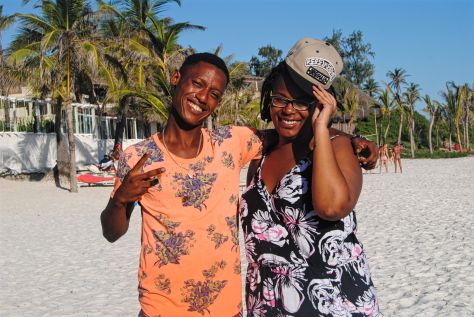
Hussein Guida Turistica requested for this photo with this lovely lady when we first met him
Italian is the language of commerce here and once in a while he and his friends would shift from swahili to italian when they didn’t want us to here what they were saying while bargaining for a boat ride to the Marine Park.
Now that we are settled on a safari this festive season, we of course have to give you tips on getting through it with ease and ensuring that you enjoy your experience to the fullest.
If your’s is a family getaway, you may be a bit worried if your kids will be safe and sound while embarking on game drives. Worry not; our tips will set you up for that perfect holiday experience.
The biggest attraction of any family safari holiday is naturally “The Big 5″: lions, African elephants, Cape buffalo, leopards, and rhinoceros. With this in mind, guided safari drives are the safest way for children and families to maximise the magical Kenya experience. Whilst children may get very excited about seeing wildlife, patience is often needed while tracking the African game therefore the main concern here is whether your kids may or may not behave.
Wait until your children are at an appropriate age
The key is to wait until your kids are at the point where they can take instructions (especially on when to keep still and be quiet for the safety of the group). Recommended ages is 5 and over, however ensure that you check with the accommodation first on their policies regarding children and game drives (most require children to be at least 8 years old).
Encourage participation
Children get bored easily. You definitely want to ensure that once bored, they do not start causing tantrums. Let your kids be part of the action by either letting them use a camera or a binocular, who knows they may spot the game before you do.
Have activities ready to keep children busy during the drive
Driving to your safari destination may take a few hours and parents know that even the most patient child will get bored during the drive. You can either prepare your ‘our activity package’ with coloring sheets and quiet games, or ask your safari guide and lodge for ideas to keep children busy.
Consider a self-drive or private safari
At larger lodges where families may have to share vehicles during a game drive, keep in mind not all travelers will enjoy having children on their safari. In such cases, get a private guide and vehicle if possible.
Book with a reliable tour operator that accommodates kids
The family travel market is full of tour operators offering safaris to families on a budget; it may be tempting to book with a less expensive operator. Keep in mind that not all lodges accommodate children and that less expensive is not always better. Look out for a single tour operator offering an established portfolio of properties.
Pack clothing that will keep them comfortable
Most family safari game drives take place in the morning or afternoon but older children may want to take part in night drives too. If this is the case, remember to bring warm clothes in the jeep.
Remember your little kids are potential prey for the Big 5
Yes, it’s a scary thought that your young children could potentially be a meal for wild dogs. On her post on National Geographic’s Intelligent Travel, Heather Greenwood-Davis reminds parents to weigh the prey factor. “My sons once stepped out of a jeep at a game reserve where wild dogs were being preserved and the immediate transformation of the dogs from playful puppies to hunters made me very grateful for the electric fence,” she writes.
Don’t feel pressured to go on every safari game drive
The excitement of being on a family trip can get the kids wanting to take part in all the drives and activities offered which in turn may leave them cranky and exhausted. If your children are tired, let them sleep. “Let your little ones rest when things are slow and rouse them for the highlights, tired kids make for terrible safari companions.”
Since safari lodges and camps offer several drives throughout the day, you and your family can still get a break from the excitement of it all and enjoy some quiet family-time together back at camp.
Hasn’t this year flown by fast? we certainly think so. There is still a few days to the festivies though and we have just the perfect place for you to spend your December holidays this year.
If you’ve had a rough year and just want a break from it all; just you, your friends/family and some tranquility, nothing says ‘breakaway’ like the village-like Kivuli Camp.
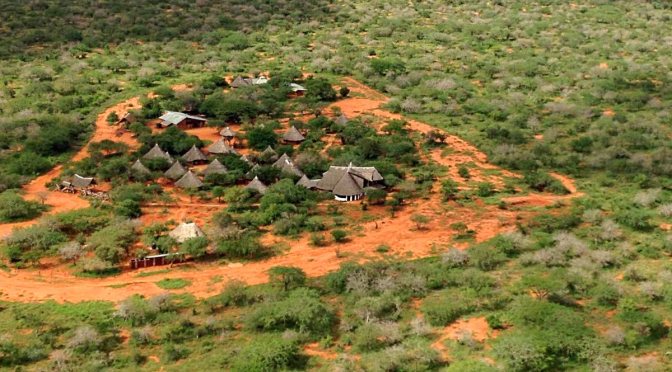
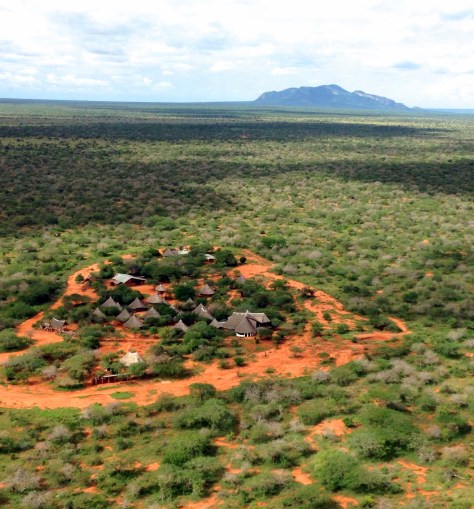
Situated in the heart of Rukinga Wildlife Sanctuary; one of the seven ranches that make up the Tsavo Conservancy, you not only get the intimacy of wildlife viewing unparalleled elsewhere in the continent but also an amazing level of true luxury accommodations, service and cuisine.
Formerly known as Camp Tsavo and before that as the Taita Discovery Centre, the camp just underwent complete refurbishment and so not only can you anticipate a charming accommodation with a new outlook, but also anticipate an affordable experience filled with wildlife, and fun-filled bush activities.
THE LOCATION
Situated conviniently along the Nairobi-Mombasa highway and just approximately 3hrs away from the coastal towns of kenya, the Kivuli camp experience is perfect for a combination of bush and beach safari (How amazing is that? double fun for you this festive season as you can easily switch up beach for bush for either chrismas or new years’). If safari is not your thing though, the camp can still serve as a transit point for a night’s stopover between Nairobi and Mombasa.
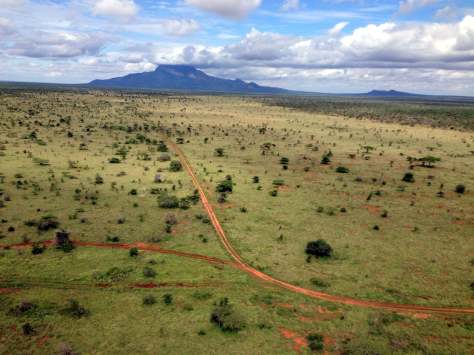
The camp is easily accessible right off Maungu town on your way to mombasa with the entrance point visibly labelled RUKINGA. Nestled amidst the Marungu Hills in a wilderness of ‘wait-a-bit’ thorns and occasional Baobab trees, you cannot go wrong with Kivuli in terms of the game viewing experience seeing as the Rukinga plains form the main migratory corridor for wildlife passing from Tsavo East National Park to the foothills of the mighty Kilimanjaro.
The camp is the epitome of tranquillity and truly embraces the glorious environment it is blessed to be within. All you hear at night is the sound of the wild: elephants, hyenas and the occasional lion; morning is announced by a swell of bird calls.
How remote? The camp has an airstrip adjacent to it. Arrangements can also be made for one to ride in by motorbike, enter with their pets, or fly in to the airstrip with private charters.
Getting around: You will need a car, preferably a four wheel drive.
NOTE: When staying at Kivuli Camp, Conservancy entry fees are only paid once, no matter how long you plan to stay! (It can’t get better than this).
THE CAMP
First things first. Though Kivuli Camp is set up in a traditional African Village model, The nearest community village is quite a distance so do not expect that sort of enviroment within the camp. So no farm animals, or crop land and so on, however if you fancy such an experience and would love to be immersed in community life while here, village visits can be arranged.
The Camp’s setting not only affords you utmost privacy and tranquility, but you are able to experience the real African bush, sleep underneath the star-filled sky, explore the fauna and flora up close whilst on bush walks or enjoy a cold Tusker whilst watching the beautiful sunset on top of one of the conservancy’s hills!
ACCOMMODATION
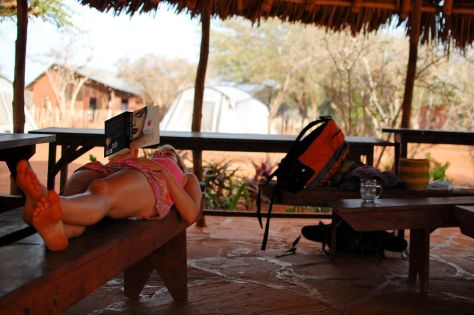
You’re spoilt for choice when it comes to accommodation at Kivuli Camp. Camp in your own tent, sleep in bunk beds or in private rooms. The establishment can accommodate individuals, families as well as large groups.
You have the option of a Family banda, which is a thatched hut containing one room with double bed, one room with twin beds and a bathroom shared between the two rooms.
If camping is more your thing though, Kivuli’s shady Kudu campsite will have you set in your own tent under a tree. The campsite offers clean communal flushing toilets and showers.
You also have a more cheaper option for the backpackers at heart in the dormitory bandas. These thatched huts contain 4 wild wood bunk beds and guests staying in these bandas have access to communal bathrooms (these are separate for ladies and gents, one drawback though: the bathrooms have sheer curtains in place of doors; not the most privacy one could hope for).
PRIVATE HOUSE
If the accommodation options above don’t suit your needs and you would rather just a private space for you, your family or friends, fret not! Kivuli Camp has just the place for you; NDOVU HOUSE
Although part of Kivuli Camp, guests staying in this house have their own private access and move independently of the other accommodation spaces.
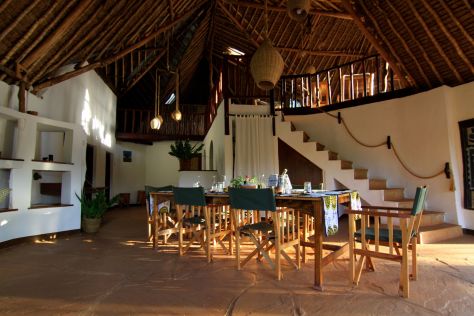
This beautiful breezy four-bedroomed house with an upstairs lounge offers a great view over the Tsavo Conservancy and sleeps 11 people. So quiet, so private, so unique!
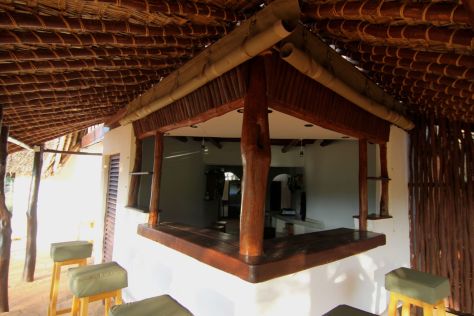
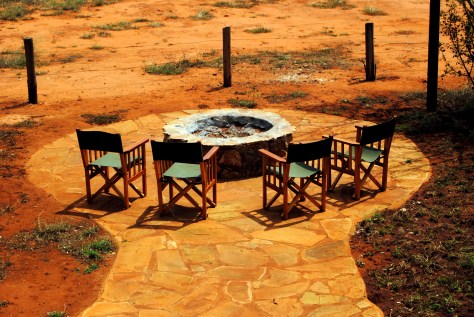
The design of the house puts a lot of consideration into comfort and convinience what with an open kitchen connecting to an outside bar and fire pit. The perfect place for a family or friends getaway. so much bliss!
The house is very airy and adapts an open space plan built with a lot of natural materials; flours of Galana stone, a lot of wood and an impressive makuti roof. The dining of the house is completely open to the garden as well. Being in the wild though, you don’t have to worry about the open-plan design of the house as kivuli camp has a fence surrounding the area to keep wildlife out.
Guest Access: While staying at Ndovu, you will have access to the house in its entirety. That is the dining area, kitchen, upstairs lounge, four en-suite bedrooms and a large garden equipped with a bar and fire pit.
Room Service: Um, no, the accommodation is set up to be of self-service however there is a staff who make beds and clean every day. If you would rather not make your own meals during the stay, a cook can be provided at a small fee.
Amenities: I would like to think that setting out on a bush safari, this would be the least of your concerns. Kivuli Camp is about experiencing the African wilderness — its game, its birds, its flowers, its dazzlingly night sky — in its remotest, wildest and most beautiful sense.
The Best Spots:
The hills around the conservancy are definitely something to look forward to for great sundowners and breathtaking views of the African wild.
Being more of a private conservancy, with very little traffic, the animals here are not very accustomed to cars and thus tend to run when you get closer (hint: try to be as quiet as possible). With various watering points in the area, your best bet is to catch the animals playing with mud or cooling off on a hot day.
HIGHLIGHTS
Kivuli Camp unlike other camps is guaranteed to up your game-viewing experience with a one-of a kind ultimate discovery game drive vehicle (eerm truck!) famously known as Beba Kuu. Nothing will skip your eye with this ‘little’ thing.
With the 1962 French ‘Berliet’ Truck, seated at height under a canvas cover, you can spot wildlife even from the longest distance.
While at the camp you can also visit the Tsavo East and West National parks for more wildlife viewing experience.
Tsavo Discovery Centre: This is a specialty education centre that hosts schools, universities and youth groups for overnight educational programmes at Kivuli Camp. The Tsavo Discovery Centre is equipped to teach an abundance of subjects related to conservation, biodiversity, community and much, much more. Here you will find a laboratory with field exhibits, museum collections, and an education centre for meetings and classes.
Moreover, if you fancy a community living experience, Wildlife works has many community projects that you can be part of or visit e.g the Basket weaving women at Kasighau and so on.
Bottom Line: There are many interesting things to explore around the camp itself, that I guarantee you’ll end up having very little time to experience it all.
Nitty Gritty:
Main area with reception, loung/library, dining and fire-pit
Communal showers and flushing toilets, a kitchen and a laundry area
Generator power from 6pm to 10pm, phone charging possible from a solar lighting system 24hrs.
Phone signal available in certain areas of the camp. Internet available in the evenings
Communities living alongside national parks face numerous problems trying to co-exist with wildlife. Farmers have to take turns all day guarding their plantations from baboons who steal their food. Elephants stampede through their crops. The animals are also under stress, as humans encroach on their habitat.
This type of human-wildlife conflict is what led to the establishment of Wildlife Works to help mitigate the competition for land and food between locals and their park neighbors in Taita Taveta County. The Founder, Mike Korchinsky a Canadian citizen, learned about the conflict that existed between wildlife and rural communities during his visit to the country in 1996. His experience caused him to think about effective ways to solve this problem which ultimately led him to developing a plan that would ensure the utmost protection of wildlife.
Wildlife Works, based on the principle that the needs of wildlife must be balanced with the need for work for the local communities who share the same environment, established that the ultimate solution to this problem would be to create jobs; to provide forest and wildlife friendly economic alternatives to the forest community.
Mike looked for an area with a high threat to the wildlife to best test his new model. He settled on Rukinga Sanctuary, located south-east of Kenya in a wildlife corridor between Tsavo East and Tsavo West National Parks, known as the Kasigau Corridor. The project was to be carried out on 13 group-owned ranches and conservancy land owned by Indigenous Community Ownership Groups.
According to Wildlife works, Job creation would not only be providing the people in this wildlife rich area with sustainable economic alternatives to poaching and slash and burn agriculture; it would also in turn be protecting wildlife in a direct and unique way.
“The only way to protect a forest that’s under economic threat is to remove the economic threat. And the only way to do that is to give the community another way of achieving their goals because they’re not going to not develop.” -Mike Korchinsky; Wildlife Works Founder.
Why Wildlife Works:
Wildlife Works is the world’s leading REDD+ (Reducing Emissions from Deforestation and Degradation), project development and management company with an effective approach to applying innovative market based solutions to the conservation of biodiversity. REDD was originated by the United Nations (UN) to help stop the destruction of the world’s forests – a significant tool to providing real value to those rural communities who have made the commitment to protect their environment for future generations. The additional plus sign in the Wildlife Works’ business model (REDD+) signifies that community development is one of their key goals.
There are six key elements to the Wildlife Works brand of REDD+ that make it a successful model, the foundation of it all being job creation.
Organic Clothing Factory
Wildlife Works factory view from above Source: Wildlife Works
The starting point of the wildlife works’ viable economic alternative project was setting up an eco-factory that produces organic casual apparel under the Wildlife Works label, sold worldwide by big brands among them Puma. All garments are carbon-neutral and made from organic and fair-trade cotton. The eco-factory originally hired seven local women but has hugely grown now and is responsible for over 80 employees; all members of the surrounding community. The factory has gone a long way in providing a sustainable alternative to destructive harvesting.
Agricultural intensification
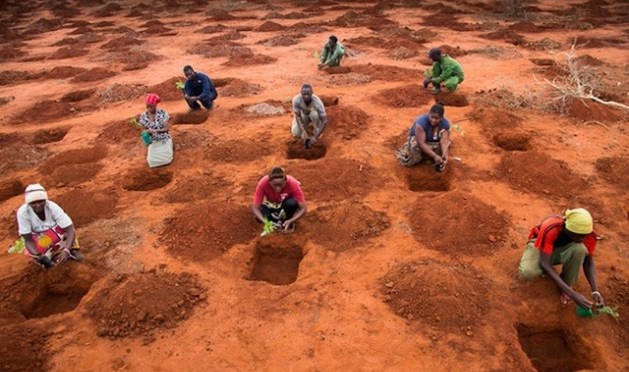
In order to assist the local communities in their move away from subsistence agriculture and deforestation, Wildlife Works has established an organic greenhouse, in addition to multiple nurseries with more in development. The nursery grows citrus trees and agro-forestry species such as Neem and Moringa oliefera to meet farmers’ medicinal, nutritional and fuel wood needs.
Each nursery, which employs approximately five people, is responsible for working with their immediate community to plan and implement the crops, while Wildlife Works provides training. In addition, the nurseries are building a business around Jojoba planting. The oil from Jojoba seeds is quite valuable and is used in the cosmetics industry and as biodiesel fuel. Community members are raising the plants in the nurseries to later plant and harvest. Wildlife Works on the other hand will assist in providing market links for the farmers to sell the seeds.
The local population’s need for farm land has also been addressed by the establishment of a land cooperative on 5,000 acres. The land set aside for the cooperative is land that had been cleared before Wildlife Works began its work.
Forest and Biodiversity Monitoring
Physical protection of the land in which the REDD+ project is set up is vital. The Kasigau Corridor REDD project is protecting 200,000 hectares (500,000 acres) of dryland forest which is under intense threat from slash and burn agriculture, as the local population expands. The Kasigau Corridor project is also home to five mammal species that are considered endangered, vulnerable or threatened: African elephant, cheetah, lion, African hunting dog and Grevy’s zebra.
To prevent illegal access into the project area and to ensure that the land is protected from deforestation, Wildlife Works has established several ranger stations around the project areas; each station with 8-12 rangers, recruited and trained from the local communities.
Working with a no-gun policy – but with the power of arrest granted by the local community, the Wildlife Rangers have received a lot of skepticism on whether or not they are fit to protect wildlife in their sanctuary especially considering the current Ivory poaching crisis in the country’s National Parks; an alarming number of elephants are losing their lives to poachers and Rukinga Sanctuary has not been spared either. Despite the fact, even with larger elephant populations, Mike believes his rangers fare well as any because they have such a strong relationship with the local communities who inform them of the comings and goings of possible poachers. They have the best intel based on the work they do with local communities.
Wildlife Works has also forged a good relationship and works side by side with Kenya Wildlife Service (KWS) rangers who are armed with a shoot to kill policy, trained in combat, and who are permanently stationed within the sanctuary. Whenever there is an armed poaching incident, Wildlife Works’ rangers are trained to avoid any confrontation until they have KWS armed support, and even then they are not supposed to be in harm’s way if shots are fired. Over the course of 18 years, there has been only one incident where these rangers were fired upon.
There are nearly over 80 rangers in total employed by the project currently.
Reforestation
An additional activity of the project is a three year reforestation project on the slopes of Mt. Kasigau to plant 20,000 indigenous hardwood trees. These trees are not included in the emission reduction calculations, but it is a valuable initiative to help replace trees cut down for charcoal production and construction over the past years. The community members involved in the monitoring and implementation of the project are rewarded financially for helping to ensure its permanence.
Deforestation continues significantly in the area adjacent to the project today, illustrating that, in the absence of the project, this activity would still continue within the sanctuary.
Eco Charcoal and Fuel Wood
Charcoal burning is one of the activities carried out for economic sustenance in Taita Taveta County. In order to avoid wood being taken from the project area in an unsustainable and ecologically damaging way, Wildlife Works has initiated an extensive project to explore the large scale production of carbon neutral charcoal derived from bush trimmings, allowing the local community to be self-sufficient in fuel wood without having to degrade any of the land.
Social benefits: School Construction and Bursary Scheme
Prior to Wildlife Works arrival, the area in which the project is carried out had no schooling facilities or necessary amenities to ensure children gain a good education. Thanks to the project, they have already built 18 classrooms throughout the district and a partner has established a bursary programme which has sent dozens of children to high school. A plan is in place to send at least five new students a year through four-year secondary school programmes and on to college or university. A school construction and maintenance fund will provide funding every year to seed school construction and maintenance projects in the area.
Wildlife Works is also working on extending access to fresh water to the locals who previously had to send their children up to 15 miles to retrieve water several times a day. They have implemented a clean water supply for the schools using an innovative rainwater catchment system and manual rower pump to allow the children to retrieve the water for themselves from underground storage tanks.
Prior to Wildlife Works, the migration corridor had been lost to poaching and encroachment before the area residents were engaged in consumer powered conservation. Wildlife Works sees empowering local people with sustainable livelihoods as the key to protecting the forest in the long-term, and with these projects, the link between better livelihoods, conservation and wildlife works is clear.
The foundation was about finding solutions that lead to mutually beneficial co-existence. The work here has led to people being more enthusiastic and supportive of conservation, and has demonstrated that people can live alongside wildlife while developing sustainable livelihoods. The local communities want to protect the environment because it works for them, hence the name Wildlife Works.
In total, Wildlife Works today provides over 400 jobs to the local community and brings the benefits of direct carbon financing to nearly 150,000 people in the surrounding communities.
It is rare in these troubled times to hear good news about the rhino: poaching has returned and a creature that has been with us since the days of the dinosaurs seems in mortal peril. That danger is real, but the rhino is very much still among us, and Kenya remains one of the best places on the planet to see both the black and white rhino.
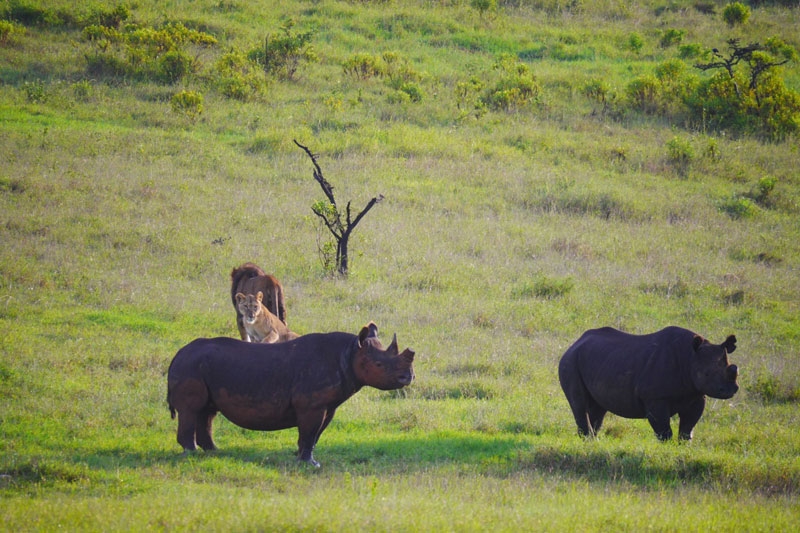
The story of the black rhino, often described as Kenya’s indigenous rhino, is particularly poignant. During the poaching wars of the 1970s and 1980s, black rhino numbers in Kenya fell from an estimated 20,000 to just 300 by the end of the 1980s. Thanks to intensive conservation efforts, those numbers rose slowly in the decades that followed and Kenya’s last rhino census gave a figure of around 620 black rhinos left in the Kenyan wilds in 2014. This amounts to around half of all black rhinos left in the wild, and close to ninety percent of the remaining eastern black rhino subspecies.
White rhinos, brought in as part of successful conservation efforts to save the species in South Africa, are thought to number around 350 in Kenya.
Nairobi National Park
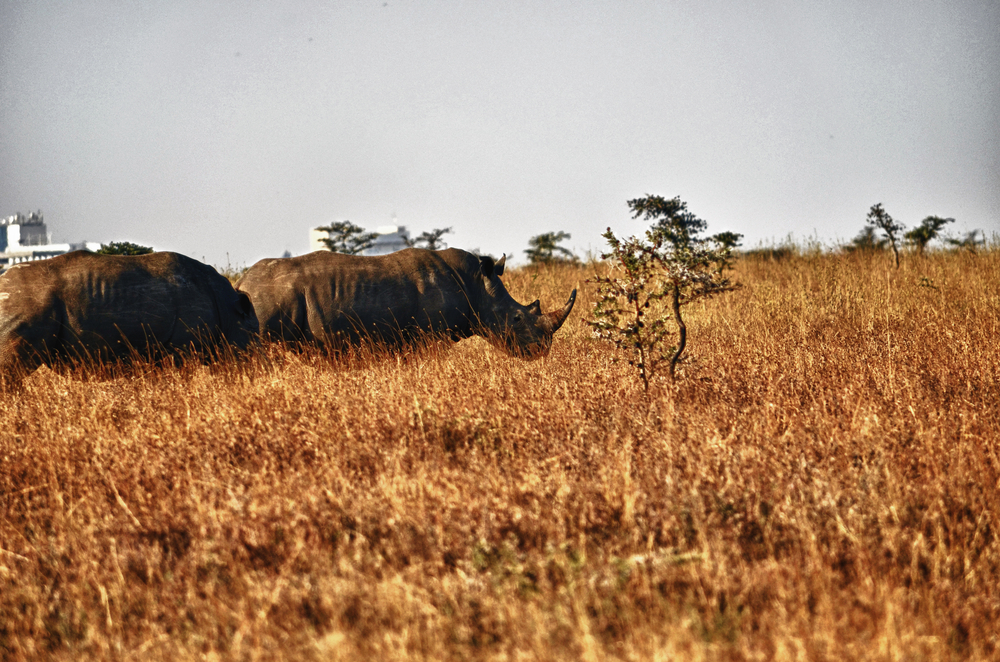
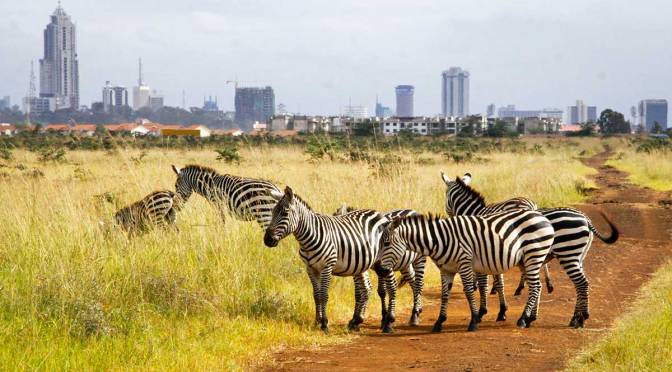
The most obvious place to begin looking for rhinos is in Nairobi National Park, on the south-western outskirts of Kenya’s capital. Its success in both protecting and breeding black rhinos has earned the park the epithet Kifaru (Rhino) Ark, and it remains home to more than 50 black rhinos living in densities not seen anywhere else in Africa. This is the place to come for that incongruous image of a rhino snuffling across the savannah with Nairobi’s skyscrapers in the background.
Ol Pejeta Conservancy
A cross between the private conservancies that are a specialty of central Kenya’s Laikipia Plateau and a national park accessible to all, 75,000-acre Ol Pejeta Conservancy is a fabulous place to see rhinos. Numbering 100, Ol Pejeta’s black rhinos form Kenya’s largest population and sightings are almost guaranteed. In addition to the free-ranging rhinos, visit the Endangered Species Boma, a 700-acre enclosure which is home to three of the last six remaining northern white rhinos, including Sudan, the last breeding male left on the planet.
Lewa Wildlife Conservancy
Just north of the Laikipia conservation zone but very much a part of the same ecosystem, Lewa Wildlife Conservancy is one of the main reasons why there are still rhinos left in Kenya. Back in the 1980s, the Craig family, who owns Lewa, and renowned rhino conservationist Anna Merz pioneered the setting aside of private land for conservation and then coupling it with high-end tourism. By 2015 there were 72 black rhinos and an estimated 62 white rhinos at Lewa, and nearly two dozen rhinos raised in the conservancy have been translocated to assist in growing rhino populations elsewhere in the country. You’ll have to be staying at one of Lewa’s top-end lodges to enter the conservancy, but with no restrictions on where the conservancy’s vehicles can go, you’ll never get closer to a rhino than you will here. There’s even the chance to visit Lewa’s Orphan Rhino project, following in the footsteps of Sir David Attenborough in the final episode of the BBC’s Africa series.
Borana Wildlife Conservancy
In 2014, a landmark agreement was reached to remove the fences that separated the high-end Borana from the contiguous Lewa Wildlife Conservancy. Borana’s 35,000 acres of ideal rhino habitat is now part of one of the world’s most important rhino sanctuaries, its own important population of rhinos now free to breed with the world-famous rhinos of Lewa to create a combined black rhino population almost 90 strong.
Il Ngwesi Group Ranch
Run by the local Maasai community, Il Ngwesi Group Ranch, off Lewa’s north-western border, has small but significant populations of both black and white rhinos. Il Ngwesi receives fewer visitors than either Lewa or Borana and the encounters here with rhinos are generally more intimate as a result.
Tsavo West National Park
When it comes to traditional national parks, few have such an important role to play in rhino conservation as the Ngulia Rhino Sanctuary, deep inside Tsavo West National Park in south-eastern Kenya. There are 78 black rhinos here in a fenced off 90-sq-km portion of the park — sightings in the dense undergrowth can be elusive but such is the density of rhinos here that it is worth persisting. Rhinos released from the sanctuary into the wider park can also be seen in Rhino Valley that runs through the heart of the park.
Lake Nakuru National Park
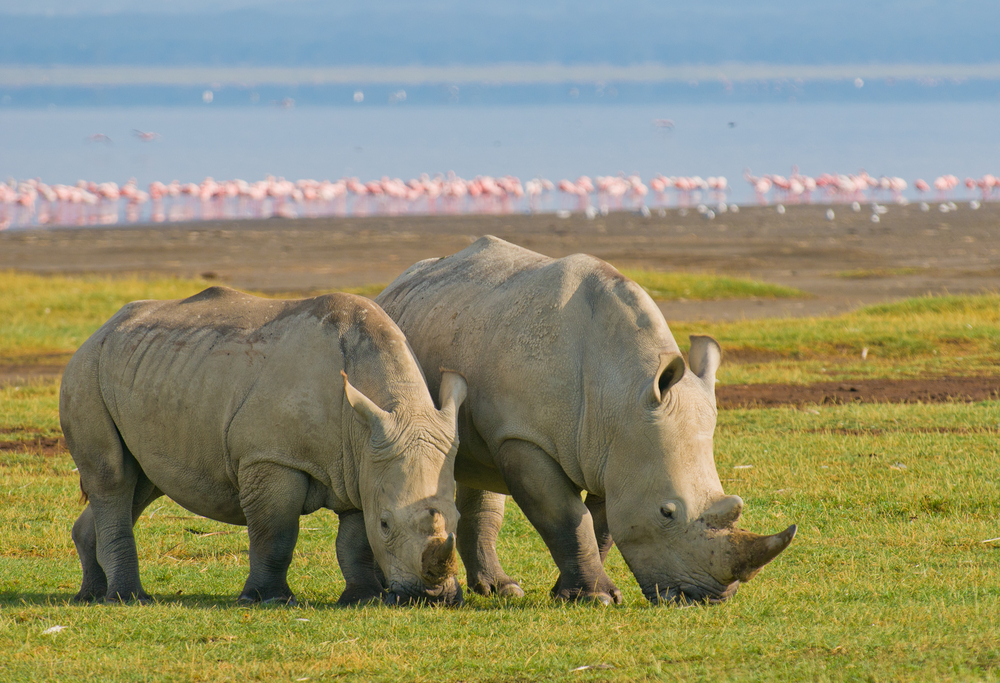
One of the iconic parks of Kenya’s Great Rift Valley, Lake Nakuru is reliable for sightings of the park’s black and white rhinos with a combined population of around 60. This is one of Kenya’s smaller parks and the rhinos (especially whites) are often seen around the shore of the lake that gives the park its name.
Meru National Park
This area of Kenya’s central east stood at the epicentre of the poaching massacres that ravaged the country’s rhinos in the 1980s. But Meru’s heavily guarded, 48-sq-km Rhino Sanctuary has been restocked with rhinos from Lake Nakuru. With around 25 black and 55 white rhinos, it’s once again an excellent place to see rhinos in the wild.
Masai Mara National Reserve
The Masai Mara is better known for its populations of big cats and the annual migration of wildebeest in their millions, but the Mara does have a few black rhinos in residence that add depth to the experience of visiting here.
Aberdare National Park
High in Kenya’s Central Highlands, a black rhinos cling to the densely forested slopes of Aberdare National Park. Thanks to this density of foliage, however, tracking down a rhino can turn into a nerve-wracking game of hide-and-seek, one in which you need to be ready at any moment to run from the charge of a rampaging rhino crashing through the undergrowth.
Solio Game Reserve
Solio Ranch, Kenya’s oldest rhino sanctuary and 22km north of Nyeri, is another pillar in Kenya’s story of rhino conservation — so many of the rhinos you see elsewhere in the country came from here. The wide open horizons here make sightings a satisfyingly easy proposition. Solio has 22% of all the rhinos in Kenya and probably the highest density of rhinos per square kilometer in the whole of wild Africa. It is by far the best and easiest place to see rhinos — sometimes as many as 50 on a single plain.
Ruma National Park
Out in Kenya’s far west, close to the shores of Lake Victoria, Ruma National Park covers just 120 sq km, but includes within its borders important rarities that include roan antelope, Rothschild’s giraffe and nearly 30 rhinos, of both black and white varieties.
August is here!! which means school term is over for a majority of the kids. Which also means that your kids will need entertaining.
For those of you planning to take your kids off to some fun destination this August, we have compiled some facts you need to put into consideration before you embark on your travels.
Image source: Kuoni
Let’s be honest. Traveling with young children during holidays is a hassle for a number of parents. This can be attributed to kids throwing tantrums, becoming disorderly and a nuisance hence messing up with the whole fun.
Traveling with small children doesn’t need to get on your nerves though. With a bit of know-how on how to manage them, good recollections can become of the road trip. Traveling with them should be a moment to ignite indelible memories of joy and provide a platform to bond well with them without much worry.
Here are a number of tips you can put in place before you go for a vacation with small children.
Safety for the kids
When hitting the road, safety comes first. Is your car in good condition? Are the seat belts well fitted? Or is the children’s car seat comfortable? In case you are going to use different cars make sure the seats are comfy for them to enjoy when traveling regardless of the distance.
Look for a child friendly hotel
Quite a good number of hotels in tourist attraction sites are not child-friendly to a degree of exposing kids to stress or danger. Before settling in any of the rooms, as a parent you have to make sure the room is well lit, windows and doors are well fitted to keep the kids out of cold weather in cases of winter/cold seasons. You should also take note of those doors with noisy hinges that may wake up kids while in sound sleep. If the room has a balcony, make sure the guard rails are firmly fitted and not providing a chance for them to pass through to an extent of falling off the balcony. If not change your room real quick.
Eat at nice hotels
Remember you are on vacation and everything has to be exciting mostly for the kid(s) so as his/her attention cannot be diverted. The hotel should be appealing to the little angel(s) ask the waitress/ waiter if certain kinds of foods are offered to avoid giving the children food they are not fond of. DON’T do buffets. Some hotels have a low food turnover and this can result to food poisoning not only to the kids but also, you as an adult. To avoid this, you can look for a busy hotel where you can be sure the food served is very fresh. You can also request for a comfortable sitting arrangement that won’t ruin other people’s peace at the hotel since kids tend to pull tables or run around disrupting other people.
Engage the children….
It is rewarding to include the kids in activities during the outing. It is sensible that children are kept aware of the trip. Involving them in planning, shopping makes them feel part of the trip. This will help impart some sense of responsibility. When in a park, let them learn to take photo shots or if it’s a fishing escapade for instance, teach them how to do it. It will help them recollect the memories after the trip.
Finally, you can never be sure of weather patterns and though you are guaranteed of experiencing fatigue, you may not know if the kids will develop some allergy while on the trip. It’s therefore of much essence that you carry some medicine with you.
Fancy a safari in Kenya? It will come as a surprise that you barely need to leave the capital to take one. Kenya’s capital, Nairobi, boasts of a national park teeming with wildlife right on its doorstep.
Image: AJ Brustein
This park is home to a diversity of environments ranging from open grass plains with scattered acacia bush, highland dry forest and a permanent river with a riverine forest, to man-made dams, stretches of broken bush country as well as deep, rocky valleys and gorges with scrub and long grass.
Nairobi National park mainly attracts guests traversing to major tourist attraction sites within the country with a day or two to spare in the capital. Not only does it offer safari enthusiasts a taste of what to expect in the wilderness, it also provides a great escape from the hustle and bustle of the big city. To top it up, the beautiful background provided by the city’s skyscrapers gives you something to marvel at.
Image: Paolo Torchio
Aside from majorly being a touristic site, Nairobi National Park is also popular for a number of other things. The park is famous as an ivory burning site where former President Moi ignited 12 tons of elephant tusks and rhino horns in 1989, therein boosting the country’s conservation image. Today a monument marks this historic site. The park is also famous as a rhino sanctuary, breeding indigenous rhinos. This guarantees you sightings of endangered black and white rhinos in their natural habitat.
A family of white rhinos at the Rhino Sanctuary. image source
Another great site to look forward to at the Nairobi National Park is the Nairobi Safari Walk – a popular attraction offering animal lovers the chance to spot wildlife on foot over walking trails weaving around Hippo Pools. Visitors can also bond with orphaned baby elephants and rhinos at the David Sheldrick Wildlife Trust.
safari walk trailsplay time at David Sheldrick orphanage
With Nairobi National Park, you get to sample what awaits you in bigger parks like the Maasai Mara, Amboseli, Samburu and Tsavo. Its accessibility, being only 7km from the city centre, and having many entrance points; whether arriving into Jomo Kenyatta Airport, from Wilson airport or travelling south from the city itself, makes it a must visit destination.
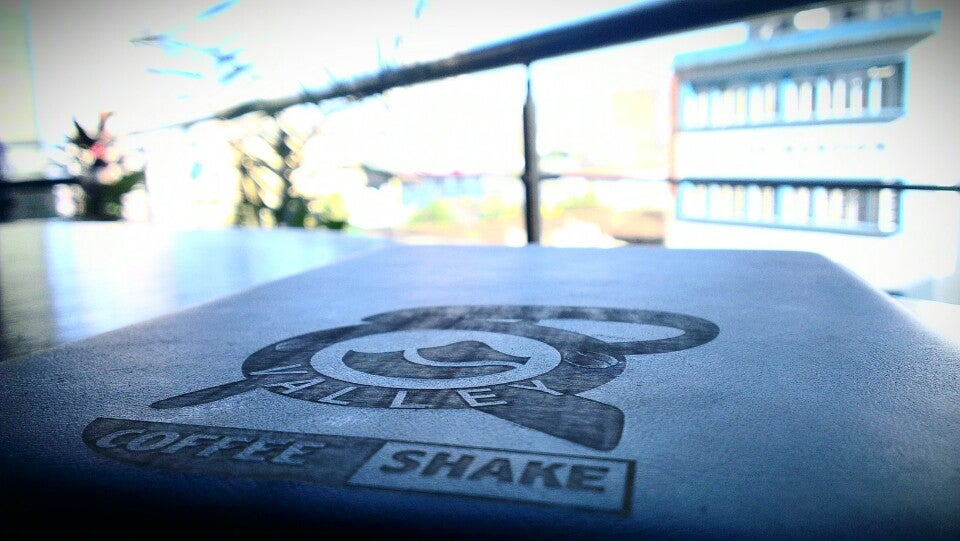
Having been away from the Nairobi scene in a while means I have missed out on some good things. One of these good things, the Valley Coffee Shake!!
With some hours to spare before my departure from Nairobi last week, a friend suggested we meet at valley coffee shake. At first I was skeptical because from where I was at the time, that meant walking and having lately developed a major love-hate (mostly hate) relationship with walking, yes I have become very lazy! but am working on it, this didn’t seem like a very good option for me. Nonetheless, I did find my way to valley coffee because what else would I have done in those 3hrs?
Since my friend was running a little late, I got some ample time to survey the place and get a feel of the establishment’s personality.
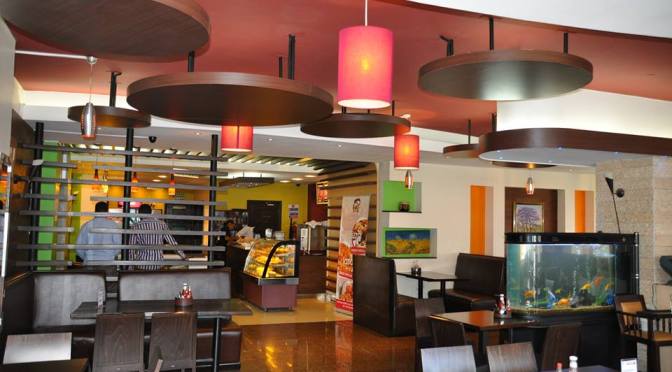
The space serves dual duty as a business center and cafe with a full functioning state of the art boardroom inclusive of a modern projector, high-speed Free Wi-Fi Internet access and an AC system. If you are in a fix for a meeting place, or simply just enjoy a relaxed working environment – just you, your computer and a latte, don’t bother looking elsewhere.
Valley Coffee Shake comes with some great balcony space, nice view of the city and awesome ambiance. When I arrived, the balcony was full so sadly I missed out on the best seats of the house.
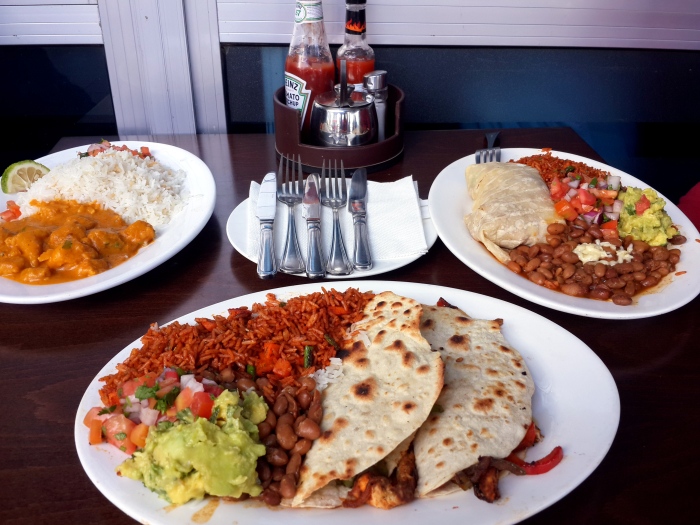
If I could rate the service we got that evening on a scale of 1 to 10, it would probably be above 10. Here’s why, I ordered a plate of Masala fries and a glass of cocktail juice whereas my friend ordered only a glass of juice. Normally, when I order Masala fries, the restaurants take a long while to bring out my plate and when it arrives, the fries are usually all soggy. Personally, I love chips za kukaushwa!! This time my food came out in good time and just the way I like it.
Why I say the service was above and beyond, once the server brought my plate, he asked if the portion was enough or if perhaps they should add some more. I usually have trouble just getting through a full portion of fries (by a full portion in my case, lets just say some people would starve) but just to see if he was serious, I obliged to them adding some more. Usually in such a scenario, the server would just laugh and walk off right? well, not this time. To my surprise, he took my plate and walked off only to come back with an extra saucer of fries. This was a first!!
As we were still trying to grasp what had just happened, ’cause let’s be honest such hospitality in kenyan cafe’s is raaaaare!!!, the server came back to our table…with another saucer of fries. Okay, either this guy was pranking us just to see our reaction and he was coming back for the two saucers, or valley coffee was feeling extra generous that evening. My friend thought the guy just liked me. Either way,there was no loss because my friend was lucky enough to have some fries he hadn’t ordered for having ordered only a glass of juice (besides, the extra fries weren’t that much. The fact that we were actually given something extra was what was so surprising), and the cafe gained a return customer!!! win-win situation.
Sadly, I didn’t quite catch our server’s name, nonetheless he is highly recommended. Good quality service.
All that said, the food here is really good with greater variety and larger portions in comparison to similar establishments in the city. Even ordering just sides makes for a great meal. And what they refer to here as a small glass, well let’s just say drinks here are well worth it! Really loved their tropical cocktail mix as well and the fact that their is no sugar added allegedly, was a plus for me.
Price: Masala Fries: Ksh. 300
Boardroom Service Charge:
First hour: KShs. 1,500 Subsequent hours: @ KShs. 1,000
Location: Yala Tower, 3rd Floor. At the junction of Biashara and Koinange Streets, Nairobi.










































 Zuru Kenya