Craft Beer Guide to Kenya

If you are a beer lover, then you are probably aware of the craft beer movement that is currently taking our country by storm. Although the said trend hasn’t been around for very long, production of craft beer has seen tremendous growth in Kenya over the past few years and is gaining skyrocketing popularity, at least in Nairobi.

The first African country to see the onset of craft beer brewing was South Africa. It has to date, with over 120, seen nearly as many craft breweries as those in Czech Republic crop up. Most of these popped up within the last ten years, hinting to the rest of the continent that this kind of brew is here to stay.

But what exactly is craft beer?

Beer Enthusiast Jonathan Gharbi, author of “Beer guide to vietnam and neighbouring countries” who travels for beer tells us more about craft beer and his experience with Kenyan craft beer breweries during his visit to the country. His blog www.beervn.com is about Vietnam where he visited 45 microbreweries. He is soon to start a new blog that will cover African breweries and beer culture in the continent starting with Kenya.

Zuru Kenya Jonbeer
Author of “Beer guide to vietnam and neighbouring countries” Jonathan Gharbi

ZK First off, Karibu Kenya! Hope you are enjoying your visit?

JG Thanks. I do like it here, the climate is perfect, not all agree but for me it is. There are so many nice beers too, so I am happy.

ZK So for those who are not familiar with this kind of brewing, what exactly is Craft beer?
Zuru-kenya-Beer-guide

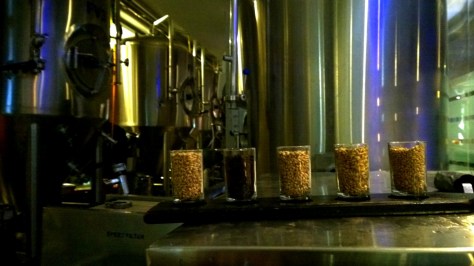
JG Craft beers, unlike industrial beers which are produced on large scale are beers made in small batches, for local customers only. The Craft brewers focus on creating a flavorful, high-quality beer which in most cases is very different from the mass-produced beers like Tusker, white cap, Heineken, Carlsberg, and others which most Kenyans are familiar with.

When you drink a hand-crafted or “craft” beer you are enjoying a fresh, natural beer made using time-honored methods with a lot of passion poured into it.

ZK There’s a tendency to assume that a craft beer must be better than a mass-produced beer, how true is this, are these beers better?

Zuru Kenya craft beers

JG Craft beer like wine is about flavor and taste. Sometimes to keep costs down, mass producers may substitute their ingredients or speed up the fermentation process with enzymes that make a beer concentrate of sorts. Handcrafted beer on the other hand, is produced using only the best ingredients and brewers do not cut corners in order to lower cost of production.

So yes: Craft beers are more delicious and flavorful as the brewers spend time focusing on the quality of their beer. With this choice of drink, you are sampling distinctive full-bodied taste and aroma achieved by interpreting traditional styles with new twists. Lagers like Carlsberg, Tusker, white cap and others on the other hand, tend to be pretty bland stuff, aimed at the broadest possible range of tastes…thin body, short aftertaste, no flavors. You need to keep in mind though that some beer lovers just want to enjoy an alcoholic drink and don’t pay much mind to taste and flavor.

ZK Having sampled the craft beer spots in Nairobi, which one would you best recommend and why?

JG I was able to visit three craft beer spots; Sierra Lounge, Brew Bistro and the newly launched, Sirville brewery.
Zuru-Kenya-sirville-brewery
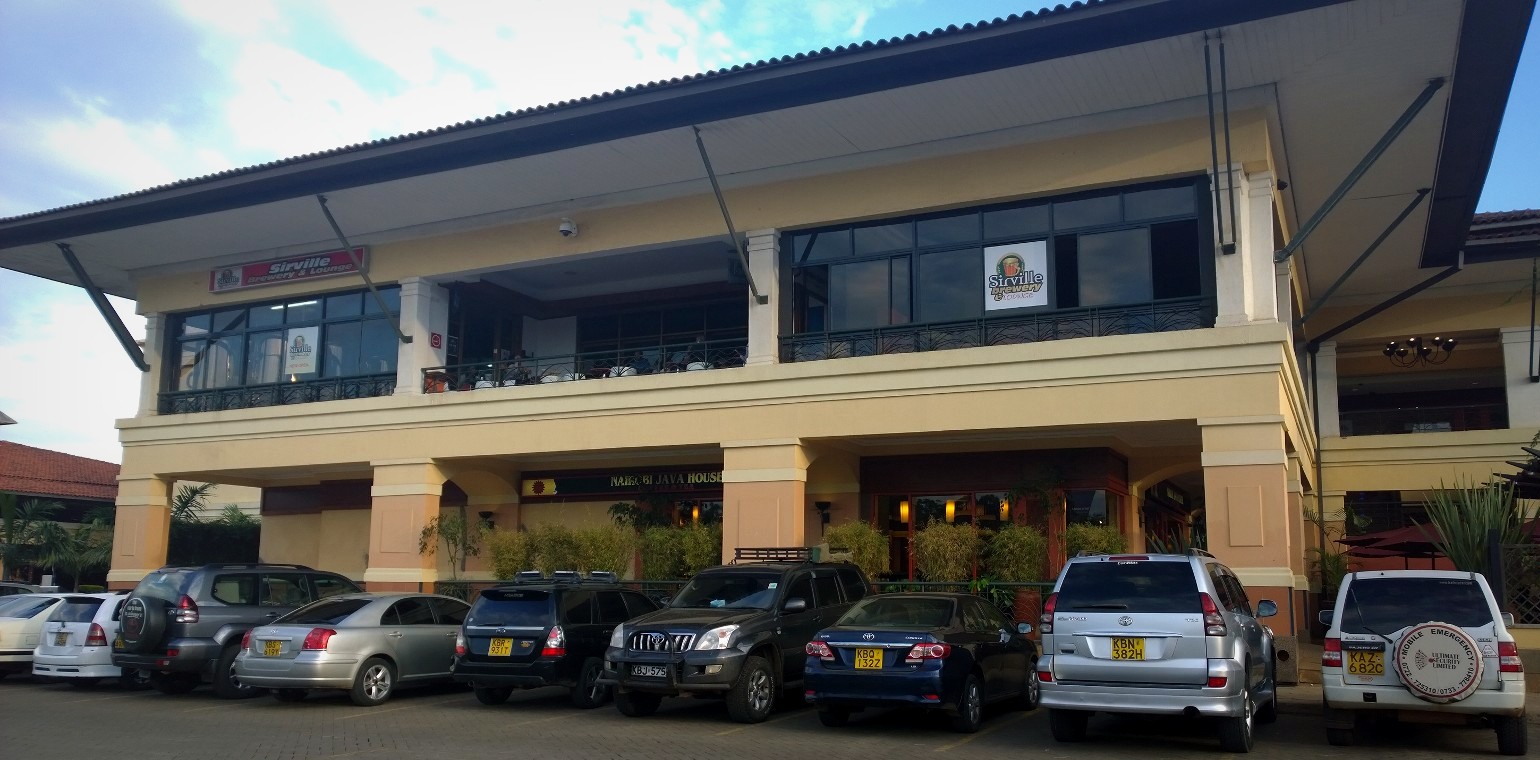
The newly opened Sirville Brewery and Lounge in Galleria

If you want a change of scene from the all too common lagers, begin with a tasting at sierra lounge, Yaya Shopping Mall. Owned by Ozzbeco, Sierra is a larger scale craft brewery stuck between craft and industrial beer. They make tasty beers and occasionally offer seasonal beers. Once or twice a year they offer special brew such as the german styled Maibock.

Brew Bistro located at Piedmont plaza, Ngong Road is a more typical craft brewery. This small scale brewer produces 1000 litres of brew at a time using 5 kinds of hops and malts. The pub provides a variety of beers each with its own description and story.

zuru kenya sirville beers

The third spot, newcomer sirville brewery, opened late last year in Galleria shopping mall has a typical microbrewery set in the same size as brew bistro’s. Being new in the market, the lounge is still testing the waters with different kinds of beers trying to find their clients’ tastes so you won’t really get much of craft beer here.

To answer your question on which one I would recommend, I like brew bistro because of their variation of beer. However I think sirville is exciting because they are new. Sierra on the other hand is very big, with good beer but not much charm.

ZK Tell us more about these breweries…

zuru-kenya-sirville-brewers

JG Sierra, which is the first craft brewery in the country, went from a small boutique brewery to a more industrial one with a capacity of 2 million liters a month and that Journey in less than 10 years. Beers here are sold on tap as well as cans and bottles. The lightest in their range is platinum and then follows Blonde, Amber and Stout.

Brew Bistro opened in 2009 is the most popular spot among beer lovers today. This brewpub has a good spectrum of beers that are only available on tap with the brewery placed just in the middle of the bar. The pub has a variety of special beers made with a traditional crafty approach. They also sell a wider range of malt and hops.

Though just recently launched, Sirville Lounge uses the most experienced brewer you can find in Nairobi with 30 years in the business and five years at Brew Bistro. Since it’s still new, beers at the brewery are adopted and not as bold yet. However starting July 2015 Sirville will brew Stout which is promising and as soon as more beer enthusiasts come in, the beers at the lounge will also change. Today they have four beers on tap, all made in the small microbrewery.

ZK What beers would you recommend to other beer lovers from the three craft breweries?
zuru-kenya-craft-beers

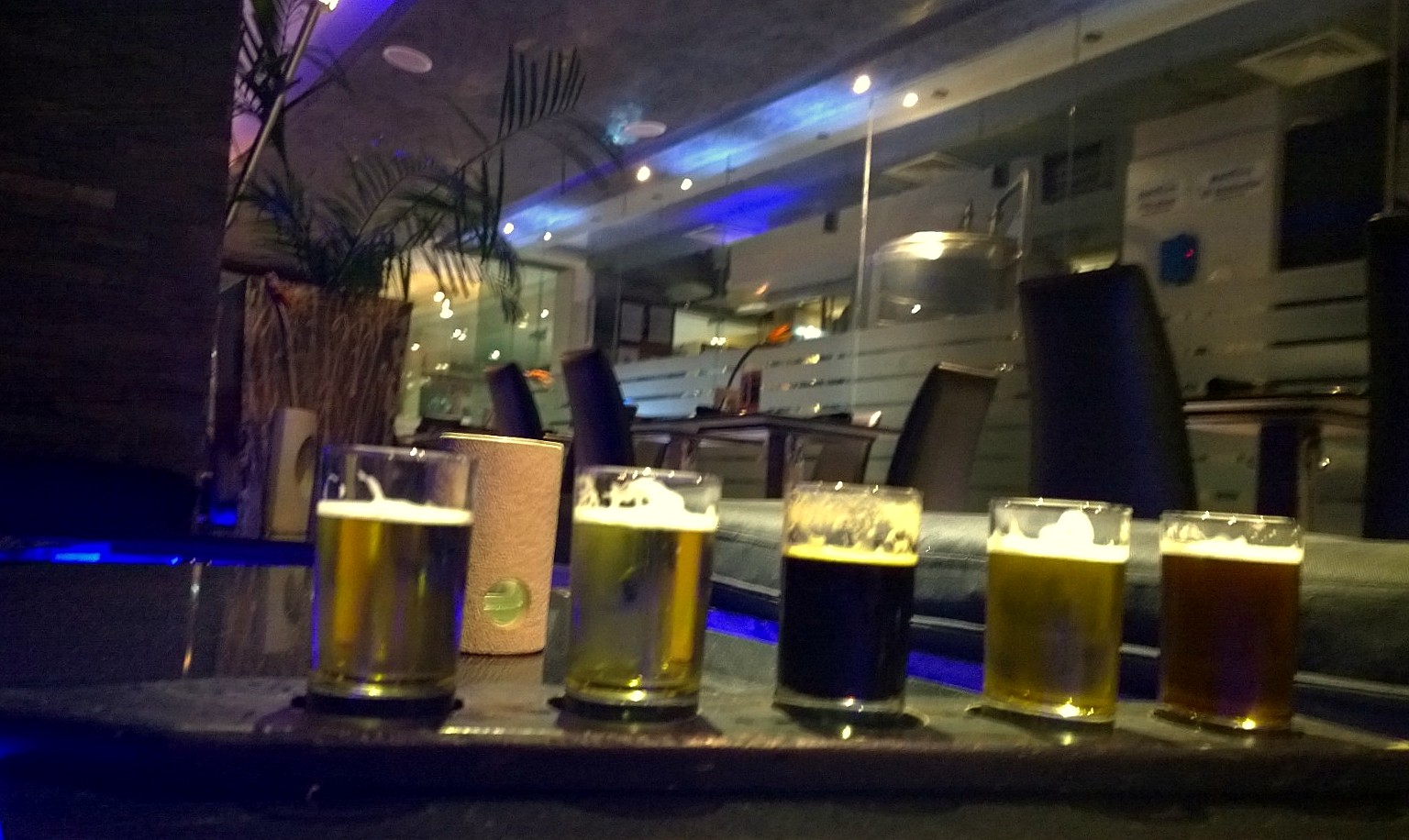
JG Sierra Lounge offers Sierra Platinum and Sierra Blonde which are not craft per se, just more industrial. Their beers Amber and Stout however, are for sure craft and worth trying out.

At Sirville, Amboseli Bitter is your best bet. With good body and a nice finish, you will feel some fruity notes in it.

My favorite at Brew Bistro was definitely the Stout; very tasty with coffee notes and a good finish.

ZK Other than craft beer, what other Kenyan beers have you been able to sample and how do they compare to other beers you’ve had in other countries?

zuru kenya craft beer guide

JG I find that Kenyan beer is like any other beer in the world. Miller lager and miller light in the US, Carlsberg in Denmark, Tiger from Singapore, Hanoi beer from Vietnam, Bitburger from Germany, all are similar to Tusker, Tusker Lite, White cap, Pilsner and Summit Beer.

ZK Finally, how would you rate the craft beer breweries you visited while in town?

zuru-kenya-craft-beer-brewers

JG Brew bistro is the established and most international styled craft brewery. Servile on the other hand being new is yet to get a clear identity. It does however offer both local traditions and a strong craft beer culture.

Sierra brewery does not have a brewpub which is very sad. They also produce international lagers such as platinum so the risk is that they may soon stop making craft beer and just do international styled lagers at a huge scale instead.

Summary: I like sirville because they are new and open to ideas however Brew Bistro offers you a wider range of craft beers and the best experience. Sierra falls short since they are one foot in the craft beer culture and one foot in the industrial beer market offering thin and boring lagers.

zuru kenya sierra beers

Craft beer is a wide spread trend and like wine, it’s just a matter of time before people start choosing their beer for taste and flavor, and not bottle brand.

One of the coolest perks to drinking craft beer is that you actually get to meet the individuals brewing your favorite drink. What’s more, with craft beer; you are not stuck with the same boring, flavorless, thin-body beer all year round. Each craft beer pub that exists provides you with different brewing styles, special recipes and ingredients as well as different brewer perspectives. Every brewer makes their own beer, in their own special way.

With so many exciting craft beer pubs popping up all around the city, beer enthusiasts are getting a taste of fresh, local creative beer…no more bland stuff! If you haven’t yet, I dare you to give it a try. Who knows? you might even trade in your favorite lager. Oh and good luck in trying to find just one favorite beer.

To follow Jonathan Gharbi on his beer adventures: www.beervn.com Photos credit  ~Jonathan Gharbi

Jaspreet Chatthe claims KCB Voi Rally

This past weekend we drove down to Rukinga Ranch to catch some action of the KCB Voi Rally.

The one-day event which took place on Saturday the 6th, was flagged off at the KCB Voi Branch after which, rally traffic proceeded to Voi stadium for the spectator stage at 3 minutes intervals as par the start order.

After flag-off, cars transported directly to Rukinga Ranch Service from where they were to tackle competitive sections among them, Simba (51km), Ndovu (33km) and Twiga (16km) stages. Simba, Ndovu and Twiga were repeated twice to make up a competitive mileage of 202km. The total distance of the rally was 274km.

The KCB Voi Rally attracted a star-studded entry of 53 cars featuring three Super 2000 cars, a myriad Group N cars, two Ford Fiesta R5s, two–wheel drive Toyotas, Classic Porsches and Ford Escorts, Group “S” Subaru and Mitsubishi machines and specially prepared vehicles (SPVs) which are non-homologated.

KNRC’s current leader Jaspreet ‘Jassi’ Chatthe who also tops the FIA African Rally Championship (ARC) log secured his second win of the 2015 KCB Kenya National Rally Championship series at the event. Driving a Mitsubishi Lancer Evo10 under the ‘Team Kibos’ livery, he led from start to extend his lead at the top of the standings.

Jassi was using  the Voi Rally to shape up for the Oryx Energies Rally of Tanzania next weekend.

“We just want to remain consistent and clean in the remaining events hoping that nothing unexpected happens. Its a busy season for us running in both the ARC and KNRC,” said Chatthe.

National champion Baldev Chager was placed second overall in a similar machine, a mere 33 seconds behind the leader. With a sole Skoda, Quentin Mitchell took third place.

The KCB Voi Rally was the first ever in the history of the KNRC series to go “carbon neutral” at Rukinga Ranch – which is part of a group called Wildlife Works. The event had been designed not to add carbon to the air.

Hemingway in Africa

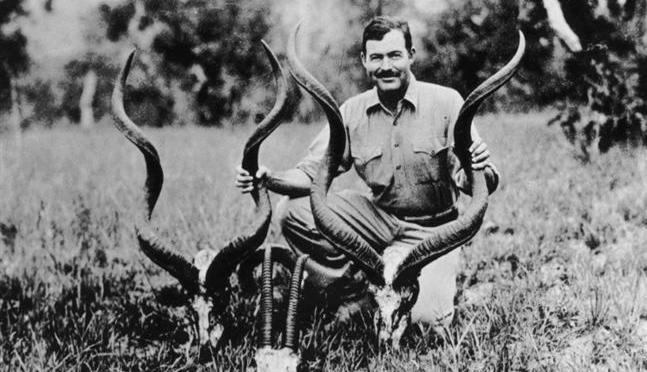
The legendary American writer Ernest Miller Hemingway (1899-1961), winner of the Pulitzer and Nobel prizes,  was probably the one introducing the word ‘safari’ to the English language. Hemingway traveled in East Africa two times in his life and the experiences gave him material for several short stories and novels. The remarkable personality of Hemingway also contributed to the image of the Great White Hunter. He was probably not the greatest of hunters but he had a true love affair with the hunting experience, the nature and wildlife of Africa. Without learning the Swahili language he also managed to have some understanding of the Kenyans, which was far from common at that time.

“All I wanted to do now was get back to Africa.  We had not left it yet, but when I would wake in the night, I would lie, listening, homesick for it already.”

First Safari

From early in his life Hemingway traveled more than most people at that time. He had an enormous appetite for adventure, war and danger. That gave him a chance to show of the macho image he was creating for himself all his life. The first visit to Kenya and Tanganyika was in 1933 with his second wife, Pauline. He was probably a bit bored at the time seeking out new inspiration. Early on the safari Hemingway was sick with dysentery. He stayed several weeks in Nairobi where he met other adventure seeking men from Europe and America. One of them was Bror Blixen, the husband of Danish writer Karen Blixen (Isak Dinesen). After continuing the safari and returning home Hemingway started writing the travel description “The Green Hills of Africa”. The book did not sell well at first, which depressed Hemingway, but his two major African short stories were quickly recognized to be among the highlights of his writings (The short happy life of Francis Macomber and The snows of Kilimanjaro)

The second safari

In the winter 1953-1954, Hemingway set of for Africa again. A bit older and changed – drinking far too much. Now traveling with his fourth and last wife, Mary, to enjoy another safari. He also wanted to visit his son, who was living in Tanganyika (Tanzania). The visit was in the middle of Kenya’s Mau-Mau rebellion ignited by later president Jomo Kenyatta. The rebellion against the British colonialists was very violent. Hemingway almost lost his life on this journey, but it was not as a victim of the Mau-Mau. As a matter of fact, it happened 2 or 3 times that Hemingway was declared dead (only the last time, of course, was it true). In January 1954 he had the rare chance of reading his own obituary notice. On the journey from Nairobi to Bukavo – Congo, he and Mary had several emergency landings in the small airplane together with the pilot Roy Marsh. They had two serious crashes near Entebbe in Uganda. They were alive, but wounded after the plane disappeared in flames. They decided to return to the luxury of New Stanley Hotel in Nairobi.

Hemingway wrote about this second safari and his flirt with a young, wakamba girl. The book is written as fiction, but most of it can be read as the diary of Hemingway. ‘True at first light’ was published posthumous in 1999. The unfinished manuscript was completed by his son Patrick. Ernest Hemingway shot himself on July 2nd 1961.

Things you may not have known about Ernest Hemingway…

1. He was a failed KGB spy

In the last few years of his life, Ernest Hemingway grew paranoid and talked about FBI spying on him. He was even treated with electroshock therapy as many as 15 times at the recommendation of his physician in 1960. It was later revealed that he was in fact being watched, and Edgard Hoover had personally placed him under surveillance. In 2009, the publication of Spies: The Rise and Fall of the KGB in America, revealed that the FBI was in fact right to spy on Ernest Hemingway, the Nobel prize-winning novelist, because he really was on the KGB’s list of its agents in America. Based on notes from a former KGB officer who was  given access in the 1990s to intelligence archives in Moscow from the Stalin era, the book reveals that Hemingway was recruited in 1941 before making a trip to China, and was given the cover name “Argo”.

According to Soviet documents, he met with Soviet agents during the 1940s in Havana and London and “repeatedly expressed his desire and willingness to help us”. In the end, Hemingway turned out to be of little use to the Soviets  however, as it’s claimed he failed to give them any political information and was never “verified in practical work”. By the 1950s, “Argo” was no longer an active Soviet contact. Some project that Hemingway’s escapades as a KGB spy were more likely all part of an elaborate charade by him to gather literary inspiration. Others suspect his paranoia over being watched by the FBI may have led him to take his own life.

2. Ernest Hemingway survived through anthrax, malaria, pneumonia, skin cancer, hepatitis, diabetes, two plane crashes (on consecutive days), a ruptured kidney, a ruptured spleen, a ruptured liver, a crushed vertebra, a fractured skull, and more.

In the end, the only thing that could kill Hemingway it would seem, was himself…

“In 1954, while in Africa, Hemingway was almost fatally injured in two successive plane crashes. He chartered a sightseeing flight over the Belgian Congo as a Christmas present to Mary. On their way to photograph Murchison Falls from the air, the plane struck an abandoned utility pole and “crash landed in heavy brush.” Hemingway’s injuries included a head wound, while his wife Mary broke two ribs. The next day, attempting to reach medical care in Entebbe, they boarded a second plane that exploded at take-off, with Hemingway suffering burns and another concussion, this one serious enough to cause leaking of cerebral fluid. They eventually arrived in Entebbe to find reporters covering the story of Hemingway’s death. He briefed the reporters and spent the next few weeks recuperating and reading his erroneous obituaries.”

3. Ernest Hemingway was charged with war crimes under the Geneva Convention when he took command and led of a group of French militia into battle against the Nazis.

Hemingway as a young soldier

Serving as a war correspondent during WWII, he had removed his non-combatant insignia and posed as a colonel. In the end, he was not convicted and claimed that he only offered advice and any titles given to him by the men were simply signs of affection. According to Hemingway himself, he and his unit were the first to enter the city during the Liberation of Paris, when he and his unit retook the Ritz Hotel, and more importantly the Ritz Bar, from Nazi control a full day before the Allied liberation force entered the city!

4. Ernest Hemingway killed himself with his favorite shotgun bought from Abercrombie & Fitch.

The suicide of his father haunted Hemingway until the day he followed his example. Indeed, depression and suicide plagued the Hemingway family: His grandfather committed suicide. two of Ernest’s sisters and his only brother, Leicester also killed themselves; two of his three sons received electroshock therapy for emotional turmoil; his granddaughter Margaux, a supermodel and sister of actress Mariel Hemingway, died in July 1996 in what was deemed a depression-related accident. Margaux and Mariel’s father, Hemingway’s eldest son John, now 75, has said with grim humor: “My brothers and I are determined to see just how long a Hemingway can live.” (Neil A. Grauer, Remembering papa)

source; crawford, MessyNessy

city under the sun safari

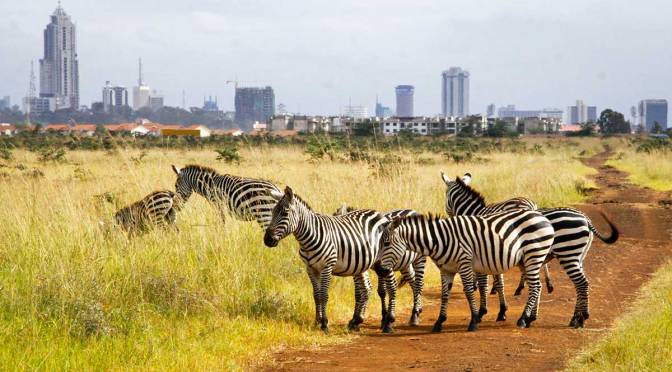
Fancy a safari in Kenya? It will come as a surprise that you barely need to leave the capital to take one. Kenya’s capital, Nairobi, boasts of a national park teeming with wildlife right on its doorstep.

Image: AJ Brustein

This park is home to a diversity of environments ranging from open grass plains with scattered acacia bush, highland dry forest and a permanent river with a riverine forest, to man-made dams, stretches of broken bush country as well as deep, rocky valleys and gorges with scrub and long grass.

Nairobi National park mainly attracts guests traversing to major tourist attraction sites within the country with a day or two to spare in the capital. Not only does it offer safari enthusiasts a taste of what to expect in the wilderness, it also provides a great escape from the hustle and bustle of the big city. To top it up, the beautiful background provided by the city’s skyscrapers gives you something to marvel at.

Image: Paolo Torchio


Aside from majorly being a touristic site, Nairobi National Park is also popular for a number of other things. The park is famous as an ivory burning site where former President Moi ignited 12 tons of elephant tusks and rhino horns in 1989, therein boosting the country’s conservation image. Today a monument marks this historic site. The park is also famous as a rhino sanctuary, breeding indigenous rhinos. This guarantees you sightings of endangered black and white rhinos in their natural habitat.

A family of white rhinos at the  Rhino Sanctuary. image source

Another great site to look forward to at the Nairobi National Park is the Nairobi Safari Walk – a popular attraction offering animal lovers the chance to spot wildlife on foot over walking trails weaving around Hippo Pools. Visitors can also bond with orphaned baby elephants and rhinos at the David Sheldrick Wildlife Trust.

zurukenya-safariwalk
safari walk trails
play time at David Sheldrick orphanage

With Nairobi National Park, you get to sample what awaits you in bigger parks like the Maasai Mara, Amboseli, Samburu and Tsavo. Its accessibility, being only 7km from the city centre, and having many entrance points; whether arriving into Jomo Kenyatta Airport, from Wilson airport or travelling south from the city itself, makes it a must visit destination.

Western Kenya untapped

Are you a value minded traveler looking to explore nature and enjoy delicious pot-boiling traditional foods? Then Kakamega and Bungoma counties in western Kenya are calling.
With a basketful of sights and sounds these areas will undoubtedly draw your appreciation for nature. Birding enthusiasts will for the most part love the Kakamega forest in Kakamega County, home to over 360 species of birds and more than 380 species of trees. The only tropical rainforest in the country, Kakamega forest is also host to 27 species of snakes, baboons, and white tail monkeys. An interesting spectacle here is Mama Mutere, a name coined by the locals for the oldest tree in the forest, nearly 400 years old.

Image source


Kakamega forest also provides for nature walks although it is advised that one carries a heavy jacket and gumboots on some occasions as the forest can get quite chilly and the terrain muddy when it pours.

zuru kenya western 3
Image source

Further down from kakamega is the stunning webuye (Broderick) falls in Bungoma County. Draining into Lake Victoria, the hippo infested falls serves as a beautiful destination for team building and great scenery. One can also enjoy a spectacular view of Webuye town from the Chetembe hills.

zurukenya
Image source
Image source

To relax, indulge and explore what nature offers, these areas are available for tourists at pocket friendly fees.

https://i0.wp.com/www.50treasuresofkenya.org/uploads/images/Gallery/44%20Kakamega%20Forest/44%20Fiebig%20Kakamega%20Forest-7135.jpg

Lastly, you cannot have been to western Kenya without trying their famous sumptuous meal of the traditional chicken (ingokho) and ugali. These can be enjoyed at Park Villa and Camp David hotels.

Preying on poverty: Sex tourism in coastal Kenya

Enduring distasteful glares and snarky comments without one iota of apprehension, that’s the kind of thick skin one needs to parade around the coastal towns of Kenya, mzungu in hand. Not that an interracial relationship is frowned upon; only when these kind of cross-generational relationships contribute to moral decay and thrust underage children into sex tourism.

Kenya is a well-known tourist destination for a number of reasons; premier wildlife safari, beautiful landscapes, good climatic conditions, beautiful coastal beaches and her hospitable people to boot. Whilst all this is positive, the country also seems to attract another breed of tourists. Tourists lured here by, although not officially stated, a ready market for a very lucrative business; the sex trade.

zurukenya-sextourism

Economic hardships and illiteracy have been cited as some of the issues that lead young men and (mostly) women to such desperation. Drug abuse also fuels sex tourism, because it’s an easy way to get money for a fix. However, living in a once upon a time nondescript coastal town that can largely attribute its growth to this trade, you slowly learn that the greatest drive towards this business is simply the materialistic nature of our society today.

Lined up with numerous restaurants, pubs, clubs, and the infamous strip clubs, Mtwapa is the town to be in. Some foreign travelers can’t pinpoint Kenya on the map to save their lives, but ask them where Mtwapa is. People get here and they just want to go to Mtwapa. Locals aren’t left behind either. Holidays to Mombasa are incomplete if you haven’t sampled the Mtwapa nightlife.

Connected to Mombasa through a bridge over-passing the Mtwapa creek, this town has recorded one of the highest property developments in the region. Unlike most kenyan towns, Mtwapa offers an array of amenities and services; ample security, an exciting nightlife, the ocean and sandy beach, modern shopping malls, hospitals and banking centers, and tastefully furnished apartments and hotels. Locals here find no need to head to Mombasa for goods and services unless they really have to.

It is this convenient lifestyle and the zero-to-none crime rate that most tourists find Mtwapa favourable to the extent of pitching tents here. This is the town where the rich, mostly tourists, and the not so rich live in harmony. Here you  get people of different nationalities, different ethnicity, and different religions. Here you get an open-minded and liberal atmosphere. The sort of atmosphere that permits high-end call girls, foreign prostitutes, escort girls as well as lowly paid sex workers to camp in town. It is the same liberal atmosphere that has the gay community scampering for safety in Mtwapa.

There’s a certain phrase we like to use in this town, “usiku kumekucha (the night has dawned)”. Come nightfall, the streets of Mtwapa are filled with tons of people looking to make merry  – and others to get paid. Music blaring from the numerous pubs lined up can be heard from a far distance. Nyama choma stands and roadside eateries are opened up where would be walking pavements by day. Business here is really good at night. As other towns go to sleep, Mtwapa is wide awake. So are its clients and servicers.

This town, like many others in the coast, has lured tourists, both international and local, with the promise of sun, sand, and sex – but mostly the thriving sex trade. It has also lured young men and women, with the promise of the much coveted mzungu money, better welfare and a ticket out of Kenya. A ticket, to the the better preferred western world; an escape from the low paying jobs, unemployment, and the rising coast of living & healthcare.

With this promise, it is therefore not unusual to see girls, barely in their teens, hanging on to the arms of 50, 60, even 70 year old men. Girls as young as 12 turning tricks in order to make money for their families. Some of these girls drop out of school to join the trade thinking it’s a cool thing to do (some of them make in a day what there teachers would make in a month). In other unfortunate cases though, the girls’ parents are the enablers. After seeing how the proceeds of sex work are giving others a more desirable life, some parents urge their kids to get themselves a “sponsor” like so-and-so in the neighborhood. In the name of profit, these young ones are forced into relationships with men old enough to be their grandfathers, if not great grandfathers.

zurukenya-sextourism

These kind of relationships are not unique to girls alone. It is well known that beach boys at the coast are on the look out for older white women to have flings with for financial benefit. Hard figures are difficult to come by, but locals estimate that as many as one in five single women visiting from rich countries are in search of sex – Reuters. Such women, well in their 60s and 70s, travel across the globe to Kenya to pick up local boys barely in their 20s.

It is estimated that there could be as many as 40,000 child sex workers in Mombasa city.

– Trace Kenya.

It is also not uncommon to see a married couple living with a mzungu lover in the pretense that either one of them is a sibling and not husband or wife. This sort of charade has been going on for years at the coast. Anything necessary for mzungu money!

This kind of lifestyle subjects the individuals involved to society’s judgment and prejudice. They make the money, at the end of the day they have to survive the judgment. Whenever an interracial couple of odd ages flags down public transport at the coast, tongues start wagging. Just the other day, I spotted a young girl struggling to assist an old white man clamber into a matatu. Shopping bags in one hand and her financial savior in the other, the old man, who was about 80 at most, could barely walk let alone breathe (he had to breathe with the aid of an oxygen tube). Once in the matatu, there was an uneasy silence as the thinned hair mzungu walked unsteadily to his seat. The girl avoided stares in shame while most people just shook their heads in disgust.

In 2006, UNICEF released a report that stated; up to 30 percent of girls in some Kenyan resorts – aged from 12 to 18 years old – were involved in the sex industry.  Today, if anything, the number has incredibly risen with the area attracting more wealthy locals and tourists than ever.

The increase in the industry has seen bigger fish crop up. Cartels, bigger and more powerful than even some of the drug lords in the country. The number of women being trafficked to the coast is increasing by the day. Women are lured into the business from as far as Ethiopia, Rwanda, South Sudan, Uganda and even Tanzania.

Thanks to these cartels, child pornography is burgeoning. Young girls are taking part in stripping, live sex shows in local clubs, shooting pornographic movies amongst other moral corrupting activities. Young boys are also sought out as much as girls. Young men are inducted into the industry and are subjected to homosexual acts with both local and white men inside villas.

Whilst some of the partakers (especially university students led by their curiosity) travel to the coast to moonlight as sex workers, others are mainly duped either by friends who lie to them about their profession, or are sourced via social media with the promise of big business deals. Not so long ago, a number of college going ladies made the headlines after they were caught shooting bestial pornographic movies with dogs (in some cases, others are forced to have sex with a horse). These activities were taking place in a Swedish owned villa; one of the numerous, highly guarded villas where young locals are paid for the most horrific and abnormal acts. Behind the steel gates and perimeter fences, sex tourism takes on different shapes; pornography, sadomasochism, child abuse and even fatalities.

Although the media has highlighted some cases of sex tourism like the Swedish villa saga and the strippers at Banhof Bar and Restaurant owned by a German national, this is just the  tip of what is going down at the coast. There’s more , that Kenyans might or might not be aware of. Sex work and trafficking is rampant. As long as the mzungu remains the synonym of wealth in Kenya, morals and caution will be thrown to the wind and towns like the ‘sin city’ will continue to grow. With the promise of easy money and a better life, the crisis of underage prostitution will recycle .

It is imperative, therefore, that strict measures are undertaken to curb any kind of sex tourism especially those that target underage and vulnerable children.

Dear airport security, No Really, my headscarf is not a threat

A number of factors come into play when choosing the perfect air travel outfit. The weather of your destination, what will keep you comfortable on the plane and a touch of style (Don’t throw fashion if that’s your thing totally out of the window because you are jet-setting). What doesn’t come into consideration however, is how much of a security threat your outfit is going to be. Because, is that even a thing?!

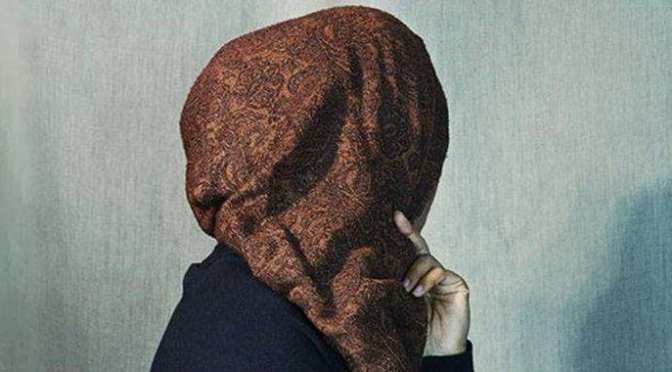
Well, until you are selected for extra screening at the airport then it becomes a thing. “Ambia madam, ashuke aende walk-in security checkpoint for frisking.” Just me? I couldn’t help but chuckle. I don’t see no one else being asked to get out of their vehicle for frisking. While I didn’t have much time to mull over why I had made the perfect candidate for an extra pat-down at the screening yard, I suddenly became all too aware of the meaningless piece of fabric on my head that I often forget is there. Just like that, thanks to my brightly cloured, floral pashmina, I got suspicion. All of a sudden, I was a security threat.

11169927_10206806273501272_4740818679175023093_n

In the wake of another terror attack, I don’t pretend to not understand why security should be tougher now. As matter of fact, when passing through airport security all passengers should do what it takes to ensure they arrive safely at their destinations. Key word, “All” passengers. Pardon me then when I don’t seem to comprehend why someone should be singled out as “most threatening passenger” by virtue of what religiously affiliated attire they may or may not be wearing. Shouldn’t everyone be subjected to the same kind of security screening? This check, if you ask me, is so devoid of logic. To assume that only Arab-appearing, Semitic looking or hijab wearing individuals are a threat is dangerously naïve.

Focusing more on a profile only increases the risk of missing out on those who don’t match it. How does that make us any safer? What it potentially does, is it opens the door for terrorist groups to probe any profiling system and figure out how to beat the profile. It is seems that our security apparatus underestimates the ability of the perpetrators to recruit people who do not fit the “terrorist” profile. Don’t you think therefore that it is prudent for everyone to undergo the same scrutiny when it comes to safety measures? Haven’t we seen cases of explosives placed in the baggage of non-suspecting civilians? How many times have we thought that the perpetrators came from an obvious ethnicity, only to be surprised later when identities are revealed?

Photo credit: teachandlearn

Singling me out on the basis of my flimsy “radioactive” floral headscarf doesn’t make anyone else safer. Terrorism is a risk we are all exposed to; veiled, or not. And as such, everyone should be held accountable. Security scrutiny should apply to all regardless of race, ethnicity, religious affiliation or even your style of dressing for that matter. Nevertheless, living in such a volatile time, one cannot control how people react or interact with you based on your pashmina or headscarf. What to do? Perhaps don’t wear anything that could possibly suggest that you are a mass murderer, like a scarf on your head for instance or better yet next time try to look as harmless as possible, which then again with my hulking 5’4” frame, and chubby cheeks, can be a very daunting task.

Never had I encountered veiled prejudice before nor have I ever felt the discomfort that comes with the simple choice of a pashmina over your hair in an airport. Boy, did I really feel it this time! As if air travel wasn’t such a drag already.

Travelstart’s neXt to help ease online travel booking in Kenya

Travelstart last week unveiled a game changing online booking tool called neXt, designed specifically to develop new travel agents and meet the needs of independent travel consultants looking to start their own travel business.

The event which was held at the Sarova Stanley Hotel on the 28th April, 2015 saw a group of next generation individuals gather to learn more about the booking management solution that allows individuals, corporate and travel agents to book and manage flights for their clients and issue airline tickets without requiring an IATA licence.

The neXt platform offers independent travel consultants a user-friendly platform that features broad flight search results and multiple payment options for travel tickets. This is a cutting edge technology for agencies who want to grow their businesses when booking flights by offering them best negotiated fares. It is also specifically designed to develop new travel agents and meet the needs of independent travel consultants looking to start their own travel business.

The good thing about neXt is that, as an agent,  you are able to create your own travel affiliate websites. Furthermore, at your disposal is support from a dedicated processing team who handle ticketing, reissues and refunds. Agents receive user friendly booking technology for free, and benefit more on Commissions and Mark -ups”.

Agents using neXt keep 100% of their markup, which can be changed in real time, and can further diversify their revenue streams by selling add-on products during the transaction or post sale.

Charles Rubia, neXt Sales & Account Manager at Travelstart Kenya, addressed the challenges most travel agents who do not have IATA licence or have the latest travel technology to booking flights go through. He further explained that neXt platform streamlines online flight ticketing and makes it easy and convenient for travel consultants.

Travelstart is already the online travel market leader in Africa and agents looking to branch out on their own stand to benefit from the company’s established relationships, access to personal and online training modules, over and above the bells and whistles developed in-house such as multi-city flight searches, mix and match flight functionality on domestic bookings and real time availability.

The company had already launched neXt platform in South Africa way back in 2013 and earlier this year in Nigeria.

Valley Coffee Shake

Having been away from the Nairobi scene in a while means I have missed out on some good things. One of these good things, the Valley Coffee Shake!!

With some hours to spare before my departure from Nairobi last week, a friend suggested we meet at valley coffee shake. At first I was skeptical because from where I was at the time, that meant walking and having lately developed a major love-hate (mostly hate) relationship with walking,  yes I have become very lazy! but am working on it, this didn’t seem like a very good option for me. Nonetheless, I did find my way to valley coffee because what else would I have done in those 3hrs?

Since my friend was running a little late, I got some ample time to survey the place and get a feel of the establishment’s personality.

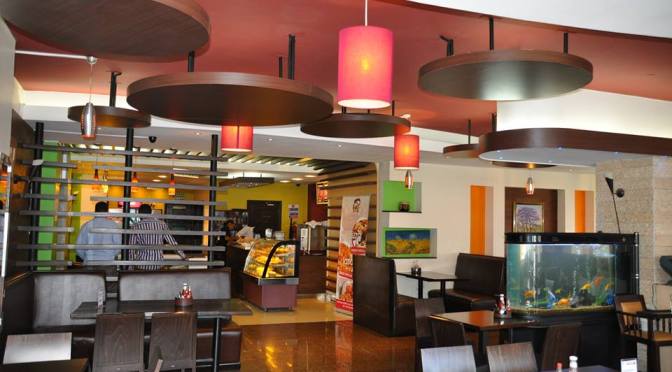
The space serves dual duty as a business center and cafe with a full functioning state of the art boardroom inclusive of a modern projector, high-speed Free Wi-Fi Internet access and an AC system. If you are in a fix for a meeting place, or simply just enjoy a relaxed working environment – just you, your computer and a latte, don’t bother looking elsewhere.

Slideshow

Slideshow

Valley Coffee Shake comes with some great balcony space, nice view of the city and awesome ambiance. When I arrived, the balcony was full so sadly I missed out on the best seats of the house.

If I could rate the service we got that evening on a scale of 1 to 10, it would probably be above 10. Here’s why, I ordered a plate of Masala fries and a glass of cocktail juice whereas my friend ordered only a glass of juice. Normally, when I order Masala fries, the restaurants take a long while to bring out my plate and when it arrives, the fries are usually all soggy. Personally, I love chips za kukaushwa!! This time my food came out in good time and just the way I like it.

photo credit: Nick Smilez Mutinda


Why I say the service was above and beyond, once the server  brought  my plate, he asked if the portion was enough or if perhaps they should add some more. I usually have trouble just getting through a full portion of fries (by a full portion in my case, lets just say some people would starve) but just to see if he was serious, I obliged to them adding some more. Usually in such a scenario, the server would just laugh and walk off right? well, not this time. To my surprise, he took my plate and walked off only to come back with an extra saucer of fries. This was a first!!

As we were still trying to grasp what had just happened, ’cause let’s be honest such hospitality in kenyan cafe’s is raaaaare!!!, the  server came back to our table…with another saucer of fries. Okay, either this guy was pranking us just to see our reaction and he was coming back for the two saucers, or valley coffee was feeling extra generous that evening. My friend thought the guy just liked me. Either way, there was no loss because my friend was lucky enough to have some fries he hadn’t ordered for having ordered only a glass of juice (besides, the extra fries weren’t that much. The fact that we were actually given something extra was what was so surprising), and the cafe gained a return customer!!! win-win situation.

Sadly, I didn’t quite catch our server’s name, nonetheless he is highly recommended. Good quality service.

photo credit: thefoodistblog
2014-12-05 15.32.56
photo credit: thefoodistblog

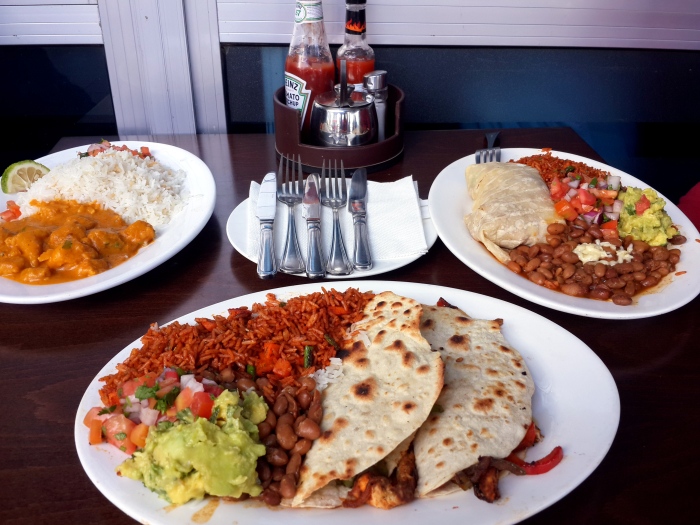
All that said, the food here is really good with greater variety and larger portions in comparison to similar establishments in the city. Even ordering just sides makes for a great meal. And what they refer to here as a small glass, well let’s just say drinks here are well worth it! Really loved their tropical cocktail mix as well and the fact that their is no sugar added allegedly, was a plus for me.

Price: Masala Fries: Ksh. 300

Boardroom Service Charge:
First hour: KShs. 1,500 Subsequent hours: @ KShs. 1,000
Location: Yala Tower, 3rd Floor. At the junction of Biashara and Koinange Streets, Nairobi.
Come hungry. Leave happy.

Raising Hope: The Angel Centre

What sane mother would abandon their baby? Is this person without a conscience? Does she not have a heart? could it be that she is simply evil?! We had so many questions when we got there. Questions that, truth be told, we may never get answers to…nevertheless one can’t help but wonder.

I had heard stories before and at an early age seen cases, of children dumped into dumpsites, on streets, on hospital facilities, in bushes or into pit- latrines. However over Easter weekend, these stories became too real. Holding these little angels in our hands, feeding them their formula, it was simply incomprehensible how these precious beings could have undergone so much pain and suffering, within such a short period of life.

ZURU KIDS

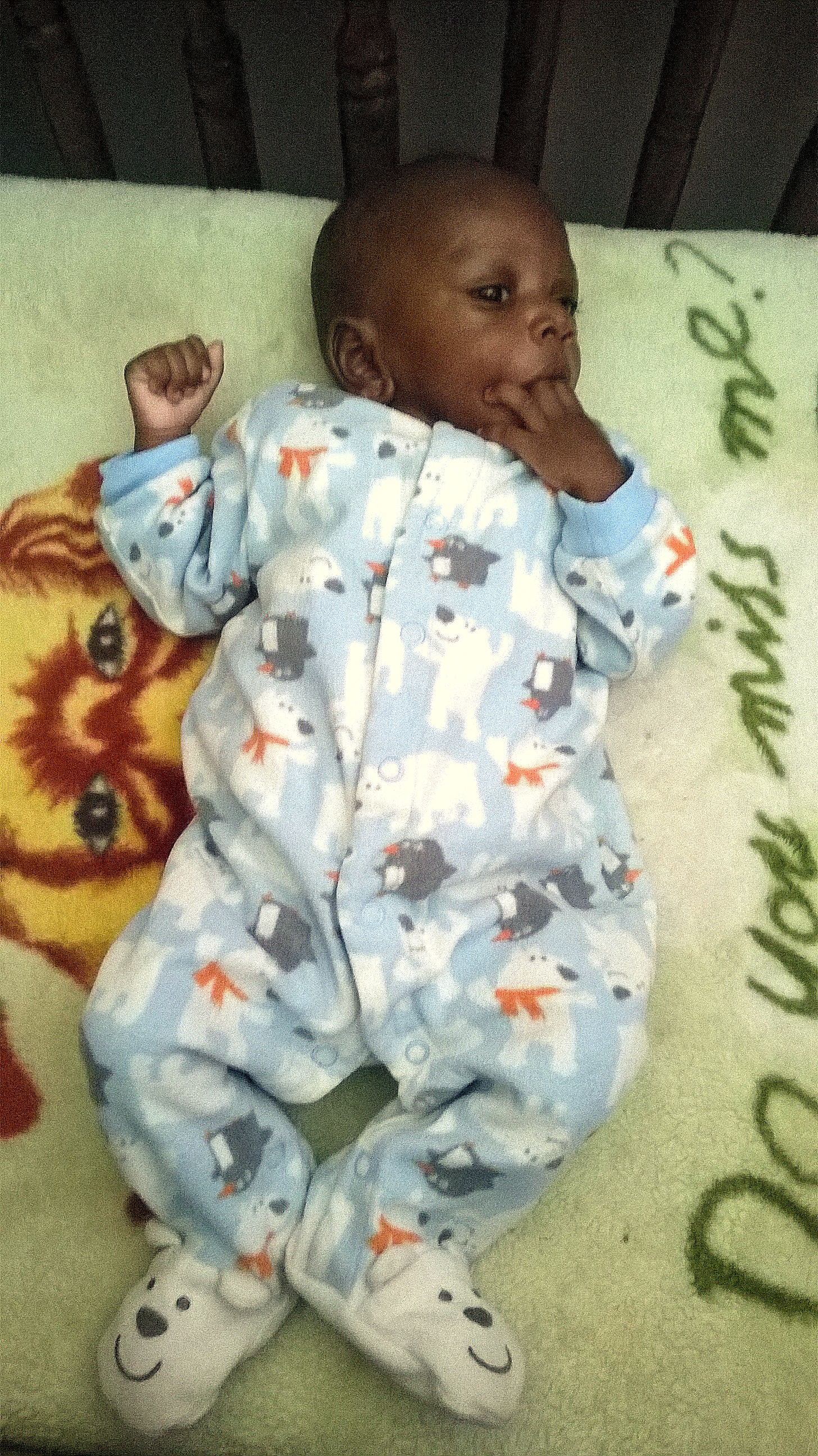
In my arms was this adorable bundle of joy, Alexander, with his appetite in check he hurriedly finished his bottle of formula within a number of minutes, as if to show who was the best feeder among the ‘siblings’. Alex’s story, like all of the others, is a sad one. With just a few hours in this cruel cruel world, the poor boy was stuffed into a sack like pieces of old clothes and dumped into a pit latrine. He was lucky enough to get rescued before it was too late.

zuru kenya Angel Center
cute little Alex after feeding
Abandonment breaches all fundamental parental roles of providing
nurturance, protection and guidance to one offspring, particularly during the most vulnerable stages of their lives, and that is why one wonders how a mother could inflict such pain and suffering on her own child. These things that could not be provided to them by their parents, Angel Center has committed to provide.
Founded by Wamaitha Mwangi, Angel Center for abandoned children  which is based in Dagoretti seeks to provide Basic human rights, Love & affection, Medical care, Complementary therapy, Good nutrition and most importantly, a place that these precious beings can call home until they find their long term families.
 zurukenya raising hope
Taking care of 27 or so kids, is a full time job that can only be described as a calling. Not that many people could commit to giving their all to children that are not their own. Babies are a gift from God and as helpless as they are, we commend the work that Angel Center is doing to give them “a fresh start”.
 angel centre
When we arrived for our playdate with the kids on Easter Monday, the mum’s were busy getting them ready; bathing and feeding them. Unfortunately at the time, some of the kids had come down with chicken pox so the younger one’s had to be kept separate from the older ones to avoid contacting the same. That didn’t stop us from enjoying our time with the Kids though. We played, danced, snacked together, and had loads of fun.
IMG_0122
While there, one of the kids was on his way out. Off to start a new chapter with his new loving family. Although oblivious of the fact that he wasn’t going to come back to Angel Center, the joy expressed on his face was enough confirmation that he was going to be just alright. In case you are looking to adopt or sponsor a child feel free to get intouch with the Angel Center.
IMG_0221
We had an amazing time with the kids at Angel Center. If we could carry them home, we would have ( they are so cute!!!). Nevertheless, despite not being able to understand how an otherwise sane mother could carry to term her baby only to abandon and in some cases kill,  desperation can never explain the “leave to let die” abandonment. Any sane mother, no matter how desperate her situation, will look for a caring place to leave her baby.

Dumping and abandoning newborns is a crime. There must be a law stiffly penalizing mothers for this.

That said, we don’t know the circumstances that led to these kids’ abandonement. Perhaps we’ll never know the full story. We can only thank God that people like Wamaitha and the ladies at the home exist. Because of them, these little miracles have a place to call home and a chance at a good life.

Kenya's ultimate travel and lifestyle magazine

Design a site like this with WordPress.com
Get started