
Category Archives: Lifestyle

Meet Joseph Mwakima: Wildlife Works’ Community Relations Officer

On my visit to Wildlife Works, I was very fortunate to meet Joseph Mwakima; a charismatic young fellow working closely with the community teaching them about conservation and sustainable development.

Despite being introduced to him towards the end of an exhaustive work day with one of his communities in the Kasighau REDD+ Project area – this time Saghalla, he gladly engaged me on a few kilometres walk taking me around the project area and explaining indepth, the projects that Wildlife Works engages in.

Joseph Mwakima- zuru kenya
Joseph showing me around the Wildlife Works’ green house

A community relations officer, Joseph’s work entails educating and creating awareness in the surrounding communities about environmental conservation and the  important links between deforestation and climate change.

Joseph and his group use different styles and methods to communicate with the people on the roles they can play in mitigating climate change. Considering that many people in the project area are illiterate, the team organizes film viewings, theater plays and workshops, sports and informal open-air meetings.

Read more of Joseph Mwakima’s story below as told by Geoff Livingstone

In online circles we believe a community manager is someone who cultivates and activates a group or a brand following on a social network. In Africa I met the ultimate community manager, Joseph Mwakima, a fellow busy activating his community and inspiring change in Kenya’s Kasigau Corrdidor REDD+ (Reducing Emissions from Deforestation and Degradation) Project area through word of mouth.

But unlike his American counterparts, Joseph doesn’t use a Facebook Group, Instagram or Twitter as primary tools of his job (though he is on those Wildlife Works community relations officer, he regularly meets with people engaged in projects throughout the region.

20020378975_7f8fa1f9ce_k

Joseph could have gotten a job in the city. He has a wife and baby, and could easily justify seeking more bountiful land. He’s also college educated, speaks fluent English, and is well travelled. But he instead came back to the region he calls home to make a difference. His community needs him, as does the overall Wildlife Works effort.

19399414223_d7ee7c4b45_k

A variety of issues are impacting the region, including rapid deforestation through slash and burn farming and charcoal harvesting, a lack of jobs in the community, and disappearing wildlife. The REDD+ Project Joseph is part of seeks to counteract challenges with a sustainable community development program that creates jobs and protects the forest.

Joseph Talikng to Us

I got to see Joseph at work, thanks to working with Audi as part of its documentary project produced by VIVA Creative (you can see Joseph talking to the VIVA team above). Audi supports Wildlife Works as part of its carbon offset program that compensates drivers for the manufacturing and first 50,000 gas-driven miles of the new A3 e-tron being released this fall.

Widespread Community Activation

19833745909_1b30a92e19_k

Nestled between Kenya’s Tsavo East and West National Parks, the Kasigau Corridor REDD+ Project is widely considered to be a leader in sustainable carbon offsets. Wildlife Works applies a wide set of innovative market-based solutions to the conservation of biodiversity.

Joseph works in the community to socialize the solutions and encourage adoption of them. Here is what I witnessed Joseph doing:

World Environment Day

19383299063_4e5bde4531_k

Marasi Primary School hosted a World Environment Day celebration the day after we (the documentary team) arrived. It acknowledged many of the positive changes that have occurred as a result of the community’s fight to stop deforestation. There, I watched Joseph help a child plant a tree, speak with children, and converse with many of the community leaders in attendance.

18704180989_a8cc7ac1bd_h

The school in many ways symbolizes the future of the corridor. In total, Wildlife Works pays for the school fees of more than 3,000 students in the area, including partial scholarships for some college students. Most people who work for Wildlife Works reinvest their wages in their children’s education.

Rangers

20012574652_949d60158c_k

In this picture below you can see Joseph talking with several Wildlife Works Rangers. The rangers are an 80+ person ranger corps that protects wildlife throughout the corridor’s 500,000 acres from poachers seeking ivory. They also stop people from slash and burn farming or from simply cutting down trees for charcoal. So part of Joseph’s job is explaining to them why the rangers are stopping them from using the forestland, and what alternatives they have.

20012608572_ce0702bedd_k

We spent seven days in the company of Joseph and Evans and Bernard, two of the Wildlife Works Rangers. I was impressed by their work, their passion for the wildlife in the Project area, and the danger they face from poachers. A poaching incident occurred on my last day in Kenya, and the pain was evident on their faces. You can see the rangers at work in the Animal Planet reality TV show “Ivory Wars.”

Eco-charcoal

19397733524_f6ce0826ca_k

Instead of slash and burn farming and chopping down forests for charcoal production, Wildlife Works offers new alternatives to citizens. These include job opportunities, smarter farming education, and alternative methods of creating charcoal. This latter effort — the creation of eco-charcoal — offers an innovative, yet pragmatic approach to fuel.

19832893248_0a4814a848_k

Joseph showed us how the eco-charcoal is created. Teams clip small branches, collect fallen tree limbs, and burn them. The ash is then mixed with a pasty substance, and poured into casts for eco-charcoal bricks. The end result is a brick that burns longer and better than the charcoal most Kenyans make when cutting down trees.

Women’s Groups

19583871509_ba2fe0185e_k

Joseph introduced us to three different women’s groups in the region. The loosely knit associations of women engage in entrepreneurial activities like producing arts and crafts that are sold in the U.S. and Europe through Wildlife Works. In all, there are 26 registered women’s groups in the Corridor, touching 550 women, or four percent of the total population.

19397719494_14295069db_h

The women use the resulting money to build clean water tanks, buy solar lights and clean cook stoves for their households, and provide an education for their children. Husbands see the positive impact on their households and are encouraging their wives’ newfound roles in the Kasigau community.

Joseph Small

These are just some of the programs that Joseph supports in the community. Wildlife Works engages in other economic development actions such as textile production, better farming practices and more to build a sustainable future for Kasigua Corridor REDD+ Project Area.

This type of community management shows the real-world impact that such a role can have in the right situation. When local people like Joseph interact with the community and serve as a liaison for Wildlife Works, adoption of sustainability programs increases, and ultimately transforms the entire region for the better.

Story Source: geofflivingston.com

Photo Credit: Geoff Livingston

To reach Joseph: joseph@wildlifeworks.com

Craft Beer Guide to Kenya

If you are a beer lover, then you are probably aware of the craft beer movement that is currently taking our country by storm. Although the said trend hasn’t been around for very long, production of craft beer has seen tremendous growth in Kenya over the past few years and is gaining skyrocketing popularity, at least in Nairobi.

The first African country to see the onset of craft beer brewing was South Africa. It has to date, with over 120, seen nearly as many craft breweries as those in Czech Republic crop up. Most of these popped up within the last ten years, hinting to the rest of the continent that this kind of brew is here to stay.

But what exactly is craft beer?

Beer Enthusiast Jonathan Gharbi, author of “Beer guide to vietnam and neighbouring countries” who travels for beer tells us more about craft beer and his experience with Kenyan craft beer breweries during his visit to the country. His blog www.beervn.com is about Vietnam where he visited 45 microbreweries. He is soon to start a new blog that will cover African breweries and beer culture in the continent starting with Kenya.

Zuru Kenya Jonbeer
Author of “Beer guide to vietnam and neighbouring countries” Jonathan Gharbi

ZK First off, Karibu Kenya! Hope you are enjoying your visit?

JG Thanks. I do like it here, the climate is perfect, not all agree but for me it is. There are so many nice beers too, so I am happy.

ZK So for those who are not familiar with this kind of brewing, what exactly is Craft beer?

Zuru-kenya-Beer-guide

JG Craft beers, unlike industrial beers which are produced on large scale are beers made in small batches, for local customers only. The Craft brewers focus on creating a flavorful, high-quality beer which in most cases is very different from the mass-produced beers like Tusker, white cap, Heineken, Carlsberg, and others which most Kenyans are familiar with.

When you drink a hand-crafted or “craft” beer you are enjoying a fresh, natural beer made using time-honored methods with a lot of passion poured into it.

ZK There’s a tendency to assume that a craft beer must be better than a mass-produced beer, how true is this, are these beers better?

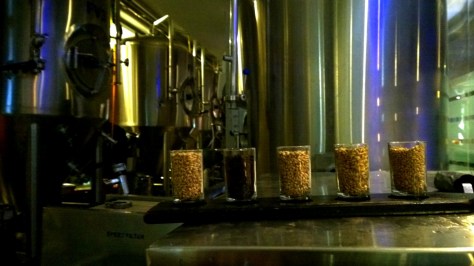
Zuru Kenya craft beers

JG Craft beer like wine is about flavor and taste. Sometimes to keep costs down, mass producers may substitute their ingredients or speed up the fermentation process with enzymes that make a beer concentrate of sorts. Handcrafted beer on the other hand, is produced using only the best ingredients and brewers do not cut corners in order to lower cost of production.

So yes: Craft beers are more delicious and flavorful as the brewers spend time focusing on the quality of their beer. With this choice of drink, you are sampling distinctive full-bodied taste and aroma achieved by interpreting traditional styles with new twists. Lagers like Carlsberg, Tusker, white cap and others on the other hand, tend to be pretty bland stuff, aimed at the broadest possible range of tastes…thin body, short aftertaste, no flavors. You need to keep in mind though that some beer lovers just want to enjoy an alcoholic drink and don’t pay much mind to taste and flavor.

ZK Having sampled the craft beer spots in Nairobi, which one would you best recommend and why?

JG I was able to visit three craft beer spots; Sierra Lounge, Brew Bistro and the newly launched, Sirville brewery.

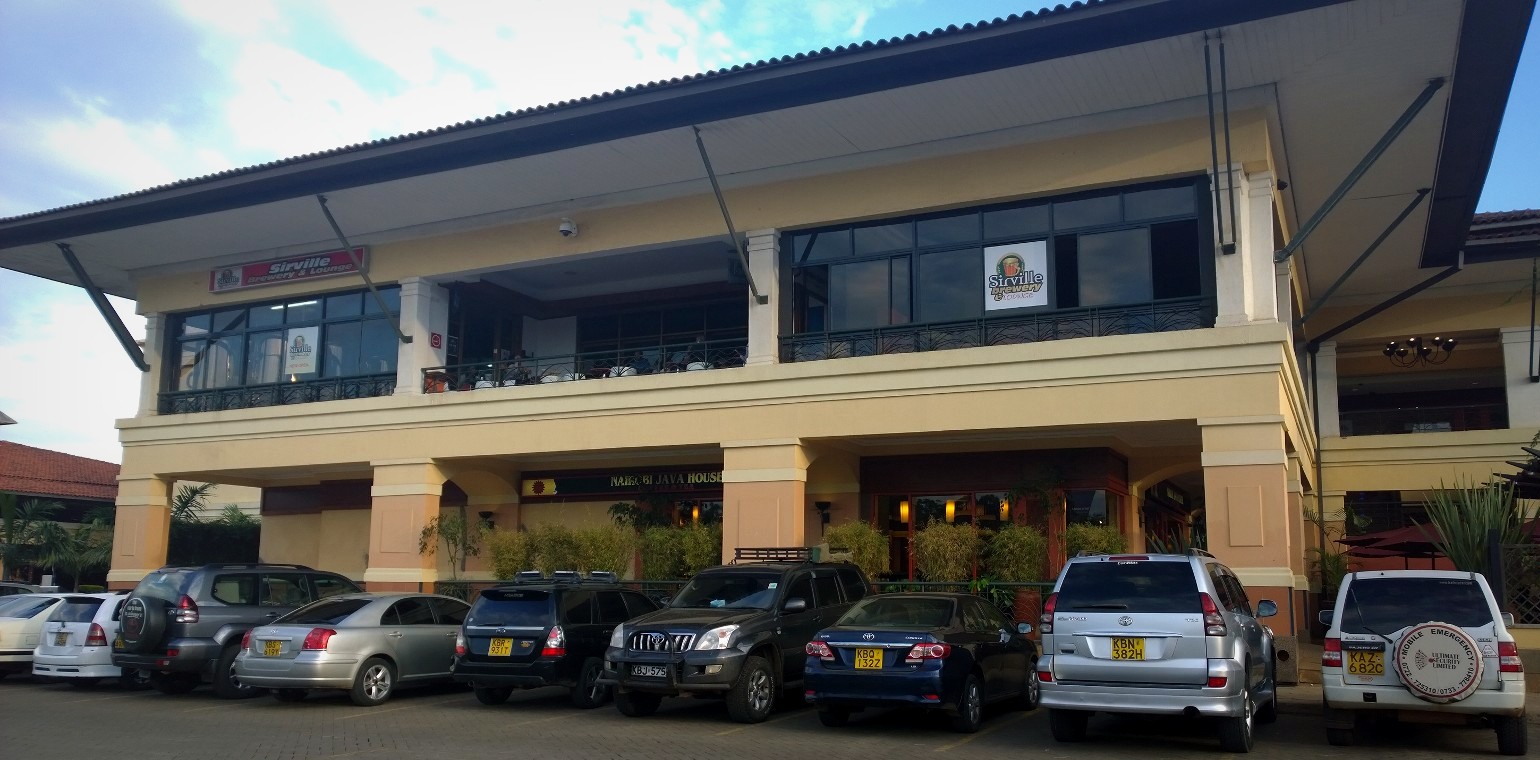
Zuru-Kenya-sirville-brewery
The newly opened Sirville Brewery and Lounge in Galleria

If you want a change of scene from the all too common lagers, begin with a tasting at sierra lounge, Yaya Shopping Mall. Owned by Ozzbeco, Sierra is a larger scale craft brewery stuck between craft and industrial beer. They make tasty beers and occasionally offer seasonal beers. Once or twice a year they offer special brew such as the german styled Maibock.

Brew Bistro located at Piedmont plaza, Ngong Road is a more typical craft brewery. This small scale brewer produces 1000 litres of brew at a time using 5 kinds of hops and malts. The pub provides a variety of beers each with its own description and story.

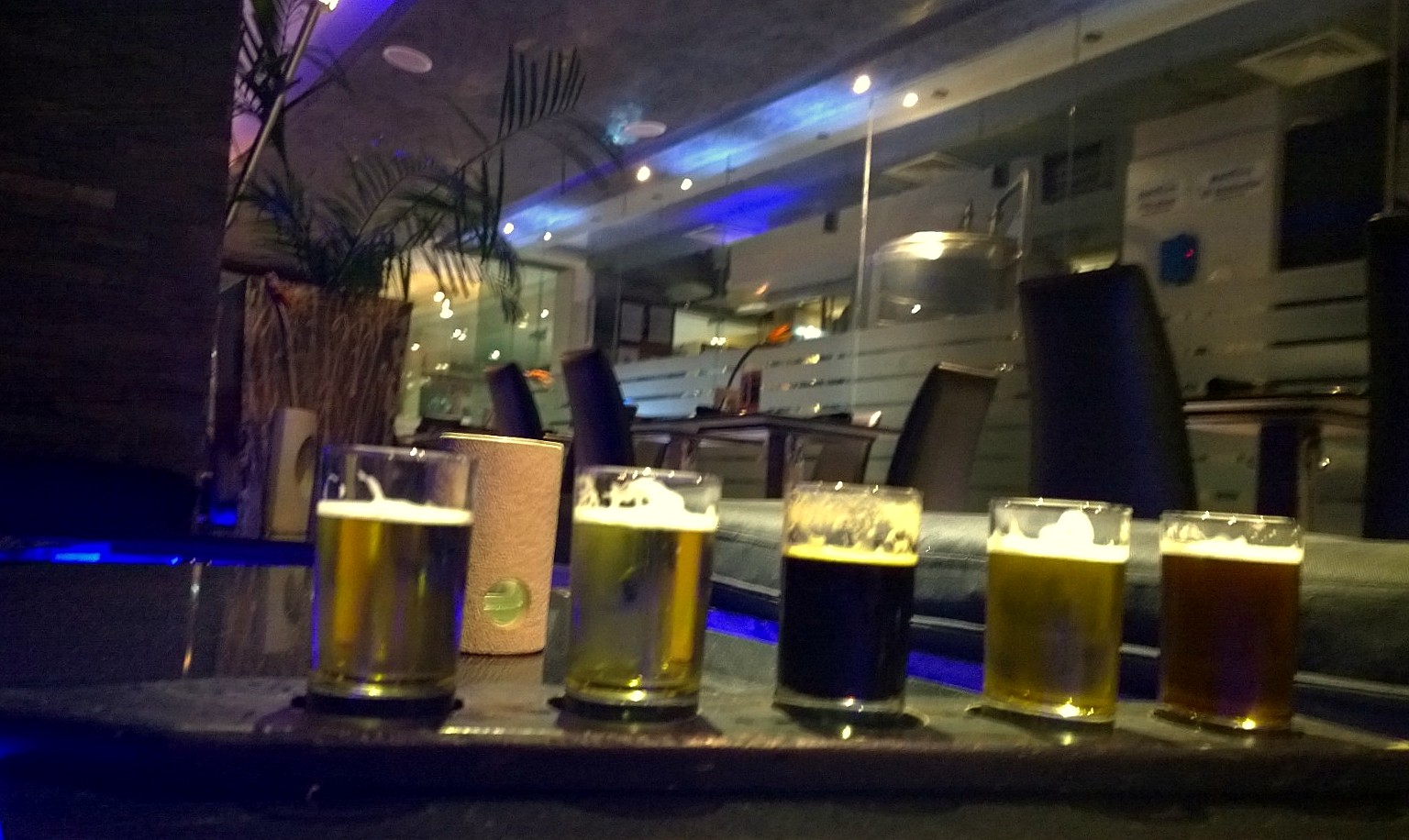
zuru kenya sirville beers

The third spot, newcomer sirville brewery, opened late last year in Galleria shopping mall has a typical microbrewery set in the same size as brew bistro’s. Being new in the market, the lounge is still testing the waters with different kinds of beers trying to find their clients’ tastes so you won’t really get much of craft beer here.

To answer your question on which one I would recommend, I like brew bistro because of their variation of beer. However I think sirville is exciting because they are new. Sierra on the other hand is very big, with good beer but not much charm.

ZK Tell us more about these breweries…

zuru-kenya-sirville-brewers

JG Sierra, which is the first craft brewery in the country, went from a small boutique brewery to a more industrial one with a capacity of 2 million liters a month and that Journey in less than 10 years. Beers here are sold on tap as well as cans and bottles. The lightest in their range is platinum and then follows Blonde, Amber and Stout.

Brew Bistro opened in 2009 is the most popular spot among beer lovers today. This brewpub has a good spectrum of beers that are only available on tap with the brewery placed just in the middle of the bar. The pub has a variety of special beers made with a traditional crafty approach. They also sell a wider range of malt and hops.

Though just recently launched, Sirville Lounge uses the most experienced brewer you can find in Nairobi with 30 years in the business and five years at Brew Bistro. Since it’s still new, beers at the brewery are adopted and not as bold yet. However starting July 2015 Sirville will brew Stout which is promising and as soon as more beer enthusiasts come in, the beers at the lounge will also change. Today they have four beers on tap, all made in the small microbrewery.

ZK What beers would you recommend to other beer lovers from the three craft breweries?

zuru-kenya-craft-beers

JG Sierra Lounge offers Sierra Platinum and Sierra Blonde which are not craft per se, just more industrial. Their beers Amber and Stout however, are for sure craft and worth trying out.

At Sirville, Amboseli Bitter is your best bet. With good body and a nice finish, you will feel some fruity notes in it.

My favorite at Brew Bistro was definitely the Stout; very tasty with coffee notes and a good finish.

ZK Other than craft beer, what other Kenyan beers have you been able to sample and how do they compare to other beers you’ve had in other countries?

zuru kenya craft beer guide

JG I find that Kenyan beer is like any other beer in the world. Miller lager and miller light in the US, Carlsberg in Denmark, Tiger from Singapore, Hanoi beer from Vietnam, Bitburger from Germany, all are similar to Tusker, Tusker Lite, White cap, Pilsner and Summit Beer.

ZK Finally, how would you rate the craft beer breweries you visited while in town?

zuru-kenya-craft-beer-brewers

JG Brew bistro is the established and most international styled craft brewery. Servile on the other hand being new is yet to get a clear identity. It does however offer both local traditions and a strong craft beer culture.

Sierra brewery does not have a brewpub which is very sad. They also produce international lagers such as platinum so the risk is that they may soon stop making craft beer and just do international styled lagers at a huge scale instead.

Summary: I like sirville because they are new and open to ideas however Brew Bistro offers you a wider range of craft beers and the best experience. Sierra falls short since they are one foot in the craft beer culture and one foot in the industrial beer market offering thin and boring lagers.

zuru kenya sierra beers

Craft beer is a wide spread trend and like wine, it’s just a matter of time before people start choosing their beer for taste and flavor, and not bottle brand.

One of the coolest perks to drinking craft beer is that you actually get to meet the individuals brewing your favorite drink. What’s more, with craft beer; you are not stuck with the same boring, flavorless, thin-body beer all year round. Each craft beer pub that exists provides you with different brewing styles, special recipes and ingredients as well as different brewer perspectives. Every brewer makes their own beer, in their own special way.

With so many exciting craft beer pubs popping up all around the city, beer enthusiasts are getting a taste of fresh, local creative beer…no more bland stuff! If you haven’t yet, I dare you to give it a try. Who knows? you might even trade in your favorite lager. Oh and good luck in trying to find just one favorite beer.

To follow Jonathan Gharbi on his beer adventures: www.beervn.com Photos credit  ~Jonathan Gharbi

Preying on poverty: Sex tourism in coastal Kenya

Enduring distasteful glares and snarky comments without one iota of apprehension, that’s the kind of thick skin one needs to parade around the coastal towns of Kenya, mzungu in hand. Not that an interracial relationship is frowned upon; only when these kind of cross-generational relationships contribute to moral decay and thrust underage children into sex tourism.

Kenya is a well-known tourist destination for a number of reasons; premier wildlife safari, beautiful landscapes, good climatic conditions, beautiful coastal beaches and her hospitable people to boot. Whilst all this is positive, the country also seems to attract another breed of tourists. Tourists lured here by, although not officially stated, a ready market for a very lucrative business; the sex trade.

zurukenya-sextourism

Economic hardships and illiteracy have been cited as some of the issues that lead young men and (mostly) women to such desperation. Drug abuse also fuels sex tourism, because it’s an easy way to get money for a fix. However, living in a once upon a time nondescript coastal town that can largely attribute its growth to this trade, you slowly learn that the greatest drive towards this business is simply the materialistic nature of our society today.

Lined up with numerous restaurants, pubs, clubs, and the infamous strip clubs, Mtwapa is the town to be in. Some foreign travelers can’t pinpoint Kenya on the map to save their lives, but ask them where Mtwapa is. People get here and they just want to go to Mtwapa. Locals aren’t left behind either. Holidays to Mombasa are incomplete if you haven’t sampled the Mtwapa nightlife.

Connected to Mombasa through a bridge over-passing the Mtwapa creek, this town has recorded one of the highest property developments in the region. Unlike most kenyan towns, Mtwapa offers an array of amenities and services; ample security, an exciting nightlife, the ocean and sandy beach, modern shopping malls, hospitals and banking centers, and tastefully furnished apartments and hotels. Locals here find no need to head to Mombasa for goods and services unless they really have to.

It is this convenient lifestyle and the zero-to-none crime rate that most tourists find Mtwapa favourable to the extent of pitching tents here. This is the town where the rich, mostly tourists, and the not so rich live in harmony. Here you  get people of different nationalities, different ethnicity, and different religions. Here you get an open-minded and liberal atmosphere. The sort of atmosphere that permits high-end call girls, foreign prostitutes, escort girls as well as lowly paid sex workers to camp in town. It is the same liberal atmosphere that has the gay community scampering for safety in Mtwapa.

There’s a certain phrase we like to use in this town, “usiku kumekucha (the night has dawned)”. Come nightfall, the streets of Mtwapa are filled with tons of people looking to make merry  – and others to get paid. Music blaring from the numerous pubs lined up can be heard from a far distance. Nyama choma stands and roadside eateries are opened up where would be walking pavements by day. Business here is really good at night. As other towns go to sleep, Mtwapa is wide awake. So are its clients and servicers.

This town, like many others in the coast, has lured tourists, both international and local, with the promise of sun, sand, and sex – but mostly the thriving sex trade. It has also lured young men and women, with the promise of the much coveted mzungu money, better welfare and a ticket out of Kenya. A ticket, to the the better preferred western world; an escape from the low paying jobs, unemployment, and the rising coast of living & healthcare.

With this promise, it is therefore not unusual to see girls, barely in their teens, hanging on to the arms of 50, 60, even 70 year old men. Girls as young as 12 turning tricks in order to make money for their families. Some of these girls drop out of school to join the trade thinking it’s a cool thing to do (some of them make in a day what there teachers would make in a month). In other unfortunate cases though, the girls’ parents are the enablers. After seeing how the proceeds of sex work are giving others a more desirable life, some parents urge their kids to get themselves a “sponsor” like so-and-so in the neighborhood. In the name of profit, these young ones are forced into relationships with men old enough to be their grandfathers, if not great grandfathers.

zurukenya-sextourism

These kind of relationships are not unique to girls alone. It is well known that beach boys at the coast are on the look out for older white women to have flings with for financial benefit. Hard figures are difficult to come by, but locals estimate that as many as one in five single women visiting from rich countries are in search of sex – Reuters. Such women, well in their 60s and 70s, travel across the globe to Kenya to pick up local boys barely in their 20s.

It is estimated that there could be as many as 40,000 child sex workers in Mombasa city.

– Trace Kenya.

It is also not uncommon to see a married couple living with a mzungu lover in the pretense that either one of them is a sibling and not husband or wife. This sort of charade has been going on for years at the coast. Anything necessary for mzungu money!

This kind of lifestyle subjects the individuals involved to society’s judgment and prejudice. They make the money, at the end of the day they have to survive the judgment. Whenever an interracial couple of odd ages flags down public transport at the coast, tongues start wagging. Just the other day, I spotted a young girl struggling to assist an old white man clamber into a matatu. Shopping bags in one hand and her financial savior in the other, the old man, who was about 80 at most, could barely walk let alone breathe (he had to breathe with the aid of an oxygen tube). Once in the matatu, there was an uneasy silence as the thinned hair mzungu walked unsteadily to his seat. The girl avoided stares in shame while most people just shook their heads in disgust.

In 2006, UNICEF released a report that stated; up to 30 percent of girls in some Kenyan resorts – aged from 12 to 18 years old – were involved in the sex industry.  Today, if anything, the number has incredibly risen with the area attracting more wealthy locals and tourists than ever.

The increase in the industry has seen bigger fish crop up. Cartels, bigger and more powerful than even some of the drug lords in the country. The number of women being trafficked to the coast is increasing by the day. Women are lured into the business from as far as Ethiopia, Rwanda, South Sudan, Uganda and even Tanzania.

Thanks to these cartels, child pornography is burgeoning. Young girls are taking part in stripping, live sex shows in local clubs, shooting pornographic movies amongst other moral corrupting activities. Young boys are also sought out as much as girls. Young men are inducted into the industry and are subjected to homosexual acts with both local and white men inside villas.

Whilst some of the partakers (especially university students led by their curiosity) travel to the coast to moonlight as sex workers, others are mainly duped either by friends who lie to them about their profession, or are sourced via social media with the promise of big business deals. Not so long ago, a number of college going ladies made the headlines after they were caught shooting bestial pornographic movies with dogs (in some cases, others are forced to have sex with a horse). These activities were taking place in a Swedish owned villa; one of the numerous, highly guarded villas where young locals are paid for the most horrific and abnormal acts. Behind the steel gates and perimeter fences, sex tourism takes on different shapes; pornography, sadomasochism, child abuse and even fatalities.

Although the media has highlighted some cases of sex tourism like the Swedish villa saga and the strippers at Banhof Bar and Restaurant owned by a German national, this is just the  tip of what is going down at the coast. There’s more , that Kenyans might or might not be aware of. Sex work and trafficking is rampant. As long as the mzungu remains the synonym of wealth in Kenya, morals and caution will be thrown to the wind and towns like the ‘sin city’ will continue to grow. With the promise of easy money and a better life, the crisis of underage prostitution will recycle .

It is imperative, therefore, that strict measures are undertaken to curb any kind of sex tourism especially those that target underage and vulnerable children.

Dear airport security, No Really, my headscarf is not a threat

A number of factors come into play when choosing the perfect air travel outfit. The weather of your destination, what will keep you comfortable on the plane and a touch of style (Don’t throw fashion if that’s your thing totally out of the window because you are jet-setting). What doesn’t come into consideration however, is how much of a security threat your outfit is going to be. Because, is that even a thing?!

Well, until you are selected for extra screening at the airport then it becomes a thing. “Ambia madam, ashuke aende walk-in security checkpoint for frisking.” Just me? I couldn’t help but chuckle. I don’t see no one else being asked to get out of their vehicle for frisking. While I didn’t have much time to mull over why I had made the perfect candidate for an extra pat-down at the screening yard, I suddenly became all too aware of the meaningless piece of fabric on my head that I often forget is there. Just like that, thanks to my brightly cloured, floral pashmina, I got suspicion. All of a sudden, I was a security threat.

11169927_10206806273501272_4740818679175023093_n

In the wake of another terror attack, I don’t pretend to not understand why security should be tougher now. As matter of fact, when passing through airport security all passengers should do what it takes to ensure they arrive safely at their destinations. Key word, “All” passengers. Pardon me then when I don’t seem to comprehend why someone should be singled out as “most threatening passenger” by virtue of what religiously affiliated attire they may or may not be wearing. Shouldn’t everyone be subjected to the same kind of security screening? This check, if you ask me, is so devoid of logic. To assume that only Arab-appearing, Semitic looking or hijab wearing individuals are a threat is dangerously naïve.

Focusing more on a profile only increases the risk of missing out on those who don’t match it. How does that make us any safer? What it potentially does, is it opens the door for terrorist groups to probe any profiling system and figure out how to beat the profile. It is seems that our security apparatus underestimates the ability of the perpetrators to recruit people who do not fit the “terrorist” profile. Don’t you think therefore that it is prudent for everyone to undergo the same scrutiny when it comes to safety measures? Haven’t we seen cases of explosives placed in the baggage of non-suspecting civilians? How many times have we thought that the perpetrators came from an obvious ethnicity, only to be surprised later when identities are revealed?

Photo credit: teachandlearn

Singling me out on the basis of my flimsy “radioactive” floral headscarf doesn’t make anyone else safer. Terrorism is a risk we are all exposed to; veiled, or not. And as such, everyone should be held accountable. Security scrutiny should apply to all regardless of race, ethnicity, religious affiliation or even your style of dressing for that matter. Nevertheless, living in such a volatile time, one cannot control how people react or interact with you based on your pashmina or headscarf. What to do? Perhaps don’t wear anything that could possibly suggest that you are a mass murderer, like a scarf on your head for instance or better yet next time try to look as harmless as possible, which then again with my hulking 5’4” frame, and chubby cheeks, can be a very daunting task.

Never had I encountered veiled prejudice before nor have I ever felt the discomfort that comes with the simple choice of a pashmina over your hair in an airport. Boy, did I really feel it this time! As if air travel wasn’t such a drag already.

Five Travel Ideas for this Easter Holiday

Fancy Food festivities in Mombasa, weekend long parties in the wild, a cool Easter city break to the countryside or Just some valuable family time? There is still time to book an Easter holiday getaway.

1. Party in the wild – Nanyuki

Easter ideas zuru kenya

Here’s camping with a twist. 3 days – 2 nights; Spectacular lighting Monstrous bonfires, Nyama choma spots, Quad bike competitions , Loud sound, superstar DJs and lots more!

The fifth edition of Party in the Wild is bound to make your Easter Holiday experience unforgettable. What’s more, this year you get to experience nature at its best in the amazingly beautiful, Storms Resort.

2. Hakuna Matata Festival – Olepolos Edition

zuru kenya easter

Looks like this year, Easter Weekend will be a weekend of fifths. The Hakuna Matata Festival will also be on its fifth edition this Easter, to be held at Graceland Olepolos, in the scenic Kajiado County.

You will be treated to an epic night of live Music and DJ perfomances, don’t miss out! On the decks will be; DJ Creme De La Creme, Dj Protege, DJ G-Money, Dj Crossfade, Dj Raj El Ray , and DJ Kace.  P-Unit will also grace the event as the Main Act. This is guarateed to be a night to remember.

3. Xtrym Mount Kenya Experience

zuru kenya easter ideas - mount kenya

Climbing Mount Kenya may have been on your bucket list for the longest time and this is the year you finally get to tick it off. Thank God for this Easter. Xtrym Adventures, and hopefully you too will embark on a 4 day-3 nights (April 3th- April 6th) journey up Mount Kenya – Lenana Peak.

This creative climb joins two of the most scenic routes up Mount Kenya, Sirimon and Chogoria, producing a remarkably diverse and spectacular trek. Sirimon coming off the west of Mount Kenya passes through the dry side of the mountain with its giant trees and rocky terrain, and the descent onto the Chogoria path is exactly different with its lush bamboo and highland forests.

This is one adventure you cannot afford to miss!!

4. Family day out – Fam Fiesta

zuru kenya easter fam fiesta

Stuck for ideas on where to take your family this Easter? WestEast Entertainment has that sorted out. Mark your calendar for Fam Fiesta, April 5th, the ultimate all inclusive family festival.

Hosted by your favorite comedians, Fam Fiesta is a fun carnival style day out for the entire family with lots of food, drinks, entertainment and games for all. Your Kids shall have their hands full with mascots from their favorite cartoons, train rides, horses, cotton candy, bouncy castles, clowns and free face painting.

Just so you get to enjoy the festival as well, kids will be minded by a team of trained pediatric nurses so your mind can be at ease as you rediscover your inner child at the adult play arena or just dance along to the live band.

Activities in store for the parents include:  Foosball (table soccer), Pool,  Playstation & XBox Challenge,   Board Games (chess, scrabble, monopoly,ludo), Miniature Golf, and Darts. Aside from the games, you will get to enjoy some comedy, live bands, Dj music, & networking opportunities.

There will also be all inclusive inter-family competitions so bring your kids, nephews and nieces for a fun day out!

5. Savor coastal flavors – Mshikaki Street Fest & Lamu Food Expo and Festival

zuru kenya easter food festival

Finally, we know Easter won’t be half as much fun without some lip-smacking food. This Easter the Coast serves you to sumptuous feasts, not only in one, but two counties; Lamu and Mombasa.

Foodies, heading down to coast this Easter should be the plan.

With both Lamu Food Expo and Mshikaki Festivals, you have no excuse not to feast. The first of its kind, Lamu Food Expo and Festival will attract an affluent audience with an interest in a rich culinary experience. This is a family-oriented, community-centered event that has been met with great excitement all over the County. What to expect: a street food bazaar, traditional dances, culinary experts including Chef Ali Mandhry, displays of foods and beverages, forums and workshops, visual art, cooking shows and competitions, and much more.

Mshikaki Street Festival on the other hand, is held every month at the Tusks Mapembeni but this Easter, it promises to be bigger and better! Performances from renowned musicians, and a vibrant array of mouthwatering coastal delicacies, from variety of seafood goodies to Shawarma, Kababs to Pizza, and lots more.

Kosa uchekwe!!!

You know you were born and raised in Kenya when…

Every friend of your parents who came to visit was “auntie” or “uncle.”

Eating at the neighbour’s was a punishable offense!

Soda in the house? Either your parents were in a REALLY good mood or there were visitors coming over.

raised in kenya - zuru kenya

You’ve been told to stop crying or you’ll get something to cry about.

raised in kenya - zuru kenya

Doing well in school is not an option. There should be no excuse as to why you were anything but “number 1” in class. Getting a test score of 98% is not that impressive, “What happened to the other 2 percent?” And why in the world should you get a B, “The person who got an A, do they have three heads?” (Just so you know, every parent was “number 1” in class and got a distinction during their time!)

raised in kenya- zuru kenya

“In my days”, “When I was you age”, “Let me tell you a story”, “In my time”, and more similar phrases usually lead to a 2 hour lecture on how things were harder for your parents.

Your parents encouraged you to follow your dreams. But that dream better be to become a doctor, lawyer or politician.

raised in kenya - zuru kenya

Your house is free for all. Relatives will be well some just gave the excuse of coming to stay for a day or two…a month later?! invited to stay for an extended-period of time.

raised in kenya - zuru kenya

Your parents will call you from upstairs, downstairs, outside, etc., to hand them an item that is literally 10 centimeters away from them.

God help you if you’re living under your parent’s roof and you yell at them, slam a door in anger, and/or curse in their presence. Yeah, God help you.

You ask for permission to go for a sleepover or to visit a friend and the reply you get is “Must you be the one to go there? Why can’t they come to visit you?”

The youngest child will be blamed for everything….until he or she is able to talk and the oldest will be blamed for everything that the younger children do.

You will probably never meet all of your extended family because there are just so many of them.

raised in kenya - zuru kenya

Your friends better greet your parents first when they see them or that friendship is pretty much over! RESPECT

raised in kenya - zuru kenya

If you are called out by your full name, and your native language is also being spoken, the day shall not pass without tears.

Attending “SHOW” (Agricultural Society of Kenya Shows) was the thing!

Your mom had special crockery that you were not to touch! for guests only!

There was a list of neighbors and relatives where you were not to dare step into.

raised in kenya - zuru kenya

The best time to ask for stuff is when visitors were around.

Save

Save

Save

These Striking Wedding Photos From Kenya Are Guaranteed To Take Your Breath Away

Wedding photographer Jonas Peterson has shot brides and grooms in all sorts of beautiful places around the world, but he says this recent wedding in Kenya might be the most spectacular of the bunch.

“I didn’t know Africa would touch me so deeply,” the Melbourne-based photographer wrote on his blog. “It sung to me in a way I didn’t know possible, found new chords and played on strings I didn’t know I had inside me.”

2014-12-02-jonaspeterson_masaimara007.jpg
Credit: Jonas Peterson

In late September, Nina — a wildlife photographer and senior marketing advisor to wild cat conservation organization Panthera — and her fiancé Sebastian tied the knot in national wildlife reserve Maasai Mara in front of their closest friends and family.

“The bride of the Maasai normally wear a lot of jewelry, and the necklace, called enkarewa, is especially important,” the bride told The Huffington Post in an email. “When I first told my closest friend in the Maasai community about our wedding, he came back to me with a necklace and bracelets as a special gift made for me by his family. The stick carried by Sebastian was also a gift from the local Maasai community.”

2014-12-03-slide_386370_4637878_free.jpg
Credit: Jonas Peterson

Over the last several years, Nina has spent many months in Maasai Mara following a pride of lions for a project about the world’s last wild lions.

“During this time, I have become very close friends and almost family with the Maasai, who have welcomed me into their lives,” she told HuffPost Weddings. “Because we were planning to hold our ceremony on the land of the Maasai, it was very important to us to incorporate some of the traditions of the Maasai culture into the ceremony…After the announcement [of husband and wife], a traditional Maasai song and dance followed according to tradition.”

According to the bride, the two cultures and nature merged “in the perfect moment and the best day of our lives.” We’ll allow the gorgeous photos below to do the talking.


Jonas Peterson 

Jonas Peterson  

Jonas Peterson 

Jonas Peterson

Jonas Peterson 

Jonas Peterson  

Jonas Peterson  

Jonas Peterson 

Jonas Peterson

Jonas Peterson

In a blog post published on Once Wed , the bride detailed the many ways Mother Nature “was with [them] every moment of the wedding”:

Approaching the ceremony site in our safari Land Rover, the clouds were building up to an unusually dramatic storm, yet on the other side of the horizon, the sky was perfectly blue and the sun was shining. As we walked down the aisle the white rose petals at the center of the ceremony had attracted a number of white butterflies that circled around us on the ground…At the end of the ceremony the sky was almost black. As we were walking back down the aisle and the Maasai started singing and jumping, a herd of wildebeest stormed across the savannah and the wind started blowing…Just as we got into our car, the sky opened and huge raindrops started falling. The groom wondered (as did some guests) whether the love of his life had made a deal with Mother Nature.

more incredible photos from the big day;

 |  By

How to make the most of Nairobi Restaurant Week

Nairobi Restaurant Week #NRW2015 kicks off today.

For the uninitiated, Restaurant Week is when hundreds  of establishments, from fine dining standbys to hip new eateries, offer special prix-fixe lunches and dinners to much enthused foodies.

NRW-Blog Post-NC

This event has been a proven tradition amongst many major cities around the World including Cape Town, London, New York and Tokyo to name a few and although it is still quite a new concept in the country, last year’s launch was a big success. This year’s NRW  will feature over 50 restaurants offering 2 or 3-meal courses.

Organised by Taste Events Ltd (A partnership between EatOut and
SHK Consulting), the event will run till 1st of February, giving food lovers an awesome 10 days to sample as many restaurants as they can. #NRW2015 is therefore bigger than last year’s encompassing two full weekends.
Menus will cost Ksh1,500 or Ksh2,000 depending on the establishment. Some establishments will be offering a 2 course selection from the same menu at lunch time for a reduced price of Ksh Ksh1,000 or Ksh1,500, again depending on the establishment. This will however not include a complimentary cocktail.
This year’s title sponsor, Magnum Cream Liqueur from Liquid Africa  will be offering a complimentary Magnum cocktail, or a glass of Magnum on the rocks; for those who prefer theirs served plain on the rocks. Magnum is a luxurious cream liqueur which has tantalizing hints of caramel, chocolate and rich toffee making it perfect for anytime of the day even as dessert after a hearty meal.
Some of the best fine-dining restaurants on board this year include; Soaring Eagle Spur, Secret Graden, Villa Rosa Kempinski, Bhandini, Mambo Italia, Artisan at Sankara,DusitD2 Soko, amongst others.
Whilst you should look forward to having a great experience, it’s important to take a step back and see if you’re actually getting a good deal. A lot of people are going to restaurants they wouldn’t go to because it’s Restaurant Week, which is part of the idea, but they’re less in tune with what those restaurants are doing.

Are you being served a raw deal?

At first glance, Restaurant Week seems like a win-win for both restaurants and guests. Customers pay a fixed (and ostensibly lower) price while getting to try a new restaurant and its specialties.

For all its benefits,  Customers, rightly, want a good dining experience and a good deal. Restaurants on the other hand, rightly, want to fill seats during an otherwise slow month—the original purpose behind the promotion—and satisfy guests without losing money.

But here’s the thing: a ton of people turn out for Restaurant Week. “Amateur eaters” are seduced by the seemingly low prices and a desire to experience the new culinary fad. As a result, wait times can stretch on, and service may lag due to the sheer volume of orders and tables.

The premise of restaurant week is that restaurants you may not normally visit will lower their prices and offer their best dishes or most creative items in order to lure you back in the future. This is however not the case for all establishments involved.

You might find restaurants that don’t take the event seriously and serve extra-small portions. With menus being extremely limited, the value just isn’t there.

The quality of food often drops, too. Cheaper options that may not otherwise appear on the standard menu show up on the prix fixe as a way for owners to save money with the “special” menus. There are restaurants that normally have very particular ingredients and offer really outstanding quality products, and then you come into Restaurant Week and it’s all very conventional. The meal should at least be representative of the kitchen’s style.

Taking all of this into consideration, those prix fixe costs suddenly don’t seem like the best deal in some establishments.

Still, some eateries use the program to deliver great value. There are a few places out there where the special prix fixe is as good a deal as the regular menu. It’s the delight in discovering those that keep many coming back for more.
It can be bad (sometimes) for restaurants too!!

Restaurant Week can certainly be great for restaurants — it amps up exposure and brings in new customers during an otherwise slow month.

It is also a good opportunity for restaurants to showcase to people who may have otherwise not dined with them.

But it can also have the opposite effect. Dining out during Restaurant Week doesn’t necessarily offer a true glimpse of what a place is actually like. Crowds and long wait times annoy a restaurant’s best customers, and those deal-seeking diners are not necessarily going to come back. Which is really bad, given that increasing repeat business for restaurants is one of the main goals of a publicity program such as Restaurant Week.

It can also be rough on the servers leading to a subpar service. When you get down to it, the waiter isn’t making as much money.”

Ultimately, Restaurant Week can turn out to be a pain. But if you do decide to go, here are some tips for doing it right:

  • Do your research — some menus might be dumbed down, especially the higher cost ones. Try to find restaurants that stick as close to their main menu as possible. If the regular menu, and what they’re offering you doesn’t match up, then you’re looking at a place that’s faking you out. There are also plenty of restaurants where you actually pay more during Restaurant Week than you would a la carte.
  • Make a reservation, especially at your favorite spot. Restaurant Week is always busy, and you might not be able to get in.  The menu is limited to the first 250 patrons at each outlet so the earlier the better!
  • Chances are many of the best restaurants were booked weeks ago. Don’t be afraid to call if a restaurant is booked  to see if some tables are unloaded last minute by reservation hoarders. Sometimes, restaurants will extend their promotions after Restaurant Week (or offer the prix fixe year round). Plus, it never hurts to make sure there are no cancellations!
 
  • Be Nice – If you do go out late, realize servers have likely been running around more than usual by the time you get there. A little extra kindness can go a long way — not being snappy is a good way to increase your chances of getting your food quickly and accurately, something that holds true no matter what time you dine.
  • Do Lunch – If you’re able to make time in the middle of the day, lunch is a good option. Not only are the the courses cheaper, dining rooms are less likely to be jam-packed, and the service and kitchen staff will both be fresh. It’s a good chance to try places you might not venture during the evening.
  • Branch Out – Sure, everyone wants to go to the hot spots of the moment, but you might get better service (and find out about a fantastic dish before your friends do) if you try some of the older, more established restaurants on the list.
  • Tip Well – Do tips actually act as incentives for good service? Not exactly, since your server won’t know what you leave until your meal is over, but if Restaurant Week patrons decide as a group to leave better gratuities, it could put an end to the front-of-the-house griping that traditionally comes with the promotion. Happier servers = happier guests, simple as that.
  • Don’t Double Book – If you can get them, it can be tempting to book several reservations for one evening, and then choose whichever one you most feel like on the night of. This is definitely not cool, since it leaves restaurants on the hook with empty tables and lost revenue. See “Tip Well” above; making the promotion smoother for servers and managers ends up making it smoother for everyone.
Last year, four days into the weeklong culinary experience,  restaurants registered a significant increase in patrons wanting to take advantage of the unique experience with establishments like Bamboo, Zen Garden and Jiko at Tribe Hotel selling out their 250 limited-edition offering within three days with several others such as About Thyme and Pablos, Best Western recording similar numbers as well.

Whether you plan to sample the finest food the city has to offer or not, it’s  a given that Nairobi Restaurant Week is growing up to be the biggest culinary event in the country (if it isnt already).
If you do get to attend though, Good meals? Bad meals? Tell us about them in the comments.
Check the participating restaurants and their menus here.

13 travel resolutions you need to keep in 2015

13 travel resolutions you need to keep in 2015How many times have you broken a New Year’s resolution? If your answer is all the time, here’s one to try for 2015: Travel more.

Instead of shooting for the stars, or trying to right a habitual wrong, make a promise that you have every incentive to want to keep.

The below jet-setting guide contains feasible, affordable and do-able goals that are sure to skyrocket the quality of your year (and overall number of Instagram Likes).

Because, who doesn’t want to scratch off a once-in-a-lifetime destination, have an epiphany during a walkabout, or make a spur-of-the-moment decision that ends up being unforgettable? No one, that’s who.

Check a trip off your bucket list

Whether it’s conquering Machu Picchu or witnessing the spectacle that is the Northern Lights, chop your bucket list by one item. These dream trips are no joke: They require some heavy lifting before they can become a reality.

Start hoarding vacation days and putting aside paychecks so you have enough time and money saved up before the end of the year. There are a handful of apps that can easily help you manage and help to reach your goals, like iWish and Bucket List Pro.

Invest in chic luggage

Why does it feel so great to update your Facebook profile photo? Because sending a message to others that you look good, feels good. Like any other hobby, traveling is an extracurricular activity that begs for you to look the part, and owning must-have travel gear will motivate you to use it.

For women, Vogue and Refinery29 cull super-cute accessories, and for men, Details has everything from stylish clothes to sleek and necessary gadgets so you both can travel in style.

Explore your own city

No one is a tourist at home, so it’s common — and somewhat embarrassing — to have major, must-see sites in your own city that you have never actually set your eyes on. The next time a friend or family member comes to town, have yourself a tourist day and keep your secret safe by doubling as an educational host.

Once the mainstream attractions are out of the way, head off the beaten path for urban hidden gems. From an outdoor bike racing track in New York City to an abandoned Nazi camp in Los Angeles and a Technicolor church in Washington, D.C.’s arts district, reference Thrillist for city lists of creative things to do that you didn’t even know existed.

Travel with a close companion

You and your best friend aren’t getting any younger. If you’ve been brainstorming co-trip ideas for years, there’s no time like the present. From girlfriend getaways in Charleston and Miami to mancations in Las Vegas or Montreal, turn your best pal into a travel buddy.

After spending 24 hours together in uncharted waters, you might want to kill each other, you’ll certainly learn something new about one another, and no matter what, you’ll emerge with an even stronger bond.

Unplug for a week, or weekend

Leave your phone at home. In today’s day and age, everyone is so reliant on mobile and technological devices that a weeklong rejuvenating spa retreat might not be enough relaxation to steer you back to center.

Digital detoxes” are leading the growing unplugging trend by stripping participants from any connection to the outside world, and that includes social media. When you quietly camp in Big Sur, watch real birds chirp in Chile and graduate from a Stress Release & Burnout class in Thailand, that vibrating urgency of your smartphone will be a distant need.

Set out on a road trip

A rocking playlist, a full tank of gas and the right passengers are the only components you need to have a successful road trip. Whether driving across the country or down the coast, hitting the pavement as the wind blows through your hair is a rite of passage that every American should experience at least once.

If anything goes wrong during your travels, it’s sure to make for one helluva story when you reminisce about the adventure. For bucket-list drives, here’s a list of 10 that take the tank.

Take a walking, hiking or biking tour

Active travel companies like Backroads, Butterfield & Robinson and National Geography offer guided excursions where you can truly take in the sights. The mantra of these groups is that by seeing less, you will see much, much more. The organized journeys take travelers across continents for an up-close-and-personal cultural adventure.

When you’re pedaling through the countryside of Tuscany, coming face-to-face with elephants during a Tanzania walking safari, or boarding a junk cruise through Vietnam’s Ha Long Bay, you aren’t just seeing the locales, you’re living them.

Go to a new U.S. city

You don’t have to spend a fortune or hop continents to soak in a spectacular sight. Have you crossed San Francisco’s Golden Gate Bridge, earned a necklace made of beads in New Orleans, or skied down Aspen’s Colorado Rockies?

What about listening to the sound of Niagara Falls, kicking up pavement through Badlands National Park or waterskiing across Lake Tahoe? There’s no shortage of homegrown lore in the U.S., so go ahead and pick one.

Plan a solo trip

When the “Eat Pray Love” wanderlust won’t quiet, it’s time for an introspective adventure. Budget Travel has a list of 35 destination recommendations and Condé Nast Traveler narrows theirs to 10.

No matter where you go, do the research. Since traveling alone can up the risk ante, you can also hook up with groups of other solo travelers through communities like the Travel Buddies app, which gives users profiles and filters to find others with shared interests.

Brush up on a language you learned in school — and use it

It’s time to break out the foreign language textbook. If you learned Spanish or French in high school, college or while studying abroad, take a refresher course, and then travel somewhere that will have you using what you’ve re-learned in the field.

The best way to experience another culture is by immersing yourself in their ways and customs, but language isn’t exactly like riding a bike. Use Duolingo, which is a free app and website that will have you conjugating verbs again soon with their video game-like approach.

Check out a festival

From music to food and wine, there are enough festivals across the country to keep you busy for the entire year. For tunes, kick off the music circuit with Coachella in April, followed by Bonnaroo and Lollapalooza in the summer months, and then head down to Austin City Limits for the closing set in October.

On your nibbling and imbibing menu, the appetizer is the New Orleans Food & Wine Experience in May, the main meal is the Aspen Food and Wine Classic in June and for dessert, devour the savory treats at the NYC Wine & Food Festival in October.

Use all of your vacation days

Most people are guilty of telling a vacation-day white lie. This year, throw down the gauntlet and promise yourself that binge-watching, staycationing on the couch and being hung over in bed are no longer reasonable uses of this valuable time away from work.

Instead, vow to actually take advantage of the desk freedom and spend it the way it’s intended: outside. You’re sure to squeeze in an extra trip or two a year.

Book a last-minute trip

When it comes to last-minute travel, Groupon, Living Social and JetSetter are your best friends. Sign up and you’ll be privy to deals that can often be too good to turn down.

Lastminute.com is another one-stop shop where you can grab an entire travel package, including cars and hotels. Be flexible, impulsive and spontaneous, and the result will be you living a little.

This article originally appeared on Yahoo Travel.

-By Jackie Strause, Yahoo Travel

‘Kenyans don’t know what a beautiful country they have’

It is 1.15pm, and before I have my sumptuous lunch at the Sarova Whitesands Beach Resort and Spa in Mombasa, I decide to put down a few thoughts of my six-day visit to three different parts of Kenya with a Ugandan delegation.

“This is a beautiful country,” I remember my colleague Edgar Batte saying earlier. Abu Mwesigwa had chimed in: “Unfortunately, some Kenyans don’t know what they have and that is why they let outsiders disrupt their peace.”

Here were Ugandans enjoying what God gifted Kenya.

This was a dream holiday coming true. However, I could have freaked out had I been fainthearted. A day before my flight from Kampala last Saturday, a bomb had gone off in Nairobi.

A few days earlier, British tour firms had evacuated their clients fearing for their safety after some Western governments issued travel advisories, especially against travelling to the Kenyan Coast.

It is some of these places that I was due to visit on invitation of the Kenya Tourism Board (KTB), who are now looking to Uganda to boost the number of foreign tourists.

On May 17, I boarded a Kenya Airways flight from Entebbe and landed at Nairobi’s Jomo Kenyatta International Airport after a 50-minute journey.

The Immigration officer allowed me a six-month stay in Kenya despite my telling him that I was spending only six days.

During my stay, I have spent nights in four hotels: Stanley in Nairobi, Sarova Mara in Maasai Mara Game Reserve, Swahili Beach in Diani, South Coast and the Whitesands from where I am working now. From the four hotels, Whitesands seems to have the highest number of guests, and guess what, the majority are Africans.

The friend who had warned me on Facebook about travelling to Kenya would certainly have been put to shame by the number of visitors.

He had seen my photos as I enjoyed swimming at the grand Swahili Beach. Cowardly attacks would not stop me from visiting the Mara, the beautiful beaches in Diani, and enjoying swimming, scuba diving and watching dolphins in the Indian Ocean at the reef near Wasini Island.

Now at the mainland in Mombasa, I cannot imagine fear would deny me such an experience.

And forgive my language, only stupid Kenyans could collaborate or allow foreigners to deny them to enjoy this immensely endowed country.

On Saturday, together with six colleagues from Uganda, we spent a night at Stanley. The attention to detail of the staff was my highlight.

I was in a beautiful room facing Kimathi Street. I later ventured into the night, starting out at Mojos and Tribeka, just opposite Nation Centre. I later relocated to Club Rumours on Tom Mboya Street. It was full-house in the entertainment spots as Arsenal fans celebrated their first trophy in nine years.

We danced to local music, and Ugandan artistes like Jose Chameleone, Radio and Weasal also played through the night. I walked back to my hotel room at 3.20am and slept for two and half hours before I was woken up to catch a flight at Wilson Airport.

Our flight on a Safarilink plane to the Mara was filled with foreigners. A few Europeans I spoke to dismissed the travel advisories and said they were having fun in Kenya.

SUNDOWNER IN THE WILD

Kenyans have heard so much about the Mara and I am the wrong person to talk about it. But it’s good to note the sundowner in the park, dinner in the wild in the dark night, the tent bandas at the Sarova Mara Lodge, and the animals that were kind enough to come out to be seen.

Uganda is increasingly becoming Kenya’s friend in deed. Even as the tourist industry is getting a beating from travel advisories and terrorism threats, Ugandans have not stopped visiting.

In fact, more are arriving, not for business or jobs but for holidays. According to KTB statistics, Ugandans have overtaken South Africans as the continent’s top visitors to Kenya with Nigerians coming second.

Last year, Ugandan tourists arriving by air numbered 47,398, South African were 36,409 and Tanzanians were 28,561. Ms Ann Kanini, the public relations officer for KTB says they have rolled out marketing programmes in Uganda, South Africa, Nigeria, China and India because those markets are “less sensitive” and can take advantage of the low seasons to enjoy Kenya’s wonders.

“Most Ugandans who come to Kenya for honeymoon or holidays largely go to the beach,” says Ms Kanini.

Now Kenya wants to increase awareness of more destinations they can visit such as the marine parks in Wasini, the luxury beaches in the South Coast, Nakuru, Naivasha, and parks like the Mara.

“Cooperation between Uganda and Kenya is picking up well and in the last two years, Kenya has engaged more than 10 key tour operators from Uganda,” Ms Kanini says.

Kenya wants Ugandans to visit more than the regular sites. When I arrived at the Coast through Ukunda airport, a flight that took one hour and 20 minutes from Nairobi, we checked into the Swahili Beach Hotel near the airport.

The hotel can easily be mistaken for a traditional structure plucked out of the 18th century Arabic-cum-Indian epoch. The rooms give a feel of the life of sultans of yesteryears and the swimming pool stretches down to the beach.

On our fourth day, we drove 70km south, stopping at Shimoni in Kwale County. Here, we passed the slave caves, and boarded the Dolphin Dhow. We headed into the ocean, towards Wasini Islands, a land of 3,500 residents. The island sits on a coral reef with mangrove trees as vegetation.

In the middle of nowhere, we saw light blue water and our guide, Hamis Ali — a young man who speaks Arabic, German, French and Spanish in addition to English and Kiswahili and his local Digo language — told us we could swim. “What?” I asked. Here, he said, are beaches in the middle of the sea because of the coral reef that rises and it is gifted with sands like you find on the main beach. As we swam on a reef in the Indian Ocean, we could see the Tanzania mainland in the distance. Not far from where we were swimming, we saw three pairs of magnificent dolphins.

Our guide told us that the Digo, the small tribe on the island, look after the dolphins. “We don’t swim with dolphins but dolphins are allowed to swim with us,” he said.

It is here in the middle of nowhere — but feeling like I am living in paradise — that I looked around and the only Kenyans on board were the dhow captain, our two guides and KTB representatives. Down in the reef we saw all kinds of fish, and the corals which are soft unlike the rocky ones on the mainland. Ms Kanini could only ask, “do you see what Ugandans who end their trips in Mombasa miss?” She was right.

As the sun went down, we rushed back to Shimoni, but not before visiting Wasini Island. We walked through the coral park that is under the care of a women’s group on the island, where a wood bridge stretches through the mangrove forest and connects two villages. We were warned not to walk barefoot on the island because the corals were acidic.

At Shimoni, as darkness approached, we entered the historical slave caves from where those captured from the hinterland, as far as Uganda, were detained in a warehouse and shipped to faraway lands. That broke down my spirit but I appreciated it as part of East Africa’s history.

We later returned to Mombasa. As I signed out on Friday, the front desk manager at Sarova Whitesands told me that many Ugandans have spent nights at the hotel.

“And they know how to spend their money,” Jayne said.

Ms Kanini only wishes Ugandans who come for wedding and honeymoons at the Whitesands venture into places like Wasini and experience the marine parks.

With my flight only two hours away, I tell my friend on Facebook, “What travel advisories were you talking about?”

-Mike Ssegawa

Daily Nation