![lake-nakuru-flamingos-12[2]](https://zurukenya.com/wp-content/uploads/2016/06/lake-nakuru-flamingos-122.jpg?w=474&h=316)
All posts by zurukenya

Daima Mkenya – Happy Madaraka Day
Nothing affirms our belonging as kenyans this Madaraka day as the song Daima Mkenya – by Eric Wainaina . Though created years ago, the message resonates with us on a daily basis and so much so on this special day as we celebrate the freedom that our fore-fathers so vehemently fought for; releasing us from the clutch of colonialism.
Verse 1
Umoja ni fahari yetu
Undugu ndio nguvu
Chuki na ukabila
Hatutaki hata kamwe
Lazima tuungane, tuijenge nchi yetu
Pasiwe hata mmoja
Anaetenganisha
Chorus
Naishi, Natumaini,
Najitolea daima Kenya,
Hakika ya bendera
Ni uthabiti wangu
Nyeusi ya wananchi na nyekundu ni ya damu
Kijani ni ya ardhi, nyeupe ya amani
Daima mimi mkenya
Mwananchi mzalendo
Verse 2
Kwa uchungu na mateso
Kwa vilio na uzuni
Tulinyakuliwa Uhuru
na mashujaa wa zamani
Hawakushtushwa na risasi
au kufungwa gerezani
Nia yao ukombozi kuvunja pingu za ukoloni
Chorus
Naishi, Natumaini,
Najitolea daima Kenya,
Hakika ya bendera
Ni uthabiti wangu
Nyeusi ya wananchi na nyekundu ni ya damu
Kijani ni ya ardhi, nyeupe ya amani
Daima mimi mkenya
Mwananchi mzalendo
Verse 3
Wajibu wetu
Ni Kuishi kwa upendo
Kutoka ziwa Mpaka pwani
Kaskazini na kusini
Chorus
Naishi, Natumaini,
Najitolea daima Kenya,
Hakika ya bendera
Ni uthabiti wangu
Nyeusi ya wananchi na nyekundu ni ya damu
Kijani ni ya ardhi, nyeupe ya amani
Daima mimi mkenya
Mwananchi mzalendo
What is Madaraka day?
Madaraka Day, 1 June, commemorates the day that Kenya attained internal self-rule in 1963, preceding full independence from the United Kingdom on 12 December 1963.
June 1, 1963, Jomo Kenyatta became prime minister of the newly-formed autonomous Kenyan government, seeking final reconciliation with the former British settlers. The country officially gained it’s independence on December 12, 1963.

HAPPY MADARAKA DAY – ” DAIMA MIMI MKENYA ”
Share this:


Travel Smart with Google App
Prepare for Takeoff – Google Flights
 There’s a good chance you’re going to fly and if you need an assistant to do the heavy lifting for you, Google Flights is at your service. Google Flights lets you quickly find and compare flights between airports on certain days. Not sure where you want to go? worry not, google flights has you covered…with the popular destinations feature, you will definitely have an idea or two of new destinations to exlore.
Or maybe you’re interested in visiting a certain region or country, but aren’t sure what airport to fly into or cities to visit. Google Flights has an answer for that as well.
Instead of entering a specific airport as a destination, selecting a country or region shows you a map highlighting the major airports in the specific regions and how much it costs to fly there. If you zoom in, you can also see small regional airports. You could even narrow down the suggestions based on your interests like culture, safari, restaurants, etc.
You can see prices for your trip on every day of the month, with the cheapest days highlighted in green. A bar graph at the bottom lets you know how prices will likely drop or rise over time.
Come rain or shine?!

It’s definitely wise to check on how the weather looks like at your destination lest you pack and prepare for activities that are not catered for by the current climatic conditions.
Google provides you with an intuitive app offering weather reports for well over two million geographical locations, feeding in everything from cloud formations and atmospheric pressure to wind speed and humidity. It’s also accurate to the point of clairvoyance, so if it predicts rain, pack your umbrella please.
What’s so cool is that you don’t have to feed the app your location…It automatically detects your new location, providing you with the areas weather conditions.
Road Trippers, this especially comes in handy for you. Google app helps you track the weather along your road trip. You are now able to know what the weather will look like in the counties you’ll be going through and at what time, and more so where you can stop if the conditions get too bad.
Know what to wear with daily weather forecasts for your current location, work location, and travel destinations.
Translate s’il vous plait

This translator can be a useful tool to support your own, more serious language learning, but realistically, it’s most useful on a practical level quickly translating day-to-day words you come across on your travels. Particularly intriguing is the Word Lens tool, whereby you point your camera at a text– such as a sign, or a menu – and Google will translate it for you instantly. It’s an essential app for any traveller.
Have you Reserved?
Get one-touch navigation to your hotel when you arrive in a new city. Google App also provides updates to restaurant and hotel reservations received in Gmail.
Currency Exchange
Don’t bother paying up for one of the many currency conversion apps out there – this freebie is slick, easy to use, and – best of all, since it uses live currency rates – completely accurate.
Let’s take a walk…

Google App has added a pedometer to its website that tell you how much you have walked, cycled or travelled in a month. You can also swipe cards away when you no more need them.
Could you direct me to…

I can’t even imagine driving without Google Maps. Its a real time-saver detecting delays up ahead, such as traffic, accidents, or construction. The app automatically offers a quicker route. It’s a great in-car GPS navigation system, right from your phone.
Other cool features:
- Set reminders: Get reminded of your scheduled meetings. Just set reminders for any meetings and events on your calendar and Google App will remind you before it’s late.
- Voice instructions: How cool is it that you don’t have to type instructions anymore, Google app takes instructions from you: ask it to call someone, what time is your meeting, ask for voice directions and so on and it’s done! you get an answer in natural language. Simply say ‘Ok Google’ or tap the microphone icon to begin.
- Sports: If you are a sports fan and cannot watch the match, Google App is here to help. Add the team you wish to follow under customise option of the Google App and it will constantly update you on match dates, scores and so on.
- Stories to read: Are there any stories you need to catch up on?
- Get to work on time: Once you enter your office address in its settings, it will automatically suggest you the shortest route to the destination. The App keeps tabs on the time when you usually leave for the office and after a while automatically starts reminding you, based on the traffic conditions, when the right time to leave for the office is. So cool right?
- Stay up to date on movies, books, and TV shows: When you search for a movie, book, TV show, music artist, or video game on Google, it’ll remember—and give you information about it in Google App. You can even tell Google to remind you about upcoming episodes, so you know when your favorite shows start. how about that?
- Keep up with the trends: This card shows you the most trending topics on Google for the day. The topics are figured out on the basis of what interests you, which in turn is figured out on the basis of what you search more on Google.
How to get started: If you let the Google App learn about you and your habits, then it can throw up information that it thinks you might be interested in. News, sports scores, weather, and traffic information is served up in real time based on your previous movements and searches. Information is served up in the form of cards, which you can tap for more detail or swipe away to ignore. What’s even more interesting, Google App can give you what you want before you even know you want it.
With such cool features, I’d be amazed if you still complain of travel inconviniences. Planning your vacation just got plenty easier with your own google “personal assistant”… you can thank me later!
• Free, iOS and Android
Share this:

#Destinationweddings: Walk down the isle the Kenyan Way
Its a Saturday. Saturdays come with weddings…and what better place to host that dreamy, unforgettable event than amidst the beautiful landscapes that is our motherland?!
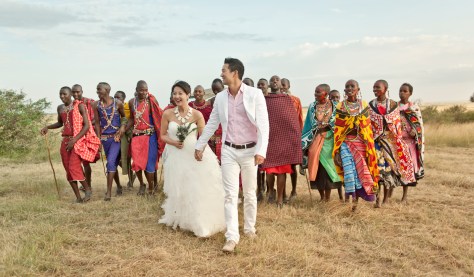





- Some colourful Maasai flavor at your wedding – Porini Lion Camp 📷: Ali “Millzero” Nishan
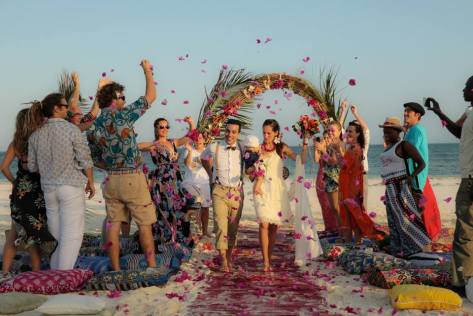
2. Let’s go to the beach 📷: @distantrelativeskilifi
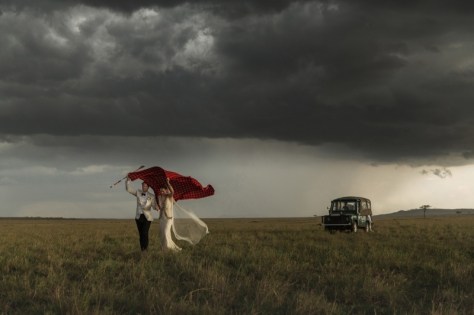
3. It gets so magical at the Mara – Maasai Mara 📷: Jonas Peterson
4. Look at that backdrop… so dreeeaamy – Maasai Mara 📷: Jonas Peterson
5. A runaway bride?….Not! – 📷: Mukima House Laikipia
6. How scenic is this Laikipian backdrop? wedding album should be out of this world 😲 📷: Mukima House Laikipia
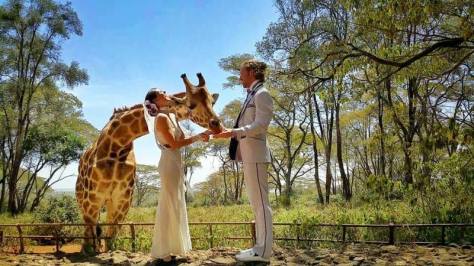
7. This wedding guest though…he/she really wanted to get in on the action 😂 – Giraffe Centre 📷: Cheetah Platt
8. Walk down the isle the Maasai way – Fairmont Safari Club Maasai Mara 📷: ChristopheViseux
9. The bride comes down the dhow steps – Turtle Bay Beach Club Watamu 📷: ChristopheViseux
10. And then there was the dhow wedding – Turtle Bay Beach Club Watamu 📷: ChristopheViseux
Share this:

Jumba La Mtwana: The Mysterious wonder of Mtwapa
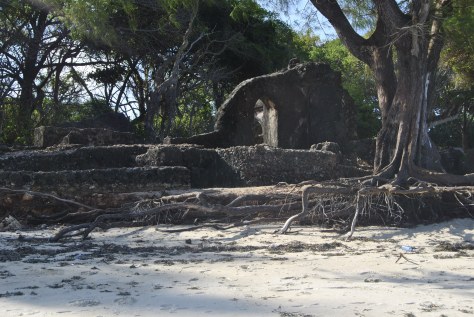
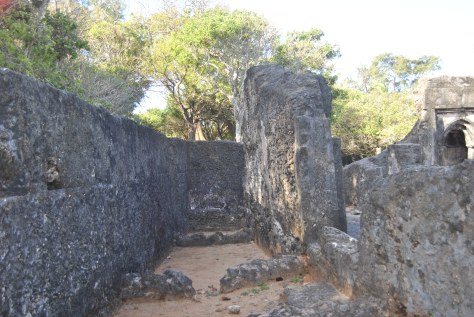
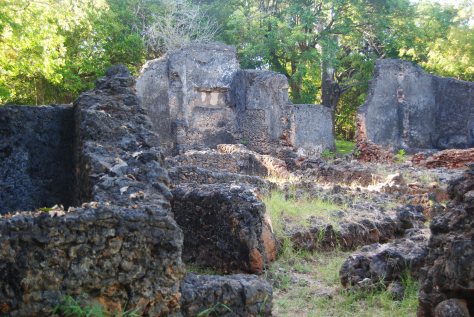
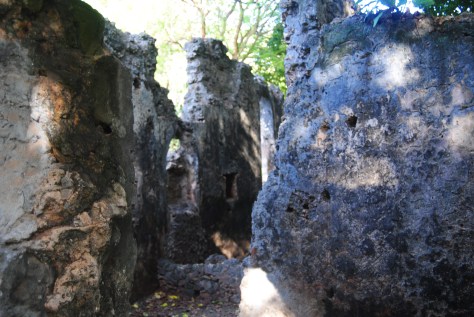
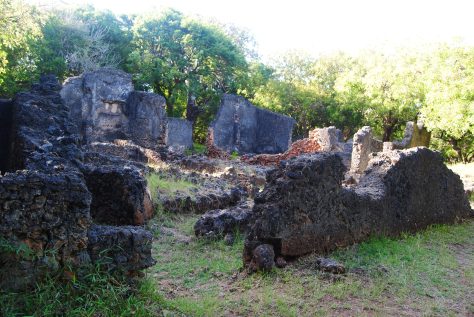
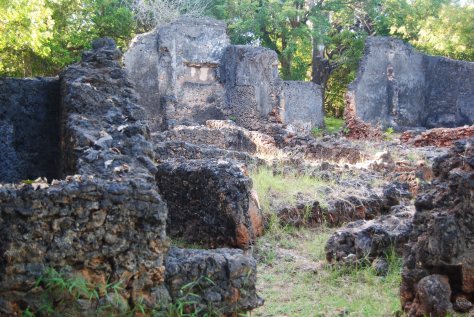
Amidst the upbeat Mtwapa town, it’s almost unbelievable that there remains a place unscathed with the changes and developments taking place around it.

It isn’t exactly clear as to the genesis of its existence and the mystery that shrouds the place is what makes the Jumba La Mtwana ruins ( an ancient settlement with as much archaeological grandeur as the more famous Gede Ruins) even more interesting.

Who built these buildings and to what aim? There are no historical records on the settlement, however given the name Jumba La Mtwana “Large house of the slave”, some believe that the ruins may have played host to the slave trade. This theory however is highly dismissible there being lack thereof archaelogical evidence that suggests that this may have been the case.

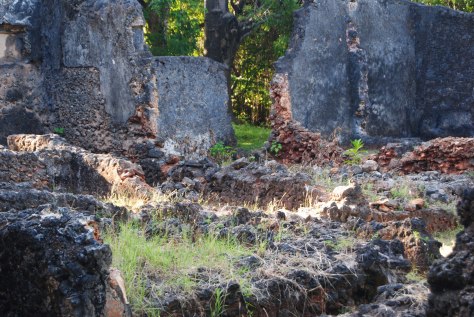
In an attempt to depict the mystery, what is now known of Jumba La Mtwana, has been deduced from the ruins which were excavated by James Kirkman in 1972. The remains of this 14th century settlement were likely built around 1350, inhabited and then abandoned a century later. It is not certain whether ‘Jumba la Mtwana’ was the settlement’s name at the time of occupation. However, one thing that is certain is that the inhabitants were Muslim evidenced by the ruins of 4 mosques, washing platform and water cisterns.
Jumba la Mtwana also known as “Jumba Ruins” was opened to the public in 1973 and was gazetted as a national monument in 1982. It is located approximately 20km (15km north of Mombasa, 3km off the Mombasa-Malindi road, 2.8km on the road leading to the sea at the junction next to Picana factory) north of Mombasa in Mtwapa.

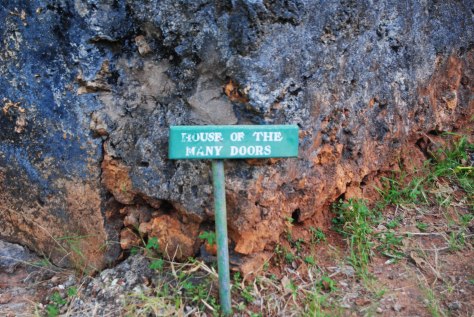
Constitutes of the ruins: Old coral stone walls of 4 mosques, 4 domestic houses (These houses include the House of the Cylinder, The House of the Kitchen, The House of the Many Pools, which had three phases, and the Great Mosque) and a tomb which have survived in recognizable condition situated among huge baobab trees on grassy slopes that descend to the sea. Excavations of the site have revealed numerous artefacts including decorated local pottery and shell beads, imported Chinese and Islamic ceramics, and glass beads.
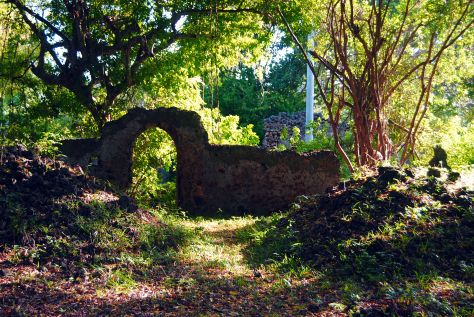
It is very likely that the site’s strategic position was selected because of the presence of fresh water, exposure to the North East and South East breezes which would keep the people cool and its safe location from external attacks by sea since it had no harbor, thus larger vessels had to anchor along way offshore, or move probably in Mtwapa creek.

Seeing as people only subscribe to several theories of its existence, one can only therefore guess reasons for its eventual desertion subject to further research, namely trade interruption, hostile invasion or a failure in water supply.





Share this:

Haller Park: From wasteland to Paradise
The beauty that is now ‘Haller Park’ was once an industrial wasteland. In 1970, one Dr. Rene Haller, took upon him the task of rehabilitating a barren cement quarry whose floor was hard as rock and groundwater saline.
Dr. Haller set out to transform this industrial wasteland into a flourishing natural park, something that was unheard of at the time. His vision; to establish a multitude of plants, providing food and shelter to a large variety of animals.”
Through careful observation of how plants and animals interact, and a series of trial-and-error experiments, Dr. Rene Haller achieved what many had thought was inachievable.
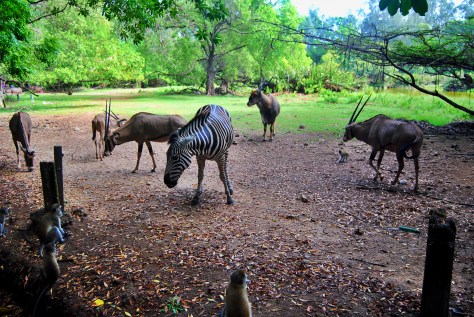
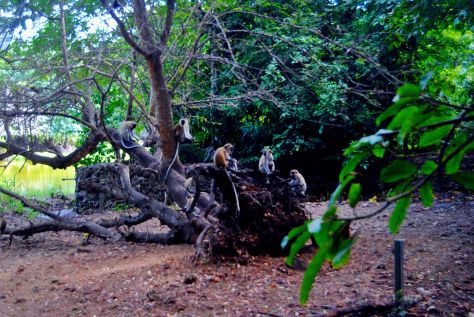
Over 1 million trees planted, and having a range of insects, butterflies, birds and mammals introduced, we now have Haller Park; a serene nature enthusiasts’ haven. Each plant, insect or animal had a purpose to keep the ecosystem in balance. Now Haller Park is a beautiful Wildlife Sanctuary, home to over 30 species of endangered animals and a favorite spot for family time over the weekends.


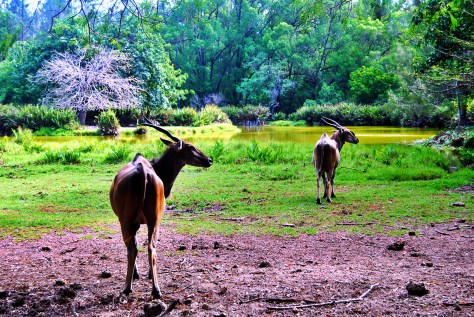

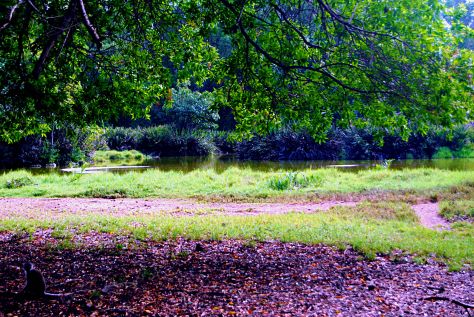


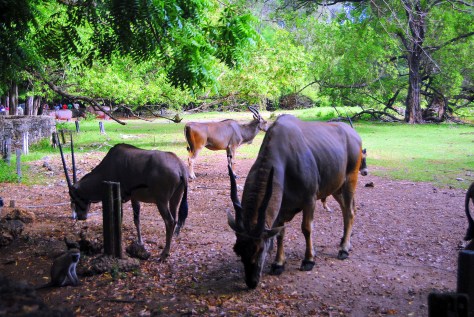
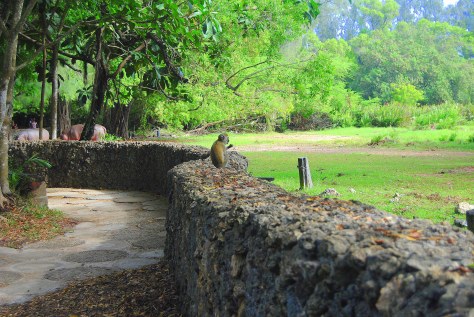
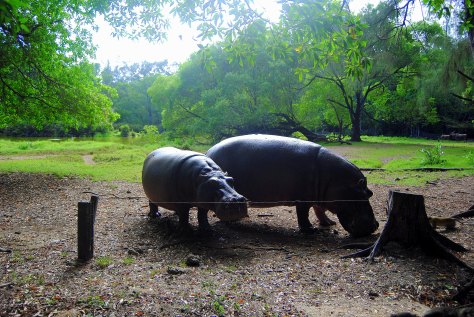


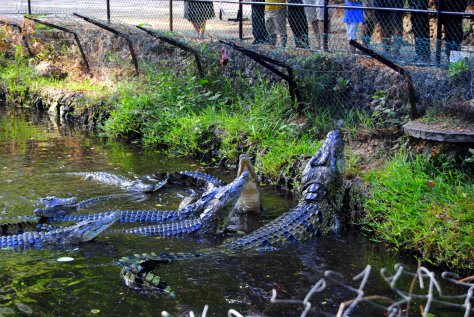
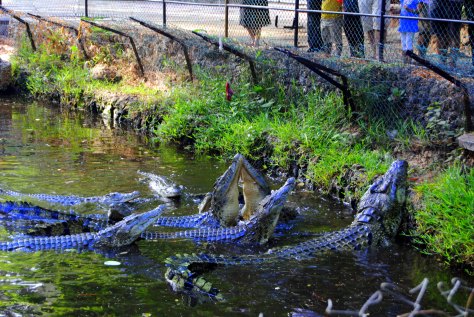

NB: Nearly 100,000 people visit Haller Park every year.
Entry Fee: kshs. 500 per person *subject to change
Share this:

Richard Branson Has Been Everywhere—and Kenya Is His Favorite Place

Through the support of the local Maasai community and Kenya’s President Uhuru Muigai Kenyatta, the entrepreneur, adventurer, and Virgin Group founder RICHARD BRANSON opened a tented safari camp in 2013 in the heart of the Kenyan bush. A recent visit to the camp, Mahali Mzuri, further bore out his reason for establishing it.
“A few years ago I had been told by a friend that the great migration was in danger of being choked by development; I wanted to do something about it, as I truly believe that there is nothing more magical than witnessing the grasslands of the Maasai Mara begin to rustle as millions of migrating wildebeests head for the plains of the southern Serengeti.

“Opening Mahali Mzuri, which means ‘beautiful place’ in Swahili, has given me access to the best wildlife viewing in the world. I recently went with my Uncle Charlie—he’s the ultimate safari partner: full of wisdom and jokes, and has plenty of stories to tell during late-night dinners in the bush or sundowners on our balcony.
“A typical day on safari starts bright and early, at 5:30 am, with a strong cup of coffee before you set off on a morning game drive. Our wonderful guides took us exploring in the bush in open safari vehicles. It’s incredible to be so close to the wildlife in their natural environment; we spotted so many beautiful animals—from leopards to lions, elephants to giraffes—it’s impossible to pick my favorite.

“The camp offers game drives twice a day, but I love to spend afternoons visiting the Maasai villages. On this trip, we visited the village that is only 10 minutes’ drive from Mahali. Our guide showed us around, introduced us to the families, and taught us about how the women of the village build the houses. The children love having visitors, as they have very little exposure to the world outside of their village. Although be warned if you try and take photos: They love to photo bomb!
“After visiting the village, we returned to camp for a relaxing spa treatment and dip in the pool before having a sundowner on the deck. This particular trip was right before I became a grandfather, and Uncle Charlie spent the evening giving me his top tips. We joined all the guests for dinner followed by entertainment from the Maasai dancers, who put on an incredible show. As an honorary ‘Maasai elder,’ it’s my duty to get involved and show them a few moves, too.

“There’s something about Kenya that makes you feel like there’s magic in the air, wonder at every turn, and an ever-present sensation of oneness with nature. I always come back with a clear mind ready to take on my next challenge.”
Do It Yourself
You can witness the great migration of wildebeests, zebras, gazelles, eland, and topi as they pass through Kenya on their way to Tanzania typically from July through November. Mahali Mzuri (mahalimzuri.virgin.com) hosts guests in 12 luxury tents. Prices range from $800 to $1,540 per person per night.
– Janice O’Leary, Source: RobbReport
Share this:


Backpackers, Beaches and a Big Burning man: My Christmas in Kilifi By Calum Warriner
Share this:

#FilmandTravel: 8 Classic Films that will awaken your wanderlust for Kenya
Has a Movie ever inspired your next vacation? With epic adventures and stunning landscapes, have you ever found yourself wanting to replicate what you just saw on the big screen within your own travels?
No?!
With this round-up of some of our favourite wanderlust-inducing films set in Kenya, We’ll have you packing your bags set for an adventure in no time.
Movies about/set in Kenya transport you right into the heart of our amazing landscapes and breathtaking backgrounds. With such fascinating backdrops; films shot in the country, everything from Fiction, Non-Fiction to Documentary; you are guaranteed of absolutely stunning result.
Travel Movie #1. Out of Africa (1985)
Set in the colonial Kenya of 20th century, this is a tragic autobiographical tale of a big-game hunter who has a steamy affair with a Danish baroness and plantation owner. Once you see the lovely reserves and hills of Kenya in this movie, you will leave no stone unturned till you make a trip to this side.
This romantic, beautiful classic is one of the most acclaimed movies of all time. Baroness Karen Blixen (Streep,) a strong-willed Dutch woman, moves to Kenya and starts a coffee plantation in the early part of the 20th century with her new husband (more of a business arrangement than a marriage of love). Her husband heads to war (and takes up with other women) and in his absence she falls in love with a mysterious nomad hunter Denys Finch Hatton (Redford), who falls deeply in love with her too. Africa and the people become her home, as does Denys. Winner of 7 Academy Awards, Out of Africa is a true story…An Absolute MUST See
The story is told in narrative by Karen, as she is now an old woman, thinking back to this time of love, passion, adventure and loss. Meryl Streep, Robert Redford and Klaus Maria Brandauer are masters of their craft as they bring these characters to life. The film was honored with several academy awards including Best Picture(1985),a well deserved Best Director for Pollack, Best Screenplay by Kurt Luedtke, Original Score for the genius of John Barry, and one for the gorgeous Cinematography among others…..Reviewer from Amazon: Laurie from Whittier, CA
Travel Movie #2. Nowhere in Africa (2001)
Both epic and heartbreakingly intimate, Nowhere in Africa begins with a Jewish woman named Jettel Redlich fleeing Nazi Germany with her daughter Regina, to join her husband, Walter, on a farm in Kenya. At first, Jettel refuses to adjust to her new circumstances (she brought with her a set of china dishes and an evening gown), while Regina adapts readily to this new world, forming a strong bond with her father’s cook, an African named Owuor. But this is only the beginning of a series of uprooting, and as the surface of their lives is torn away, Walter and Jettel find they have little in common, and must–under tumultuous circumstances–build their marriage anew.
With incredible skill and passion, Nowhere in Africa manages to bring you fully into every change in this family’s life; it richly deserves the Academy Award® it received in 2002. A powerful, deeply moving film. –Bret Fetzer
Travel Movie #3. Born Free (1966)
Married couple George Adamson and Joy Adamson have long lived in northern Kenya for George’s work as the senior game warden of the region. One of George’s primary responsibilities is to deal with dangerous animals that may be chronically threatening to humans, livestock and/or crops. It is in this vein that George and his staff end up killing a man eating lion and its lioness, resulting in their three young female cubs being orphaned. Although difficult to begin, George and Joy are able to wean and take care of the three cubs, who they adopt as pets. But soon, they know they have to provide a more suitable environment for the cubs, namely sending them to Rotterdam Zoo… that is except for the smallest, who they have named Elsa and to who Joy in particular has become attached as the emotional fighter among the three. As Elsa grows into lioness maturity, George and Joy provide her with greater freedom away from their property, which may get her into trouble as a largely tame animal. Ultimately, John Kendall, George’s boss, directs them to send Elsa to a zoo like they did with her sisters, especially as with anyone in George’s job he is soon being reassigned. Joy cannot bear the thought of Elsa being locked up for the rest of her life, believing that they can reintegrate her back into the wild instead, something that had never been done with a tame lion. John gives them three months to accomplish this task, which most specifically involves getting Elsa to be able to kill for food, other creatures which up to this point she has seen only as fellow playthings, and to be accepted by other lions, most specifically mate with and provide food for a male partner while standing up successfully to female competitors.
Travel Movie #4. To Walk With Lions (1999)
More than 30 years after the Academy Award triumph Born Free moved millions, To Walk With Lions brings you the dramatic continuation of George Adamson’s fight to save Kenya’s wildlife. Together with his young assistant Tony Fitzjohn, Adamson battles to keep the animals on his game reserve “Kora” from dangerous poachers and deadly “shifta” warriors who are determined to destroy rhinos and elephants for their tusks, and lions for their rich pelts.
Academy Award Nominee Richard Harris of Gladiator and Harry Potter and The Sorcerer’s Stone takes you to the wilds of Africa in an inspirational story about one man’s magnificent crusade.
Travel Movie #5. Africa’s Elephant Kingdom (1998)
Africa’s Elephant Kingdom takes you into the heart of the continent and face-to-face with the great elephants of Africa. Featuring spectacular cinematography and the amazing picture and sound quality that comes from giant-screen film, this is the same widely acclaimed motion picture playing in giant-screen theaters worldwide. Africa’s Elephant Kingdom is the story of one elephant clan’s struggle for survival as it travels across vast stretches of land in search of dwindling sources of food and water. Wide and high above Africa, the camera travels over waterfalls, rivers, plains, and forests. Large groups of elephants move across the plains. One comes closer. He is massive, weathered, craggy. He is the Old Bull, our storyteller, and it is through his eyes that the film dramatically unfolds.
Travel Movie #6. Africa – The Serengeti (1994)
There is a place on earth where it is still the morning of life and the great herds still run free. Africa: The Serengeti takes you on an extraordinary journey to East Africa to view a spectacle, few humans have ever witnessed: The great migration. Journey with more than two million wildebeests, zebras and antelopes as they travel over 500 miles across the Serengeti plains…. A MUST SEE
Travel Movie #7. White Masai (2005)
The film White Masai follows the story of a young Swiss girl, Carola, whose vacation in Kenya takes an interesting turn when she becomes infatuated with a Samburu Warrior Lemalian. Although traveling with her boyfriend Stefan, Carola decides to leave him to stay with her new lover. She makes her way to Lemalian’s tribe in Barsaloi where she is welcomed by his people. There, she has to adapt to the Masai’s way of life and get used to their food which includes milk mixed with blood. She also has to face her husband’s attitude towards women and what he expects from a wife. In the long run however, faced with cultural differences, Carola is forced to make an ultimate decision for herself and her daughter.
The film introduces you to the samburu culture and their way of life. This is one of the Kenyan communities that has managed to keep their traditions intact even with the claim of civilisation. You will also definitely enjoy the beautiful landscapes showcased in the movie.
Travel Movie #8. The First Grader (2010)
In a remote mountain village in the Kenyan bush, a primary school is bursting at the seems with hundreds of children who have been given a chance at free education newly promised by the Kenyan government. Perhaps the most intriguing applicant is an 80-something year old veteran Mau Mau tribesman, desperate to learn to read after a lifetime of fighting for the liberation of his homeland. This triumphant story places a humble, elderly man alongside 6-year-old students to learn a skill so many of us often take for granted. This film became an instant inspiration to the Kenyan nation and world, reminding us of the courage it sometimes takes to achieve our dreams. A poignant film with great purpose.
With this movie, we conclude our list of must watch films set in our beautiful country. The number of movies out there however that can awaken your Kenyan wanderlust is endless; so much so that attempting to list them all would be but a tiresome affair.
If you haven’t seen these movies yet, you owe it to yourself to check them out. Don’t go saying we haven’t given you a weekend plan now!!
Share this:

Camping in The Taita Hills – Needle In A Haystack

I am unsure if i should share the fact I drove for 6 hrs over 400km, camped for 2 nights and walked for hours through the Taita Hills to find 3 of Kenya’s treasures that were each about 10 cm long. These are the reasons why you have to be a little bit mad to be a traveller. You need that one screw loose, that one blown fuse, the slight spark of insanity to justify some of the reasons that take you places. But thats just the way travel is, it cannot be separated from the quest of of knowledge; the answer the question “What is over that next hill?”

View original post 996 more words
 Zuru Kenya