Tag Archives: Editor’s Pick

Bush Christmas in the “African Village”: Why Kivuli Camp should be your plan this festive season!!!

Hasn’t this year flown by fast? we certainly think so. There is still a few days to the festivies though and we have just the perfect place for you to spend your December holidays this year.

If you’ve had a rough year and just want a break from it all; just you, your friends/family and some tranquility, nothing says ‘breakaway’ like the village-like Kivuli Camp.
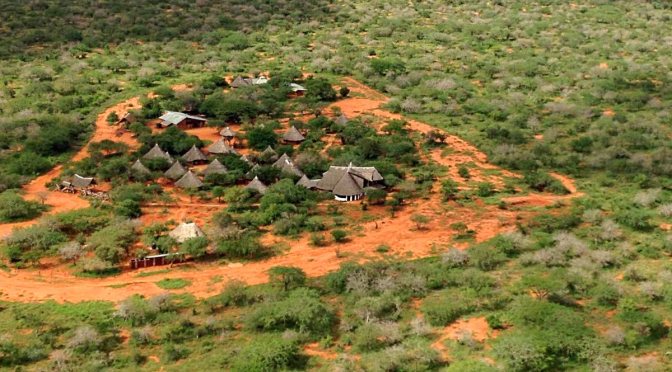
zuru kenya african village

Situated in the heart of Rukinga Wildlife Sanctuary; one of the seven ranches that make up the Tsavo Conservancy, you not only get the intimacy of wildlife viewing unparalleled elsewhere in the continent but also an amazing level of true luxury accommodations, service and cuisine.

Formerly known as Camp Tsavo and before that as the Taita Discovery Centre, the camp just underwent complete refurbishment and so not only can you anticipate a charming accommodation with a new outlook, but also anticipate an affordable experience filled with wildlife, and fun-filled bush activities.

THE LOCATION
zurukenya african village camp

Situated conviniently along the Nairobi-Mombasa highway and just approximately 3hrs away from the coastal towns of kenya, the Kivuli camp experience is perfect for a combination of bush and beach safari (How amazing is that? double fun for you this festive season as you can easily switch up beach for bush for either chrismas or new years’). If safari is not your thing though, the camp can still serve as a transit point for a night’s stopover between Nairobi and Mombasa.

zurukeny african village camp

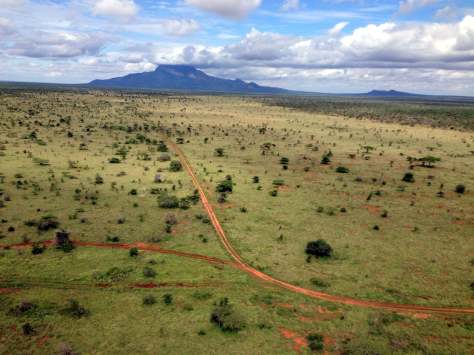
The camp is easily accessible right off Maungu town on your way to mombasa with the entrance point visibly labelled RUKINGA. Nestled  amidst the Marungu Hills in a wilderness of ‘wait-a-bit’ thorns and occasional Baobab trees, you cannot go wrong with Kivuli  in terms of the game viewing experience seeing as the Rukinga plains form the main migratory corridor for wildlife passing from Tsavo East National Park to the foothills of the mighty Kilimanjaro.

Rukinga sign zurukenya african village camp

The camp is the epitome of tranquillity and truly embraces the glorious environment it is blessed to be within. All you hear at night is the sound of the wild: elephants, hyenas and the occasional lion; morning is announced by a swell of bird calls.

How remote? The camp has an airstrip adjacent to it. Arrangements can also be made for one to ride in by motorbike, enter with their pets,  or fly in to the airstrip with private charters.

Getting around: You will need a car, preferably a four wheel drive.

NOTE: When staying at Kivuli Camp, Conservancy entry fees are only paid once, no matter how long you plan to stay! (It can’t get better than this).

THE CAMP

zurukenya african village camp

First things first. Though Kivuli Camp is set up in a traditional African Village model, The nearest community village is quite a distance so do not expect that sort of enviroment within the camp. So no farm animals, or crop land and so on, however if you fancy such an experience and would love to be immersed in community life while here, village visits can be arranged.
zurukenya african village camp

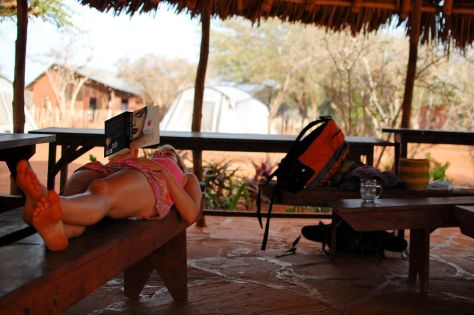
The Camp’s setting not only affords you utmost privacy and tranquility, but you are able to experience the real African bush, sleep underneath the star-filled sky, explore the fauna and flora up close whilst on bush walks or enjoy a cold Tusker whilst watching the beautiful sunset on top of one of the conservancy’s hills!

ACCOMMODATION

zuru kenya african village camp

You’re spoilt for choice when it comes to accommodation at Kivuli Camp. Camp in your own tent, sleep in bunk beds or in private rooms. The establishment can accommodate individuals, families as well as large groups.

You have the option of a Family banda, which is a  thatched hut containing one room with double bed, one room with twin beds and a bathroom shared between the two rooms.

zurukenya african village camp

zurukenya african village camp

zurukenya african village camp

If camping is more your thing though, Kivuli’s shady Kudu campsite will have you set in your own tent under a tree. The  campsite offers clean communal flushing toilets and showers.

zurukenya african village camp

You also have a more cheaper option for the backpackers at heart in the dormitory bandas. These thatched huts contain 4 wild wood bunk beds and guests staying in these bandas have access to communal bathrooms (these are separate for ladies and gents, one drawback though: the bathrooms have sheer curtains in place of doors; not the most privacy one could hope for).

zurukenya african village camp

zurukenya african village camp

PRIVATE HOUSE

Ndovu_House Zuru Kenya african village camp

If the accommodation options above don’t suit your needs and you would rather just a private space for you, your family or friends, fret not! Kivuli Camp has just the place for you; NDOVU HOUSE


zurukenya village african village camp

Although part of Kivuli Camp, guests staying in this house have their own private access and move independently of the other accommodation spaces.

Ndovu_entrance

This beautiful breezy four-bedroomed house with an upstairs lounge offers a great view over the Tsavo Conservancy and sleeps 11 people. So quiet, so private, so unique!

zurukenya african village camp


zurukenya african village camp

zurukenya african village camp

zurukenya african village camp

ndovu house bedroom 1

zurukenya african village camp

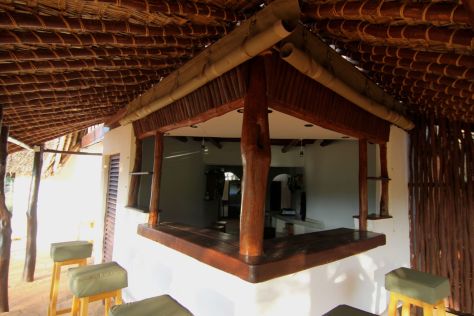
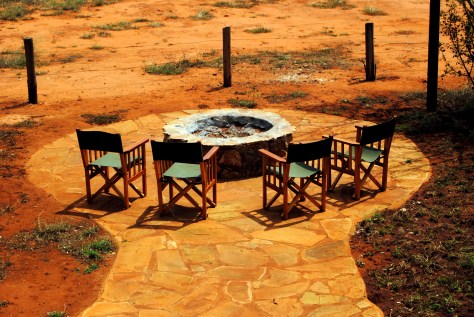
The design of the house puts a lot of consideration into comfort and convinience  what with an open kitchen connecting to an outside bar and fire pit. The perfect place for a family or friends getaway. so much bliss!

ndovu house kitchen 1

ndovu house kitchen 2

zurukenya african village camp

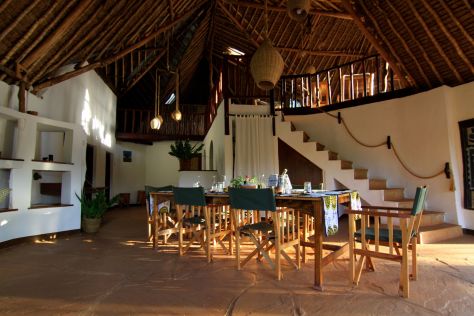
The house is very airy and adapts an open space plan built with a lot of natural materials; flours of Galana stone, a lot of wood and an impressive makuti roof. The dining of the house is completely open to the garden as well. Being in the wild though, you don’t have to worry about the open-plan design of the house as kivuli camp has a fence surrounding the area to keep wildlife out.

ndovu house open dining

Guest Access: While staying at Ndovu, you will have access to the house in its entirety. That is the dining area, kitchen, upstairs lounge, four en-suite bedrooms and a large garden equipped with a  bar and fire pit.

ndovu house lounge 2

ndovu house lounge 1

zurukenya african village camp

zurukenya african village camp

zurukenya african village camp

Room Service: Um, no, the accommodation is set up to be of self-service however there is a staff who make  beds and clean every day. If you would rather not make your own meals during the stay, a cook can be provided at a small fee.

Amenities: I would like to think that setting out on a bush safari,  this would be the least of your concerns. Kivuli Camp is about experiencing the African wilderness — its game, its birds, its flowers, its dazzlingly night sky — in its remotest, wildest and most beautiful sense.

The Best Spots:

The hills around the conservancy are definitely something to look forward to for great sundowners and breathtaking views of the African wild.

zuru_kenya_view african village camp

Being more of a private conservancy, with very little traffic, the animals here are not very accustomed to cars and thus tend to run when you get closer (hint: try to be as quiet as possible). With various watering points in the area, your best bet is to catch the animals playing with mud or cooling off on a hot day.

zurukenya african village camp

HIGHLIGHTS

Kivuli Camp unlike other camps is guaranteed to up your game-viewing experience with a one-of a kind ultimate discovery game drive vehicle (eerm truck!) famously known as Beba Kuu. Nothing will skip your eye with this ‘little’ thing.

beba kuu zurukenya african village camp

With the 1962 French ‘Berliet’ Truck, seated at height under a canvas cover, you can spot wildlife even from the longest distance.

zurukenya african village camp

While at the camp you can also visit the Tsavo East and West National parks for more wildlife viewing  experience.

Tsavo Discovery Centre: This is a specialty education centre that hosts schools, universities and youth groups for overnight educational programmes at Kivuli Camp. The Tsavo Discovery Centre is equipped to teach an abundance of subjects related to conservation, biodiversity, community and much, much more. Here you will find a laboratory with field exhibits, museum collections, and an education centre for meetings and classes.

zurukenya african village camp

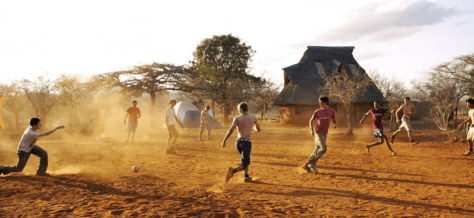
Moreover, if you fancy a community living experience, Wildlife works has many community projects that you can be part of or visit e.g the Basket weaving women at Kasighau and so on.
zurukenya african village camp

Bottom Line: There are many interesting things to explore around the camp itself, that I guarantee you’ll end up having very little time to experience it all.

Nitty Gritty:

  • Main area with reception, loung/library, dining and fire-pit
  • Communal showers and flushing toilets, a kitchen and a laundry area
  • Generator power from 6pm to 10pm, phone charging possible from a solar lighting system 24hrs.
  • Phone signal available in certain areas of the camp. Internet available in the evenings

Contact us for enquiries on Kivuli Camp.

Minnesota photographer’s images of Kenya’s “Action for Children in Conflict” featured in the 4th edition of PWB magazine

November 1, 2015, Photographers Without Borders will launch the 4th edition of their self-titled magazine. Featured in the magazine is a photo documentary story by Jenna Ammerman, a photographer who travelled to Kenya to document the impacts of an NGO called Action for Children in Conflict. This organization visualizes a world having equal and sustainable opportunities for every child through appropriate interventions to give communities, in Kenya, the capacity to protect the rights of children and youth. Ammerman collects, shares memories, and photographs the lives of bright souls and strange friendships where ever she goes.

Photo of Jenna Rae Ammerman 
Photo of Jenna Rae Ammerman; source – PWD

Photographers Without Borders (PWB) will launch its fourth issue of magazine on November 1, 2015. The magazine features significant and positive changes done by grassroots charities and NGOs to communities across the globe.

Founded by photographer/director Danielle Da Silva in 2009, Photographers Without Borders is a non-profit organization in Toronto that aims to make a difference through photography.

Photographers Without Borders® (PWB) visually communicates ways that grassroots initiatives are addressing global issues. They cover the stories of grassroots initiatives all over the world who contribute to sustainable development and conservation. The original images that PWB photographers produce are donated to the initiative being documented so that they may better visually communicate their stories.

The magazine will be available for purchase November 1st here: http://www.photographerswithoutborders.org/pwbmagazine
Ebook is also available in Apple’s iBook store:
http://itunes.apple.com/ca/book/id1050044517

Why Wildlife Works: The Kasigau Corridor REDD+ Project

Communities living alongside national parks face numerous problems trying to co-exist with wildlife. Farmers have to take turns all day guarding their plantations from baboons who steal their food. Elephants stampede through their crops. The animals are also under stress, as humans encroach on their habitat.

This type of human-wildlife conflict is what led to the establishment of Wildlife Works to help mitigate the competition for land and food between locals and their park neighbors in Taita Taveta County. The Founder, Mike Korchinsky a Canadian citizen, learned about the conflict that existed between wildlife and rural communities during his visit to the country in 1996. His experience caused him to think about effective ways to solve this problem which ultimately led him to developing a plan that would ensure the utmost protection of wildlife.

Wildlife Works, based on the principle that the needs of wildlife must be balanced with the need for work for the local communities who share the same environment, established that the ultimate solution to this problem would be to create jobs; to provide forest and wildlife friendly economic alternatives to the forest community.

Mike looked for an area with a high threat to the wildlife to best test his new model. He settled on Rukinga Sanctuary, located south-east of Kenya in a wildlife corridor between Tsavo East and Tsavo West National Parks, known as the Kasigau Corridor. The project was to be carried out on 13 group-owned ranches and conservancy land owned by Indigenous Community Ownership Groups.

According to Wildlife works, Job creation would not only be providing the people in this wildlife rich area with sustainable economic alternatives to poaching and slash and burn agriculture; it would also in turn be protecting wildlife in a direct and unique way.

“The only way to protect a forest that’s under economic threat is to remove the economic threat. And the only way to do that is to give the community another way of achieving their goals because they’re not going to not develop.”
-Mike Korchinsky; Wildlife Works Founder.

Why Wildlife Works:
Wildlife Works is the world’s leading REDD+ (Reducing Emissions from Deforestation and Degradation), project development and management company with an effective approach to applying innovative market based solutions to the conservation of biodiversity. REDD was originated by the United Nations (UN) to help stop the destruction of the world’s forests – a significant tool to providing real value to those rural communities who have made the commitment to protect their environment for future generations. The additional plus sign in the Wildlife Works’ business model (REDD+) signifies that community development is one of their key goals.

There are six key elements to the Wildlife Works brand of REDD+ that make it a successful model, the foundation of it all being job creation.

Organic Clothing Factory

Wildlife Works factory view from above
Wildlife Works factory view from above Source: Wildlife Works

The starting point of the wildlife works’ viable economic alternative project was setting up an eco-factory that produces organic casual apparel under the Wildlife Works label, sold worldwide by big brands among them Puma. All garments are carbon-neutral and made from organic and fair-trade cotton. The eco-factory originally hired seven local women but has hugely grown now and is responsible for over 80 employees; all members of the surrounding community. The factory has gone a long way in providing a sustainable alternative to destructive harvesting.

Agricultural intensification

wildlife works green house- why wildlife works zuru kenya

In order to assist the local communities in their move away from subsistence agriculture and deforestation, Wildlife Works has established an organic greenhouse, in addition to multiple nurseries with more in development. The nursery grows citrus trees and agro-forestry species such as Neem and Moringa oliefera to meet farmers’ medicinal, nutritional and fuel wood needs.

Each nursery, which employs approximately five people, is responsible for working with their immediate community to plan and implement the crops, while Wildlife Works provides training. In addition, the nurseries are building a business around Jojoba planting. The oil from Jojoba seeds is quite valuable and is used in the cosmetics industry and as biodiesel fuel. Community members are raising the plants in the nurseries to later plant and harvest. Wildlife Works on the other hand will assist in providing market links for the farmers to sell the seeds.

The local population’s need for farm land has also been addressed by the establishment of a land cooperative on 5,000 acres. The land set aside for the cooperative is land that had been cleared before Wildlife Works began its work.

Forest and Biodiversity Monitoring
Physical protection of the land in which the REDD+ project is set up is vital. The Kasigau Corridor REDD project is protecting 200,000 hectares (500,000 acres) of dryland forest which is under intense threat from slash and burn agriculture, as the local population expands. The Kasigau Corridor project is also home to five mammal species that are considered endangered, vulnerable or threatened: African elephant, cheetah, lion, African hunting dog and Grevy’s zebra.

To prevent illegal access into the project area and to ensure that the land is protected from deforestation, Wildlife Works has established several ranger stations around the project areas; each station with 8-12 rangers, recruited and trained from the local communities.

wildlife works rangers-why wildlife works zuru kenya
Image source: tripllepundit.com Photo Credit: Geoff Livingston

Working with a no-gun policy – but with the power of arrest granted by the local community, the Wildlife Rangers have received a lot of skepticism on whether or not they are fit to protect wildlife in their sanctuary especially considering the current Ivory poaching crisis in the country’s National Parks; an alarming number of elephants are losing their lives to poachers and Rukinga Sanctuary has not been spared either. Despite the fact, even with larger elephant populations, Mike believes his rangers fare well as any because they have such a strong relationship with the local communities who inform them of the comings and goings of possible poachers. They have the best intel based on the work they do with local communities.

Wildlife Works has also forged a good relationship and works side by side with Kenya Wildlife Service (KWS) rangers who are armed with a shoot to kill policy, trained in combat, and who are permanently stationed within the sanctuary. Whenever there is an armed poaching incident, Wildlife Works’ rangers are trained to avoid any confrontation until they have KWS armed support, and even then they are not supposed to be in harm’s way if shots are fired. Over the course of 18 years, there has been only one incident where these rangers were fired upon.

There are nearly over 80 rangers in total employed by the project currently.

Reforestation

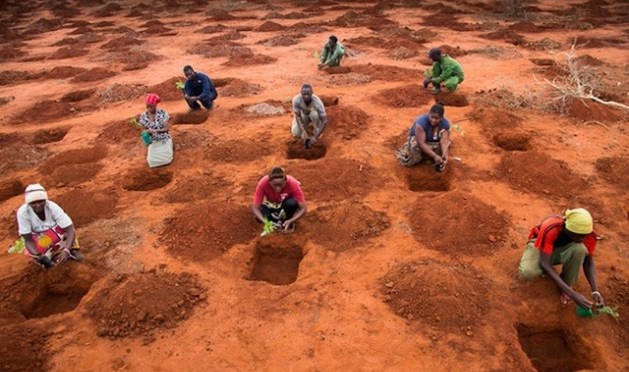
An additional activity of the project is a three year reforestation project on the slopes of Mt. Kasigau to plant 20,000 indigenous hardwood trees. These trees are not included in the emission reduction calculations, but it is a valuable initiative to help replace trees cut down for charcoal production and construction over the past years. The community members involved in the monitoring and implementation of the project are rewarded financially for helping to ensure its permanence.

Deforestation continues significantly in the area adjacent to the project today, illustrating that, in the absence of the project, this activity would still continue within the sanctuary.

Eco Charcoal and Fuel Wood
Charcoal burning is one of the activities carried out for economic sustenance in Taita Taveta County. In order to avoid wood being taken from the project area in an unsustainable and ecologically damaging way, Wildlife Works has initiated an extensive project to explore the large scale production of carbon neutral charcoal derived from bush trimmings, allowing the local community to be self-sufficient in fuel wood without having to degrade any of the land.

Social benefits: School Construction and Bursary Scheme
Prior to Wildlife Works arrival, the area in which the project is carried out had no schooling facilities or necessary amenities to ensure children gain a good education. Thanks to the project, they have already built 18 classrooms throughout the district and a partner has established a bursary programme which has sent dozens of children to high school. A plan is in place to send at least five new students a year through four-year secondary school programmes and on to college or university. A school construction and maintenance fund will provide funding every year to seed school construction and maintenance projects in the area.

why wildlife works zuru kenya

Wildlife Works is also working on extending access to fresh water to the locals who previously had to send their children up to 15 miles to retrieve water several times a day. They have implemented a clean water supply for the schools using an innovative rainwater catchment system and manual rower pump to allow the children to retrieve the water for themselves from underground storage tanks.

why wildlife works zuru kenya

Prior to Wildlife Works, the migration corridor had been lost to poaching and encroachment before the area residents were engaged in consumer powered conservation. Wildlife Works sees empowering local people with sustainable livelihoods as the key to protecting the forest in the long-term, and with these projects, the link between better livelihoods, conservation and wildlife works is clear.

The foundation was about finding solutions that lead to mutually beneficial co-existence. The work here has led to people being more enthusiastic and supportive of conservation, and has demonstrated that people can live alongside wildlife while developing sustainable livelihoods. The local communities want to protect the environment because it works for them, hence the name Wildlife Works.

In total, Wildlife Works today provides over 400 jobs to the local community and brings the benefits of direct carbon financing to nearly 150,000 people in the surrounding communities.

Make a Rhino, Save a Species

Saving the northern white rhinos isn’t just about species conservation, it’s about safeguarding wild species for future generations. We, therefore, remain committed to saving this species no matter how long it takes.

Make a rhino_funddescription

We want to raise £0.5m ($0.8m) to develop the IVF techniques needed for a new generation of northern white rhino to be born.

GoFundMe will make currency conversions or you can use our  USD Paypal account here.  For press enquiries, please contact elodie.sampere@olpejetaconservancy.org , +254 727 341 612
or jan.stejskal@zoodvurkralove.cz , +420 608 009 072

On Monday, July 27th Nabiré, a female northern white rhino at Dvůr Králové Zoo in the Czech Republic passed away. With the sad and recent deaths of Suni and  Angalifu since the end of 2014, there are now just four northern white rhino left in the world.  It could be the end of a species.
Credit: Khalil Baalbaki/ZOO Dvur Kralove
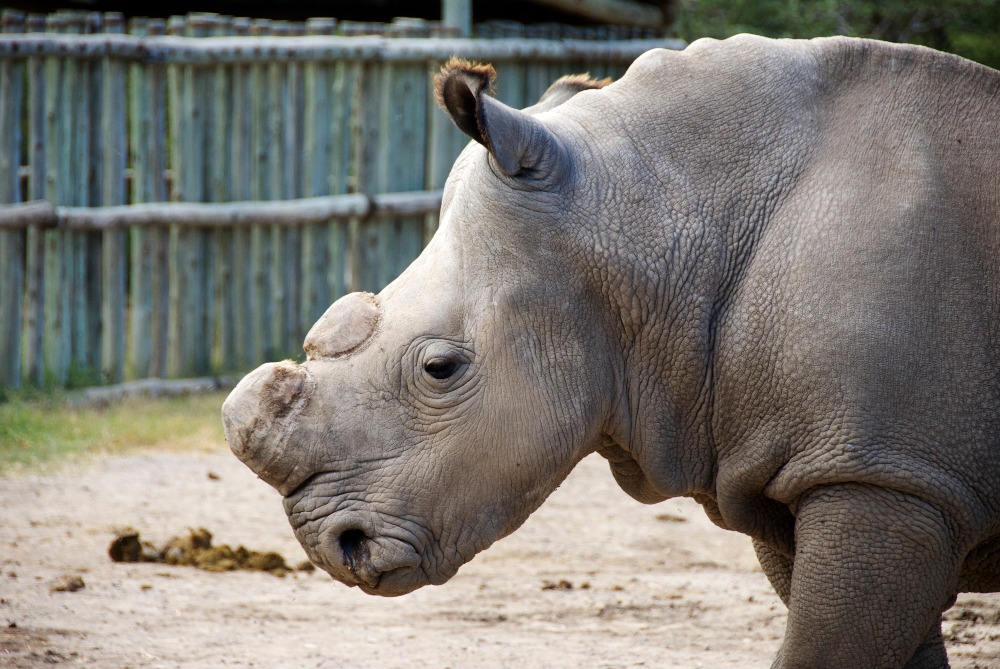
Sudan (named after his birth-place but living in Ol Pejeta Conservancy, Kenya) is the last northern white male in existence, and at 42 is in advanced old age for a rhino.  The chances of him successfully mating are close to zero.
Credit: Ian Aitken

The only hope now is to develop assisted methods of reproduction to allow new northern white rhino calves to be born.  Given the age and reproductive health issues that affect the remaining females, we are exploring in vitro fertilization and an embryo transfer. We aim to combine eggs from the remaining females with stored northern white sperm to create embryos that can be carried by surrogate southern white females.

This has never been successfully carried out with rhinos before.  It will be costly – we are working towards £0.5m (approx. $0.8m).  It could take 12-36 months of research to develop the new techniques required. There are no guarantees of success.  But if we are successful, we will save a species.

You might well ask:  “Why bother?” or “Most species have gone extinct over time, what’s the problem?” or  “Couldn’t this money be better spent on other threatened species, including black rhino?”

We wish we could give you the ultimate answer but beyond sheer, inspirational beauty, the maintenance of global biodiversity and the chance to see wild rhinos roaming free in central Africa at some stage in the future, we can’t.
Credit: Erico Hiller

However, when you consider the value of this magnificent species please consider:

£0.5m (approx. $0.8m) to save a species for now, for your children and for your children’s children…

Versus the same amount to buy…

16 m2 of real estate in Monaco (172 square foot), or
62,500 space hoppers, or
One Lamborghini, or
43 Methuselah bottles of 1990 Cristal Brut Millennium cuvée , or
5 and a bit, Supercharged Range Rover SVR Sports, or
Half of an Xten, Pininfarina designed office chair

Please see foot of this page for links to sources.

Feel free to share in your comments any more crazy comparisons as to how £0.5m ($0.8m) could be spent compared to saving a species.

Please contribute and help us make a new baby northern white rhino. Any and all funds raised here will go directly to the northern white rhino programme.

For more information please contact Richard Vigne, CEO of Ol Pejeta Conservancy, or Jan Stejskal, Director of International Projects at Dvur Kralove Zoo, by simply posting a message to this Go Fund Me page.

——-

Important information:

There is no guarantee of success.  We could spend this money and fail.  But we hope that you will agree that it is worth trying.

Even if we do succeed it could take us much, much longer than the time frames we are hoping for as outlined above.

We estimate that we need to raise £0.5m (approx. $0.8m) before fees to make this work but we could be wrong – we could need more and would continue fundraising.

Should any funds remain after success or failure, then the committee set up to safeguard the northern white future will reinvest those monies into protecting the world’s remaining rhino species.

The northern white rhino programme is administered by a committee comprised of the Kenya Wildlife Service, the Ol Pejeta Conservancy in Kenya, Dvur Kralove Zoo and the Ministry of Environment in the Czech Republic, and Back to Africa with support from Fauna and Flora International and the Lewa Wildlife Conservancy.

The northern white rhino is technically recognised as a subspecies by IUCN AfRSG. For simplicity we have chosen to communicate this campaign under the banner of ‘Save a Species’ in recognition that northern white rhino genetics are uniquely adapted to their habitats and are subsequently irreplaceable and we believe invaluable.

This campaign has been set up by Robert Breare and Jan Stejskal. Robert is Chief Operating Officer of Ol Pejeta Conservancy, home to three of the last four northern white rhino. Jan is Director of International Projects at Dvur Kralove Zoo, owner of all four remaining northern white rhinos. Their identity can be confirmed by checking out LinkedIn here  and here  or staff pages on OPC  or DK Zoo website .  GoFundMe also runs extensive verification checks.

Sources:

Banner image: Credit Jan Stejskal

http://www.gofundme.com/makearhino

Square Metre Prices- Monaco Compared to Continet

How would you change the world with half a million pounds?

10 Irresponsible Ways To Spend $1 Million In One Day

Christie’s Auction Results

Landrover UK Pricing and Specifications $1.5 Million

$1.5 million Xten Office Chair by Pininfarina

Craft Beer Guide to Kenya

If you are a beer lover, then you are probably aware of the craft beer movement that is currently taking our country by storm. Although the said trend hasn’t been around for very long, production of craft beer has seen tremendous growth in Kenya over the past few years and is gaining skyrocketing popularity, at least in Nairobi.

The first African country to see the onset of craft beer brewing was South Africa. It has to date, with over 120, seen nearly as many craft breweries as those in Czech Republic crop up. Most of these popped up within the last ten years, hinting to the rest of the continent that this kind of brew is here to stay.

But what exactly is craft beer?

Beer Enthusiast Jonathan Gharbi, author of “Beer guide to vietnam and neighbouring countries” who travels for beer tells us more about craft beer and his experience with Kenyan craft beer breweries during his visit to the country. His blog www.beervn.com is about Vietnam where he visited 45 microbreweries. He is soon to start a new blog that will cover African breweries and beer culture in the continent starting with Kenya.

Zuru Kenya Jonbeer
Author of “Beer guide to vietnam and neighbouring countries” Jonathan Gharbi

ZK First off, Karibu Kenya! Hope you are enjoying your visit?

JG Thanks. I do like it here, the climate is perfect, not all agree but for me it is. There are so many nice beers too, so I am happy.

ZK So for those who are not familiar with this kind of brewing, what exactly is Craft beer?

Zuru-kenya-Beer-guide

JG Craft beers, unlike industrial beers which are produced on large scale are beers made in small batches, for local customers only. The Craft brewers focus on creating a flavorful, high-quality beer which in most cases is very different from the mass-produced beers like Tusker, white cap, Heineken, Carlsberg, and others which most Kenyans are familiar with.

When you drink a hand-crafted or “craft” beer you are enjoying a fresh, natural beer made using time-honored methods with a lot of passion poured into it.

ZK There’s a tendency to assume that a craft beer must be better than a mass-produced beer, how true is this, are these beers better?

Zuru Kenya craft beers

JG Craft beer like wine is about flavor and taste. Sometimes to keep costs down, mass producers may substitute their ingredients or speed up the fermentation process with enzymes that make a beer concentrate of sorts. Handcrafted beer on the other hand, is produced using only the best ingredients and brewers do not cut corners in order to lower cost of production.

So yes: Craft beers are more delicious and flavorful as the brewers spend time focusing on the quality of their beer. With this choice of drink, you are sampling distinctive full-bodied taste and aroma achieved by interpreting traditional styles with new twists. Lagers like Carlsberg, Tusker, white cap and others on the other hand, tend to be pretty bland stuff, aimed at the broadest possible range of tastes…thin body, short aftertaste, no flavors. You need to keep in mind though that some beer lovers just want to enjoy an alcoholic drink and don’t pay much mind to taste and flavor.

ZK Having sampled the craft beer spots in Nairobi, which one would you best recommend and why?

JG I was able to visit three craft beer spots; Sierra Lounge, Brew Bistro and the newly launched, Sirville brewery.

Zuru-Kenya-sirville-brewery
The newly opened Sirville Brewery and Lounge in Galleria

If you want a change of scene from the all too common lagers, begin with a tasting at sierra lounge, Yaya Shopping Mall. Owned by Ozzbeco, Sierra is a larger scale craft brewery stuck between craft and industrial beer. They make tasty beers and occasionally offer seasonal beers. Once or twice a year they offer special brew such as the german styled Maibock.

Brew Bistro located at Piedmont plaza, Ngong Road is a more typical craft brewery. This small scale brewer produces 1000 litres of brew at a time using 5 kinds of hops and malts. The pub provides a variety of beers each with its own description and story.

zuru kenya sirville beers

The third spot, newcomer sirville brewery, opened late last year in Galleria shopping mall has a typical microbrewery set in the same size as brew bistro’s. Being new in the market, the lounge is still testing the waters with different kinds of beers trying to find their clients’ tastes so you won’t really get much of craft beer here.

To answer your question on which one I would recommend, I like brew bistro because of their variation of beer. However I think sirville is exciting because they are new. Sierra on the other hand is very big, with good beer but not much charm.

ZK Tell us more about these breweries…

zuru-kenya-sirville-brewers

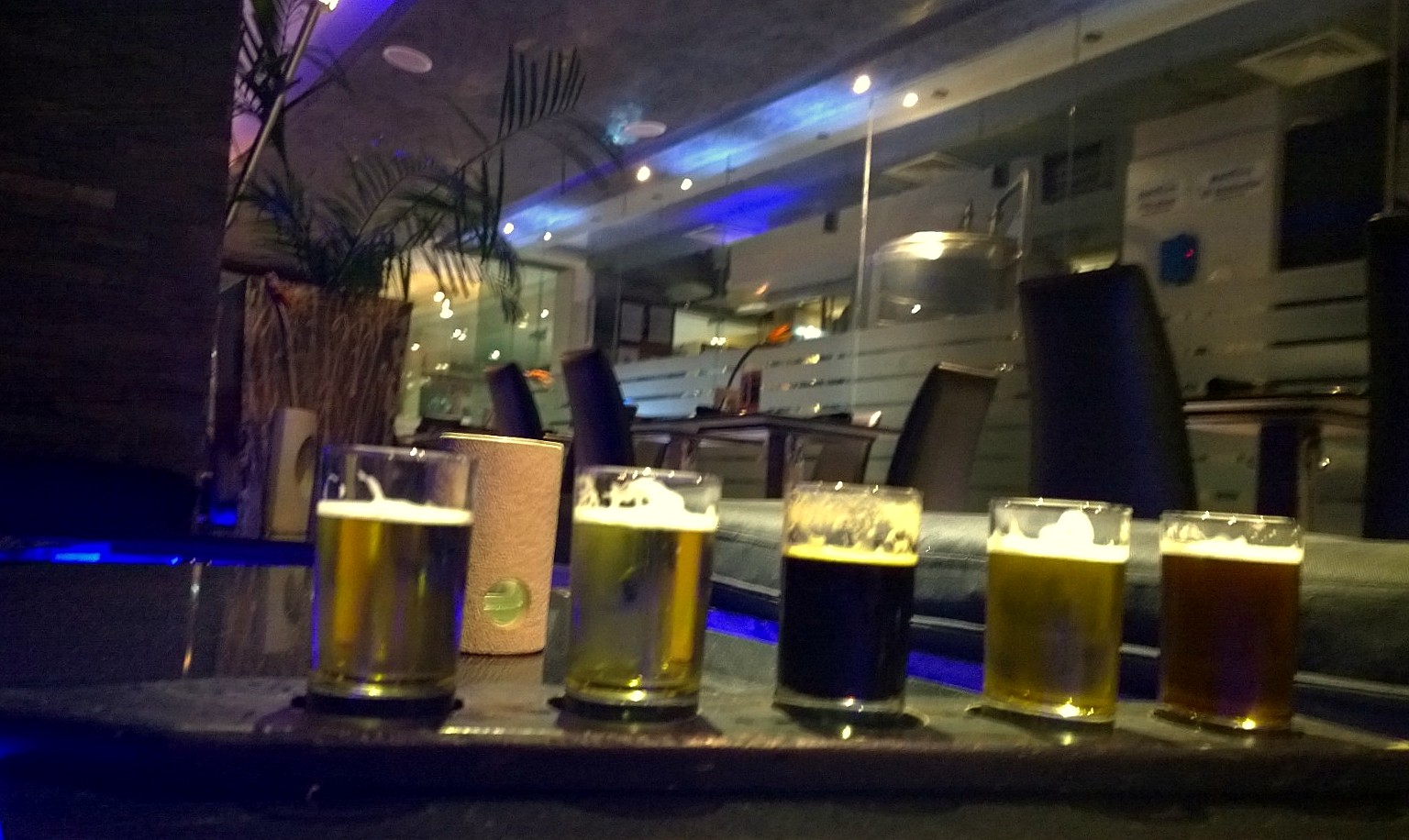
JG Sierra, which is the first craft brewery in the country, went from a small boutique brewery to a more industrial one with a capacity of 2 million liters a month and that Journey in less than 10 years. Beers here are sold on tap as well as cans and bottles. The lightest in their range is platinum and then follows Blonde, Amber and Stout.

Brew Bistro opened in 2009 is the most popular spot among beer lovers today. This brewpub has a good spectrum of beers that are only available on tap with the brewery placed just in the middle of the bar. The pub has a variety of special beers made with a traditional crafty approach. They also sell a wider range of malt and hops.

Though just recently launched, Sirville Lounge uses the most experienced brewer you can find in Nairobi with 30 years in the business and five years at Brew Bistro. Since it’s still new, beers at the brewery are adopted and not as bold yet. However starting July 2015 Sirville will brew Stout which is promising and as soon as more beer enthusiasts come in, the beers at the lounge will also change. Today they have four beers on tap, all made in the small microbrewery.

ZK What beers would you recommend to other beer lovers from the three craft breweries?

zuru-kenya-craft-beers

JG Sierra Lounge offers Sierra Platinum and Sierra Blonde which are not craft per se, just more industrial. Their beers Amber and Stout however, are for sure craft and worth trying out.

At Sirville, Amboseli Bitter is your best bet. With good body and a nice finish, you will feel some fruity notes in it.

My favorite at Brew Bistro was definitely the Stout; very tasty with coffee notes and a good finish.

ZK Other than craft beer, what other Kenyan beers have you been able to sample and how do they compare to other beers you’ve had in other countries?

zuru kenya craft beer guide

JG I find that Kenyan beer is like any other beer in the world. Miller lager and miller light in the US, Carlsberg in Denmark, Tiger from Singapore, Hanoi beer from Vietnam, Bitburger from Germany, all are similar to Tusker, Tusker Lite, White cap, Pilsner and Summit Beer.

ZK Finally, how would you rate the craft beer breweries you visited while in town?

zuru-kenya-craft-beer-brewers

JG Brew bistro is the established and most international styled craft brewery. Servile on the other hand being new is yet to get a clear identity. It does however offer both local traditions and a strong craft beer culture.

Sierra brewery does not have a brewpub which is very sad. They also produce international lagers such as platinum so the risk is that they may soon stop making craft beer and just do international styled lagers at a huge scale instead.

Summary: I like sirville because they are new and open to ideas however Brew Bistro offers you a wider range of craft beers and the best experience. Sierra falls short since they are one foot in the craft beer culture and one foot in the industrial beer market offering thin and boring lagers.

zuru kenya sierra beers

Craft beer is a wide spread trend and like wine, it’s just a matter of time before people start choosing their beer for taste and flavor, and not bottle brand.

One of the coolest perks to drinking craft beer is that you actually get to meet the individuals brewing your favorite drink. What’s more, with craft beer; you are not stuck with the same boring, flavorless, thin-body beer all year round. Each craft beer pub that exists provides you with different brewing styles, special recipes and ingredients as well as different brewer perspectives. Every brewer makes their own beer, in their own special way.

With so many exciting craft beer pubs popping up all around the city, beer enthusiasts are getting a taste of fresh, local creative beer…no more bland stuff! If you haven’t yet, I dare you to give it a try. Who knows? you might even trade in your favorite lager. Oh and good luck in trying to find just one favorite beer.

To follow Jonathan Gharbi on his beer adventures: www.beervn.com Photos credit  ~Jonathan Gharbi

Hemingway in Africa

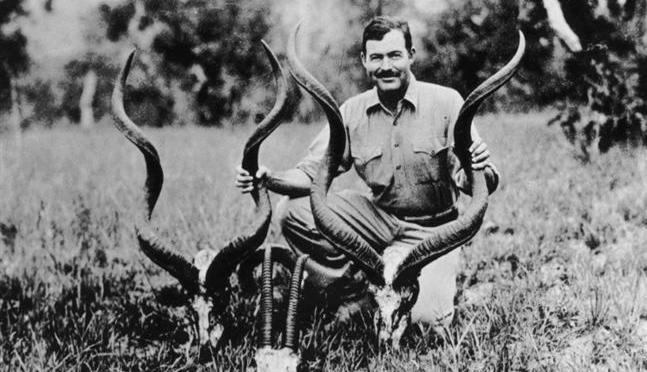
The legendary American writer Ernest Miller Hemingway (1899-1961), winner of the Pulitzer and Nobel prizes,  was probably the one introducing the word ‘safari’ to the English language. Hemingway traveled in East Africa two times in his life and the experiences gave him material for several short stories and novels. The remarkable personality of Hemingway also contributed to the image of the Great White Hunter. He was probably not the greatest of hunters but he had a true love affair with the hunting experience, the nature and wildlife of Africa. Without learning the Swahili language he also managed to have some understanding of the Kenyans, which was far from common at that time.

“All I wanted to do now was get back to Africa.  We had not left it yet, but when I would wake in the night, I would lie, listening, homesick for it already.”

First Safari

From early in his life Hemingway traveled more than most people at that time. He had an enormous appetite for adventure, war and danger. That gave him a chance to show of the macho image he was creating for himself all his life. The first visit to Kenya and Tanganyika was in 1933 with his second wife, Pauline. He was probably a bit bored at the time seeking out new inspiration. Early on the safari Hemingway was sick with dysentery. He stayed several weeks in Nairobi where he met other adventure seeking men from Europe and America. One of them was Bror Blixen, the husband of Danish writer Karen Blixen (Isak Dinesen). After continuing the safari and returning home Hemingway started writing the travel description “The Green Hills of Africa”. The book did not sell well at first, which depressed Hemingway, but his two major African short stories were quickly recognized to be among the highlights of his writings (The short happy life of Francis Macomber and The snows of Kilimanjaro)

The second safari

In the winter 1953-1954, Hemingway set of for Africa again. A bit older and changed – drinking far too much. Now traveling with his fourth and last wife, Mary, to enjoy another safari. He also wanted to visit his son, who was living in Tanganyika (Tanzania). The visit was in the middle of Kenya’s Mau-Mau rebellion ignited by later president Jomo Kenyatta. The rebellion against the British colonialists was very violent. Hemingway almost lost his life on this journey, but it was not as a victim of the Mau-Mau. As a matter of fact, it happened 2 or 3 times that Hemingway was declared dead (only the last time, of course, was it true). In January 1954 he had the rare chance of reading his own obituary notice. On the journey from Nairobi to Bukavo – Congo, he and Mary had several emergency landings in the small airplane together with the pilot Roy Marsh. They had two serious crashes near Entebbe in Uganda. They were alive, but wounded after the plane disappeared in flames. They decided to return to the luxury of New Stanley Hotel in Nairobi.

Hemingway wrote about this second safari and his flirt with a young, wakamba girl. The book is written as fiction, but most of it can be read as the diary of Hemingway. ‘True at first light’ was published posthumous in 1999. The unfinished manuscript was completed by his son Patrick. Ernest Hemingway shot himself on July 2nd 1961.

Things you may not have known about Ernest Hemingway…

1. He was a failed KGB spy

In the last few years of his life, Ernest Hemingway grew paranoid and talked about FBI spying on him. He was even treated with electroshock therapy as many as 15 times at the recommendation of his physician in 1960. It was later revealed that he was in fact being watched, and Edgard Hoover had personally placed him under surveillance. In 2009, the publication of Spies: The Rise and Fall of the KGB in America, revealed that the FBI was in fact right to spy on Ernest Hemingway, the Nobel prize-winning novelist, because he really was on the KGB’s list of its agents in America. Based on notes from a former KGB officer who was  given access in the 1990s to intelligence archives in Moscow from the Stalin era, the book reveals that Hemingway was recruited in 1941 before making a trip to China, and was given the cover name “Argo”.

According to Soviet documents, he met with Soviet agents during the 1940s in Havana and London and “repeatedly expressed his desire and willingness to help us”. In the end, Hemingway turned out to be of little use to the Soviets  however, as it’s claimed he failed to give them any political information and was never “verified in practical work”. By the 1950s, “Argo” was no longer an active Soviet contact. Some project that Hemingway’s escapades as a KGB spy were more likely all part of an elaborate charade by him to gather literary inspiration. Others suspect his paranoia over being watched by the FBI may have led him to take his own life.

2. Ernest Hemingway survived through anthrax, malaria, pneumonia, skin cancer, hepatitis, diabetes, two plane crashes (on consecutive days), a ruptured kidney, a ruptured spleen, a ruptured liver, a crushed vertebra, a fractured skull, and more.

In the end, the only thing that could kill Hemingway it would seem, was himself…

“In 1954, while in Africa, Hemingway was almost fatally injured in two successive plane crashes. He chartered a sightseeing flight over the Belgian Congo as a Christmas present to Mary. On their way to photograph Murchison Falls from the air, the plane struck an abandoned utility pole and “crash landed in heavy brush.” Hemingway’s injuries included a head wound, while his wife Mary broke two ribs. The next day, attempting to reach medical care in Entebbe, they boarded a second plane that exploded at take-off, with Hemingway suffering burns and another concussion, this one serious enough to cause leaking of cerebral fluid. They eventually arrived in Entebbe to find reporters covering the story of Hemingway’s death. He briefed the reporters and spent the next few weeks recuperating and reading his erroneous obituaries.”

3. Ernest Hemingway was charged with war crimes under the Geneva Convention when he took command and led of a group of French militia into battle against the Nazis.

Hemingway as a young soldier

Serving as a war correspondent during WWII, he had removed his non-combatant insignia and posed as a colonel. In the end, he was not convicted and claimed that he only offered advice and any titles given to him by the men were simply signs of affection. According to Hemingway himself, he and his unit were the first to enter the city during the Liberation of Paris, when he and his unit retook the Ritz Hotel, and more importantly the Ritz Bar, from Nazi control a full day before the Allied liberation force entered the city!

4. Ernest Hemingway killed himself with his favorite shotgun bought from Abercrombie & Fitch.

The suicide of his father haunted Hemingway until the day he followed his example. Indeed, depression and suicide plagued the Hemingway family: His grandfather committed suicide. two of Ernest’s sisters and his only brother, Leicester also killed themselves; two of his three sons received electroshock therapy for emotional turmoil; his granddaughter Margaux, a supermodel and sister of actress Mariel Hemingway, died in July 1996 in what was deemed a depression-related accident. Margaux and Mariel’s father, Hemingway’s eldest son John, now 75, has said with grim humor: “My brothers and I are determined to see just how long a Hemingway can live.” (Neil A. Grauer, Remembering papa)

source; crawford, MessyNessy

Dear airport security, No Really, my headscarf is not a threat

A number of factors come into play when choosing the perfect air travel outfit. The weather of your destination, what will keep you comfortable on the plane and a touch of style (Don’t throw fashion if that’s your thing totally out of the window because you are jet-setting). What doesn’t come into consideration however, is how much of a security threat your outfit is going to be. Because, is that even a thing?!

Well, until you are selected for extra screening at the airport then it becomes a thing. “Ambia madam, ashuke aende walk-in security checkpoint for frisking.” Just me? I couldn’t help but chuckle. I don’t see no one else being asked to get out of their vehicle for frisking. While I didn’t have much time to mull over why I had made the perfect candidate for an extra pat-down at the screening yard, I suddenly became all too aware of the meaningless piece of fabric on my head that I often forget is there. Just like that, thanks to my brightly cloured, floral pashmina, I got suspicion. All of a sudden, I was a security threat.

11169927_10206806273501272_4740818679175023093_n

In the wake of another terror attack, I don’t pretend to not understand why security should be tougher now. As matter of fact, when passing through airport security all passengers should do what it takes to ensure they arrive safely at their destinations. Key word, “All” passengers. Pardon me then when I don’t seem to comprehend why someone should be singled out as “most threatening passenger” by virtue of what religiously affiliated attire they may or may not be wearing. Shouldn’t everyone be subjected to the same kind of security screening? This check, if you ask me, is so devoid of logic. To assume that only Arab-appearing, Semitic looking or hijab wearing individuals are a threat is dangerously naïve.

Focusing more on a profile only increases the risk of missing out on those who don’t match it. How does that make us any safer? What it potentially does, is it opens the door for terrorist groups to probe any profiling system and figure out how to beat the profile. It is seems that our security apparatus underestimates the ability of the perpetrators to recruit people who do not fit the “terrorist” profile. Don’t you think therefore that it is prudent for everyone to undergo the same scrutiny when it comes to safety measures? Haven’t we seen cases of explosives placed in the baggage of non-suspecting civilians? How many times have we thought that the perpetrators came from an obvious ethnicity, only to be surprised later when identities are revealed?

Photo credit: teachandlearn

Singling me out on the basis of my flimsy “radioactive” floral headscarf doesn’t make anyone else safer. Terrorism is a risk we are all exposed to; veiled, or not. And as such, everyone should be held accountable. Security scrutiny should apply to all regardless of race, ethnicity, religious affiliation or even your style of dressing for that matter. Nevertheless, living in such a volatile time, one cannot control how people react or interact with you based on your pashmina or headscarf. What to do? Perhaps don’t wear anything that could possibly suggest that you are a mass murderer, like a scarf on your head for instance or better yet next time try to look as harmless as possible, which then again with my hulking 5’4” frame, and chubby cheeks, can be a very daunting task.

Never had I encountered veiled prejudice before nor have I ever felt the discomfort that comes with the simple choice of a pashmina over your hair in an airport. Boy, did I really feel it this time! As if air travel wasn’t such a drag already.

Valley Coffee Shake

Having been away from the Nairobi scene in a while means I have missed out on some good things. One of these good things, the Valley Coffee Shake!!

With some hours to spare before my departure from Nairobi last week, a friend suggested we meet at valley coffee shake. At first I was skeptical because from where I was at the time, that meant walking and having lately developed a major love-hate (mostly hate) relationship with walking,  yes I have become very lazy! but am working on it, this didn’t seem like a very good option for me. Nonetheless, I did find my way to valley coffee because what else would I have done in those 3hrs?

Since my friend was running a little late, I got some ample time to survey the place and get a feel of the establishment’s personality.

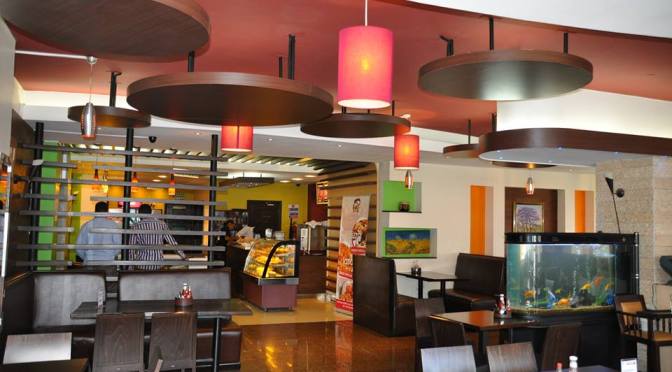
The space serves dual duty as a business center and cafe with a full functioning state of the art boardroom inclusive of a modern projector, high-speed Free Wi-Fi Internet access and an AC system. If you are in a fix for a meeting place, or simply just enjoy a relaxed working environment – just you, your computer and a latte, don’t bother looking elsewhere.

Slideshow

Slideshow

Valley Coffee Shake comes with some great balcony space, nice view of the city and awesome ambiance. When I arrived, the balcony was full so sadly I missed out on the best seats of the house.

If I could rate the service we got that evening on a scale of 1 to 10, it would probably be above 10. Here’s why, I ordered a plate of Masala fries and a glass of cocktail juice whereas my friend ordered only a glass of juice. Normally, when I order Masala fries, the restaurants take a long while to bring out my plate and when it arrives, the fries are usually all soggy. Personally, I love chips za kukaushwa!! This time my food came out in good time and just the way I like it.

photo credit: Nick Smilez Mutinda


Why I say the service was above and beyond, once the server  brought  my plate, he asked if the portion was enough or if perhaps they should add some more. I usually have trouble just getting through a full portion of fries (by a full portion in my case, lets just say some people would starve) but just to see if he was serious, I obliged to them adding some more. Usually in such a scenario, the server would just laugh and walk off right? well, not this time. To my surprise, he took my plate and walked off only to come back with an extra saucer of fries. This was a first!!

As we were still trying to grasp what had just happened, ’cause let’s be honest such hospitality in kenyan cafe’s is raaaaare!!!, the  server came back to our table…with another saucer of fries. Okay, either this guy was pranking us just to see our reaction and he was coming back for the two saucers, or valley coffee was feeling extra generous that evening. My friend thought the guy just liked me. Either way, there was no loss because my friend was lucky enough to have some fries he hadn’t ordered for having ordered only a glass of juice (besides, the extra fries weren’t that much. The fact that we were actually given something extra was what was so surprising), and the cafe gained a return customer!!! win-win situation.

Sadly, I didn’t quite catch our server’s name, nonetheless he is highly recommended. Good quality service.

photo credit: thefoodistblog
2014-12-05 15.32.56
photo credit: thefoodistblog

All that said, the food here is really good with greater variety and larger portions in comparison to similar establishments in the city. Even ordering just sides makes for a great meal. And what they refer to here as a small glass, well let’s just say drinks here are well worth it! Really loved their tropical cocktail mix as well and the fact that their is no sugar added allegedly, was a plus for me.

Price: Masala Fries: Ksh. 300

Boardroom Service Charge:
First hour: KShs. 1,500 Subsequent hours: @ KShs. 1,000
Location: Yala Tower, 3rd Floor. At the junction of Biashara and Koinange Streets, Nairobi.
Come hungry. Leave happy.

Reasons why you won’t feel like a loner, backpacking!!

Sipping my healthy smoothie by the  Kilifi Backpackers bar counter, I watch as my friend tries to get a splinter off of *James (a fellow traveller’s) foot . Poor thing went swimming at the beach and left his stuff (bag, shoes, and bicycle) unattended. Unfortunately for him, “Cha kuokota si cha kuiba” finding is not stealing, is a rule some people live by on this ends, his bag and shoes got stolen and had he not left his bicycle somewhere in the bushes, his transport back “home” would have gone too! With his shoes gone, getting his bicycle from the bushes left him with a thorny situation.

Even after cleaning his wound when he got back from the beach, *James could still feel some sharp pain on the foot and that’s when he asked us to check it out. Funny thing though about this whole situation, I doubt he would have gotten any such assistance from fellow guests in a classic or luxury travel setting, everyone keeps to themselves! Imagine you and your friends enjoying your drinks in some luxurious hotel bar, laughing with each other about jokes nobody outside of your group will understand, based on memories and past experiences you had with those friends. Now imagine some random dude approaching you and asking for help with his foot situation. What would your reaction be? weirded out perhaps?

With backpacking, things are different.  Sure, not everyone will be welcoming with open arms when you ask if you may join them for dinner, some people want to be left alone sometimes, but I guarantee you that 99% of people will say “sure, no problem”.  See even though we were not really “buddies” with James, we were not really strangers per se, we had cheered him on during the daily beach volleyball, shared conversation over breakfast,  heck we even got to “babysit” his beers!! so we were already familiar with him.

11-600x338

If you are setting out to travel on your lonesome and are worried about loneliness creeping up on you, fear not, backpacking is here!

Just like our time at Distant Relatives, you will realise that almost everyone backpacking is travelling alone as well. Moreover, everyone wants to make friends. As a matter of fact, you may have to TRY to be alone!  It does not matter how introverted you are, it is impossible not to meet new people; for instance, at times you may just be sitted by yourself wanting some alone time when a stranger joins you for conversation.

14-600x338

Whether you’re lounging in a hammock on the balcony or frying something in the communal kitchen, at any moment you could strike up a conversation with a  stranger and make a friend for life.

10488096_769463753132003_3847208001679672746_n

Aside from that, meeting new people is inevitable when staying in a hostel, or dorm rooms. You won’t have a choice but to get to know them. Just say hello and ask where they’ve been, where they’re going, how long they’ve been around and if they’d recommend anything cool to do or see.

I’m not sure it’s possible to feel lonely at a hostel and more often than not, you may end up craving some alone time.

In the backpacking world, it’s always someone’s first or last night and therefore a reason to go out – which means there’s a lot of drinking going on (A LOT!). Therefore, if parties are your thing, you will never fall short. Going out for dinner one night with several strangers and never seeing them again is part of the fun and it’s what happens. People are aware of it and it’s kind of the norm.

1618691_769032566508455_713762541137030143_n

10922727_769469239798121_4150208900195217877_n

You meet great people, and then tomorrow they are gone. Maybe you will see each other again, maybe not. In some cases though, some of these people may end up being the group you travel around with, which is a great bonus!

269528_377994088945640_1879865484_n

Backpacking is a great lifestyle; It’s fun, social, has a  youthful vibe to it and you get to meet amazing people. There will be people you meet who become your friends for a week, friends for a month and friends for life. Happy Backpacking!!!
Photo Credits: Distant Relatives Kilifi Backpackers

How to make the most of Nairobi Restaurant Week

Nairobi Restaurant Week #NRW2015 kicks off today.

For the uninitiated, Restaurant Week is when hundreds  of establishments, from fine dining standbys to hip new eateries, offer special prix-fixe lunches and dinners to much enthused foodies.

NRW-Blog Post-NC

This event has been a proven tradition amongst many major cities around the World including Cape Town, London, New York and Tokyo to name a few and although it is still quite a new concept in the country, last year’s launch was a big success. This year’s NRW  will feature over 50 restaurants offering 2 or 3-meal courses.

Organised by Taste Events Ltd (A partnership between EatOut and
SHK Consulting), the event will run till 1st of February, giving food lovers an awesome 10 days to sample as many restaurants as they can. #NRW2015 is therefore bigger than last year’s encompassing two full weekends.
Menus will cost Ksh1,500 or Ksh2,000 depending on the establishment. Some establishments will be offering a 2 course selection from the same menu at lunch time for a reduced price of Ksh Ksh1,000 or Ksh1,500, again depending on the establishment. This will however not include a complimentary cocktail.
This year’s title sponsor, Magnum Cream Liqueur from Liquid Africa  will be offering a complimentary Magnum cocktail, or a glass of Magnum on the rocks; for those who prefer theirs served plain on the rocks. Magnum is a luxurious cream liqueur which has tantalizing hints of caramel, chocolate and rich toffee making it perfect for anytime of the day even as dessert after a hearty meal.
Some of the best fine-dining restaurants on board this year include; Soaring Eagle Spur, Secret Graden, Villa Rosa Kempinski, Bhandini, Mambo Italia, Artisan at Sankara,DusitD2 Soko, amongst others.
Whilst you should look forward to having a great experience, it’s important to take a step back and see if you’re actually getting a good deal. A lot of people are going to restaurants they wouldn’t go to because it’s Restaurant Week, which is part of the idea, but they’re less in tune with what those restaurants are doing.

Are you being served a raw deal?

At first glance, Restaurant Week seems like a win-win for both restaurants and guests. Customers pay a fixed (and ostensibly lower) price while getting to try a new restaurant and its specialties.

For all its benefits,  Customers, rightly, want a good dining experience and a good deal. Restaurants on the other hand, rightly, want to fill seats during an otherwise slow month—the original purpose behind the promotion—and satisfy guests without losing money.

But here’s the thing: a ton of people turn out for Restaurant Week. “Amateur eaters” are seduced by the seemingly low prices and a desire to experience the new culinary fad. As a result, wait times can stretch on, and service may lag due to the sheer volume of orders and tables.

The premise of restaurant week is that restaurants you may not normally visit will lower their prices and offer their best dishes or most creative items in order to lure you back in the future. This is however not the case for all establishments involved.

You might find restaurants that don’t take the event seriously and serve extra-small portions. With menus being extremely limited, the value just isn’t there.

The quality of food often drops, too. Cheaper options that may not otherwise appear on the standard menu show up on the prix fixe as a way for owners to save money with the “special” menus. There are restaurants that normally have very particular ingredients and offer really outstanding quality products, and then you come into Restaurant Week and it’s all very conventional. The meal should at least be representative of the kitchen’s style.

Taking all of this into consideration, those prix fixe costs suddenly don’t seem like the best deal in some establishments.

Still, some eateries use the program to deliver great value. There are a few places out there where the special prix fixe is as good a deal as the regular menu. It’s the delight in discovering those that keep many coming back for more.
It can be bad (sometimes) for restaurants too!!

Restaurant Week can certainly be great for restaurants — it amps up exposure and brings in new customers during an otherwise slow month.

It is also a good opportunity for restaurants to showcase to people who may have otherwise not dined with them.

But it can also have the opposite effect. Dining out during Restaurant Week doesn’t necessarily offer a true glimpse of what a place is actually like. Crowds and long wait times annoy a restaurant’s best customers, and those deal-seeking diners are not necessarily going to come back. Which is really bad, given that increasing repeat business for restaurants is one of the main goals of a publicity program such as Restaurant Week.

It can also be rough on the servers leading to a subpar service. When you get down to it, the waiter isn’t making as much money.”

Ultimately, Restaurant Week can turn out to be a pain. But if you do decide to go, here are some tips for doing it right:

  • Do your research — some menus might be dumbed down, especially the higher cost ones. Try to find restaurants that stick as close to their main menu as possible. If the regular menu, and what they’re offering you doesn’t match up, then you’re looking at a place that’s faking you out. There are also plenty of restaurants where you actually pay more during Restaurant Week than you would a la carte.
  • Make a reservation, especially at your favorite spot. Restaurant Week is always busy, and you might not be able to get in.  The menu is limited to the first 250 patrons at each outlet so the earlier the better!
  • Chances are many of the best restaurants were booked weeks ago. Don’t be afraid to call if a restaurant is booked  to see if some tables are unloaded last minute by reservation hoarders. Sometimes, restaurants will extend their promotions after Restaurant Week (or offer the prix fixe year round). Plus, it never hurts to make sure there are no cancellations!
 
  • Be Nice – If you do go out late, realize servers have likely been running around more than usual by the time you get there. A little extra kindness can go a long way — not being snappy is a good way to increase your chances of getting your food quickly and accurately, something that holds true no matter what time you dine.
  • Do Lunch – If you’re able to make time in the middle of the day, lunch is a good option. Not only are the the courses cheaper, dining rooms are less likely to be jam-packed, and the service and kitchen staff will both be fresh. It’s a good chance to try places you might not venture during the evening.
  • Branch Out – Sure, everyone wants to go to the hot spots of the moment, but you might get better service (and find out about a fantastic dish before your friends do) if you try some of the older, more established restaurants on the list.
  • Tip Well – Do tips actually act as incentives for good service? Not exactly, since your server won’t know what you leave until your meal is over, but if Restaurant Week patrons decide as a group to leave better gratuities, it could put an end to the front-of-the-house griping that traditionally comes with the promotion. Happier servers = happier guests, simple as that.
  • Don’t Double Book – If you can get them, it can be tempting to book several reservations for one evening, and then choose whichever one you most feel like on the night of. This is definitely not cool, since it leaves restaurants on the hook with empty tables and lost revenue. See “Tip Well” above; making the promotion smoother for servers and managers ends up making it smoother for everyone.
Last year, four days into the weeklong culinary experience,  restaurants registered a significant increase in patrons wanting to take advantage of the unique experience with establishments like Bamboo, Zen Garden and Jiko at Tribe Hotel selling out their 250 limited-edition offering within three days with several others such as About Thyme and Pablos, Best Western recording similar numbers as well.

Whether you plan to sample the finest food the city has to offer or not, it’s  a given that Nairobi Restaurant Week is growing up to be the biggest culinary event in the country (if it isnt already).
If you do get to attend though, Good meals? Bad meals? Tell us about them in the comments.
Check the participating restaurants and their menus here.